Prefer Jewish News on Google
Rika’s Rooms: Gail Louw’s new play about her mother opens in London
From Nazi Germany to modern England, one woman's life unfolds room by room
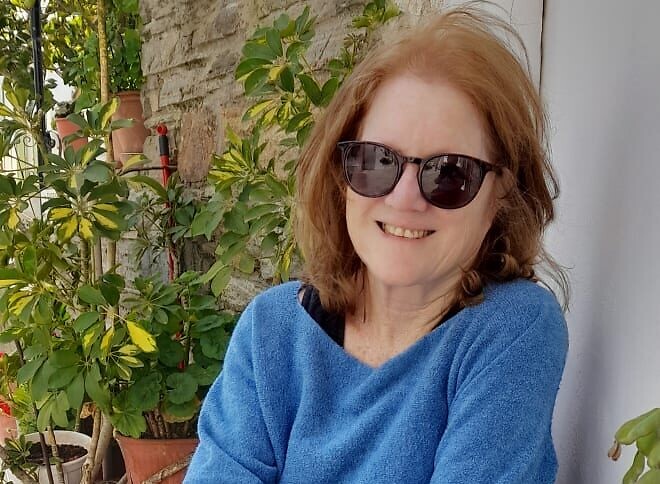
Award-winning Jewish playwright Gail Louw likes to write about other’s people stories. This month sees the premier of Rika’s Rooms, Gail’s newest, and, she says, most important play, because it is the story of her mother’s life.
Rika’s Rooms is the true and moving story about an ordinary woman dealing with intense love and loss during extraordinary times. Moving from Nazi Germany to Palestine, to Apartheid South Africa, Rika becomes a victim of war and a freedom fighter. But instead of committing herself to the cause, she decides to live the good life. Now aged 76 and living with dementia in England, Rika inhabits two worlds: the present, which makes no sense anymore, and the past, peopled by ghosts.
“It hasn’t been an easy play for me to write,” Gail said. “I feel so fortunate to have had such a happy life, but for my mother there were so many challenges, and at the end her challenge was the onset of living with dementia.”
Gail describes herself as a staunch atheist but says being Jewish is something that defines her. All her life she has challenged injustice, whether it was in her native South Africa or in the UK where she now resides.
Gail has written over 40 plays and her work has been performed across the world from small venues to large ones including Sydney Opera House.



“Rika’s Rooms is the play that is closest to my heart,” she said. “I was incredibly close to my mother, and she was a wonderful woman who lived with us and whom I dearly loved.
“I started to write her story in book form but could never finish it. Then during Covid I picked it up again and finally finished the manuscript. The book was published and received a good response, and this encouraged me to turn it into a play.”
Many of Gail’s plays have Jewish protagonists. Her first play, Herschel, is the story of Herschel Grynszpan, the 17-year old who shot and killed the highest Nazi official in Paris in 1938 and whose actions were used as a pretext for Kristallnacht.
Her one-woman play Blonde Poison is based on the true story of Stella Goldschlag who betrayed up to 3,000 fellow Jews by becoming a greifer – an informer for the Gestapo, who nicknamed her Blonde Poison.
But not all Gail’s protagonists are Jewish. The central figure of her play Duwayne central figure is Duwayne Brooks who, traumatised by his best friend Stephen Lawrence’s murder, was treated as a potential criminal instead of a witness by the Metropolitan police.
Gail became a full playwright by chance. As an academic at Brighton University she enrolled on a playwriting course. It was meant to last three terms but, by the end of the first term, Gail had already written a complete play, and the remaining two terms were spent refining the script. Since then, playwriting has become a huge part of her life. Her plays have won international acclaim and awards and when she finishes one play she starts to work on her next one. Antarctic explorer Apsley Cherry-Garrard is the subject of her next play, Antarctica, debuting at the White Bear Theatre in December.
Rika’s Rooms runs until 25 July at Tabard Theatre in Chiswick. tabardtheatre.org.uk

Keep community journalism free.
Jewish News is free for everyone. No paywall. No barriers. Just trusted journalism for anyone who wants to stay connected to Jewish life in Britain.
If you value that, please support us.
From as little as £5 a month, you can help keep our journalism free and accessible to all.
Every day, we report on the issues that matter to our community. We celebrate achievements, support charities, challenge antisemitism and ensure Jewish voices are heard more widely.
From as little as £5 a month, you can help us continue to:
- Report on the stories shaping Jewish life in the UK and beyond
- Bring our community together through shared stories, events and campaigns
- Celebrate the people, culture and moments that define our community
- Support organisations doing vital work across Jewish Britain
You can make a one-off donation or become a regular supporter. Every contribution helps keep our journalism free, independent and accessible to all.
If everyone who values Jewish News gave a small amount, it would make a real difference to our future.