
 Prefer Jewish News on Google

Rob Reiner – the life and legacy of a Hollywood legend
From When Harry Met Sally and Stand By Me to The Princess Bride and Misery: celebrating a director and film maker for the ages
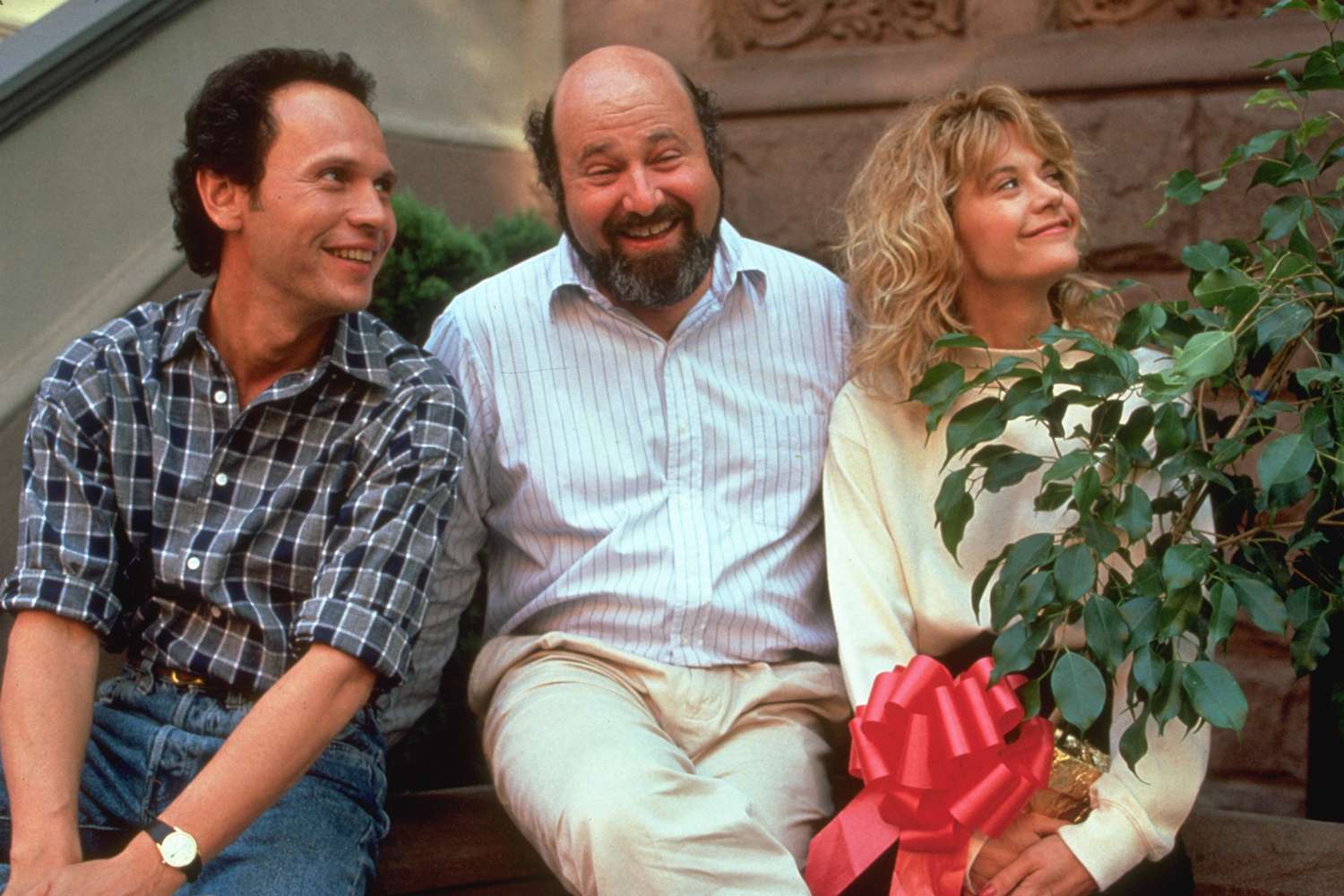
What will survive is the work. While Rob Reiner’s demise feels like the stuff of Hollywood Babylon, it is the films that will be remembered for as long as people are around to watch them. The son of comedy great Carl Reiner, Rob might have been concerned about entering showbusiness but established himself as a beloved national treasure with his performance in All in the Family, an adaptation of British sitcom Till Death Us Do Part that won him two acting Emmys.
Reiner’s directorial debut, This Is Spinal Tap, was released in 1984. The mockumentary was co-written through improvisation by the filmmaker and lead actors with Reiner himself playing the director of the “rockumentary” depicted.
The film is regularly ranked as one of the funniest movies ever made and is arguably the single most influential comedy in any medium of the modern era. Without Spinal Tap, there would be no Curb Your Enthusiasm, The Office or Modern Family.
That film was the start of a run that saw Reiner direct seven films in eight years, six of which are routinely listed as favourites of everyone from casual filmgoers to ardent cinephiles.
Reiner never truly got his due as a director until this week, perhaps because his films were simply too popular, in the same way that Steven Spielberg is not spoken about in the same hushed tones as Stanley Kubrick. Reiner, as an actor, filmmaker and human being, sought primarily to entertain and he did so with the range of Howard Hawks. One could make the case that nobody in history had a better first decade behind the camera than this nepo baby par excellence.




A year after Spinal Tap came The Sure Thing, the least acclaimed picture of Reiner’s imperial phase but one that deserves reappraisal. There are echoes of It Happened One Night and it seems to foreshadow When Harry Met Sally but perhaps it suffers from the fact that the director would make the latter romantic comedy at the end of the decade, one that is largely considered the genre’s apotheosis.
1986 saw the release of Stand By Me, a rare Stephen King adaptation that the novelist genuinely adored. It is a film about friendship in the period before the teenage years kick in but it is also, on some level, about fathers and sons and specifically how the director felt about growing up in the shadow of his famous father. Coming of age has rarely been captured more astutely or sensitively on screen.
The following year Reiner directed The Princess Bride, adapted by the peerless William Goldman from his own metafictional fairytale novel. Like Spinal Tap, it is packed with comedy performers at the peak of their powers and seems to bounce from one immortal scene to the next, each filled with endlessly quotable lines that have entered the quote repertoire of the best of us. There may be some people out there who don’t like The Princess Bride but it feels inconceivable.
Maybe Reiner was getting tired at this point since it took two years rather than the usual one for his next masterpiece to arrive in the form of 1989’s When Harry Met Sally, scripted by Nora Ephron. A day after watching a rough cut in 1988, Carl Reiner was on the radio show Fresh Air and asked about his son. He told Terry Gross, before the film even had a title: “I’m going to go on record as saying it is the most beautiful, successful, glorious, romantic comedy that I have ever seen.”
This was not simply paternal pride but a simple statement of fact.
Reiner ushered in the new decade with another King adaptation, this time in the form of Misery, one of the writer’s least supernatural offerings. James Caan plays a novelist kidnapped by deranged superfan Kathy Bates and the result is a claustrophobic psychological thriller that won Bates an Oscar and stands as one of the scariest films of the nineties.
The Hawksian golden run ended with A Few Good Men, the courtroom drama penned by Aaron Sorkin in which Jack Nicholson tells Tom Cruise he can’t handle the truth. There was the usual “could do better” pontificating from teacherly critics about Reiner’s output in the decades that followed but, like many a musical icon, perhaps he simply ran out of steam after that astonishing opening salvo.
Those thirty or so years are irrelevant now and the circumstances of his death will, in centuries to come, be nothing more than a footnote. Reiner brought a great many of us untold joy and ultimately it is those movies that will live forever.
- Darren Richman is a journalist

Keep community journalism free.
Jewish News is free for everyone. No paywall. No barriers. Just trusted journalism for anyone who wants to stay connected to Jewish life in Britain.
If you value that, please support us.
From as little as £5 a month, you can help keep our journalism free and accessible to all.
Every day, we report on the issues that matter to our community. We celebrate achievements, support charities, challenge antisemitism and ensure Jewish voices are heard more widely.
From as little as £5 a month, you can help us continue to:
- Report on the stories shaping Jewish life in the UK and beyond
- Bring our community together through shared stories, events and campaigns
- Celebrate the people, culture and moments that define our community
- Support organisations doing vital work across Jewish Britain
You can make a one-off donation or become a regular supporter. Every contribution helps keep our journalism free, independent and accessible to all.
If everyone who values Jewish News gave a small amount, it would make a real difference to our future.





















