Prefer Jewish News on Google
Robert Peston launches thriller inspired by fears over Britain’s AI future
Veteran broadcaster tells JW3 audience his latest novel explores the growing power of artificial intelligence, billionaire technology firms and politics
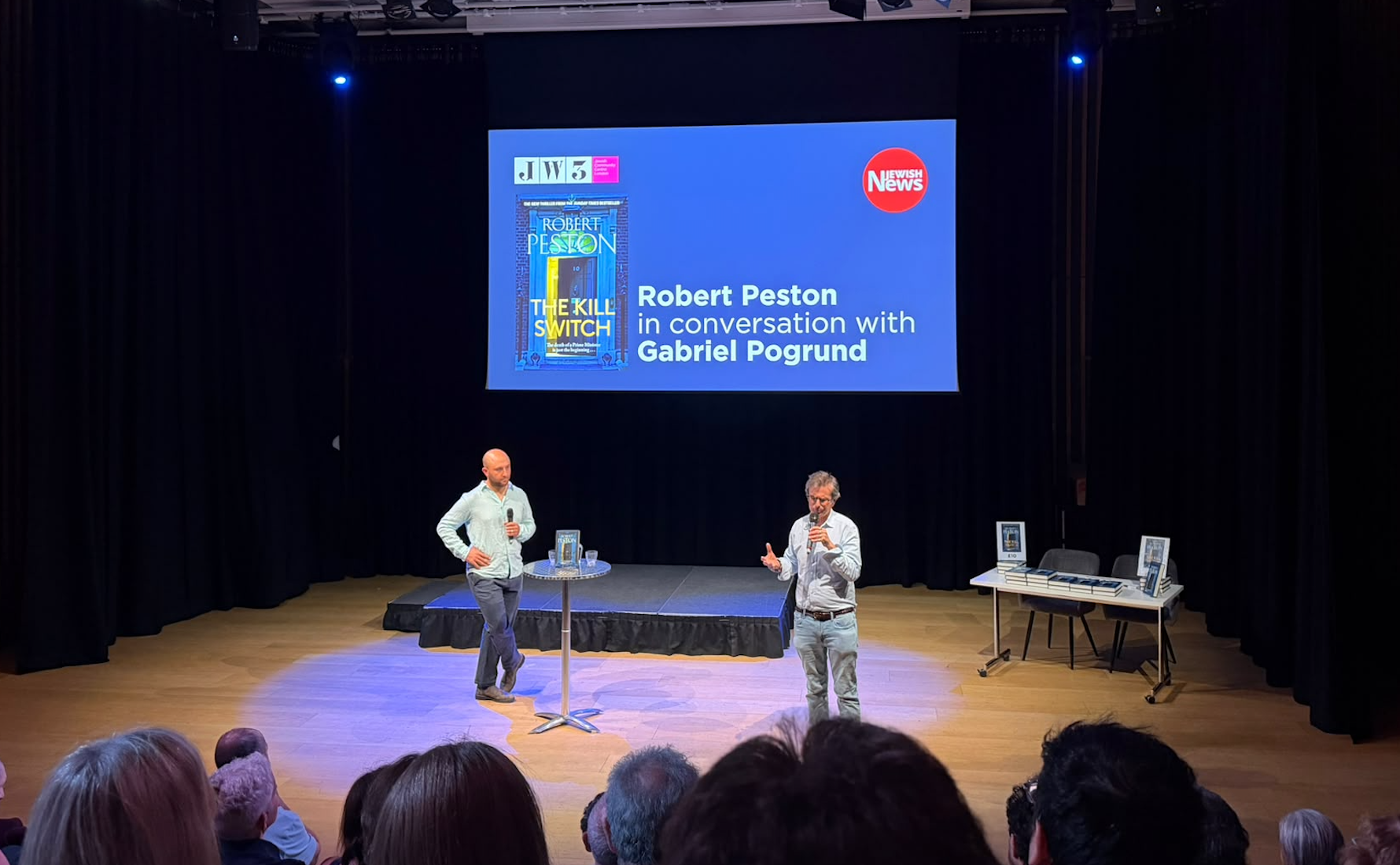
ITV political editor Robert Peston has said his latest political thriller was inspired by what he believes is the defining issue of the age – the rise of artificial intelligence and the growing influence of powerful technology companies over politics.
Speaking at the launch of The Kill Switch at JW3 in London, at an event presented in partnership with Jewish News, Peston told The Sunday Times Whitehall Editor Gabriel Pogrund that he wanted the third novel in his Gil Peck series to explore the consequences of a future many politicians are still failing to confront.
The novel follows Jewish journalist Gil Peck as he investigates the suspicious death of a Prime Minister before uncovering a conspiracy involving a global AI company, political power and corporate influence.
Peston said he chose AI because it is already transforming the world faster than governments appreciate.
“I was probably regarded as one of the more eccentric broadcasters during the general election because every single night I kept saying the only thing that matters is the way artificial intelligence is going to transform the economy, transform society and transform how we see ourselves,” he said.



He argued political leaders should be debating AI “more than anything else”, warning that governments remained dangerously underprepared for the technology’s impact.
“The thing that upsets me most is that this should be the stuff that we’re all debating. This should be the stuff that our leaders should be talking about more than anything else. And they’re not.”
Peston said AI had the potential to eliminate “vast numbers of jobs”, raising fundamental questions about how governments would fund public services and support workers forced to retrain.
“If loads of people lose their jobs, where does income tax come from? How do we fund our public services?” he asked.
Drawing comparisons with the 2008 financial crisis and the Covid pandemic, he argued governments had repeatedly failed to prepare for low-probability, high-impact events despite clear warning signs.
“We had the global financial crisis… We had another low-probability catastrophic event in Covid, which again we didn’t prepare for,” he said, arguing AI required the same level of urgent planning before its full impact was felt.
He also warned about the growing political influence of the world’s richest technology entrepreneurs.
“The sums of money that can be generated… are literally just off the charts,” he said, adding that history showed individuals with immense wealth often believed “they know best” and sought to influence politics.
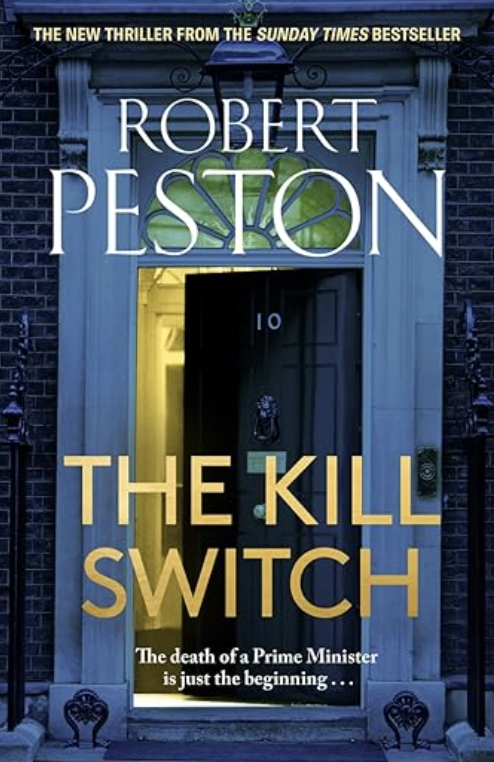
Alongside the technology theme, Peston revealed the novel’s protagonist deliberately shares aspects of his own background.
“Gil Peck is, like me, a secular Jew, a journalist, he worked at the BBC for a while, and he suffers from obsessive-compulsive disorder, as I do,” he said.
“There is one critical difference between him and me… he’s a Tottenham supporter, not an Arsenal supporter. But he is not me. This is not a disguised autobiography.”
Peston said he based the series on “worlds I’ve lived and breathed for almost 40 years”, drawing on his experience covering Westminster to give the novels authenticity.
During the audience Q&A, Peston, who is an ambassador for Jewish News, reflected on the importance of trust in journalism after being asked about the Jewish News fundraising lunch he hosted with former prime minister Tony Blair earlier this year, where comments made under Chatham House rules were later leaked.
“I felt pretty personally let down,” he said. “There is no future for you in our trade if people can’t trust you.”
The discussion also turned to political discourse following the recent death of former Conservative cabinet minister Ann Widdecombe. Peston said he hoped Britain would resist the increasingly hostile political climate seen elsewhere.
“One of the great things about this country is we don’t have a culture of political violence, unlike America,” he said. “I hope this is a moment where, as a nation, we draw breath and try to turn the temperature down a bit.”
He added that Widdecombe would be remembered not only for her forthright views but because “she disagreed with people in a respectful way”, something he believed had become increasingly rare in modern politics.
The Kill Switch by Robert Peston is available now. Order your copy on Amazon here.

Keep community journalism free.
Jewish News is free for everyone. No paywall. No barriers. Just trusted journalism for anyone who wants to stay connected to Jewish life in Britain.
If you value that, please support us.
From as little as £5 a month, you can help keep our journalism free and accessible to all.
Every day, we report on the issues that matter to our community. We celebrate achievements, support charities, challenge antisemitism and ensure Jewish voices are heard more widely.
From as little as £5 a month, you can help us continue to:
- Report on the stories shaping Jewish life in the UK and beyond
- Bring our community together through shared stories, events and campaigns
- Celebrate the people, culture and moments that define our community
- Support organisations doing vital work across Jewish Britain
You can make a one-off donation or become a regular supporter. Every contribution helps keep our journalism free, independent and accessible to all.
If everyone who values Jewish News gave a small amount, it would make a real difference to our future.