Prefer Jewish News on Google

Russian-Israeli pianist Boris Giltburg takes centre stage in London and Bournemouth
The classical music aficionado talks passionately about the power of music and why AI can never replace the human connection of a live performance
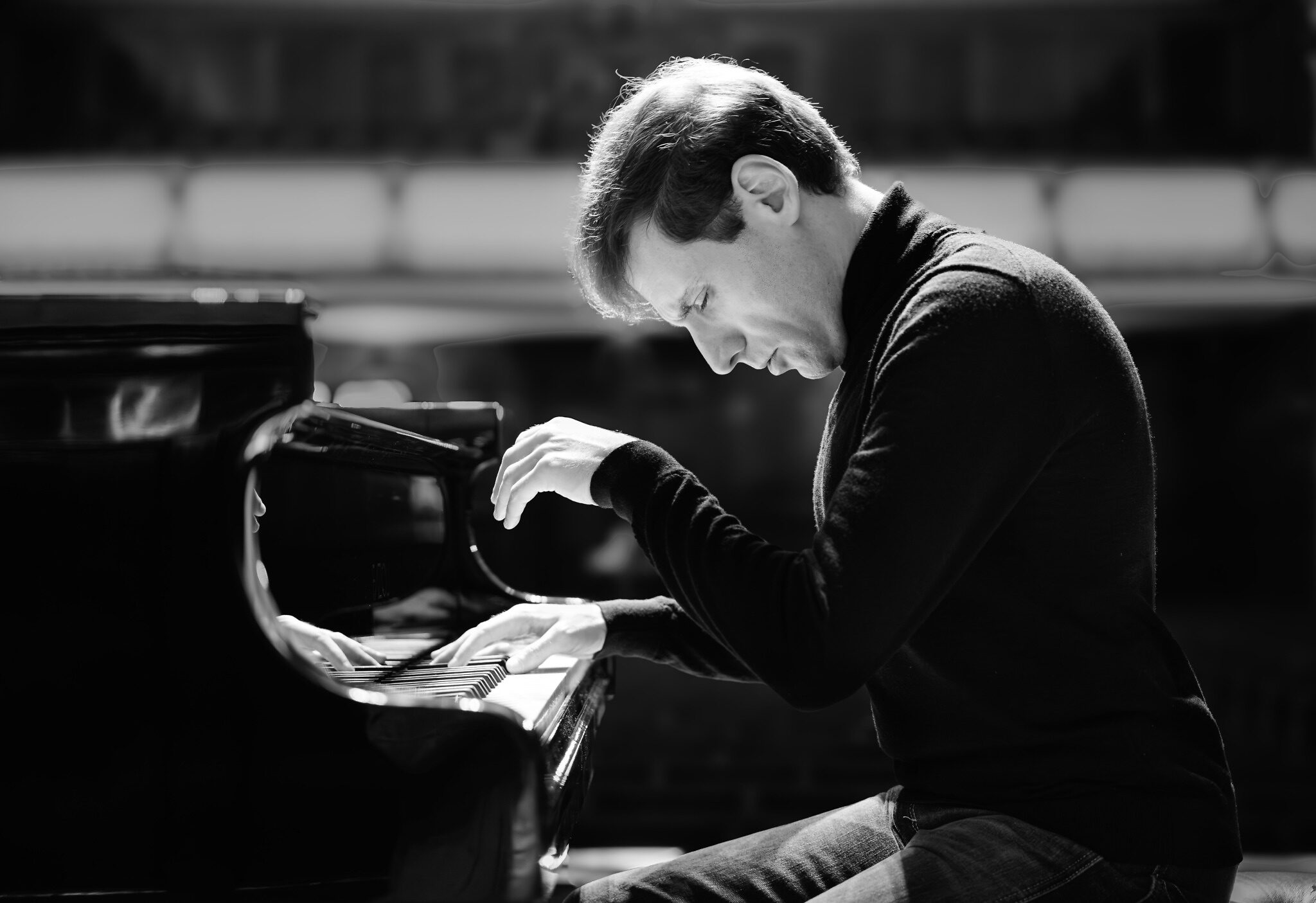
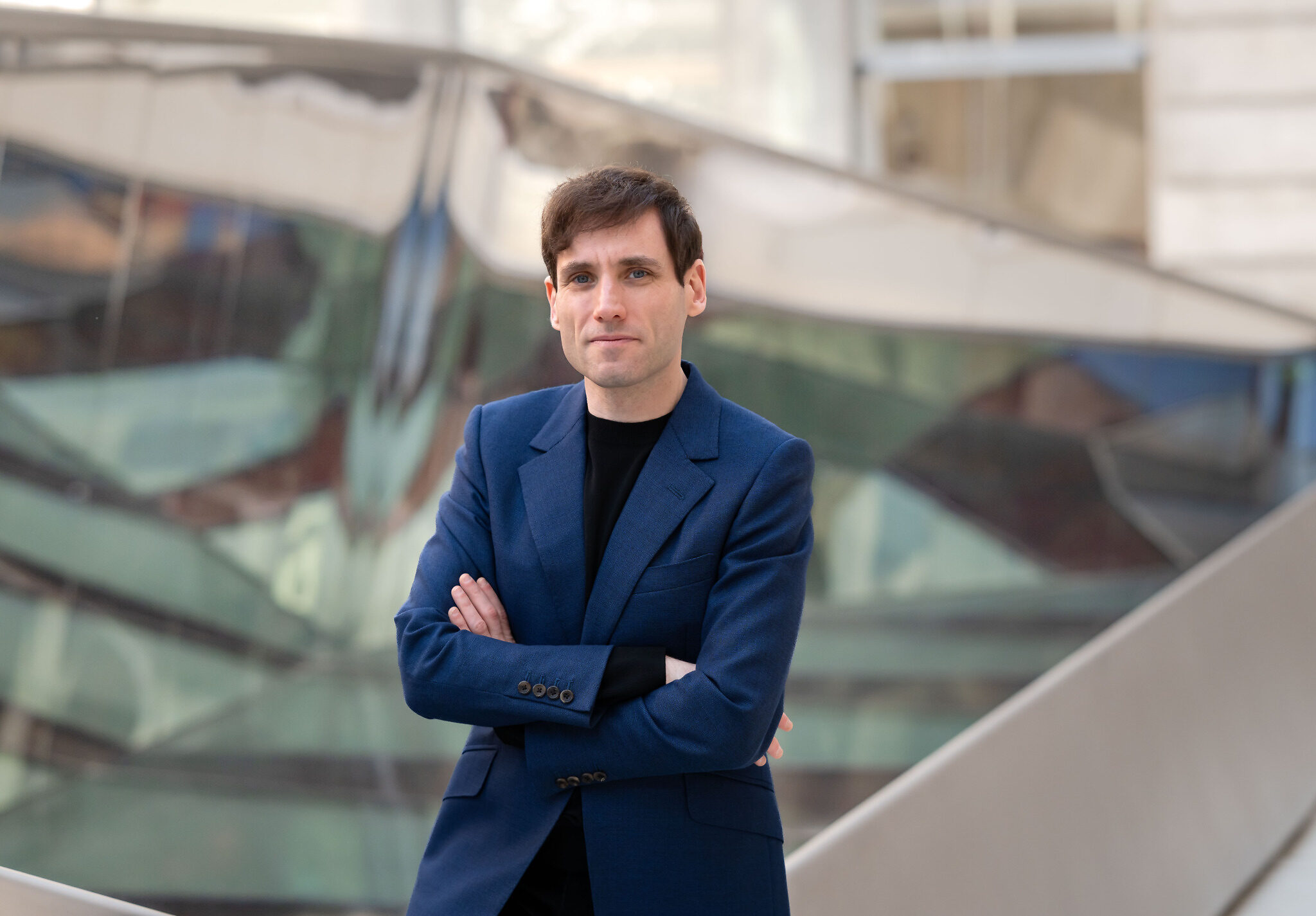
Boris Giltburg is a Russian-Israeli pianist living in London and playing for the Bournemouth Symphony Orchestra. If that sounds like an unlikely geography lesson, stay tuned because he’s also doing concerts in Poole, Exeter and Bristol. Oh, and he met his husband in the Netherlands.
Boris, 42, has been playing the piano since he was five. His mother is a piano teacher, and both his grandmother and great grandmother played too. “My mum was against the idea of me playing the piano because she thought it was a challenging profession,” he says. “She wanted me to do something ‘safer’. But I was really stubborn. There was a piano in the house and I wanted to play. The piano always felt like the safest place to be, and it still does.”
Boris was born in Moscow and the family moved to Israel when he was five. “I’m undoubtedly Israeli but at the same time, Russian culture is a very big part of me,” he says. “Music, of course, and also the language itself, which, thanks to my parents, I kept as my mother tongue.”
The fact that Boris’s family were musicians made entering the music world a lot easier. They had an instrument, he could get lessons right away and there was a whole treasury of experience and knowledge in the family that they could share with him.
Boris moved to the Netherlands when he was 30 and it was there that he met his husband, who is from Yorkshire. They have been living in London for four years.
For the Bournemouth Symphony Orchestra concerts, which start next month, the programming was chosen together with Mark Wigglesworth, the chief conductor and artistic director of the orchestra. He requested the Schumann Concerto, which is rarely performed, and the second week is Rachmaninov-focused. “This was my request because Rachmaninov is the composer closest to my heart, the one I really can’t live without,” says Boris.
Last year Boris played with the London Philharmonic, the Royal Philharmonic, and with the Philharmonia at the Royal Festival Hall. He completed a cycle of all Beethoven’s sonatas at Wigmore Hall, where he is about to start a five-year residency as associated artist.
This season at Wigmore Hall he is focusing on the work of Sergei Prokofiev, and the first program features the three war sonatas that he wrote during the Second World War. “They are one of the strongest artistic reflections of that time,” he says. “It’s not light listening – it’s incredibly strong, moving and thought provoking. The music speaks about the war and also the Stalinist regime and the terror and mass arrests that were taking place just before.
“Prokofiev, as an incredibly sensitive artist, was living through all of that, and then reflecting it in this music.”
Boris says that these sonatas would resonate with any anxieties that we might have today. “There’s one movement which, for me, is the image of a machine that, in a very happy, productive way, crushes everything underneath it without malice. It’s not evil. It just sort of moves forward, and in its inexorable forward movement, it destroys everything. Any of us who have worries about what the collaboration between AI and humanity may look like might see something in that music that would speak to these worries.”
Boris says that so far AI has not impacted his work. “I believe that what people want from the concert experience is the human connection and that would be very hard, if not impossible, to replicate without the human element on both sides of the stage.” If AI created new music would he play it? “If it’s really new – like not in the style of Rachmaninov or Beethoven, but genuinely new – and if it were really talented, then I can’t tell you that I wouldn’t. Maybe I would need to embrace it because if everybody else is moving forward with AI, I can’t be left behind.
“That said, I will never, in ten lifetimes, be able to play everything I would like to play that has already been written for the piano. When there’s so much choice, we can pick the pieces that speak to us the most, invest time, thought and love into them and therefore, hopefully, create a stronger experience for the audience when they come into the concert hall.”
Boris Giltburg is Wigmore Hall’s Associate Artist 2026-27 and has concerts there on 19 December and 19 March. For tickets visit wigmore-hall.org.uk
He is also Artist-in-Residence 2026-27 at Bournemouth Symphony Orchestra and is playing the following concerts:
Schumann’s Piano Concerto conducted by BSO Chief Conductor Mark Wigglesworth [4 November in Poole and 5 November in Bristol]
https://bsolive.com/events/sunshine-symphonies/
https://bsolive.com/events/sunshine-symphonies-bristol/
Rachmaninov’s Piano Concerto No.4 and Variations on a Theme of Paganini conducted by BSO Chief Conductor Mark Wigglesworth [20 January in Poole and 21 January in Exeter]
https://bsolive.com/events/kissed-by-a-rose/
https://bsolive.com/events/kissed-by-a-rose-exeter/
Recital of Prokofiev’s Visions fugitives, Schumann’s Carnaval, and Mussorgsky’s Pictures at an Exhibition [10 March in Poole]

Keep community journalism free.
Jewish News is free for everyone. No paywall. No barriers. Just trusted journalism for anyone who wants to stay connected to Jewish life in Britain.
If you value that, please support us.
From as little as £5 a month, you can help keep our journalism free and accessible to all.
Every day, we report on the issues that matter to our community. We celebrate achievements, support charities, challenge antisemitism and ensure Jewish voices are heard more widely.
From as little as £5 a month, you can help us continue to:
- Report on the stories shaping Jewish life in the UK and beyond
- Bring our community together through shared stories, events and campaigns
- Celebrate the people, culture and moments that define our community
- Support organisations doing vital work across Jewish Britain
You can make a one-off donation or become a regular supporter. Every contribution helps keep our journalism free, independent and accessible to all.
If everyone who values Jewish News gave a small amount, it would make a real difference to our future.