Prefer Jewish News on Google
Senior Belgian politician refuses to send Jewish community Rosh Hashana message
Matthias Diependaele's staff initially cited Middle East conflict as the reason; he later claimed it was because 'no religion...has any role to play in the exercise of my mandate'
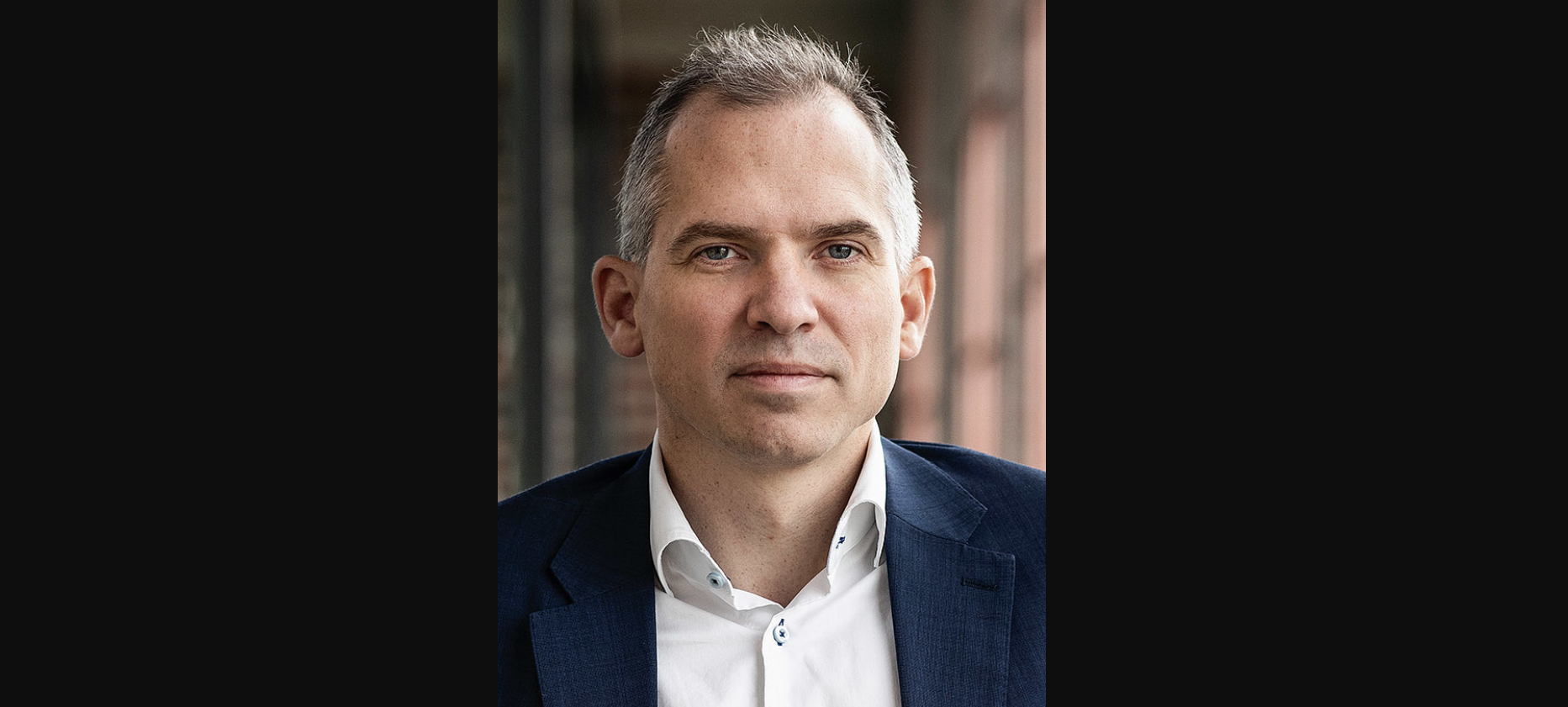
A Senior Belgian politician has refused to send a Jewish New Year message to the country’s Jewish community, with his staff initially citing “the current situation and sensitivities concerning the tensions in the Middle East”.
Matthias Diependaele, Minister‑President of the Government of Flanders and leader of the Executive Branch of the Flemish region of Belgium, was approached by a longstanding Belgian Jewish newspaper, The Centrale, for a Rosh Hashana message.
The paper received a response from the Minister-President’s team, thanking them for their request and wishing them every success with the publication, but telling them that “after internal deliberation, we regret to inform you that, given the current situation and sensitivities concerning the tensions in the Middle East, we cannot follow up on your request. Anything that bears even the slightest connection to this conflict is being closely monitored and examined under a magnifying glass.
“For that reason, we do not deem it opportune to go into this any further. We hope for your understanding of this decision and thank you once again for your engagement.”
The Centrale published the response, describing it how “for more than a century, The Centrale has asked Belgium’s leaders for a simple Rosh Hashana greeting to the country’s Jewish citizens. A sentence or two of goodwill — nothing more. This year, even that became radioactive.”

The paper also published a follow-up response directly from Diependaele, acknowledging that “uproar has arisen because of my refusal to accede to the request…In light of this, I would like to correct something.
“My refusal is not driven by the situation in the Middle East, as was incorrectly presented in the message below from my cabinet. I would like to share my personal motivation.
“My refusal is purely based on the principle that, for more than 15 years in my role as a representative of the people, I have not supported religious activities. I have also never accepted invitations for the Eid. I have also never taken part in a Te Deum for Catholics. And so on.
“By this I am in no way passing judgment on any religion or on the people who practice it. It is, however, my conviction that no religion — including my own — has any role to play in the exercise of my mandate.”
The paper rejected Diependaele’s second rationale, saying: “From ‘too sensitive right now’ to ‘timeless principle.’ Same destination, new costume. The first letter admits the truth — fear of optics. The second attempts to launder that fear into lofty secularism. The giveaway is the sloppiness: an incomplete sentence and a retrofitted 15‑year ‘doctrine.’ This is choreography masquerading as conscience: drift with the current, then claim you were anchored all along.”
The Centrale also pointed out that two historic acts of Belgian complicity with the Nazi murders of the country’s Jews in the Holocaust have not been resolved, despite the paper’s regular discussion of them.
“During the Nazi occupation, Belgian national railways were paid — at the tariff of four pfennigs per kilometre per Jew — to transport deportees to their deaths”, the paper said.
“The Centrale has repeatedly brought this matter to public attention. To this day, authorities have refused compensation — not even returning the roughly €50 million (current‑value equivalent) the railways received from the Nazis for those transports.”
The Jewish publication also referred to “the unresolved question of Nazi‑looted Jewish art still held in Belgian museums — works believed to be worth billions. Provenance research is slow, fragmented, and too often opaque. Families age. Files gather dust. Justice deferred becomes justice denied.”
The World Jewish Congress strongly condemned the Minister-General’s actions, stating: “Holding Jews in the Diaspora collectively accountable for the actions of Israel – is antisemitic. To be a political leader, and to refuse to acknowledge the traditions and culture of your country’s Jewish community – because of Israel – is antisemitic… What transpired is quite clear: A political leader declined to acknowledge their Jewish citizens because of Israel and the perceived public backlash about engaging with Jews.”
The Centrale’s discussion of the incident ended by saying: “We know the pattern. We know the cost. And we have the receipts — two official texts, bearing the full title of the highest office in Flanders, explaining first why a greeting to Jews is “not opportune”, and then why it was “never about that” at all. Add to this the unsettled accounts of the railways and the unreturned art, and the through‑line becomes impossible to miss.”

Keep community journalism free.
Jewish News is free for everyone. No paywall. No barriers. Just trusted journalism for anyone who wants to stay connected to Jewish life in Britain.
If you value that, please support us.
From as little as £5 a month, you can help keep our journalism free and accessible to all.
Every day, we report on the issues that matter to our community. We celebrate achievements, support charities, challenge antisemitism and ensure Jewish voices are heard more widely.
From as little as £5 a month, you can help us continue to:
- Report on the stories shaping Jewish life in the UK and beyond
- Bring our community together through shared stories, events and campaigns
- Celebrate the people, culture and moments that define our community
- Support organisations doing vital work across Jewish Britain
You can make a one-off donation or become a regular supporter. Every contribution helps keep our journalism free, independent and accessible to all.
If everyone who values Jewish News gave a small amount, it would make a real difference to our future.