Prefer Jewish News on Google
Shabbat Shalom to those who refuse to cross the line
Every week there are people who make a difference. Not always loudly, not always comfortably, but always meaningfully
There are moments when the line is obvious and there are moments when it begins to move. Not because it should, but because it is convenient for it to do so. Often because there is money to be made, influence to be gained and there is a cost to holding it in place.
We have a name for this now; the “Overton window.”
The idea that what is considered acceptable can shift over time, that positions once beyond the pale can be pulled into the mainstream if enough people are willing to entertain them.
Used honestly, it is a way of describing how societies evolve. Used cynically, it becomes something else entirely, a justification. A way of pretending that the line itself has moved, when in reality it is being pushed, deliberately, by those who benefit from doing so.
The truth is far simpler, because the line does not move on its own, it is moved by people or it is held in place by them. If more people were prepared to say no, if more people refused to cross it, then the so-called “window” would stop shifting altogether.


Which is why those who refuse to move the line matter so much.
Each Friday, I try to end the week by saying Shabbat Shalom to those who have made a difference over the past few days. Those who, in their own way, have stepped forward and done something that deserves to be recognised.
This week, that means recognising those who saw the line clearly, and refused to step over it.
So this week, I want to say Shabbat Shalom to the following people.
Shabbat Shalom to Sarah Tetteh
This week, she did something that far too many in her industry chose not to do, she told the truth.
At a moment when much of the music world appears willing to welcome Kanye West back into the fold, to treat his so-called apology as sufficient, to calculate the upside of his return rather than confront the substance of what he has said and done, she stepped forward and said no.
She didn’t do so quietly or ambiguously, but with clarity and the contrast could not be starker.
Larry Jackson and Gamma signed him. Wireless Festival booked him to headline three nights. SoFi Stadium provided the stage for a comeback in front of 170,000 people. Festival Republic, part of Live Nation Entertainment, promoted him.
Decision after decision, platform after platform, each one making the same calculation. That the risk was worth it, that the upside justified it, that the line could move.
But what a line to move, because this is neither ambiguous nor nuanced. This is not a moment open to interpretation. This is a body of rhetoric and behaviour that includes death chants against Jews, the glorification of Hitler, the normalisation of symbols that the world once agreed should never reappear. Yet still, the machine turned.
Her voice matters so greatly precisely because she did not have to say anything. She is not Jewish and she does not have an obvious personal stake. In purely professional terms, it would almost certainly be easier, and more beneficial, to say less, to soften, to leave space for the industry to do what it so often does when money is involved.
Yet she chose to draw the line. Not based on convenience or consensus, but based on principle.
Shabbat Shalom to Sarah Tetteh, and to those who understand that when everyone else is weighing the upside, someone still has to decide where the line is and refuse to move it.
Shabbat Shalom to Dr Shahrar Ali
If speaking out on Kanye is about culture and commerce, then this is about politics and principle.
This week, Dr Ali issued a stark warning about the direction of the party he once helped lead, the Green Party. About the infiltration of Islamist thinking, about antisemitic motions being advanced, about the growing distance between the party’s founding values and its current trajectory.
This is not the perspective of an outsider, this is someone who has been inside the room. Who understands the party, its structures, its people, its intentions. Someone who, as a proud Muslim, also recognises the damage done when religion is distorted and weaponised for political ends.
Still, he chose to speak, a choice that carries consequence. It invites criticism, it risks isolation, it places him at odds with people and institutions he once stood alongside. Dr Ali was, half a decade ago, one of the leading voices in the Green Party opposing adoption of the IHRA definition of antisemitism. The fact that he has joined the growing chorus of voices criticising the Party’s deeply disturbing direction shows how it is possible to change.
But it also does something more important, it draws a line. Because the most dangerous shifts are often the ones that happen internally, quietly, incrementally, without challenge. Until suddenly, what was once unrecognisable becomes accepted.
Unless someone is willing to say otherwise.
Shabbat Shalom to Shahrar Ali, and to those who understand that being inside the room is not a reason to stay silent, but a responsibility to speak.
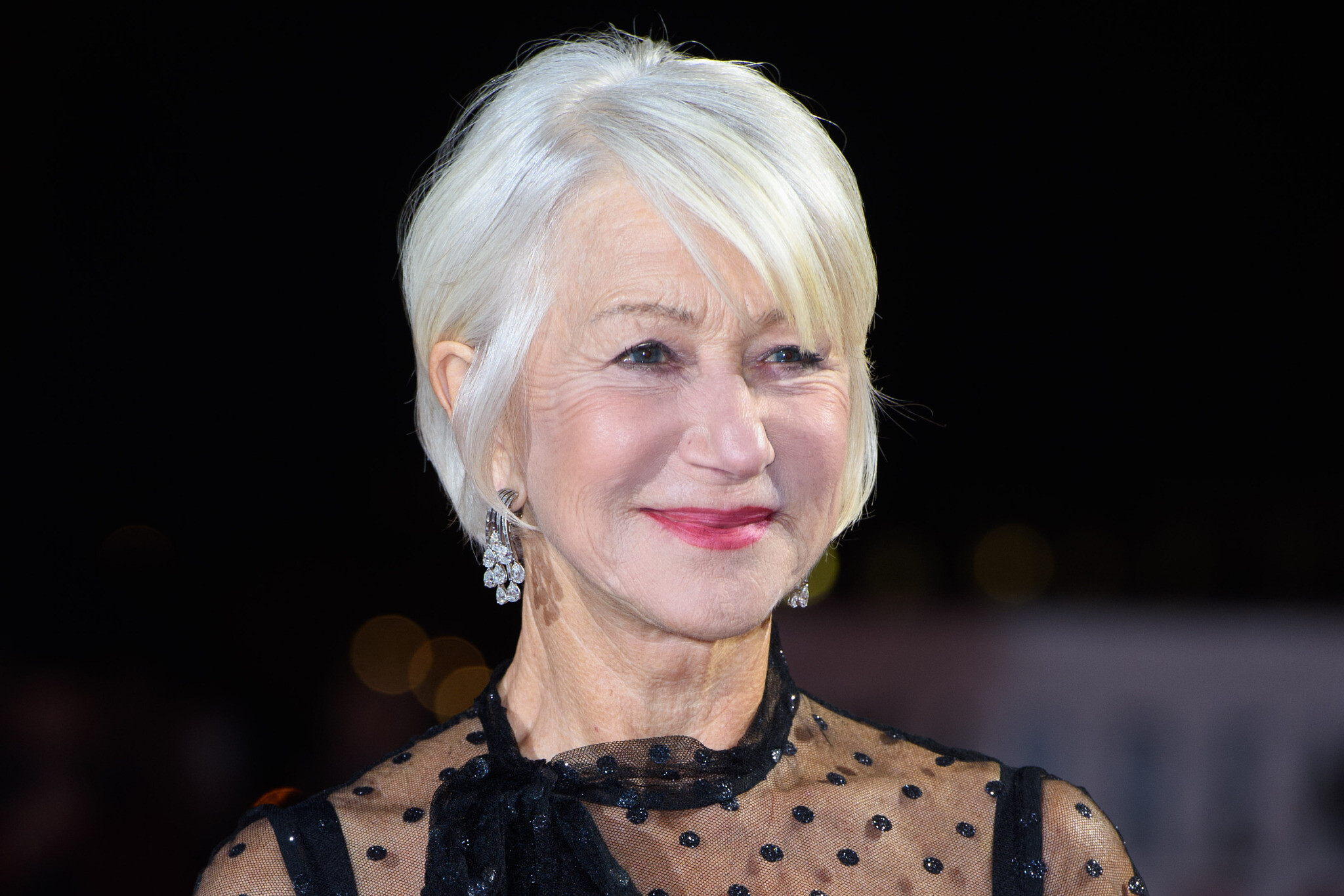
Shabbat Shalom to Helen Mirren, Liev Schreiber and the hundreds of others who chose to stand publicly this week
This does not begin and end with individuals, sometimes, drawing the line becomes a collective act.
This week, more than a thousand figures from across the creative industries came together to support Israel’s inclusion in the Eurovision Song Contest. At a time when pressure to exclude, isolate and delegitimise continues to build, they chose to say something simple but significant.
That Israel belongs.
Again, this is not without cost. Public statements carry risk, they invite backlash, they place names, reputations and careers into a conversation that many would prefer to avoid altogether.
Yet, they chose to be counted. Not because it was necessary for them individually, but because it mattered more broadly. Because allowing the line to shift in one arena makes it easier for it to shift in another. Because silence, particularly from those with a platform, has a way of being interpreted as consent.
Shabbat Shalom to those who signed, and to those who recognise that standing together is often the only way to hold the line in place.
Shabbat Shalom to Rossall School and its headmaster, Andrew McBride
Knowing where the line is, and why it matters, is not something we discover for the first time, it is something we are taught.
This week, Rossall School commissioned a statue and the opening of a Garden of Reflection to honour the Kindertransport children it once welcomed. Jewish children who arrived in Britain alone, separated from their families, carrying little more than the hope that they might find safety.
Many of them did, many of their families did not.
This is not just an act of remembrance, it is an act of education. A statement about what happens when lines are not held, when hatred is allowed to grow unchecked, when society chooses convenience, silence or indifference over clarity.
History does not begin with the worst moments, it begins with smaller ones. With words that go unchallenged, ideas that are allowed to take root, lines that are quietly moved. Until one day, the consequences are impossible to ignore.
What Rossall is now doing goes even further. The school is applying to become a Beacon School for Holocaust Education. To take what they have created physically, in the form of this memorial, and connect it directly to a structured, living educational programme.
That matters because it means this is not just something to be seen, but something to be taught, not just remembered, but understood.
It means inviting other schools into a space where students, particularly those for whom Holocaust education is not yet embedded in the curriculum, can engage with these stories in a way that is accessible, human and real.
The Kindertransport is, in many ways, the beginning of that journey. A way to introduce younger students to the realities of what happened, through stories they can grasp, children not unlike themselves, separated from their families, placed into an uncertain world. From there one can seek to build understanding.
Nothing is more important than educating the next generation. Nothing matters more than ensuring that the lessons of history are not left to chance, or to assumption, but are actively passed on.
Shabbat Shalom to Rossall School, to Andrew McBride, and to those who recognise that remembering the past is not enough, we must teach it, so that future generations know exactly where to stand.
Every week there are people who make a difference. Not always loudly, not always comfortably, but always meaningfully.
This week’s Shabbat Shalom recognises just a few of them. A journalist who refused to follow the industry’s lead. A political figure who spoke out from within. A collective who chose to stand publicly. An institution that chose not just to remember, but to teach.
Different lives, different arenas, the same decision to draw the line.
That is how this story has always been protected. Not by those who allowed boundaries to drift, but by those who understood where they were, why they mattered, and refused to let them move.
That understanding does not happen by accident. It is taught, it is passed on, it is reinforced, generation by generation, until it becomes instinct.
So if someone made a difference this week, by saying no when others said maybe, by speaking when others stayed silent, by holding the line when it would have been easier to let it shift, add their name. Because there are far more people worthy of a Shabbat Shalom than can fit into a single column.
Shabbat Shalom and may we remember that what becomes acceptable is not inevitable. It is decided and the line will only ever stay where it belongs if enough people are willing to hold it there.

Keep community journalism free.
Jewish News is free for everyone. No paywall. No barriers. Just trusted journalism for anyone who wants to stay connected to Jewish life in Britain.
If you value that, please support us.
From as little as £5 a month, you can help keep our journalism free and accessible to all.
Every day, we report on the issues that matter to our community. We celebrate achievements, support charities, challenge antisemitism and ensure Jewish voices are heard more widely.
From as little as £5 a month, you can help us continue to:
- Report on the stories shaping Jewish life in the UK and beyond
- Bring our community together through shared stories, events and campaigns
- Celebrate the people, culture and moments that define our community
- Support organisations doing vital work across Jewish Britain
You can make a one-off donation or become a regular supporter. Every contribution helps keep our journalism free, independent and accessible to all.
If everyone who values Jewish News gave a small amount, it would make a real difference to our future.