Prefer Jewish News on Google

Shavuot has a branding problem
Shavuot is an opportunity to focus on our own Jewish identities, yet only four in ten British Jews celebrated it in 2025.
Passover has matzah, the seder and the four questions. Chanukah has candles, gifts and fried food. Purim has costumes, noise and an annual licence for children and adults to behave differently. Even Sukkot has built-in visual appeal: temporary huts, distinctive ritual objects, and practices that are hard to ignore within the Jewish public sphere.
And then there is Shavuot.
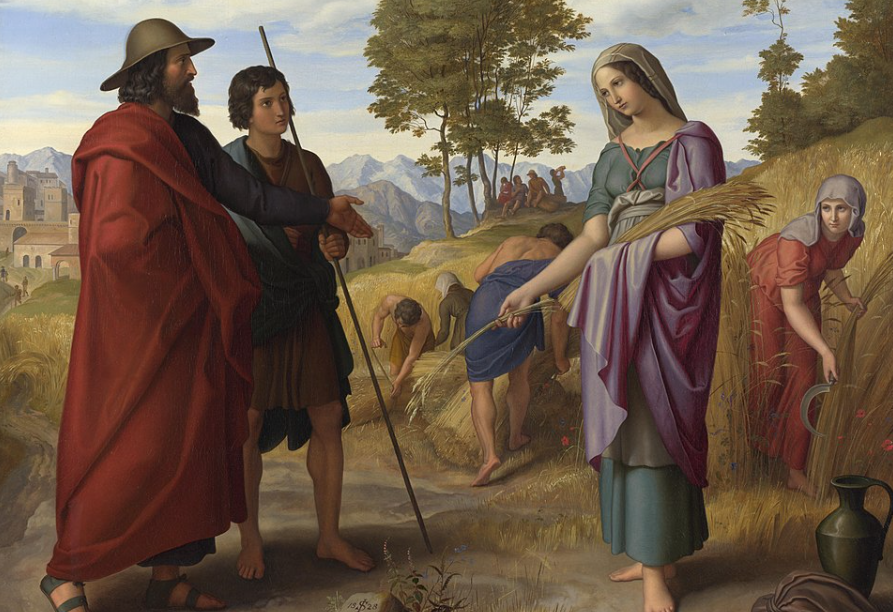
Shavuot – the Feast of Weeks – commemorates one of the most foundational moments in Jewish history: the giving of the Torah at Mount Sinai. It marks the point at which a people becomes a community defined by shared obligations. Yet its most distinctive contemporary practice is arguably also its least accessible: staying up all night to study religious texts.
No shared meal structure. No central ritual script. No visual marker that immediately signals participation. Instead… learning.
Patterns of observance suggest this difference matters. New JPR data show that just 42% of British Jews say they celebrated Shavuot in some way last year. That places it below several other Jewish rituals and festivals: 89% participated in lighting Chanukah candles at least once, 84% attended a Passover Seder, 74% observed Rosh Hashanah rituals at home, and around half celebrated Sukkot (50%) or Purim (49%).



This creates an interesting paradox. Large majorities of British Jews continue to engage in Jewish ritual life and report that Jewish identity matters to them. But forsm of engagement that are experiential, visual and family-oriented tend to attract considerably broader participation than those centred on sustained intellectual activity.
One possible explanation is that Shavuot asks for a different type of participation.
Passover invites engagement through family ritual. Chanukah through warmth and familiarity. Purim through theatre and partying. Shavuot, by contrast, centres on study. It asks people to engage with texts, ideas and traditions that require time, attention and prior knowledge. It is less easily adapted to informal or domestic settings, and less immediately accessible to those on the periphery of Jewish learning.
This does not make it less significant. But it may help explain why its reach is narrower.
More broadly, the pattern reflects a wider feature of contemporary Jewish life. Practices that are social, sensory and easy to integrate into everyday routines tend to travel further than those that require sustained intellectual investment or higher thresholds of participation. This does not diminish the importance of study; it highlights the conditions under which different forms of engagement are more or less likely to take hold.
Shavuot is distinctive because it foregrounds obligation, learning and interpretation. It invites participants not simply to remember or symbolise Jewish identity, but to work with it – to engage actively with inherited texts and ideas. In doing so, it reflects a conception of Jewishness rooted in responsibility rather than expression alone.
That emphasis feels particularly relevant at a time when Jewish identity is being shaped by a range of external and internal pressures – from antisemitism and political polarisation to ongoing debates about belonging, meaning and moral responsibility. In that context, Shavuot’s focus on study and reflection offers a different register of engagement: slower, more demanding, and less immediately visible.
Its relatively low levels of participation may therefore reflect not only a ‘branding problem,’ but a deeper mismatch between the kind of engagement it requires and the patterns of Jewish life that currently prevail.
Whether that should concern us is an open question. It may simply indicate that Jews today prioritise forms of ritual and identity that are easier to integrate into family life and contemporary cultural rhythms. But it may also point to a missed opportunity.
In a highly fragmented, fast-moving environment – one shaped by constant information flows, competing narratives, and pressure on attention – a festival centred on sustained learning, reflection and interpretation may be more relevant than its participation rates suggest.
Shavuot may not appeal to everyone. But the questions it raises about obligation, identity and engagement remain central to Jewish life, whether or not we stay awake to confront them.
Omri Gal Kornblum is Director of Communications at JPR

Keep community journalism free.
Jewish News is free for everyone. No paywall. No barriers. Just trusted journalism for anyone who wants to stay connected to Jewish life in Britain.
If you value that, please support us.
From as little as £5 a month, you can help keep our journalism free and accessible to all.
Every day, we report on the issues that matter to our community. We celebrate achievements, support charities, challenge antisemitism and ensure Jewish voices are heard more widely.
From as little as £5 a month, you can help us continue to:
- Report on the stories shaping Jewish life in the UK and beyond
- Bring our community together through shared stories, events and campaigns
- Celebrate the people, culture and moments that define our community
- Support organisations doing vital work across Jewish Britain
You can make a one-off donation or become a regular supporter. Every contribution helps keep our journalism free, independent and accessible to all.
If everyone who values Jewish News gave a small amount, it would make a real difference to our future.