Should we only be staging work that shows Jewish people in a good light?
Disturbing premise of play Steinberg vs Steinberg has provoked debate among Jewish creatives
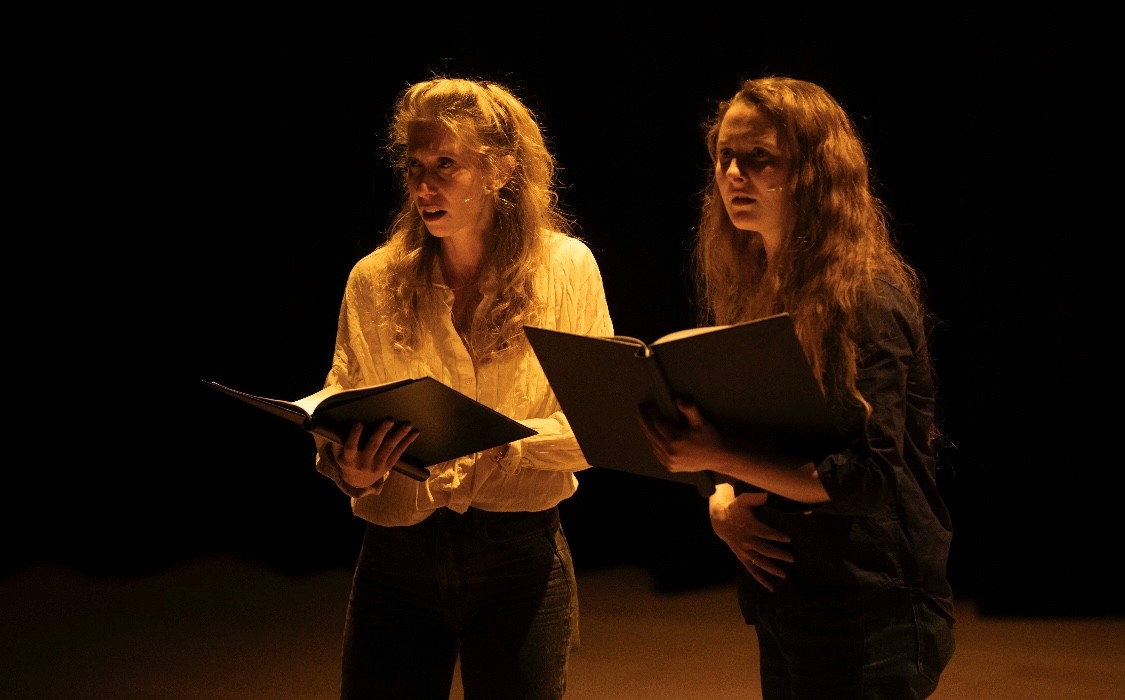
A powerful, controversial new play staged recently at JW3 has provoked much debate in the Jewish community. The premise of Steinberg v Steinberg, based on a true story, is a mock trial by two sisters of their mother, who did not take action when their father sexually abused them. Could her complicity be excused because both parents were Holocaust survivors?
Beautifully written, impeccably researched and performed by two talented actors, it references the 1960s when there were no laws in the USA protecting children from sexual abuse. Had the mother gone to the police, they would have said that no crime was being committed. But is now, when the community is receiving so much bad press, the time when this play should be aired?
“Yes,” says the playwright, Annelise Bianchini, who also stars in the show. She based Steinberg v Steinberg on her own mother’s story. “To only stage work that shows Jewish people in a good light is to bypass the shadow side of the human condition. What would this achieve? Are we trying to trick people? Our art cannot be oriented in relation to antisemites. Why should we let their racism and bias stop us from creating art that boldly delves into our complexities, flaws and unresolved traumas? After the rehearsed readings of my play, both Jews and non-Jews told me that they had experienced something similar to what happens in the story, and how much the reading meant to them and affected them. We go to the theatre to see something real, to be moved, to be challenged, and to be changed. We are just as human as the rest.”
Theatre creative Estee Stimler says: “I’m the daughter of a Holocaust survivor. I am also a theatre-maker and an advocate for Jewish stories, stories that celebrate, illuminate, and humanise who we are. In recent months, I’ve found myself increasingly at odds with a troubling trend in Jewish theatre: plays that reduce Jewish characters to symbols of trauma, dysfunction or cruelty. Works that risk reinforcing the very stereotypes and suspicions that fuel the world’s oldest hatred.
“Jewish creatives are vilified online. I have received death threats for speaking out. In this climate, storytelling is not neutral. Theatre doesn’t live in a vacuum; it lands in a culture already primed to misread, distort, and weaponise the stories we tell about ourselves. What is the cost of putting yet another ‘difficult’ Jewish character on stage? When a Jewish character is lovable, laughable, flawed but forgivable, we invite non-Jews to connect with us. That’s how theatre becomes a bridge, not a bludgeon. Tell Jewish stories. But tell them wisely.”



Playwright Julia Pascal says: “Sholem Asch’s early 20th century drama God of Vengeance told the story of a rabbi who kept a brothel in his basement. It has inspired many Jewish writers. I presented a scene from it in The Yiddish Queen Lear. We must always call out hypocrisy and lies within our own community. It is a Jewish tradition.”
But Maureen Lipman says: “It’s a precarious time for Jewish people everywhere and this play should probably have been put on hold.”
Last year theatre producer and actor Rachel Gaffin created Joyfully Jewish, producing new plays that are all about the joys of being Jewish and sharing them with Jewish and non-Jewish audiences alike. “There are obviously good and bad people in every culture, race and religion, so for me it’s OK to draw evil characters who happen to be Jewish, but it very much depends on the context,” she says. “A play featuring a whole cast of non-Jewish ‘good’ characters with one ‘baddie’ who happens to be Jewish would, understandably, be seen as antisemitic. But when you have a play with several Jewish characters, written by a Jewish writer, that’s going to attract a mainly Jewish audience, I think it’s legitimate to portray a complex character with questionable behaviour who is Jewish.”
Rachel Borchard Lewis, a theatre producer and trustee of Shoresh Charitable Trust whose work includes supporting Jewish arts in the UK says: “My role isn’t to protect audiences from uncomfortable truths, but to ensure that a production has purpose and integrity.”
Alastair Falk, founder of Tsitsit, the Jewish Fringe Festival says that art should challenge and make us question as much as it makes us laugh and feel good, while actress Sue Kelvin says it is the job of drama to examine humanity in all its contradictory facets.
“Since when have Jews feared the truth?” says writer, actor, director and academic Jack Klaff. “Isn’t the Jewish tradition built on the courage to ask the toughest questions? Theatre is a place for laughter, yes, but also to confront uncomfortable realities, to provoke thought, discussion, transformation and the betterment of human beings. Jews are called the People of the Argument because they search for truth.
Natan Paul Collis, founder of The Jewish Drama Association of London (JDAL) says a performance can show us in a negative light if it is “only staged between us but I cannot see the point of presenting us in a bad light to the external world”.
The last word goes to William Galinsky, director of programming and impact at JW3 where the play was staged. “Each year, more than 6,000 people come to our panto, an unashamedly vibrant, joyfully Jewish expression of our culture. But we would be doing a disservice to our community if we did not also give space for more difficult stories, told with honesty and integrity.”

Keep community journalism free.
Jewish News is free for everyone. No paywall. No barriers. Just trusted journalism for anyone who wants to stay connected to Jewish life in Britain.
If you value that, please support us.
From as little as £5 a month, you can help keep our journalism free and accessible to all.
Every day, we report on the issues that matter to our community. We celebrate achievements, support charities, challenge antisemitism and ensure Jewish voices are heard more widely.
From as little as £5 a month, you can help us continue to:
- Report on the stories shaping Jewish life in the UK and beyond
- Bring our community together through shared stories, events and campaigns
- Celebrate the people, culture and moments that define our community
- Support organisations doing vital work across Jewish Britain
You can make a one-off donation or become a regular supporter. Every contribution helps keep our journalism free, independent and accessible to all.
If everyone who values Jewish News gave a small amount, it would make a real difference to our future.