Prefer Jewish News on Google

Sinai, solidarity and conscience
The dual inheritance of solidarity and conscience has long sat at the heart of Jewish identity. But right now, it is creating tensions that feel particularly acute.
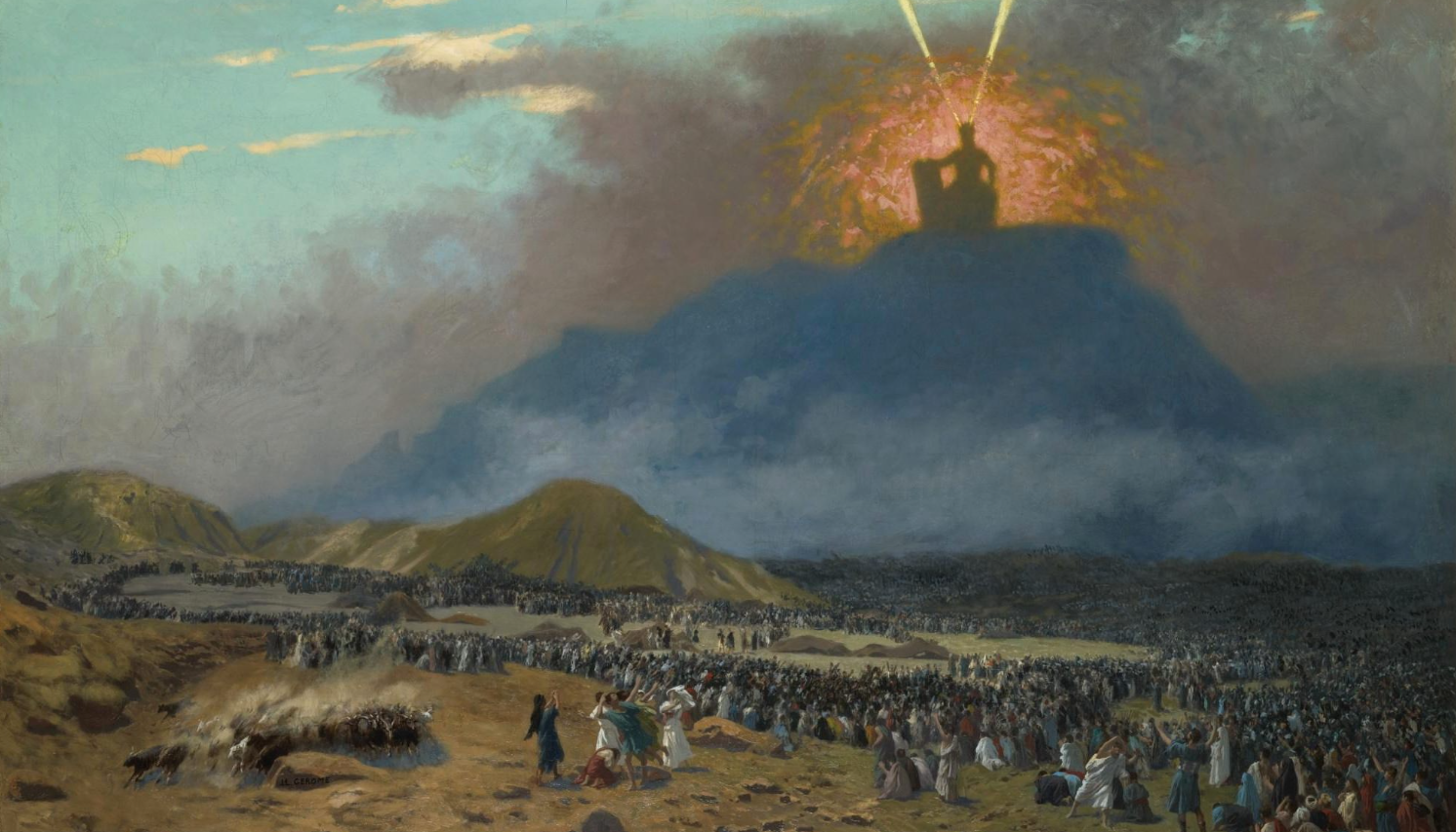
Shavuot marks the moment of revelation. But it also marks something else: the moment the Jewish People came into being as a collective.
At Sinai, a group of former slaves became a people. That moment resonates powerfully today, in a context of anxiety, division and strain that is driving a sense of solidarity. JPR data shows clearly that many Jews feel a powerful need to stand together, to affirm a sense of shared fate in a world that feels more hostile and uncertain. That instinct is both understandable and necessary. Peoplehood offers reassurance; it reminds us that no Jew stands alone.
Yet Sinai did not give us solidarity alone. It also gave us a conscience. The covenant it represents was not only about belonging; it was also about moral obligation. It was not just about standing together; it was also about how to stand.
That dual inheritance – solidarity and conscience – has long sat at the heart of Jewish identity. But right now, it is creating tensions between us, perhaps even within us, that feel particularly acute.
On the one hand, JPR research shows just how widely that moral dimension is shared. In our National Jewish Identity Survey, 94% of British Jews said that moral and ethical behaviour is an important part of what being Jewish means to them. Across all the sharp differences that exist in terms of Jewish belief, practice and politics, that commitment stands out. Irrespective of how Jews define their identity – from the staunchly orthodox to the vehemently secular – almost all recognise that being Jewish carries with it a moral imperative.



Yet the challenge is that we do not agree on what that imperative requires. That has long been the case – Judaism is built on argument about how values should be lived, not on unanimity. But the current moment has raised the stakes. For some, the instinct is solidarity: to defend, to protect, to hold the line. For others, it is conscience: to question, to probe, to ensure that Jewish action remains aligned with Jewish values.
The temptation – and often the reality – is to treat these as opposing positions. But Sinai suggests something more demanding. It insists that we carry both, and it shows how easily each falters when left on its own. Solidarity without conscience risks becoming morally uncritical; conscience without solidarity risks increased vulnerability to danger. The challenge of Jewishness has never been to choose between them, but to hold them together.
That is far from easy under pressure. Conflict and fear intensify both instincts while pulling them apart. The tensions and anxieties many Jews live with today tend to reward certainty, reduce patience, and make disagreement harder to sustain. In that context, listening — both to Jewish tradition and to one another — becomes more difficult.
Yet listening is precisely what Sinai demands. It insists that belonging should be matched by ethical responsibility, that collective strength should be accompanied by restraint, and that fear cannot be allowed to do all our ethical work. It rejects the profoundly seductive idea today that suffering, threat or power place a people beyond judgement.
They do not. The covenant at Sinai does not tell Jews that because we have suffered, whatever we do is justified. It tells us that even in danger, even in conflict, even under pressure, we remain answerable.
That is not always easy to hear because it cuts against instinct. When we feel under pressure, we close ranks, defend, justify. That is human. But Shavuot comes to remind us that Jewish identity has never rested on emotional instinct or defensiveness alone. It stresses the moral covenant that binds us, and asks whether we can still accept a Judaism that judges us, as well as one that protects us.
The tension many Jews feel today – between solidarity with Israel and the Jewish People, and the obligation to act morally towards others – is not easily resolved. Yet Sinai insists that we face it – honestly, seriously, and without turning away.
And perhaps, in doing so – in grappling together with what our moral inheritance demands of us – we strengthen, rather than weaken, our sense of the collective. We know that sense of shared belonging matters; it is central to Jewish life across our differences. The question is whether we can place this kind of moral conversation at the heart of our communal life – not despite the strain it creates, but because of what it might ultimately help to sustain.
Dr Jonathan Boyd is the executive director of the Institute for Jewish Policy Research (JPR)

Keep community journalism free.
Jewish News is free for everyone. No paywall. No barriers. Just trusted journalism for anyone who wants to stay connected to Jewish life in Britain.
If you value that, please support us.
From as little as £5 a month, you can help keep our journalism free and accessible to all.
Every day, we report on the issues that matter to our community. We celebrate achievements, support charities, challenge antisemitism and ensure Jewish voices are heard more widely.
From as little as £5 a month, you can help us continue to:
- Report on the stories shaping Jewish life in the UK and beyond
- Bring our community together through shared stories, events and campaigns
- Celebrate the people, culture and moments that define our community
- Support organisations doing vital work across Jewish Britain
You can make a one-off donation or become a regular supporter. Every contribution helps keep our journalism free, independent and accessible to all.
If everyone who values Jewish News gave a small amount, it would make a real difference to our future.