Prefer Jewish News on Google
Six Day War victory marked day Palestinians had to ‘fend for themselves’
Experts at the BICOM-RUSI conference claim 1967 War marked the day Palestinians knew they had to 'fend for themselves'
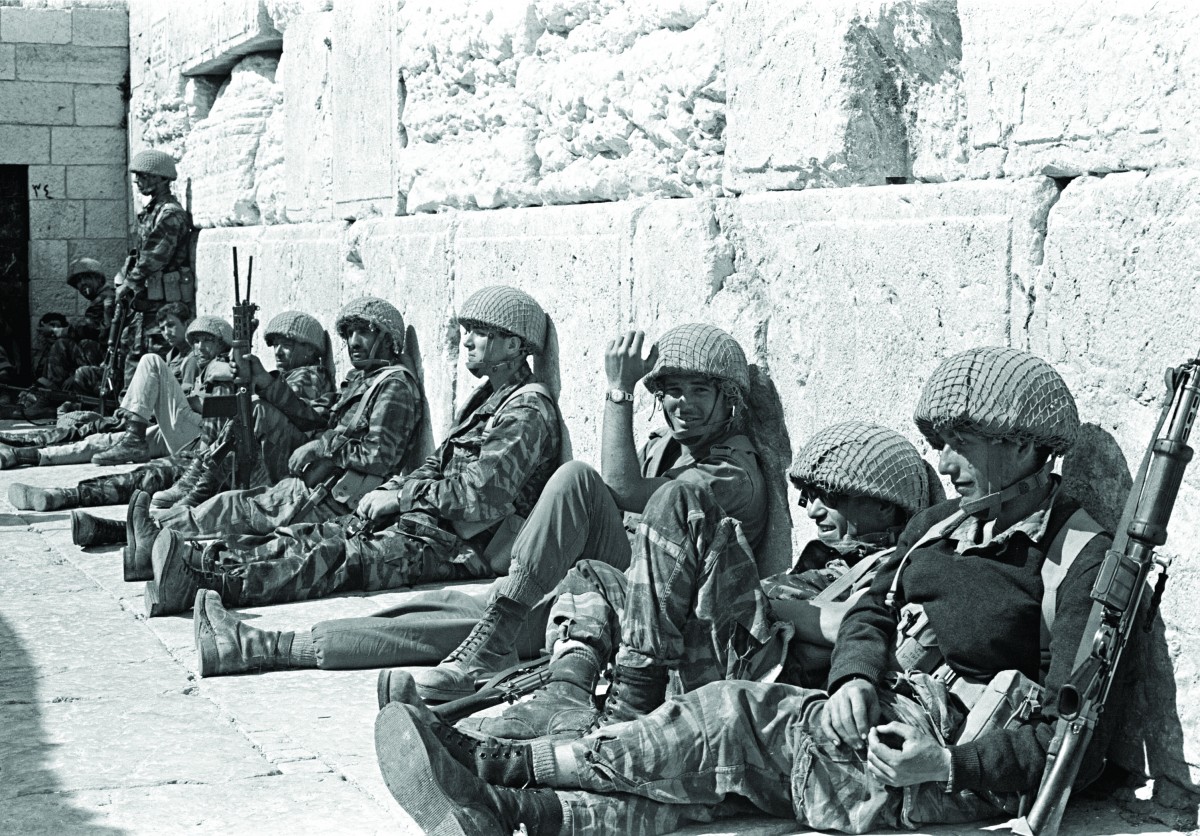
International experts have said the Six Day War between Arab states and Israel was a “watershed” moment in the Middle East, as it marked the day the Palestinians knew they had to “fend for themselves”.
Professor Asher Susser of Tel Aviv University told a conference in London that Israel’s rapid defeat of Egyptian, Jordanian and Syrian armies “ended Arab dreams of their place in the sun”.
The 50-year anniversary conference, organised by UK-Israel think tank BICOM and the Royal United Services Institute (RUSI), heard Susser say the victory exposed pan-Arabism as “an empty vessel”, leading Arab states to pursue their own interests.
“No one in the Middle East more than the Palestinians believed that [Egyptian leader] Col Abdel Nasser’s formula – Arab unity, Arab socialism, and an alliance with the Soviet Union – would deliver Palestine. In six days, shockingly, humiliatingly, unbelievably, it all came to nothing,” he said, but the void left by pan-Arabism’s defeat led to two contradictory trends in the Middle East that are still seen today.
On the one hand, Susser said, there was “the clear-cut pursuit of state interests” while on the other it led to Islamism. “Arab nationalism was designed to paper over sectarianism,” he said. “Islamism exacerbates it.”
Egypt’s decision to withdraw from the conflict meant the Arab states had no military option, he said, which meant the Palestinians knew they “had to fend for themselves… they knew the Arabs were not going to save them”.
Yet, Susser said, humiliation of the Arab armies also laid bare for the first time the Arab social and economic crisis that again became evident in violent revolution during the “expression of despair” of the Arab Spring.
The rise of sectarianism in Arab states since 1967 had “led to challenges we haven’t seen for a century,” said Susser, with Middle East countries “on the verge” or already disintegrated.
Israel’s relative success, he argued, meant it was “despised and resented” more than ever.
BICOM’s James Sorene said: “We were delighted to partner with RUSI to put on an event that explored the complex legacy of the war and brought fresh analysis and discussion to a high-profile audience in Whitehall.”

Keep community journalism free.
Jewish News is free for everyone. No paywall. No barriers. Just trusted journalism for anyone who wants to stay connected to Jewish life in Britain.
If you value that, please support us.
From as little as £5 a month, you can help keep our journalism free and accessible to all.
Every day, we report on the issues that matter to our community. We celebrate achievements, support charities, challenge antisemitism and ensure Jewish voices are heard more widely.
From as little as £5 a month, you can help us continue to:
- Report on the stories shaping Jewish life in the UK and beyond
- Bring our community together through shared stories, events and campaigns
- Celebrate the people, culture and moments that define our community
- Support organisations doing vital work across Jewish Britain
You can make a one-off donation or become a regular supporter. Every contribution helps keep our journalism free, independent and accessible to all.
If everyone who values Jewish News gave a small amount, it would make a real difference to our future.