Prefer Jewish News on Google
‘Smartness is only one of the assets you need to succeed’ says Jonathan Goldstein
The co-founder of Cain and director of Chelsea reflects on leadership, Sir Gerald Ronson, doing business in the Gulf and the Jewish values that have guided his career
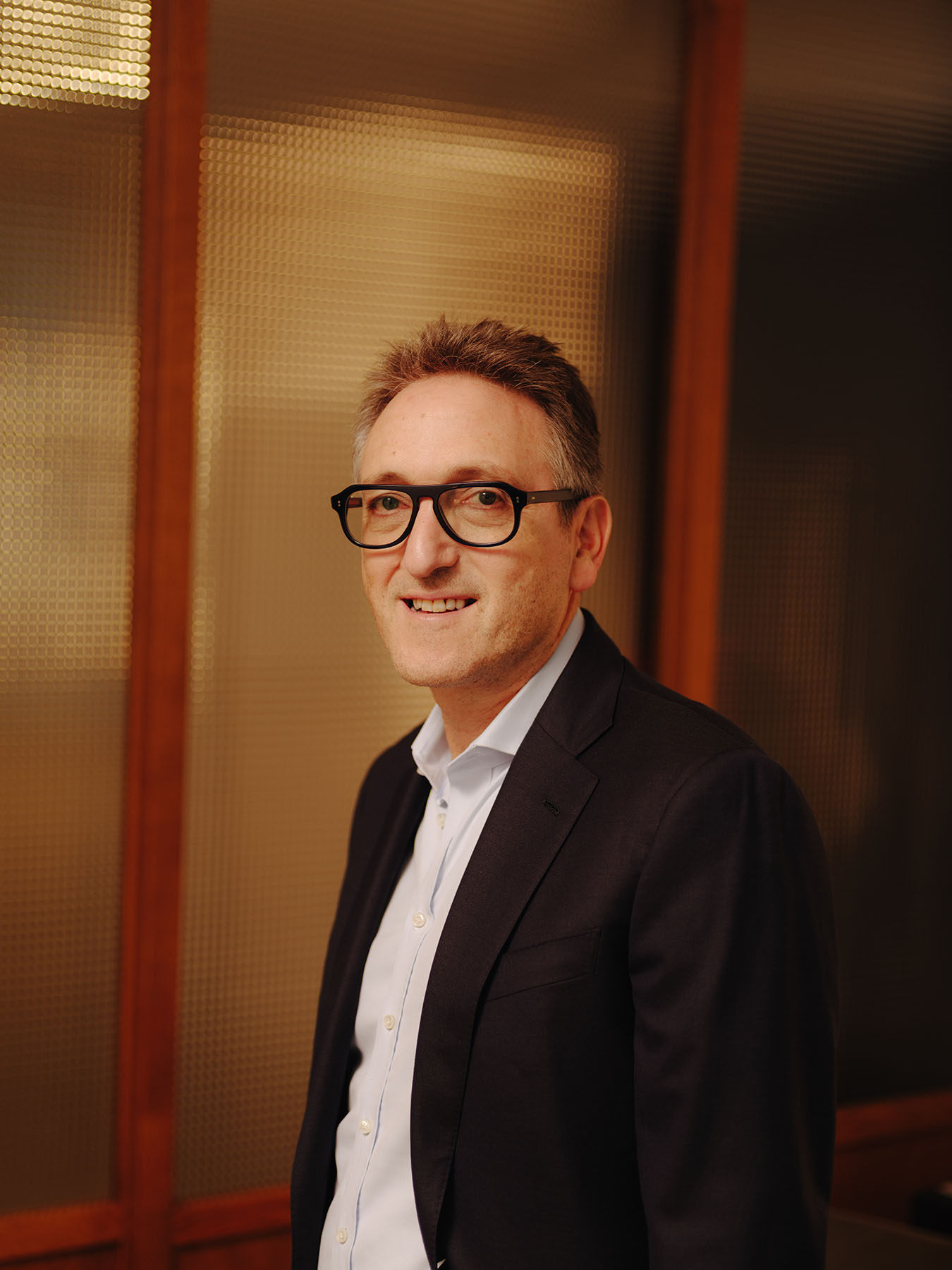
Many will know Jonathan Goldstein as the successful businessman behind Cain, the global investment firm with more than $14 billion of assets under management. Others know him as the former chair of the Jewish Leadership Council and one of British Jewry’s most influential communal figures. Football fans may be more familiar with Goldstein as a director of Chelsea. But despite a career that has taken him from the City to global real estate, hospitality and sport, Goldstein says one Jewish principle has guided him throughout.
“I’ve always tried to remember to treat people the way I would want to be treated,” he tells Jewish News. It is a philosophy Goldstein traces back to his schooldays and his favourite novel, To Kill a Mockingbird. He still recalls the lesson at the heart of the book: “you cannot truly understand another person until you have walked in their shoes”.
Only later did he realise how closely that lesson aligned with the teachings of Pirkei Avot (Ethics of the Fathers), the collection of Jewish ethical teachings that has guided generations of Jewish life.
The idea of trying to understand another person’s perspective – of metaphorically walking a mile in their shoes before passing judgement – sits at the heart of Goldstein’s approach to business, leadership and philanthropy.
Looking back on a career that has led him to work with some of the world’s most successful business figures, Goldstein argues that intelligence alone is rarely what separates exceptional leaders from the rest. “Smartness is only one of the assets you need to succeed,” he says.
“You need the ability to create relationships, get on with people and for people to trust you.” Whether discussing his business partner and Cain co-founder Todd Boehly, financier and philanthropist Michael Milken, former Goldman Sachs chief executive Lloyd Blankfein or his long-time mentor Sir Gerald Ronson, Goldstein repeatedly returns to the same theme: “the most successful leaders combine intellect with humanity.
“The ones that stand out are those who marry the insightful intelligence that a business person needs with a humanity, an empathy and an ability to create relationships.”
Few people have put those principles into practice more successfully.

After becoming one of the youngest managing partners of a City law firm (Olswang), Goldstein moved into property and finance, serving in senior roles at Sir Gerald Ronson’s Heron International and Guggenheim Partners before co-founding Cain in 2014. Today Cain manages more than $14 billion in assets across real estate, sport entertainment and hospitality, including the landmark One Beverly Hills – featuring Aman Beverly Hills and The Beverly Hilton, Delano Miami Beach and Miami’s 830 Brickell tower, one of the city’s most successful office developments.
Goldstein says he left law not because he stopped enjoying it, but because he wanted to see whether he could “cut it in the Premier League” of business.
He spent seven years working at Heron with Sir Gerald Ronson, who he affectionately calls a mentor and close friend. He serves as a trustee of the Gail & Gerald Ronson Foundation.
“The biggest thing I learned from Gerald was the art of discipline.
“If Gerald saw a brick wall in front of him, he wouldn’t go round it. He’d go through it. He would just keep pushing until the wall fell down.”

If business became Goldstein’s “Premier League”, football now forms part of his professional life too.
He became a director of Chelsea Football Club in 2022, as part of the Todd Boehly and Clearlake Capital consortium. Boehly’s Eldridge Industries is also a strategic partner in Cain.
Goldstein admits the role has required some adjustment for someone who grew up supporting Tottenham Hotspur.
“Of course I want Chelsea to do well… that doesn’t mean that I wanted Spurs to be relegated. You can hold two thoughts in your head at the same time.
Alongside his business career, Goldstein has spent decades at the heart of British Jewish communal life. A former chair of the Jewish Leadership Council, he has also chaired PaJeS, served as vice-chair of Jewish Care and remains actively involved with a number of communal and charitable organisations, including Seed, Hatzola and Camp Simcha, where he is an honorary president.
Today, he jokes that he has become a “minister without portfolio” – no longer leading major organisations but still deeply engaged in the issues facing the community.
He believes British Jewry would benefit from a more coordinated public voice. Reflecting on the Jewish community’s response to antisemitism in the Labour Party during Jeremy Corbyn’s leadership, Goldstein says one of its strengths was the ability of different organisations to unite behind a common message.
“We didn’t try to merge organisations,” he says. “But we did try to merge messages.”
That sense of responsibility has only deepened since October 7. Goldstein and his wife Sharon were in Israel on the day of the Hamas attacks, an experience he says brought home the profound impact the events would have on Jewish communities around the world.
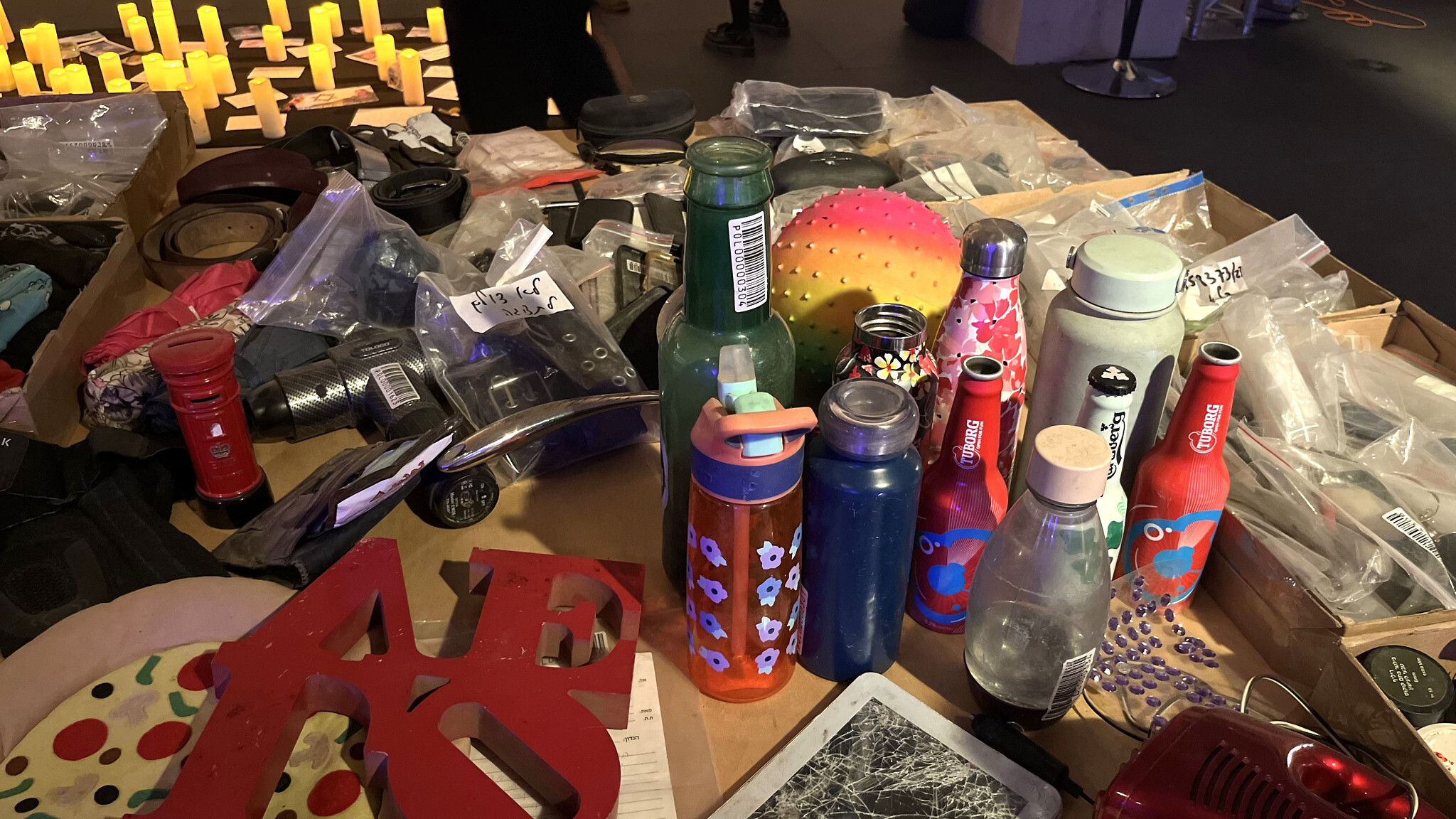
Goldstein was instrumental in bringing the Nova Music Festival exhibition to London – it is based in one of Cain’s properties. The exhibition, which tells the stories of those affected by the October 7 attacks, has become of the most powerful public memorials to the victims outside Israel.
He says the project reflected a broader responsibility to help explain what the Jewish community has experienced since October 7.
“We have an obligation,” he says. “We’ve been very blessed to grow up in a country which has welcomed us.”
“One of the things we can help influence is the narrative in our own country. We need to explain what the community is going through.”
Through Cain’s growing presence in the Gulf, including an office in Abu Dhabi, Goldstein spends significant time in the UAE and Saudi Arabia and speaks enthusiastically about the relationships he has built across the region.
“I enjoy doing business there. I enjoy the people,” he says. “The UAE is an amazing place.”
Goldstein says he openly discusses Jewish issues and the Middle East with those he meets.
“The vast majority of people in this world want peace. They want settled lives.
“The only way you overcome conflict is through conversations, through talking to people, through hearing their issues.”
One of his most memorable experiences was spending Shabbat at Abu Dhabi’s Abrahamic Family House, home to a synagogue, mosque and church.
“It’s the most uplifting experience to sing Lecha Dodi in the middle of Abu Dhabi and know you’re being welcomed into that environment.”
The Abraham Accords, he believes, are proof that progress is possible when people are prepared to listen to one another.
Goldstein and his wife Sharon have four children and one grandchild. One of his daughters now works alongside him at Cain.
He says suggestions that the community is struggling to produce the next generation of future leaders and philanthropists are misplaced.
“I heard it said about my generation and I’ve heard it said about the generations after me,” he says.
I remember the late Chief Rabbi Lord Sacks said: “communities do not suffer from a lack of leaders, but a lack of followers…”
“I don’t worry about the next generation.”
As for his own future, there are no plans to “hang up his boots” any time soon. “I still feel like I’ve got more to give and more to achieve.”
What would he like his legacy to be? “I’ve never been interested in scores on a scorecard.
“I’m much more interested in the reputation, the life that you lead and what people think about you. That’s the legacy that I’d like to leave behind. Someone who people respected and regarded, and who knew how to treat people well.”

Keep community journalism free.
Jewish News is free for everyone. No paywall. No barriers. Just trusted journalism for anyone who wants to stay connected to Jewish life in Britain.
If you value that, please support us.
From as little as £5 a month, you can help keep our journalism free and accessible to all.
Every day, we report on the issues that matter to our community. We celebrate achievements, support charities, challenge antisemitism and ensure Jewish voices are heard more widely.
From as little as £5 a month, you can help us continue to:
- Report on the stories shaping Jewish life in the UK and beyond
- Bring our community together through shared stories, events and campaigns
- Celebrate the people, culture and moments that define our community
- Support organisations doing vital work across Jewish Britain
You can make a one-off donation or become a regular supporter. Every contribution helps keep our journalism free, independent and accessible to all.
If everyone who values Jewish News gave a small amount, it would make a real difference to our future.