
 Prefer Jewish News on Google

South Asian community leaders show solidarity with Jewish Care visit
Representatives from India and Singapore send a clear message of support following Hatzola arson attacks in Golders Green
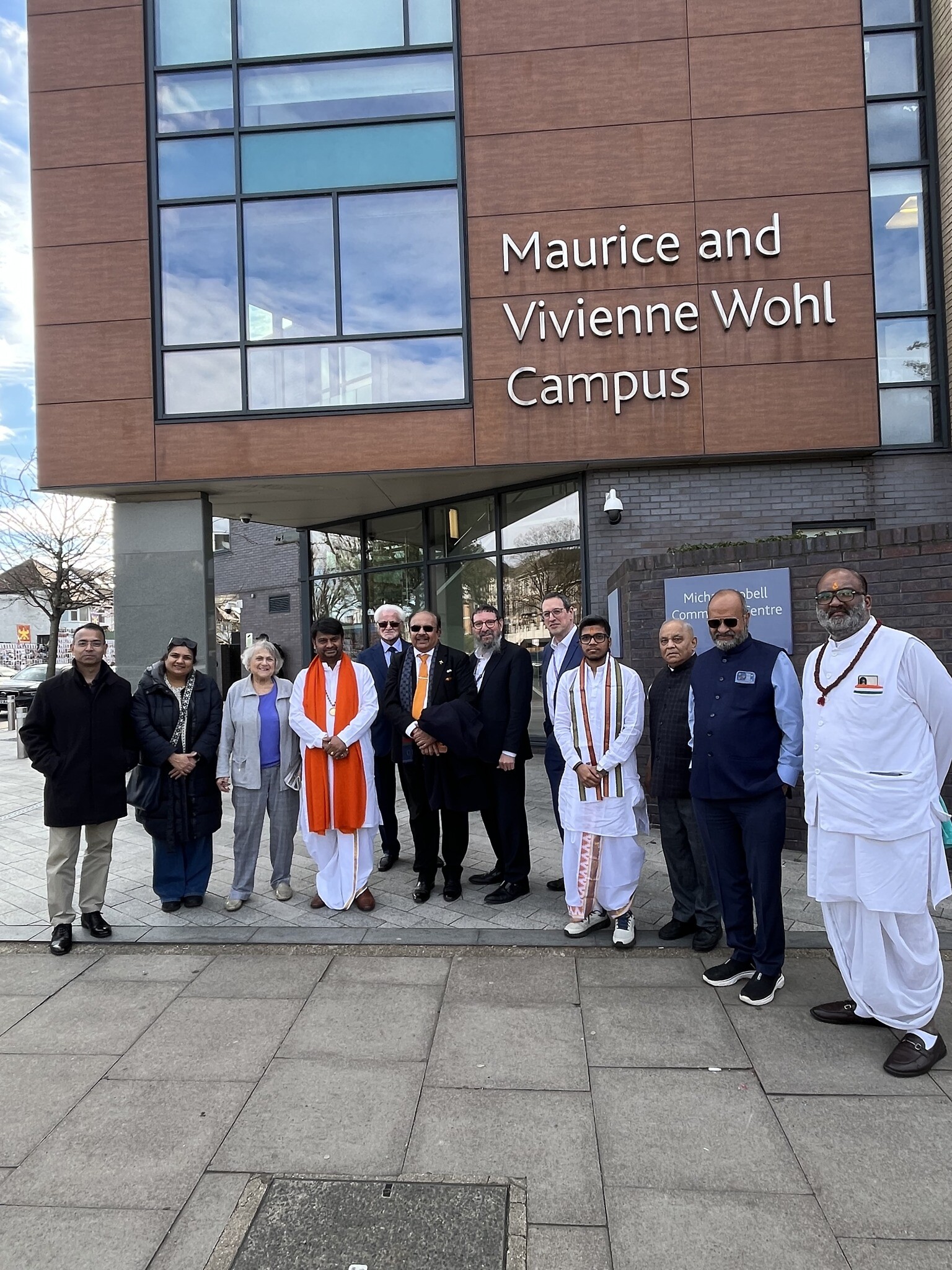
A group of community leaders from South Asian community organisations visited Jewish Care at the Maurice and Vivienne Wohl Campus on Thursday 27 March, with the intention of showing solidarity with the Jewish community following the arson attack on Hatzola ambulances in Golders Green.
The group included leaders of the Singapore South Asia chamber of commerce and industry, the Global Indian Organisation, the National Council of Gujarati Organisations, the Rajasthan Foundation, Inspiring Indian Women – East London community, the Sangat community centre and Harrow temple.
The representatives met with Jewish Care chief executive Daniel Carmel-Brown and Rabbi Junik, Jewish Care’s spiritual and pastoral lead, as well as Michael Sobell Jewish Community Centre members and Miriam Freedman, member of Jewish Care’s Holocaust Survivor’s Centre, who was a hidden child during the Shoah.
Carmel-Brown called the visit “truly special”, welcoming “their solidarity with our work at Jewish Care and with the wider Jewish community” especially “at a time when we are facing rising antisemitism. Unity and compassion matter more than ever and standing together to support one another across communities is a source of strength for us all.”
Mr. Mahendra Sinh Jadeja, chairman of the South Asia chamber of commerce and industry, said: “It is our collective responsibility to stand with the Jewish community and reaffirm our shared values of peace, respect, and harmony.
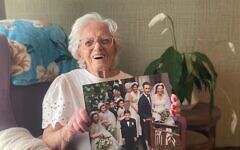

“At this time, we wish to strengthen our inter-community bonds and be reminded that hatred and division have no place in our society. Meeting so many members was a memorable experience, especially Ruby Cohen, the remarkable lady from Calcutta who is over 100 years old—her charm, spirit, and joy for life were truly inspiring and a testament to the exceptional care she receives.”
Mahendra, who led the visit, is a descendant of Jam Sahib Digvijaysinhji, the Maharaja of Nawanagar. During the Second World War, following the 1941 Sikorski-Mayski agreement between the Soviet Union and Poland, many women and children – many of whom Catholic and Jewish orphans – were released from the Gulag and Soviet camps.
While many nations refused to offer them refuge, ‘the Good Maharajah’, as he became known, welcomed them to his personal estate at Balachadi, India. They came to know him as “Bapu” – father. At the end of the World War II, only those children who wished to return to Poland were required to go back. Eighty-one children were relocated to the United States to build new lives there with the help of Catholic missionaries, while 12 Jewish children from the group left for Haifa.

Keep community journalism free.
Jewish News is free for everyone. No paywall. No barriers. Just trusted journalism for anyone who wants to stay connected to Jewish life in Britain.
If you value that, please support us.
From as little as £5 a month, you can help keep our journalism free and accessible to all.
Every day, we report on the issues that matter to our community. We celebrate achievements, support charities, challenge antisemitism and ensure Jewish voices are heard more widely.
From as little as £5 a month, you can help us continue to:
- Report on the stories shaping Jewish life in the UK and beyond
- Bring our community together through shared stories, events and campaigns
- Celebrate the people, culture and moments that define our community
- Support organisations doing vital work across Jewish Britain
You can make a one-off donation or become a regular supporter. Every contribution helps keep our journalism free, independent and accessible to all.
If everyone who values Jewish News gave a small amount, it would make a real difference to our future.





















