Prefer Jewish News on Google
SPECIAL REPORT: Is the Qur’an really anti-Jewish? Scholars say read it again
Muslims and Jews fill the Aga Khan Centre for a rare public reckoning with Islamic scripture – and a call to rethink everything we thought we knew
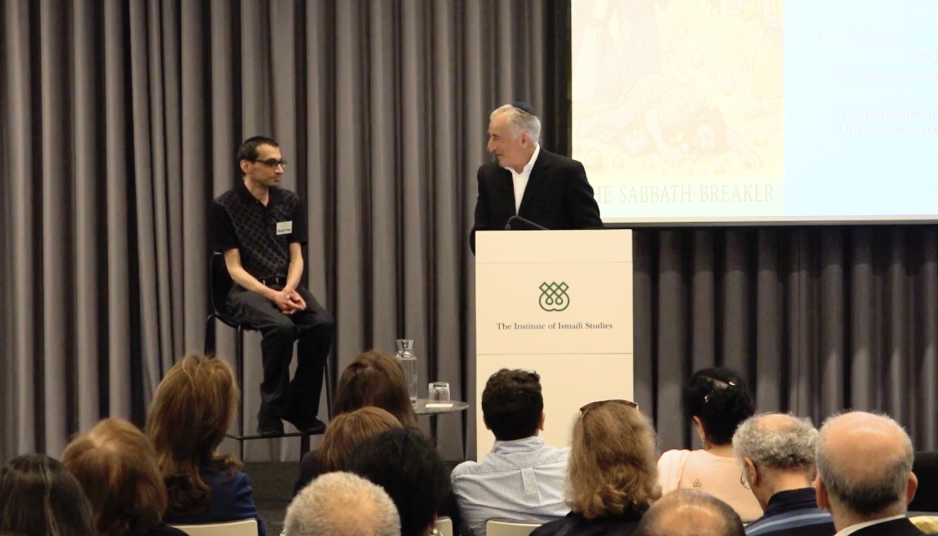
More than 100 Jews and Muslims gathered at the Aga Khan Centre in King’s Cross for a highly unusual event – a full-length public discussion interrogating what the Qur’an actually says about Jews, Judaism and the Bible.
The lecture, hosted by the Woolf Institute and the Aga Khan Centre, was led by Rick Sopher, a British Jewish financier and interfaith organiser, and Professor Abdulla Galadari, an Islamic studies scholar at Khalifa University in Abu Dhabi. Their message was simple, but confronting: many of the Qur’anic verses most often cited as hostile to Jews have been misread, misused – and are in fact often less harsh than the Hebrew Bible itself.
“The Qur’an reveres the Torah,” said Sopher. “It never actually undermines or criticises it. It rails against some Jews – but so does the Hebrew Bible. Arguably more so.”
Galadari added: “Is there really a text more anti-Jewish than the Hebrew Bible itself, in the way it criticises the Israelites and brings so many curses? But we never call it anti-Jewish – because it’s written as an insider. The Qur’an should be read in the same way.”
The event drew on the pair’s five-year collaboration through the Qur’an and Bible Reading Group, a Woolf Institute project convening Muslim and Jewish scholars to compare scripture line by line. Their forthcoming book, expected in 2026 or 2027, builds on this work by exploring Qur’anic parallels to each weekly Torah portion.


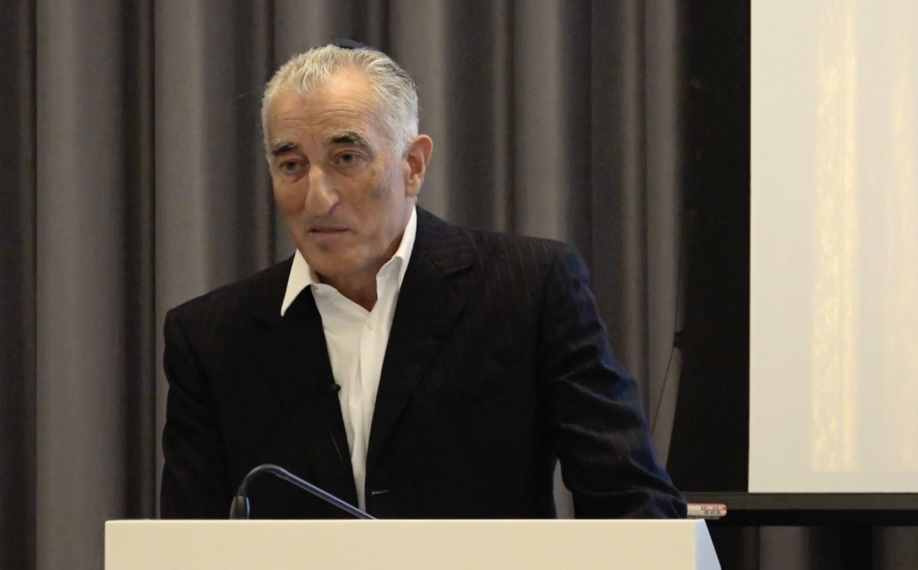
As a Jewish reader, Sopher said his first impressions of the Qur’an were unexpected. “I couldn’t see in the Qur’an anywhere where it called for the complete destruction of Jews or Christians,” he said. “At least not in a fashion I could understand. That infamous verse about Jews hiding behind stones and trees? Not in the Qur’an. That’s a hadith, not scripture.”
He was also struck by the linguistic kinship between the texts. “Ruh, ruach. Sakina, shekhinah. Iman, Emunah. So many words are cognates. The whole text felt oddly familiar – and beautiful. Nearly all of the Qur’an is written in an elevated, poetic cadence, like the ‘Ha’azinu’ section of the Torah.”
Together, they tackled some of the Qur’an’s most controversial verses. The passage likening Sabbath violators to “spurned apes” was one of them – a line frequently misunderstood. “No capital or physical punishment is mentioned, just an insult,” said Sopher. He contrasted it with the Torah’s treatment of the same offence, where the violator is stoned to death by the entire community. “The Qur’anic treatment is, if anything, far less severe.”
Sopher said this pattern repeats throughout. “Again and again, where the Hebrew Bible orders execution, the Qur’an refrains. It doesn’t mean it’s never critical – but the tone is different.”
They also explored the jizya tax – often raised as proof of Islamic subjugation of Jews. Galadari pointed to the precise wording: “Fight those among the People of the Book who do not believe in God or the Last Day, who don’t forbid what God has forbidden, and who do not follow the rule of justice – until they pay the tax.”
“The conditions are explicit,” he said. “It’s not a blanket command. Not all Jews are targeted – just specific groups.”
Historically, Sopher said, the verse was often used to protect Jews. “In 1602, Sultan Mehmet III issued a firman saying Jews fleeing the Spanish and Portuguese expulsions should be left in peace – and framed that as duty under Islamic law. So, it’s been interpreted very differently at different times.”
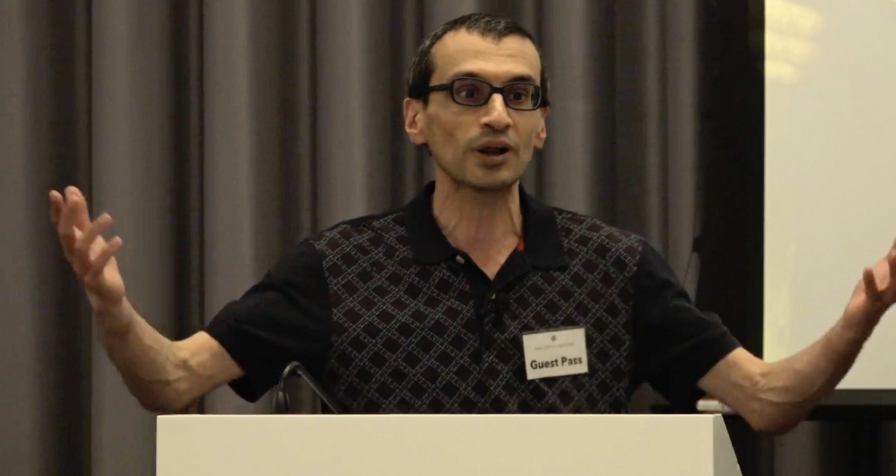
During the Q&A, an attendee asked whether the Qur’an ever praises Jews. Galadari replied with a line from Surah Al-Imran: “They are not all alike. Amongst them are upright… they recite God’s words by night, bow in prayer. Whatever good they do, God will not forget it.”
He added: “The word qa’ima – upright – shares the same root as Amidah, the Jewish standing prayer. The Qur’an is saying: some Jews are upright. That is praise.”
One Muslim attendee cited Surah Al-Baqarah, verse 62: “Those who believe, and the Jews, and the Christians… whoever believes in God and the Last Day and does good – their reward is with their Lord.”
Sopher, meanwhile, brought the room to attention by quoting a Qur’anic verse on the Holy Land: “O my people, enter the Holy Land which God has ordained for you.”
“It doesn’t give conditions,” he said. “It just says: God has ordained it for you. That seems pretty clear.”
For Sopher, the issue is less theology and more fear. “I’ve started calling it Qur’anophobia,” he said. “There’s really no need for it. The Qur’an doesn’t ask Jews to convert. It asks them to follow the Torah. That’s all.”
Galadari agreed. “You have no foundation unless you uphold the Torah. That’s the Qur’an’s position.”
The two hope to bring the lecture to a wider audience at JW3 next year. Until then, their central message stands: the Qur’an, read carefully, tells a very different story than many believe.
The talk ended with a verse both speakers had quoted before: ‘We created you from male and female, and made you nations and tribes, so that you may know one another.”
For a room full of Jews and Muslims – reading, listening, asking and answering – it felt less like an idea, and more like a beginning.

Keep community journalism free.
Jewish News is free for everyone. No paywall. No barriers. Just trusted journalism for anyone who wants to stay connected to Jewish life in Britain.
If you value that, please support us.
From as little as £5 a month, you can help keep our journalism free and accessible to all.
Every day, we report on the issues that matter to our community. We celebrate achievements, support charities, challenge antisemitism and ensure Jewish voices are heard more widely.
From as little as £5 a month, you can help us continue to:
- Report on the stories shaping Jewish life in the UK and beyond
- Bring our community together through shared stories, events and campaigns
- Celebrate the people, culture and moments that define our community
- Support organisations doing vital work across Jewish Britain
You can make a one-off donation or become a regular supporter. Every contribution helps keep our journalism free, independent and accessible to all.
If everyone who values Jewish News gave a small amount, it would make a real difference to our future.