Prefer Jewish News on Google

SPECIAL REPORT: The trainers that walk with the wounded, and the cards that carry care
From ‘Am Yisrael Chai’ shoes to handwritten letters, a British-led initiative is delivering hundreds of acts of care to Israel in the wake of the Gaza conflict
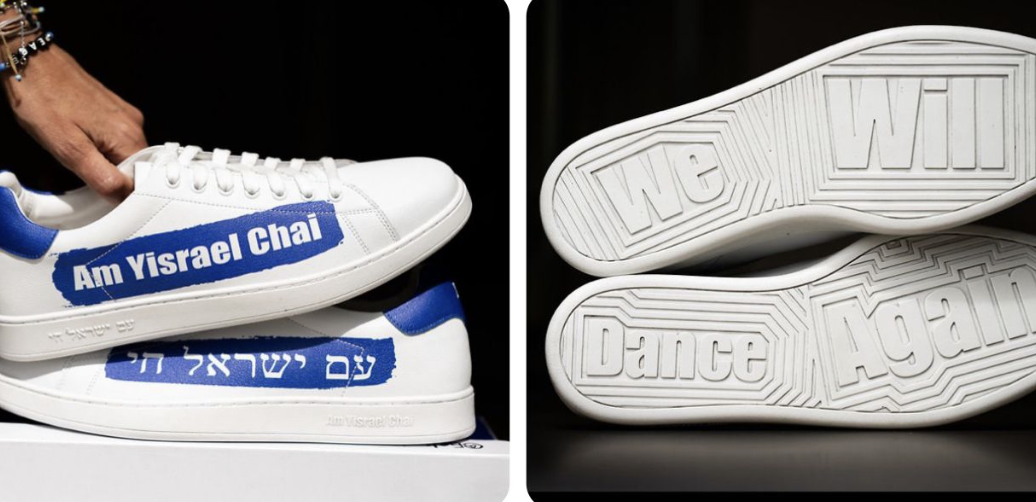
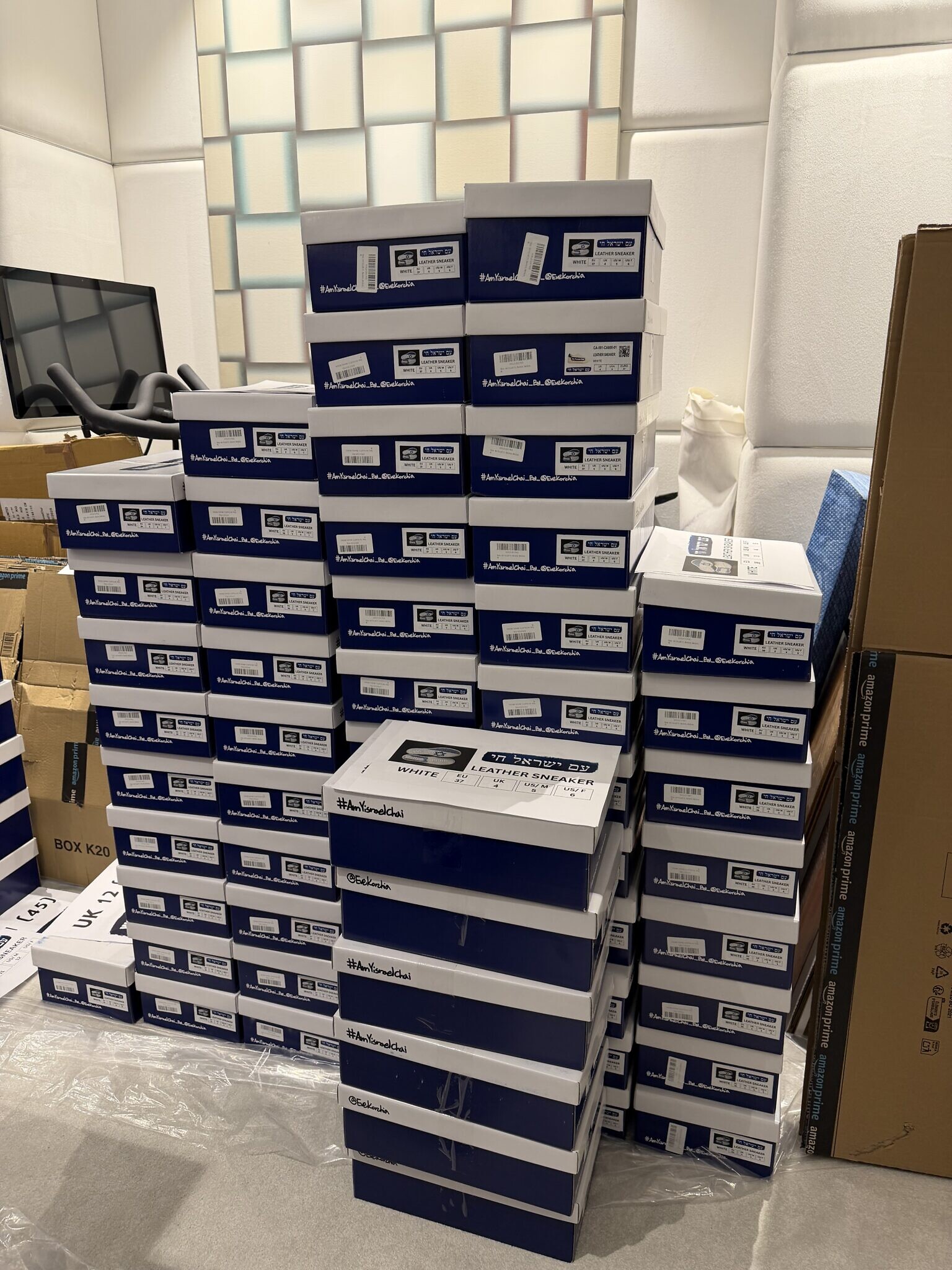
White trainers stacked neatly in a London home may not look like a frontline response to trauma. But for released hostages, bereaved families and injured soldiers in Israel, they have become something else entirely: a message of solidarity that can be worn, carried and felt.
The trainers – emblazoned with the words Am Yisrael Chai – are part of a much wider grassroots effort that has quietly grown into hundreds of what its organisers call “missions”: targeted acts of care delivered to people living through the aftermath of 7 October and the war that followed.
“They’re walking Am Yisrael Chai,” said the project’s founder, who asked not to be named, describing the shoes that have been given to released hostages, including Sasha Trufanov and Sapir Cohen. Cohen later told organisers she loved the shoes, with hopes she may even wear them at her wedding.
But footwear, she insists, is not the heart of the initiative.
The soldiers are on the physical front line. We are on the spiritual front line


Since 7 October, the network has carried out close to 300 individual missions. Each one is focused on a specific person or family, whether a wounded soldier recovering in hospital, a widow navigating life after loss, or a hostage returning home. The missions are numbered, logged and carefully tracked, not as a measure of scale alone but as a reminder that each one represents a human story.
“Every mission has a name,” she said. “It’s someone.”
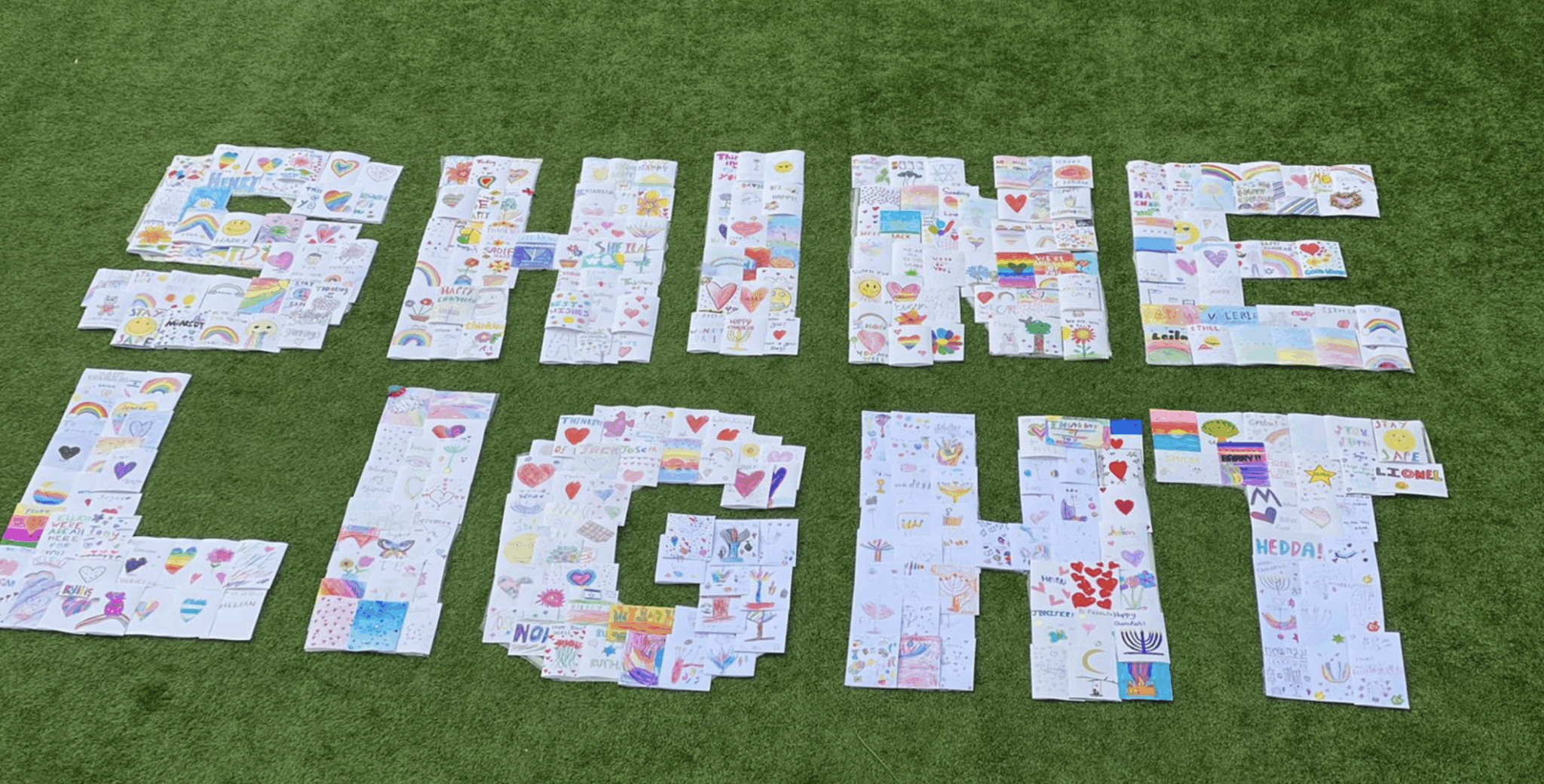
Some missions involve gifts such as the trainers, often sponsored by supporters in the UK or overseas. Many more centre on handwritten letters and cards of care, which have become the backbone of the operation. Written by schoolchildren, families and volunteers, the cards are deliberately simple – and, crucially, accessible.
“The cards are free,” she said. “Kindness doesn’t cost a thing.”
Their simplicity has also made them effective. Cards can be produced quickly, sometimes within 24 to 48 hours, when organisers learn that a family from Israel is arriving in the UK, a soldier has been injured, or a widow is facing her first festival alone. In several cases, hundreds of messages have been gathered at speed, coordinated across countries and communities.
For families facing devastating loss, the cards are sometimes bound into books and read aloud, before being given to relatives as a lasting record of care. One of the earliest moments that shaped the initiative came during the Covid pandemic, when letters were gathered for Rabbi Lord Jonathan Sacks shortly before his death. Messages from across the Jewish world were compiled into a book and read to him while he was ill, before later being given to his family. The experience, she said, reinforced her belief in the power of written words to offer comfort at moments of profound vulnerability.
“We just knew we had to do something,” she said.
The responses to the cards, she added, are often immediate and deeply personal. Thank-you messages arrive from families, soldiers and survivors who had not expected to hear from strangers, let alone children or elderly writers abroad. Some say the cards were read again and again; others say they were kept by hospital beds or taken home from shiva as something tangible to hold onto.
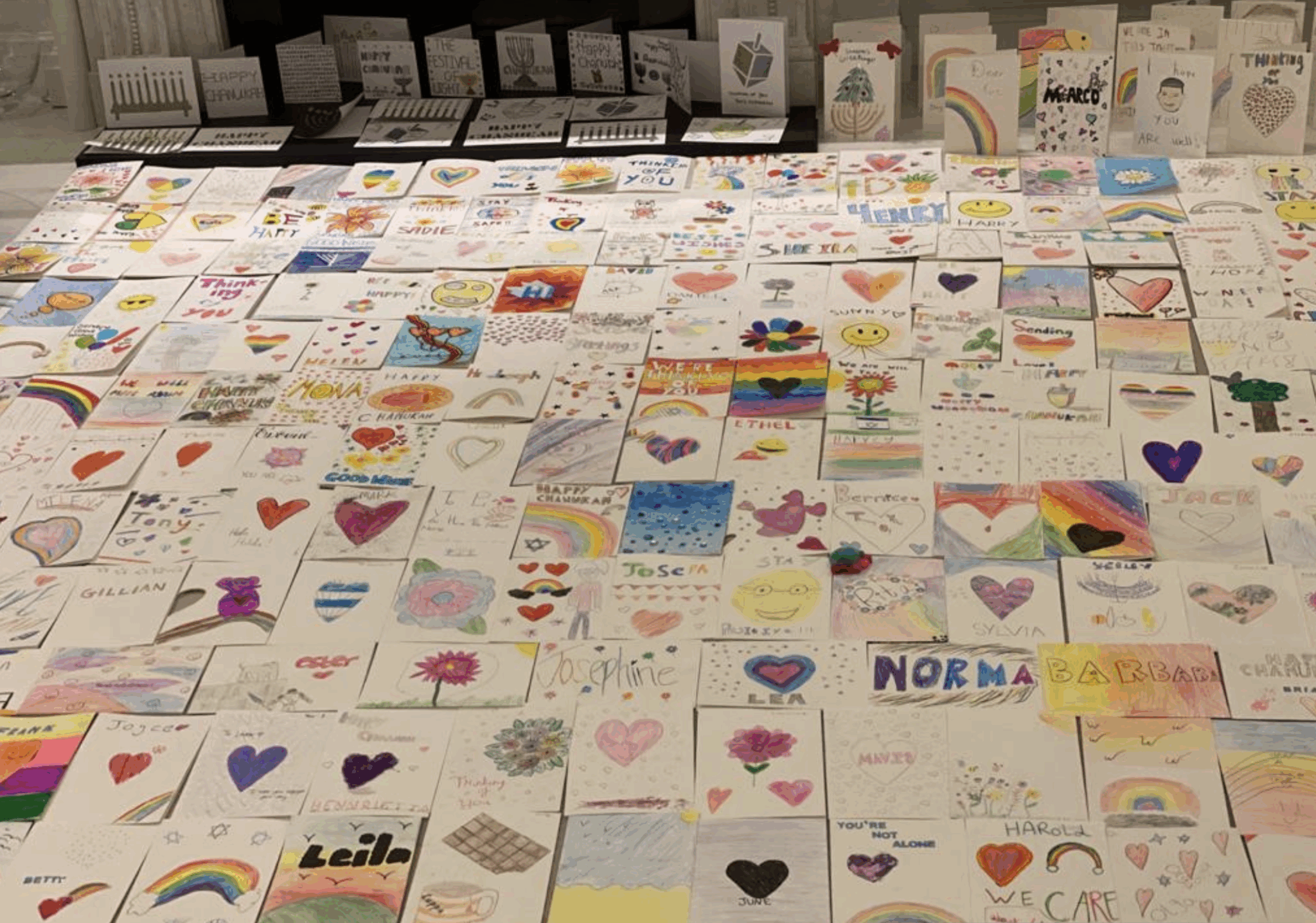
Among those who have written cards are Holocaust survivors, whose messages have been sent to released hostages and bereaved families. For organisers, those letters carry particular resonance – survivors of one Jewish trauma reaching out to those living through another.
When a Holocaust survivor writes to a hostage, that’s everything. That’s Am Yisrael Chai
The letters are not framed as comparisons, she stresses, but as gestures of continuity – a way of saying that Jewish suffering has been met before, and that survival, care and responsibility did not end with one generation.
The emotional impact has not been one-directional. When Nova music festival survivor Omri Aloni received his shoes, he sent a message of gratitude that organisers say lifted them in return.
“He was in a really dark place,” she said. “And he lifted our hearts and souls.”
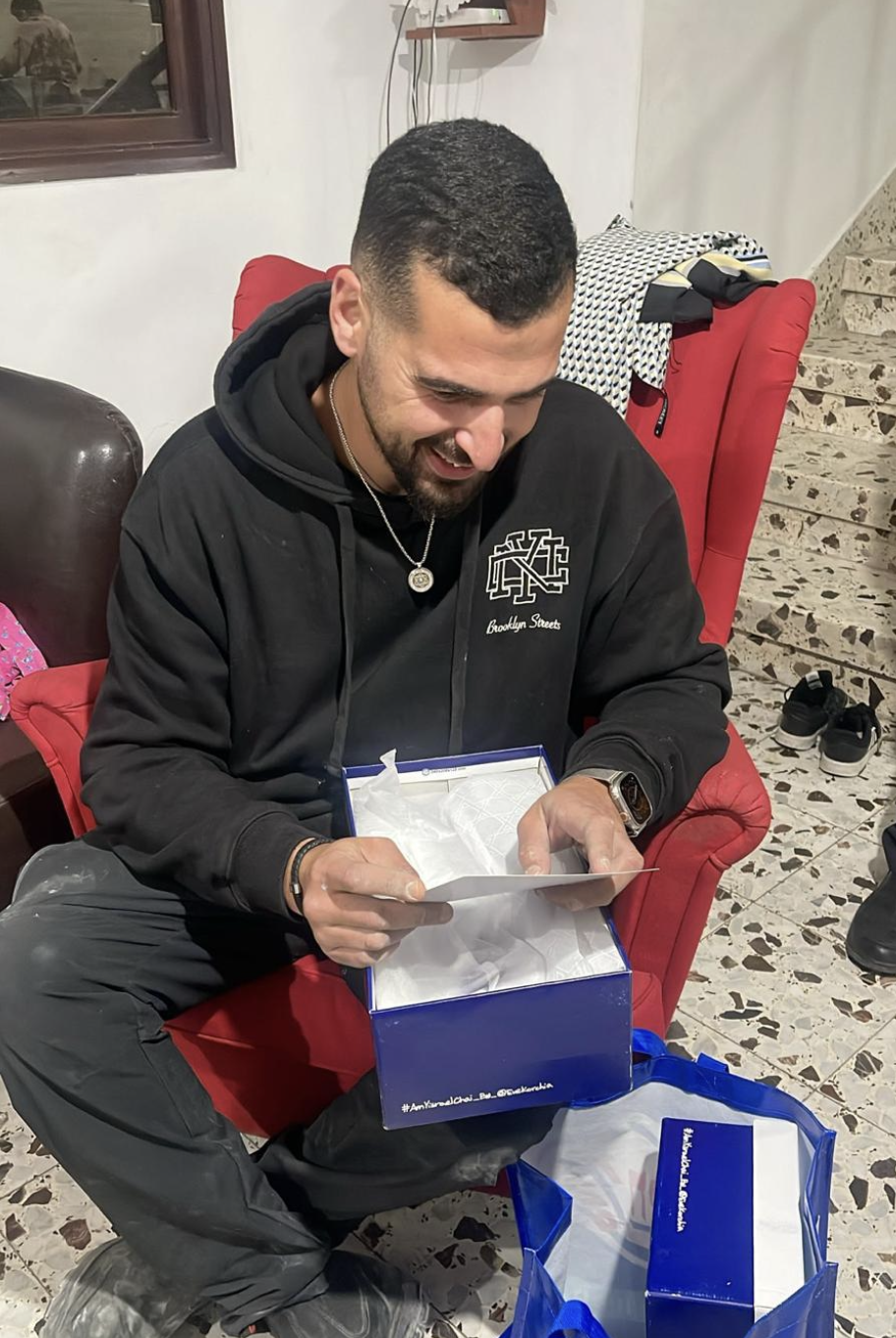
That sense of mutual strength – what she describes as a “shared smile” – has become a defining feature of the work, particularly with survivors of the Nova attack, many of whom continue to struggle long after the headlines moved on.
Much of the card-writing effort has been driven not by institutions but by young people themselves. At one UK school, pupils independently organised the creation of 120 cards for injured soldiers after hearing about the project. Every card was scanned to ensure it reached its intended recipient.
“The children ran it,” she said. “And I think that’s even better.”
She believes card-writing should be treated as an educational exercise, not an optional extra – a way of teaching children how to articulate empathy, responsibility and care at a time when many struggle to put such emotions into words.
“This is actually a classroom activity,” she said. “Learning how to write to someone who’s lost a loved one – that’s a life lesson.”
That belief is rooted in her long-standing involvement in a values-based education programme developed years before 7 October, called The Loving Classroom, which is built around eight core values, including respect, compassion, kindness and care, taught through practical classroom exercises. One exercise asks pupils to consider how many people are involved in something as simple as a glass of water, from those who built the roads to those who cleaned them – an idea that later shaped the card-writing initiative by helping people understand connection and collective responsibility in moments of crisis.
“Everybody has a role,” she said.
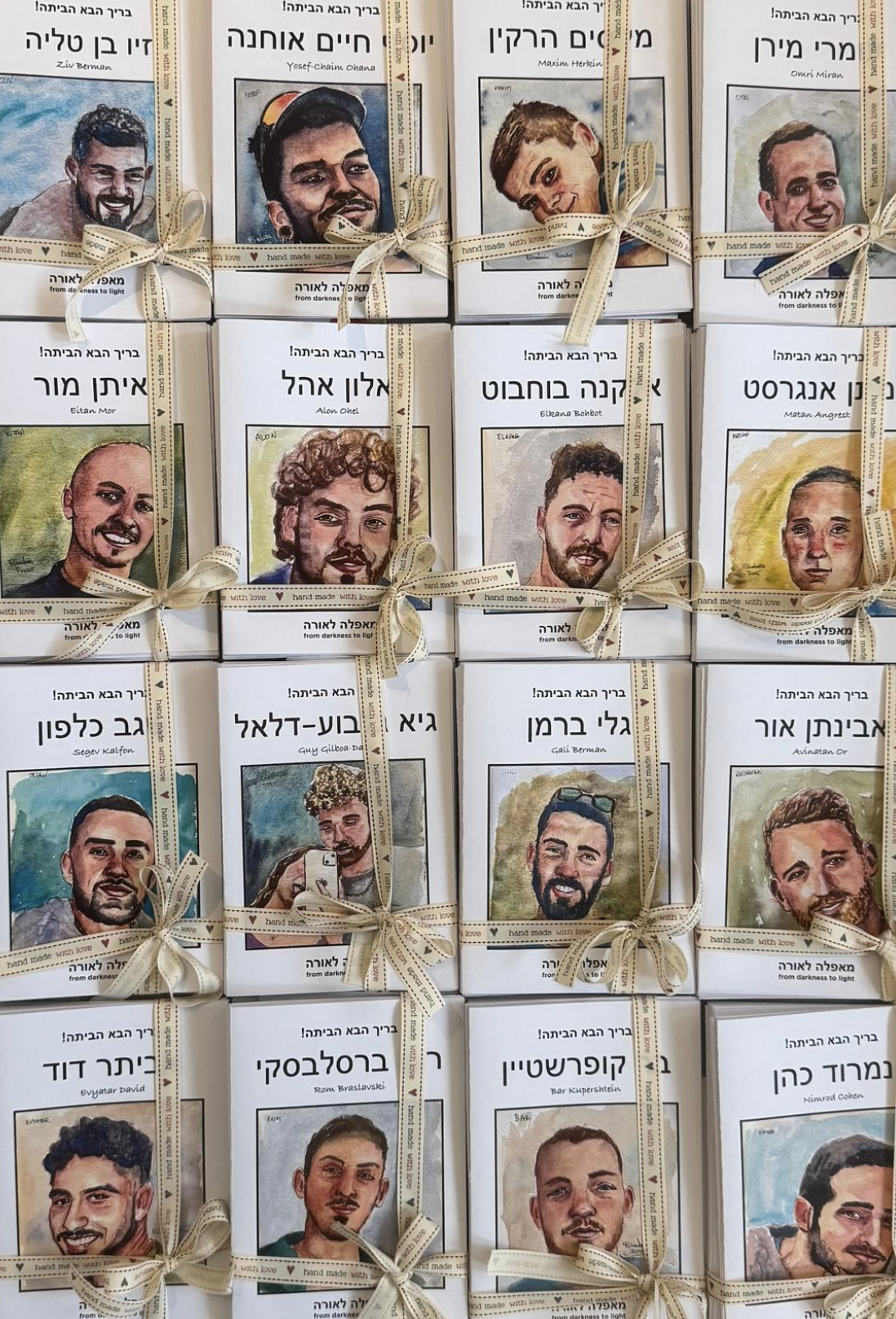
For supporters who want to get involved, there are two clear routes: writing cards or sponsoring a gift of care. Some sponsors choose to include personal messages alongside the shoes, creating a connection between giver and recipient, even if the two never meet.
“This is a gift of love,” she said.
As the network continues to grow, its founder remains adamant that the focus should never rest on the individual, but on the collective effort behind every mission – from Holocaust survivors picking up pens, to children writing their first letters, to families who take the time to send messages of thanks.
“It’s not about one person,” she said. “It’s about what happens when people choose to care.”
Updates on Cards of Care and the Am Yisrael Chai shoes are shared on Instagram.

Keep community journalism free.
Jewish News is free for everyone. No paywall. No barriers. Just trusted journalism for anyone who wants to stay connected to Jewish life in Britain.
If you value that, please support us.
From as little as £5 a month, you can help keep our journalism free and accessible to all.
Every day, we report on the issues that matter to our community. We celebrate achievements, support charities, challenge antisemitism and ensure Jewish voices are heard more widely.
From as little as £5 a month, you can help us continue to:
- Report on the stories shaping Jewish life in the UK and beyond
- Bring our community together through shared stories, events and campaigns
- Celebrate the people, culture and moments that define our community
- Support organisations doing vital work across Jewish Britain
You can make a one-off donation or become a regular supporter. Every contribution helps keep our journalism free, independent and accessible to all.
If everyone who values Jewish News gave a small amount, it would make a real difference to our future.