Prefer Jewish News on Google
Still catching its breath, Israel tourism is on the way back to booming
SPECIAL REPORT: Flights are back to usual, visitors are returning but confidence is still rebuilding
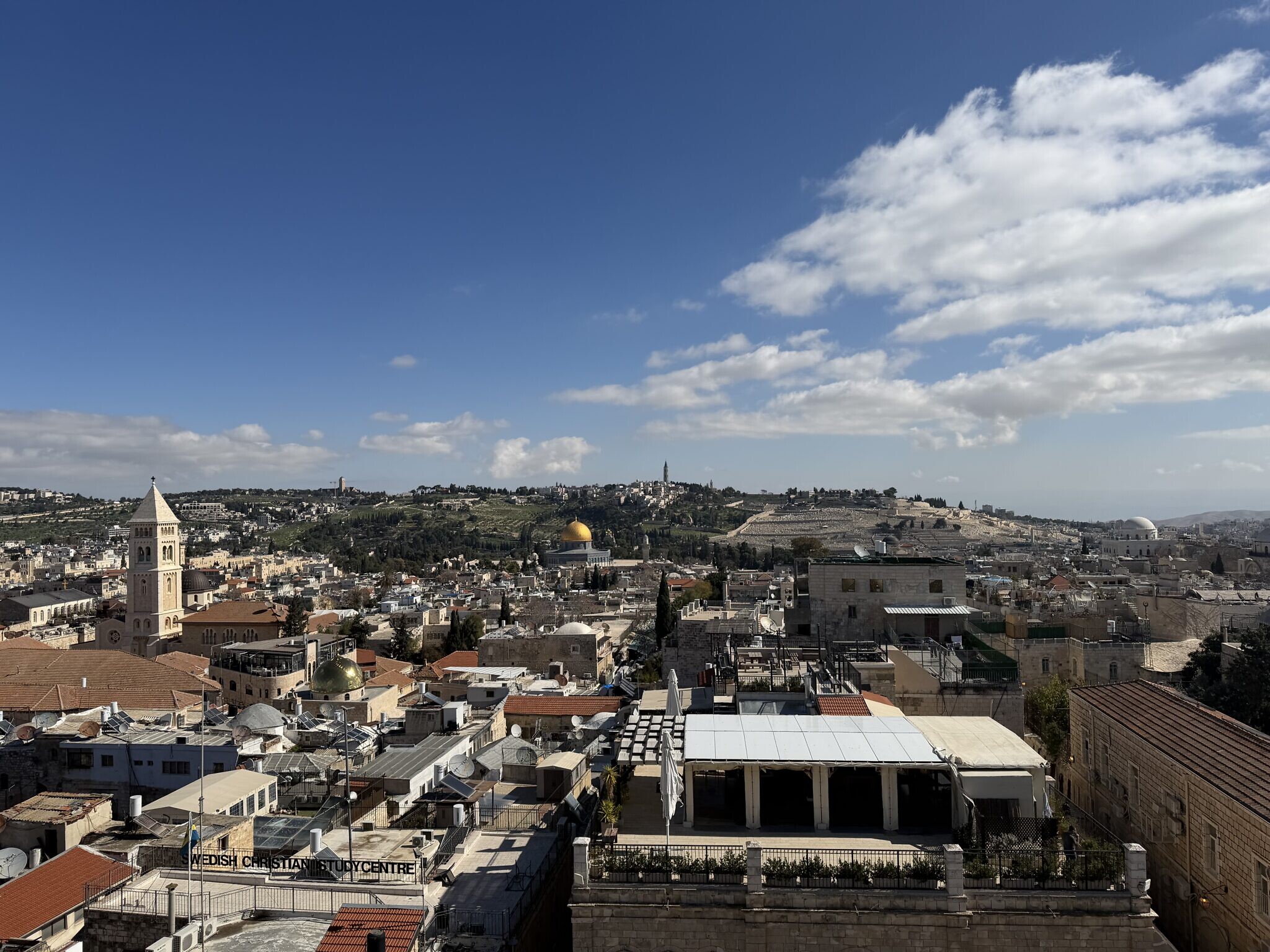
Israel does not feel frozen in time. Nor does it feel back to full speed. A visit now sits somewhere in between: daily life continuing, visitors present, businesses operating, but at a different pace to before.
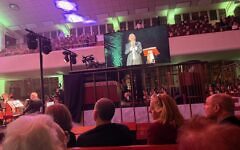
That reality was reflected at the International Mediterranean Tourism Market (IMTM) 2026 in Tel Aviv, where tourism officials spoke openly about disruption and recovery. Opening the international tourism fair, Tourism Minister Haim Katz said: “Uncertainty and travel warnings have impacted tourism activity. However, with improvements in flight availability expected in 2026, there is a reason for optimism that the first signs of recovery are already here.” He added that demand from audiences with existing ties to Israel, including Jewish communities abroad, had remained stronger elsewhere.
Away from the fair, that recovery is visible in small, practical ways.

Tel Aviv remains busy. Main roads are active, cafés and restaurants are open throughout the day, and people move around the city as normal. Some areas are quieter than in peak years, but others feel unchanged. The city does not feel empty, just less compressed. It still feels young, full of interesting people moving through shared spaces, giving the city an energy that has not disappeared even as visitors fluctuate.
That atmosphere extends to accommodation. Hotels are open, staffed and functioning without fuss. Near the seafront, the Melody Hotel reflected that everyday rhythm, with guests coming and going throughout the day and shared spaces in regular use. It worked as a base rather than a destination.


One evening was spent in Tel Aviv’s American Colony, an area shaped by late 19th-century American and German Templer settlement. The neighbourhood’s stone buildings and layout still reflect that history. The gathering took place inside The Drisco Hotel, a restored 19th-century building that once accommodated travellers arriving through the nearby port. A range of food was served, from salads and meat dishes to potatoes, risotto and dessert, as people talked informally over the course of the evening.
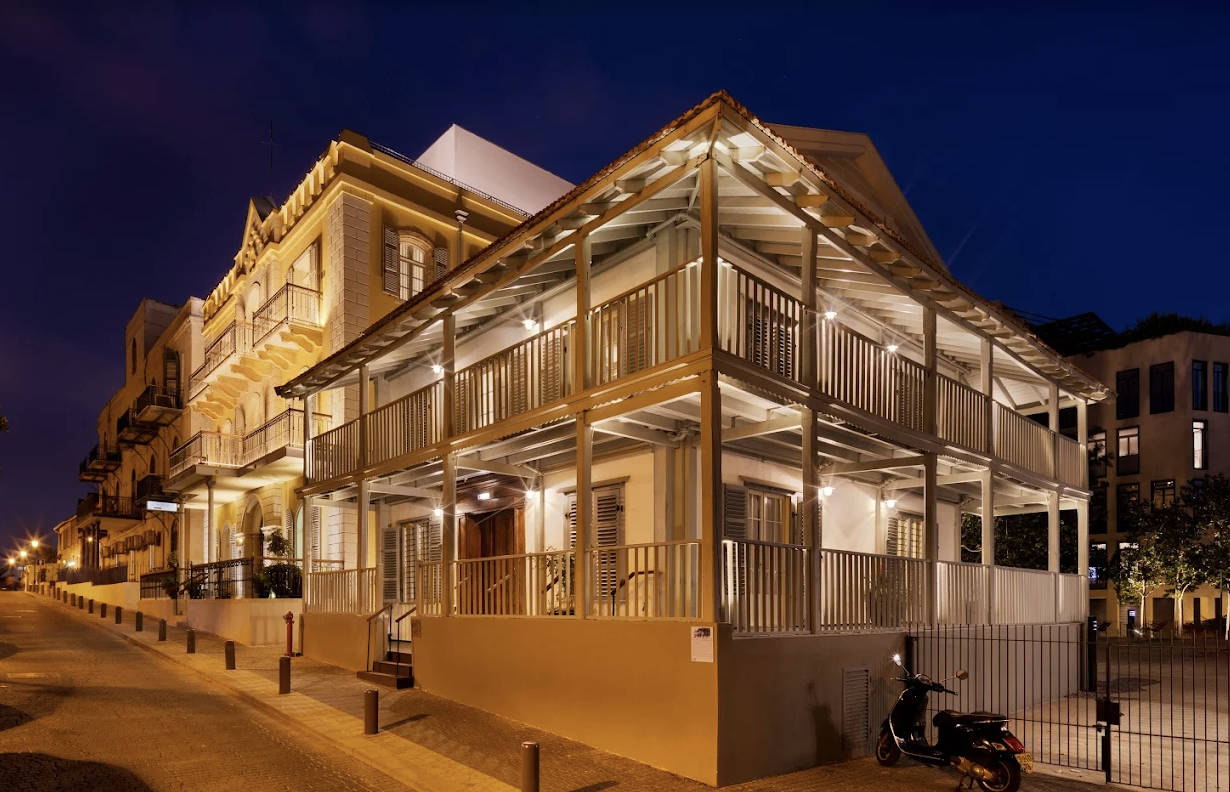
The Drisco Hotel
Restaurants across the country continue to operate steadily.
Kitchens are open, menus familiar, evenings unhurried. In Jerusalem, that included a visit to Chakra, a long-established, non-kosher restaurant near Independence Park. The dining room was busy without feeling crowded, with a mix of locals and visitors. The food leaned Mediterranean and Israeli, and the atmosphere felt settled rather than scene-driven.
In Jaffa, history is woven into daily life. One of the oldest port cities in the world, it has long served as a gateway for trade, pilgrimage and migration. Its name became internationally known through the Jaffa orange, exported widely in the late 19th and early 20th centuries. That commercial past still shapes the area.
Today, the port and surrounding streets are active. Traders in the flea market sell ceramics, textiles and household goods. Small falafel and hummus shops line the streets, doing steady business throughout the day. Hebrew and Arabic appear side by side on shop signs and menus, without comment.
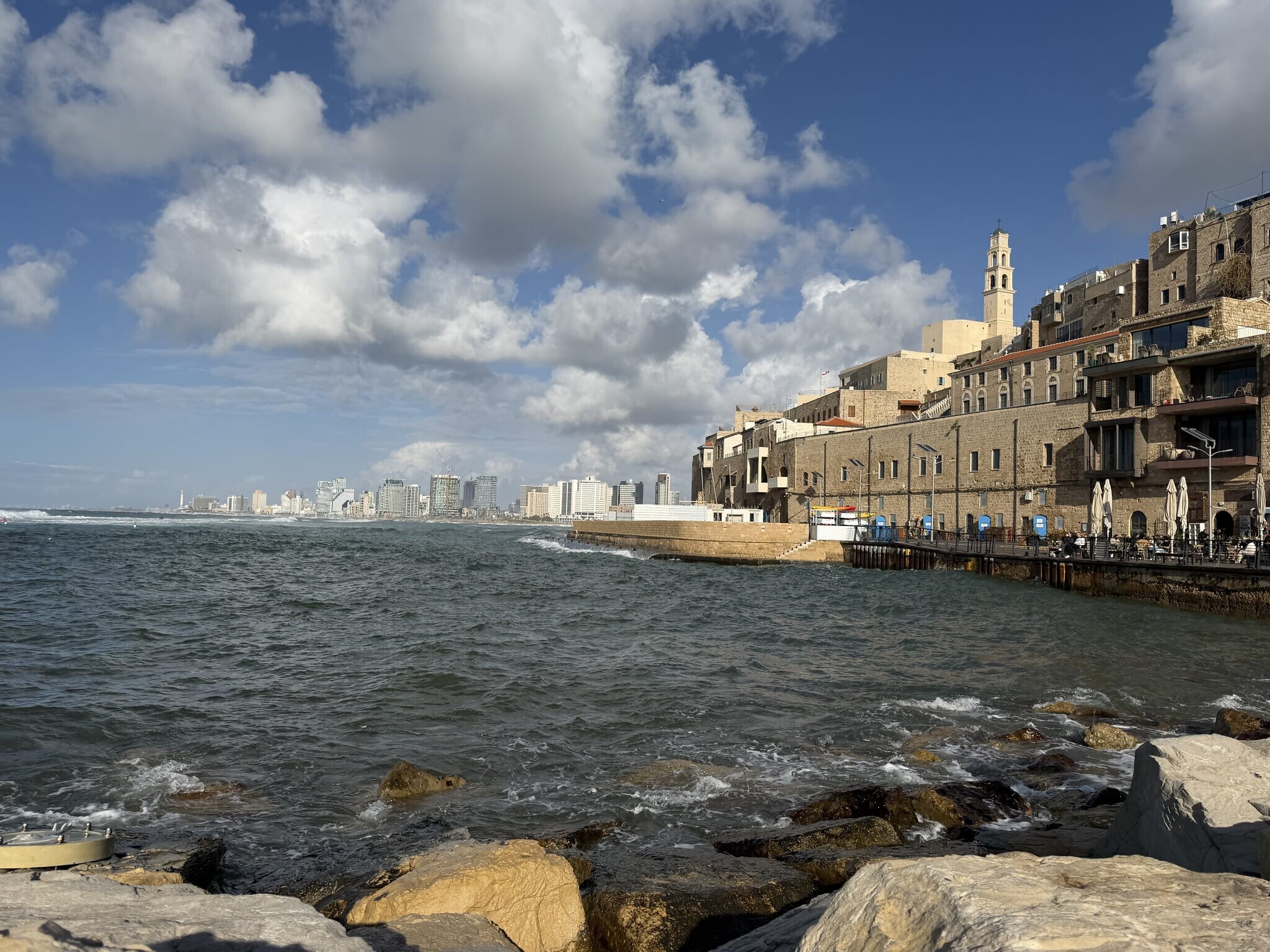
Above the old city stands St Peter’s Church, built in 1894 on Crusader-era ruins. Funded by the Spanish royal house, the Franciscan church marks the site traditionally associated with St Peter’s vision described in Christian scripture. Napoleon Bonaparte is said to have stayed at the church complex in 1799. It remains in regular use by pilgrims and local congregations.
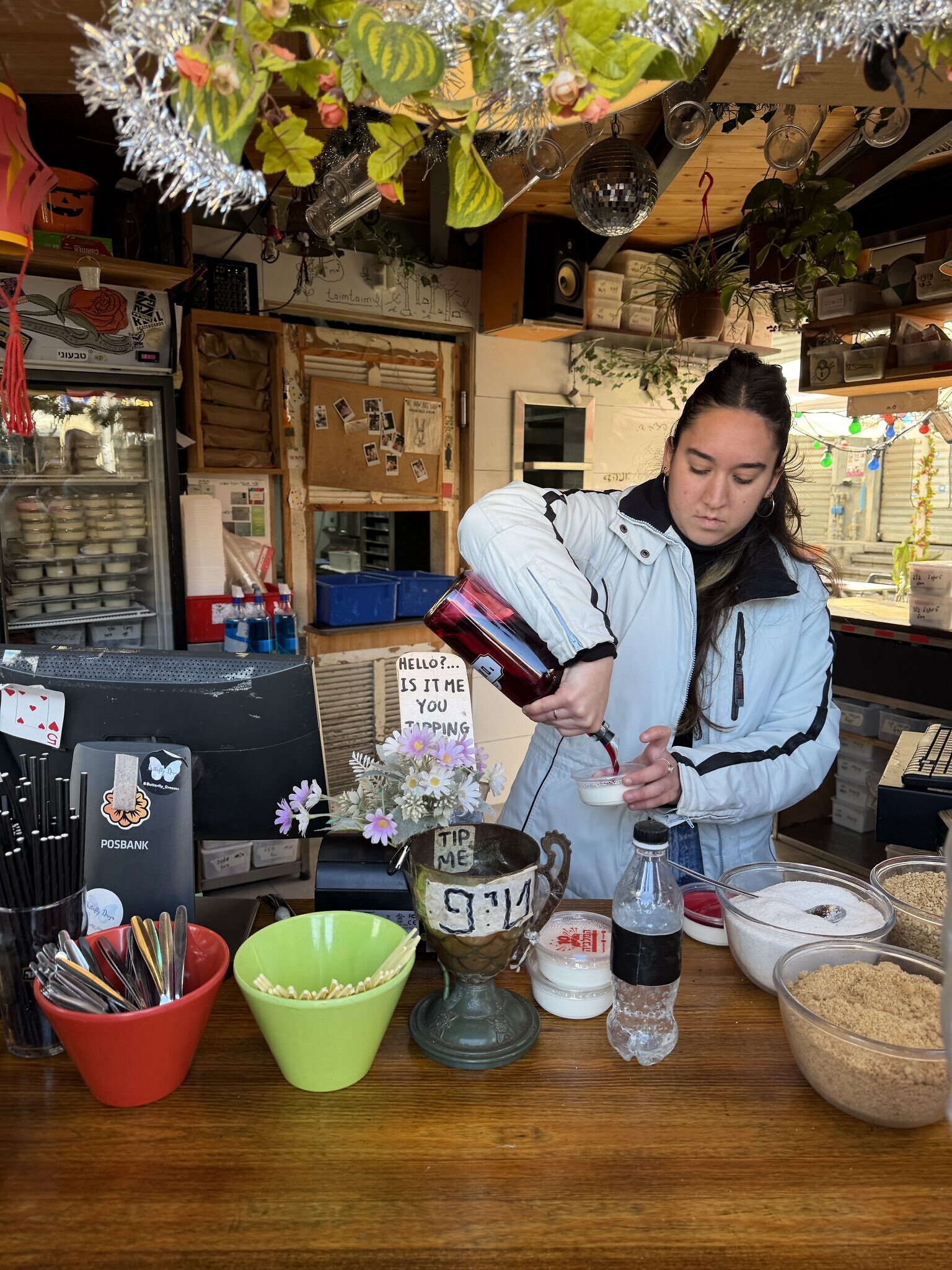
Food provides continuity. At a small stall, malabi – a chilled milk-based pudding common across the region, usually topped with syrup and nuts – is prepared simply and sold steadily. Some days there is a queue, other days not.
Jerusalem feels denser. The Old City is active, with pilgrims, locals and visitors moving through its narrow streets. Shops are open. Prayer continues alongside commerce. What stands out is proximity: ultra-Orthodox Jewish families, secular Israelis, Arab shopkeepers, Christian clergy and tourists pass through the same spaces. Dress, language and rhythm shift from street to street. Frum neighbourhoods sit close to Arab areas, with religious life and daily trade running side by side.
Accommodation reflects that geography. The Brown JLM Mamilla Hotel sits between several Jerusalems at once: overlooking Independence Garden and the new Museum of Tolerance on one side, with the pedestrian streets of Nahalat Shiva nearby, and Mamilla Mall and the Old City walls a short walk in the other direction. It offers a local yet outward-looking base, close to both historic and contemporary Jerusalem.
Walking along the Pilgrimage Road offers one of the clearest links between Jerusalem’s past and present. The stone-paved street, dating to the Second Temple, once formed the city’s main thoroughfare, leading from the Pool of Siloam up towards the Temple Mount. In September 2025, the route was opened in its entirety for the first time in around 2,000 years following extensive archaeological work in the City of David.
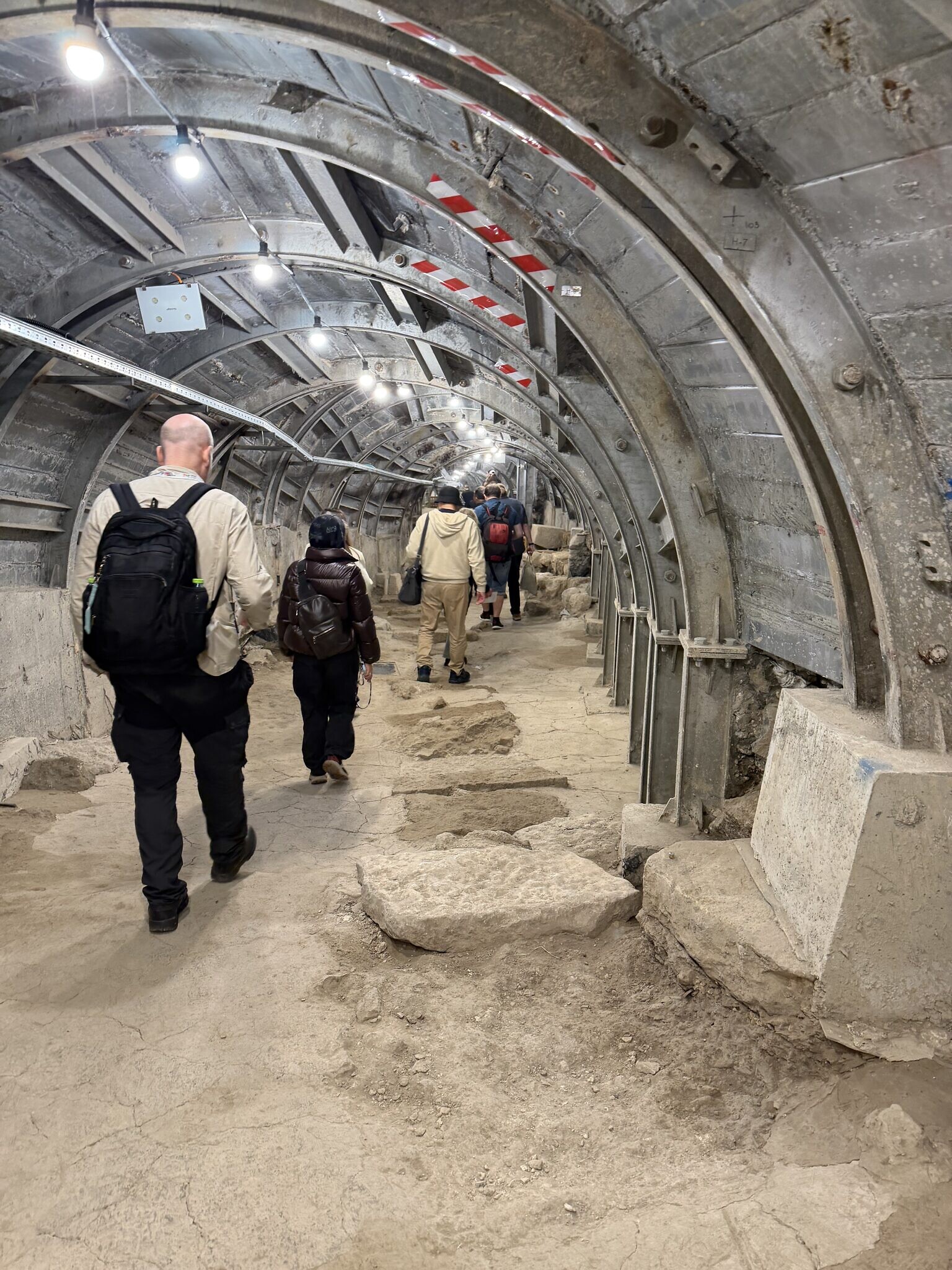
Archaeologists uncovered coins, weights and a stone measuring table along the route, pointing to a busy commercial street lined with shops and stalls – a central artery through which pilgrims once passed on their way to the Temple. Beneath the paving stones, an ancient drainage channel was also revealed, later used as a hiding place during the Great Revolt, containing oil lamps, cooking vessels, coins and a Roman sword.
At the Western Wall, the atmosphere shifts again. Prayer continues throughout the day, largely uninterrupted by the steady flow of visitors. People arrive alone or in small groups, some staying briefly, others remaining for long periods. Notes are placed between the stones, prayers murmured, heads bowed. The space functions first and foremost as a place of worship, with tourism present but secondary.
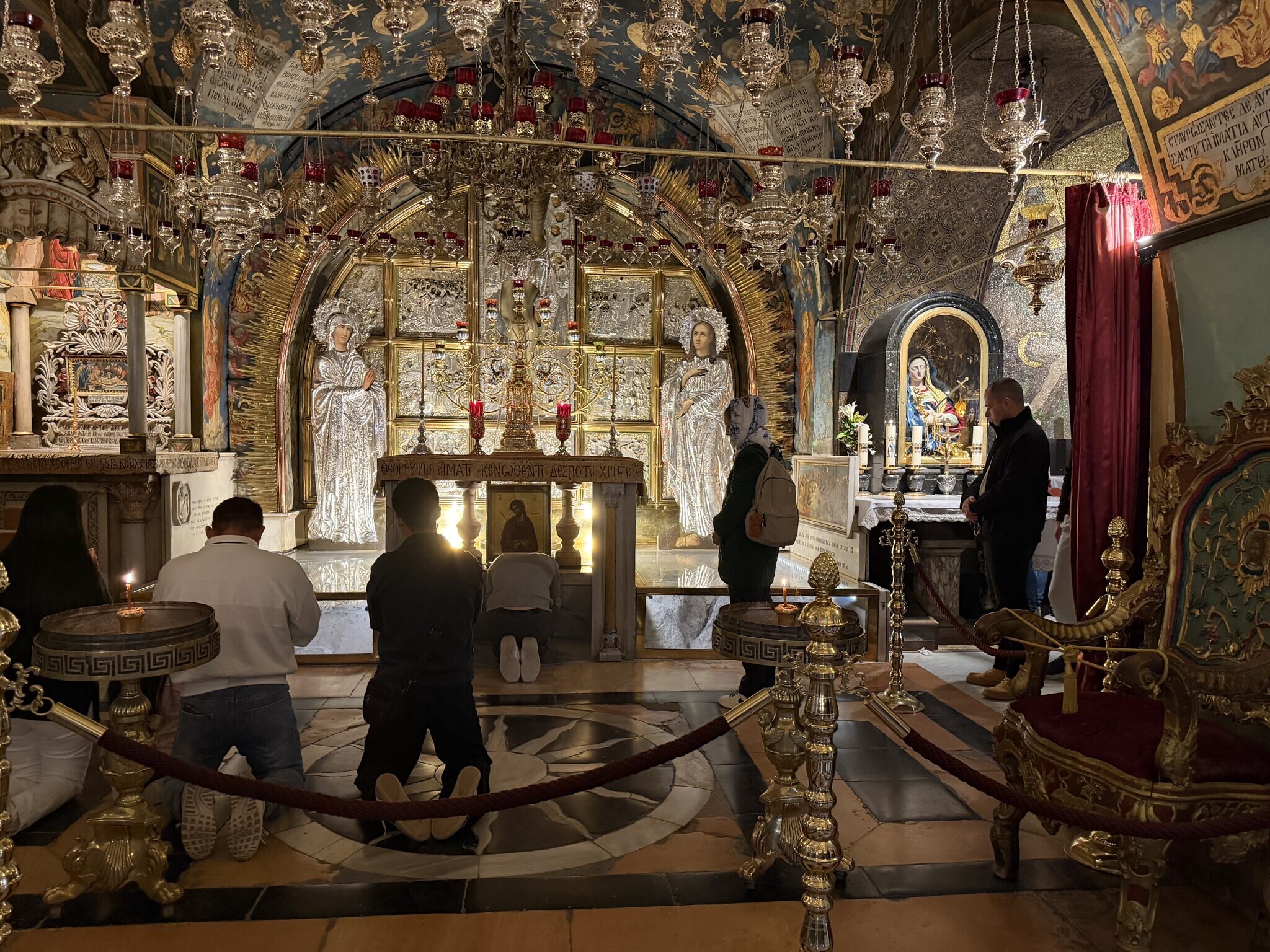
Jerusalem’s Christian presence remains just as visible. Inside the Old City, the Church of the Holy Sepulchre continues to operate as it has for centuries, marking the site traditionally recognised as the place of Jesus’ crucifixion, burial and resurrection. Controlled jointly by several Christian denominations, the church functions through a carefully maintained status quo. Visitors move through steadily, candles burn, clergy pass between chapels, and services overlap quietly. It is not staged for tourism; it is a working religious space, layered and continuously in use.
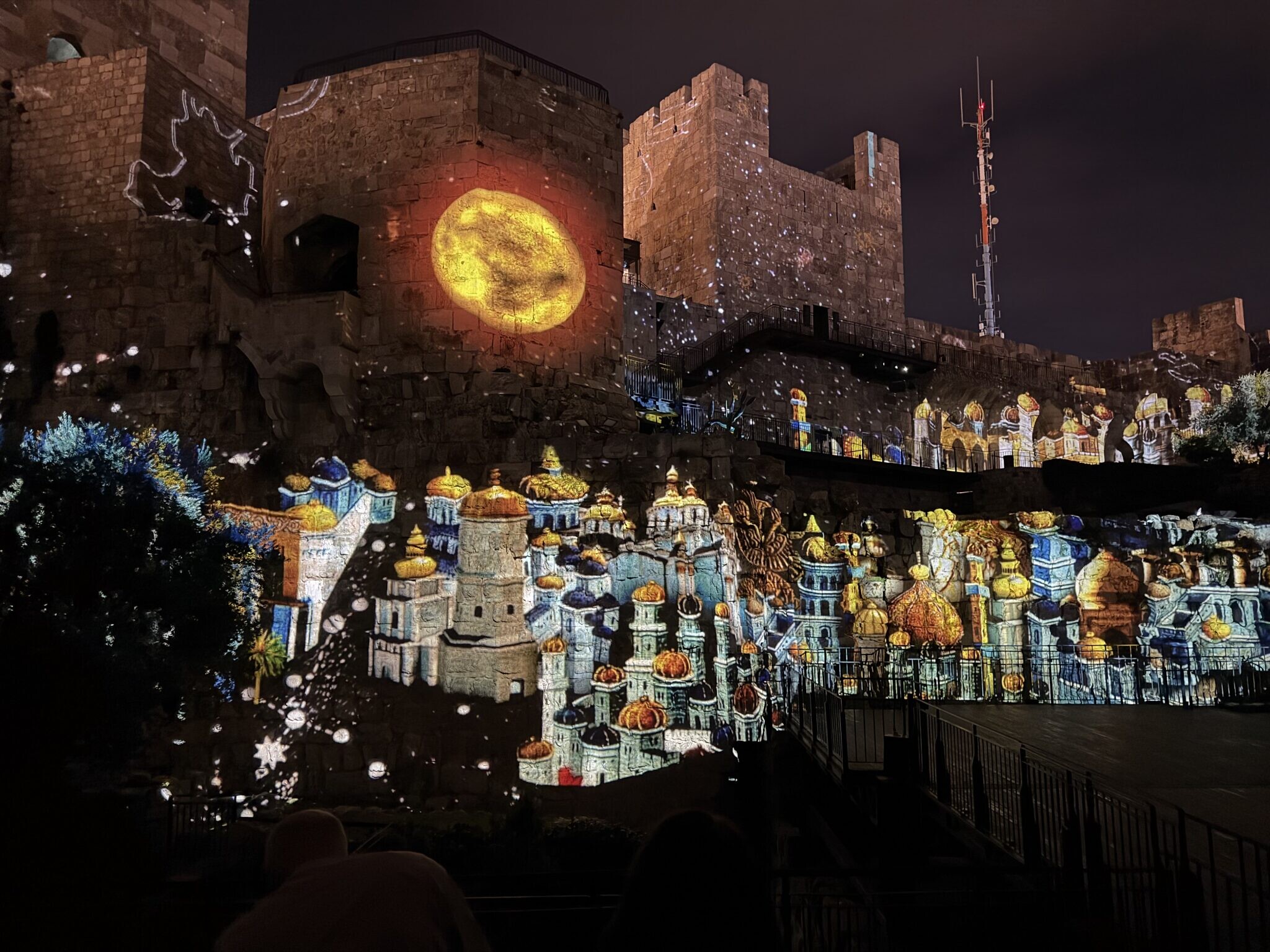
The Tower of David Jerusalem Museum now functions as a point of orientation before entering the Old City. Following a three-year, £36.7 million ($50 million) conservation and renewal programme, the museum reopened in 2023 as the capital’s official museum, housed within the ancient citadel at Jaffa Gate. A new sunken entrance pavilion guides visitors through galleries before they step back into the streets.
Inside, ten thematic galleries trace Jerusalem’s 4,000-year history and its centrality to Judaism, Christianity, and Islam. Archaeological material, including artefacts displayed on site, is combined with multimedia elements that provide context rather than spectacle. As evening falls, the citadel’s sound-and-light show projects scenes from Jerusalem’s past onto the ancient walls, drawing a mixed audience before the city disperses again.
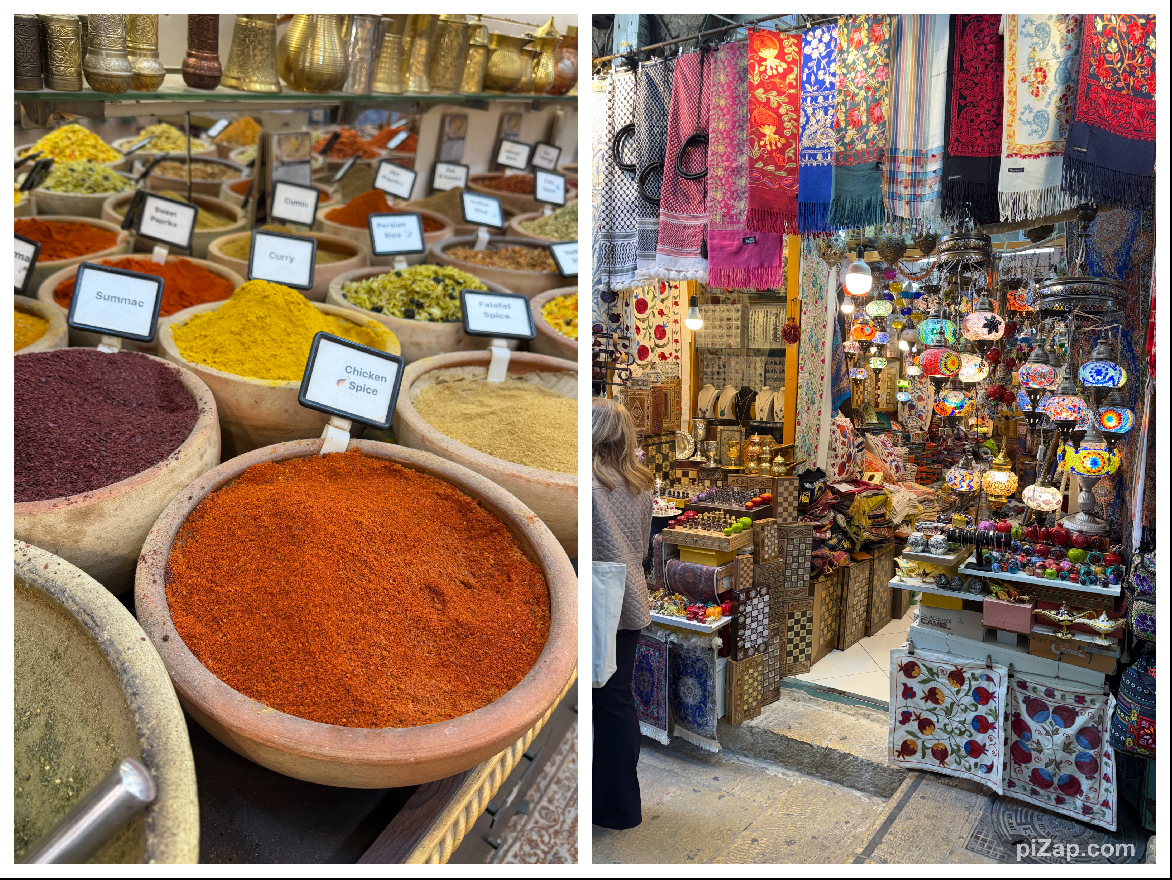
Markets remain central to Jerusalem’s movement. In and around the Old City, stalls sell spices, bread and everyday goods, trading steadily rather than loudly. In the evening, Mahane Yehuda Market shifts towards food and drink, with restaurants and bars filling gradually. Street food ranges from fresh pita stuffed with falafel or shawarma to bourekas, sabich, grilled vegetables and trays of pastries, eaten standing up or carried through the market.
In the Muslim Quarter, daily trade continues much as it always has. Bakeries, spice shops and juice stalls remain open, serving locals and visitors alike. At one juice stand, an Arab seller spoke candidly about how the drop in tourism has affected business. When fewer visitors come, he said, it is felt immediately – not just by hotels or tour operators, but by small family-run stalls like this. Boycotts abroad, he added, do not distinguish between communities on the ground. When tourism slows, Arab businesses in Jerusalem are affected alongside Jewish ones.
Further south, the road drops sharply towards the Dead Sea, the lowest point on earth, more than 400 metres below sea level. The change in landscape is immediate. Salt formations line the shore, and across the water, the mountains of Jordan are clearly visible. The area feels stark but not inactive. Beaches, hotels and visitor facilities remain open, and people come for short stays, day trips or specific events rather than long holidays.
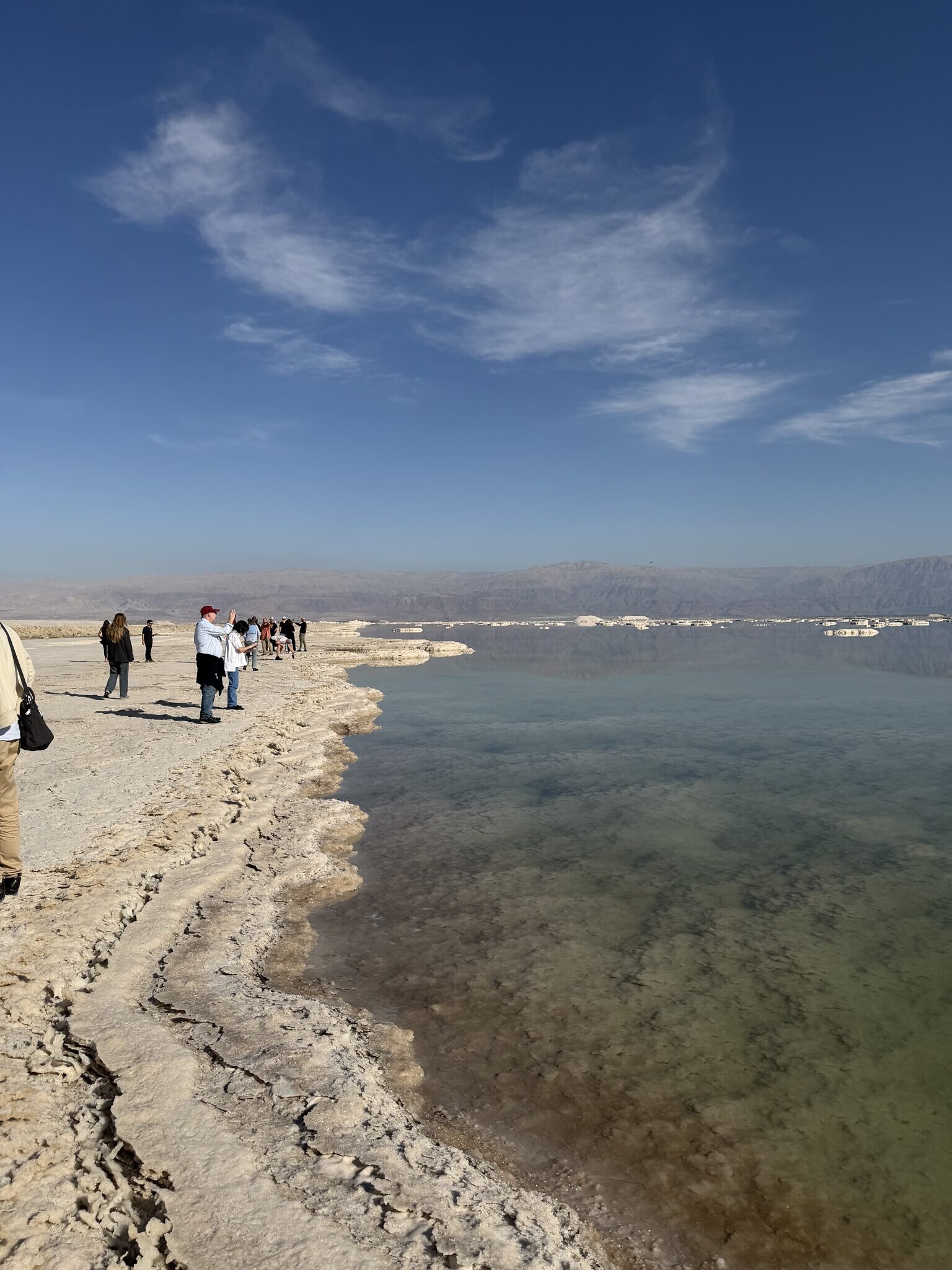
Photo: Annabel Sinclair
The Dead Sea continues to function as a place shaped by what it already is. Visitors float in the mineral-rich water, cover their skin in mud, or spend time in a landscape that is unlike anywhere else. Tourism here feels practical rather than reimagined, grounded in familiarity rather than reinvention.
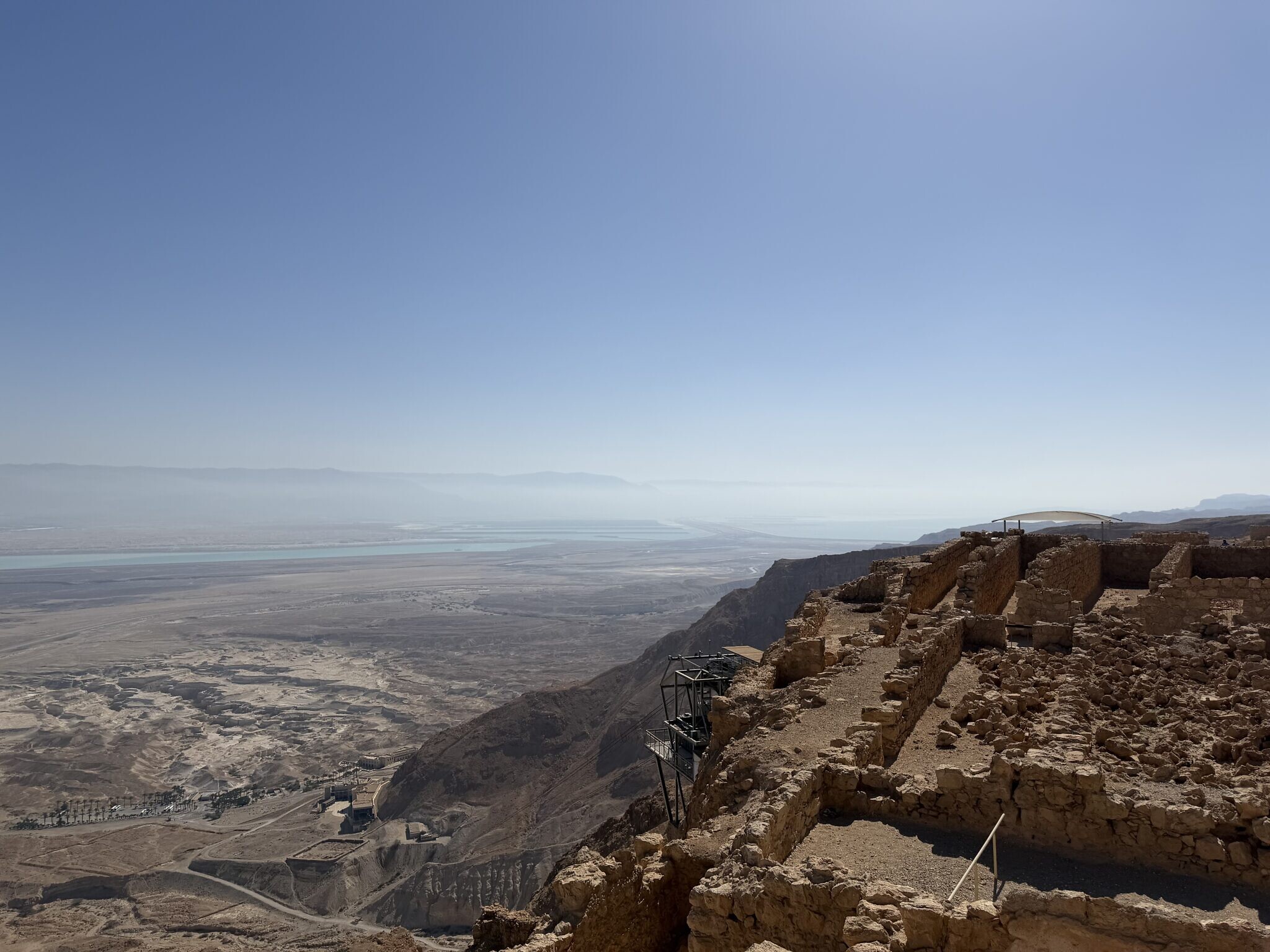
Nearby, Masada remains one of Israel’s most recognisable historic sites. The desert fortress, perched high above the Dead Sea, dates back to the late Second Temple period and has long held a central place in the country’s historical landscape. Visitors reach the plateau either by cable car or on foot via the winding Snake Path, both of which remain in regular use. From the top, the scale of the surrounding desert and the Dead Sea below is striking, giving a clear sense of why the site has endured as both an archaeological landmark and a point of reflection. The experience feels calm rather than crowded, reinforcing Masada’s place as part of the wider Dead Sea region rather than a standalone attraction.
The Dead Sea Land Marathon is one example. Runners descend to the lowest point on earth, crossing exposed seabed and salt dikes normally closed to the public. This year’s race drew thousands of participants, including runners from the UK.
What a visit shows now is not a full return of the past, but continuity. Tourism continues to support Jewish, Muslim and Christian livelihoods.

Keep community journalism free.
Jewish News is free for everyone. No paywall. No barriers. Just trusted journalism for anyone who wants to stay connected to Jewish life in Britain.
If you value that, please support us.
From as little as £5 a month, you can help keep our journalism free and accessible to all.
Every day, we report on the issues that matter to our community. We celebrate achievements, support charities, challenge antisemitism and ensure Jewish voices are heard more widely.
From as little as £5 a month, you can help us continue to:
- Report on the stories shaping Jewish life in the UK and beyond
- Bring our community together through shared stories, events and campaigns
- Celebrate the people, culture and moments that define our community
- Support organisations doing vital work across Jewish Britain
You can make a one-off donation or become a regular supporter. Every contribution helps keep our journalism free, independent and accessible to all.
If everyone who values Jewish News gave a small amount, it would make a real difference to our future.