Prefer Jewish News on Google
Studies suggest antisemitic attacks are rare in Russia but sentiment is rife
Fewer than 10 suspected hate crimes took place in Russia in the first six months of 2018, but a report claims antisemitic views are still widespread
Russia saw fewer than 10 suspected hate crimes against Jews in the first half of 2018, a human rights watchdog critical of the government said in a report.
The publishing this week of the SOVA centre’s report on antisemitism, which suggests a far lower risk to Jews in Russia than in Western Europe, coincided with the release of a PEW survey indicating far greater prevalence of antisemitic sentiment in Russia and other Eastern European countries than in the West.
In the PEW survey of 56,000 adults between 2015 and 2017 in 34 European countries, only 40 percent of Russians said they would not object to accepting a Jew into their family.
The figure in Western Europe ranged from 96 percent in the Netherlands to 57 percent in Italy. Acceptance levels in Eastern Europe were significantly lower, stretching from Slovakia’s 73 percent to Georgia’s 27. Only three Eastern European countries were above the 70 percent mark, compared to 11 countries in Western Europe, with Britain remaining at 69 percent.
The SOVA centre’s report lists the torching in January of two cars belonging to a Jewish communal leader in Murmansk, in northwestern Russia, and the scrawling of an antisemitic graffiti on the headquarters of Ksenia Sobchak, who ran for president. In June, several gravestones were burnt at the Jewish cemetery in Voronezh, in southwestern Russia, the report said.

In neighbouring Ukraine, dozens of antisemitic incidents are reported each year. In Western Europe, hundreds are reported each few months.
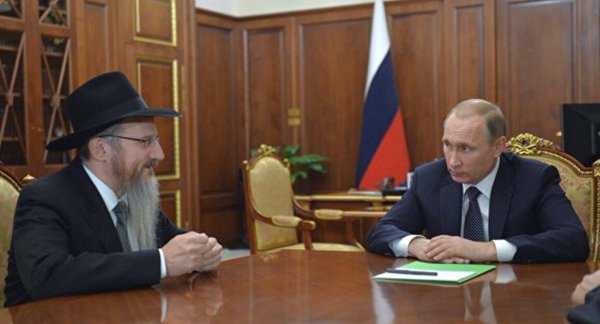
The SOVA centre’s report was published ahead of the “Protecting the Future” conference in Moscow on antisemitism, attended by senior government officials and communal leaders, including Russian Jewish Congress President Yuri Kanner; Russian Chief Rabbi Berel Lazar and the president of the Euro-Asian Jewish Congress, or EAJC, Michael Mirilashvili.
“There will be no antisemitism and xenophobia in Russia, and the Russian authorities together with civil society will do everything that is necessary for it,” Valentina Matviyenko, the chairwoman of the Council of the Federation of Russia, the Russian parliament’s upper house, said in a speech during the conference.
Separately, EAJC, which is an umbrella group and World Jewish Congress affiliate representing dozens of former Soviet Union communities, opened an office in Moscow on the week of the conference.
Commenting on Jewish organisations’ relative freedom to operate in Russia, Mirilashvili said in his speech: “We remember it was not always like this. But today Russia can serve as an example of the struggle against antisemitism and we hope that no geopolitical challenges will change this attitude,” he said.
Listen to this week’s episode of the Jewish Views Podcast, focusing on Pittsburgh:

Keep community journalism free.
Jewish News is free for everyone. No paywall. No barriers. Just trusted journalism for anyone who wants to stay connected to Jewish life in Britain.
If you value that, please support us.
From as little as £5 a month, you can help keep our journalism free and accessible to all.
Every day, we report on the issues that matter to our community. We celebrate achievements, support charities, challenge antisemitism and ensure Jewish voices are heard more widely.
From as little as £5 a month, you can help us continue to:
- Report on the stories shaping Jewish life in the UK and beyond
- Bring our community together through shared stories, events and campaigns
- Celebrate the people, culture and moments that define our community
- Support organisations doing vital work across Jewish Britain
You can make a one-off donation or become a regular supporter. Every contribution helps keep our journalism free, independent and accessible to all.
If everyone who values Jewish News gave a small amount, it would make a real difference to our future.