Prefer Jewish News on Google
Still raising hell at 99: Mel Brooks on Hitchcock, Hoffman and surviving history
From shoving Hitchcock through a studio doorway to warning a young Dustin Hoffman not to flirt with Anne Bancroft, the comic giant tells Jewish News about a century of mischief
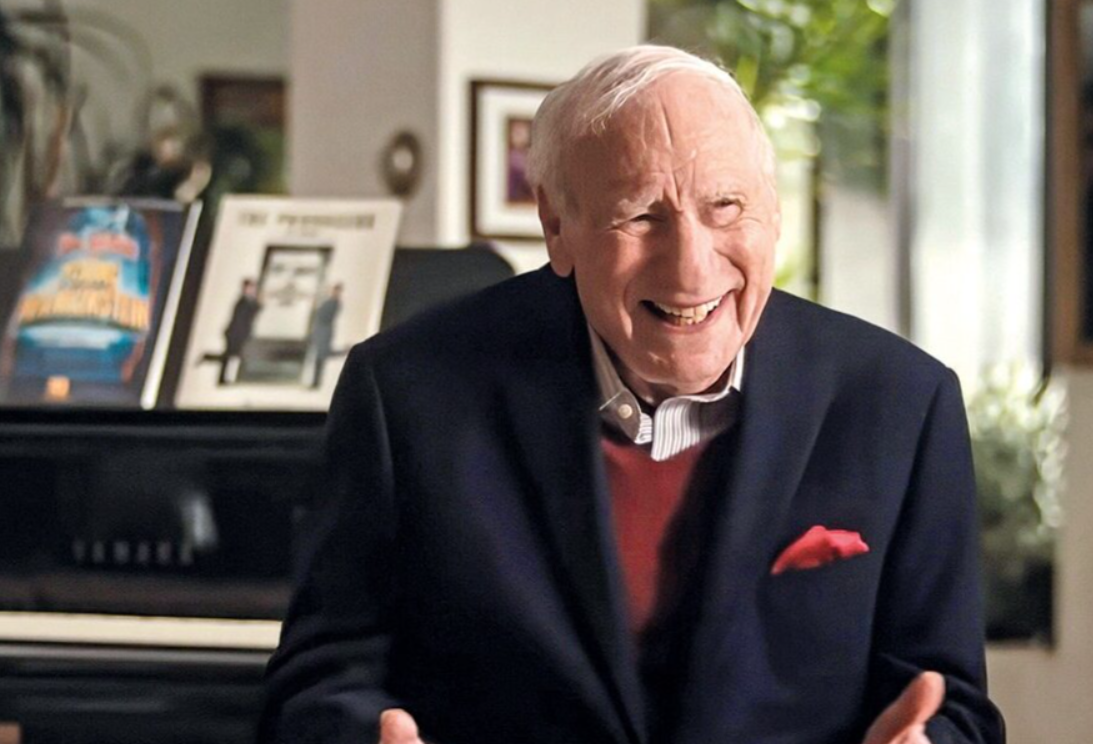
When Mel Brooks was working at Universal Studios in the late 60s, so was Alfred Hitchcock. Years later, Brooks honoured the director with High Anxiety – his spoof of the master’s thrillers. The two men had got to know each other gradually, but well enough that Brooks was allowed to call him “Hitch”.|
“One day we were walking to lunch and he got stuck in the doorway, so with my thigh I banged him right in the ass, knocking him into the dining room. I said, ‘Come on, Hitch, we’re hungry!’ Ha!” Brooks cackles. What did Hitch do? “He went red and I thought, ‘Oh no, what have I done?’ But then he turned, laughing, and said, ‘Oh, you naughty boy!’”
Brooks still looks like a naughty boy, though he’s 99 — and if you can’t believe it, neither can he. “Some days I’m not feeling as great as I want to. But other days I don’t even notice that I’m not 37 anymore.” He keeps “showbiz hours”, staying up late, sleeping late, starting his day in the afternoon with a breakfast omelette. “Then I take a walk in front of the house, up and down the steps to stay limber. I talk on the phone and I write – every day. Always writing, always correcting, always questioning.”
This is the third time I’ve questioned Brooks, and he appears to be ageing backwards. The first was in February 2020, at the home of his best friend Carl Reiner, with whom he’d had dinner every night since 2005 – the year his wife, actress Anne Bancroft, died. Brooks, who with Reiner created the legendary 2000 Year Old Man, was worried about Reiner’s health that night, and with reason: four months later Reiner was gone. When Brooks speaks of those he’s lost – Bancroft especially – he looks his age. Otherwise, his stories buoy him back up, and no one has more of them.
“Lemme tell you about Dustin [Hoff man],” he grins. “He was my neighbour in Greenwich Village and one day asked what I was working on. I said, ‘The Producers’. He read for Liebkind, the Nazi playwright, and was great. Then he says, ‘I gotta bow out. They want me for The Graduate.’ I said, ‘You’ll be back – you’re not exactly Cary Grant.’”



Hoffman didn’t return – he got the part of Benjamin, opposite Mrs Robinson, played by Bancroft. “I told him, ‘You’ll be acting opposite my wife, so don’t fool around,’” Brooks laughs. “She never complained about the age thing. Not a word.”
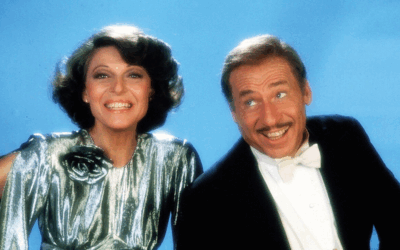
Brooks won the Oscar for The Producers screenplay and, in 2001, turned the film into a Broadway musical – still the most Tony-winning show in history, with 12 awards. Sixty years on, it continues to provoke hysteria with its audacity; no one has made a funnier – or more Jewish – show about Nazism. “It turned out to be my task to bring Hitler down,” he says cheerfully. It also gave him something close to starlit immortality. “I don’t care about immortality,” he adds, “I just try to live. The secret is not letting anything get under your skin. You gotta find the humour in it.”
Born Melvin Kaminsky in a Brooklyn tenement in 1926, the youngest of four boys, Brooks lost his father to tuberculosis at two, leaving what he calls “a brushstroke of depression”. The next year brought the Great Depression itself. His life changed at nine when his uncle took him to see Anything Goes. Watching Ethel Merman sing, he realised he wasn’t destined for a factory
Jewish-American life then was close-knit – families lived, worked and holidayed together, often in the Catskills’ Borscht Belt resorts, where Jewish comedians perfected jokes about ma-in-laws and matzo ball soup. Brooks was performing there by the age of 14, until the Second World War interrupted his fun. Enlisting at 18, he fought in France and Germany as a combat engineer. What does he remember about it? “I remember thinking there’s nothing better than a ham and cheese baguette on the Champs-Élysées. Delicious, but very treif.”
His three older brothers also served; one, Lenny, a B-17 engineer gunner,
was shot down. “He ripped off his dog tags before the Nazis arrested him – they said ‘H’ for Hebrew. If they’d known he was Jewish, they’d have sent him to a camp. Not that we even knew about those then.” Brooks pauses. “I never use concentration camp humour. It’s just too devastating.”
Returning to America, he found antisemitism alive and well – universities with Jewish quotas, clubs and corporations barring Jews and Hollywood blacklists. By the early 1950s, he was writing for Sid Caesar’s Your Show of Shows alongside Carl Reiner, Neil Simon and a teenage Woody Allen. “Then McCarthy’s people came to question us,” he recalls. “Carl said, ‘Come in! Have a coffee!’ They asked if we knew any communists. Carl said, ‘Many – but I didn’t know they were communists, they were just in showbusiness.’ He was brilliant. I thought, ‘Might as well make them laugh – it’s our best defence.’”
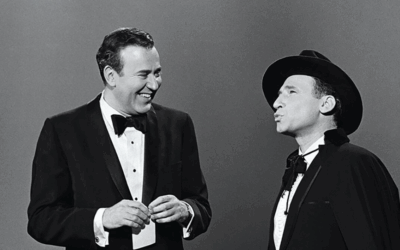
Brooks has made people laugh for six decades. His films, along with Allen’s, reshaped the image of American Jews – clever, urbane, funny – while writers like Roth and Bellow did the same in literature. “Ah, but we didn’t know it then! And that’s kind of gone away,” he says softly. And the rise in nationalism and antisemitism now? “I worry about authoritarian governments, and there are so many now. But I’m too old to go to rallies,” he sighs, waving a weary “oy vey” hand. Any concern that The Producers revival would be hit by antisemitism? “No,” he shrugs. “The Producers was never tagged a Jewish play – which is funny.” And the nature of antisemitism? “We’re attacked for being billionaires and attacked for being communists. If you need a scapegoat, you can’t do better than the Jews. But you know, Jews will survive.”
The other writers on Sid Caesar’s shows became Brooks’ friends for life, though only Allen, who has just turned 90, survives and they’re still close.
“The wonderful thing about Woody,” Brooks says, “was that after working on Caesar’s show, he’d always walk me home, all the way uptown, just walking and talking. It’s a pity he’s being crucified now for no reason,” he adds, referring to the allegations that surfaced in 1992 after Allen left his long-term partner, Mia Farrow, for her adopted daughter, Soon-Yi Previn.
Brooks’ first marriage, which produced three children, ended in divorce. In 1961 he tagged along with a friend to see Anne Bancroft rehearse for a concert – and fell instantly in love. They married in 1964 and had one son, Max, an author. “The minute I met Anne, I knew!” he shouts. “She had such joie de vivre, she was the best actress that ever lived, and she whirled me round the dance floor like I was a feather. Plus she made great pasta fazool.”
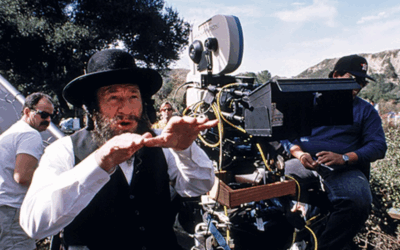
It was Bancroft who urged him to direct, leading to The Producers and a run of classics – Blazing Saddles, Young Frankenstein, High Anxiety, Spaceballs and Robin Hood: Men in Tights. In 1980, he founded Brooksfilms to make dramas such as The Elephant Man and The Fly, but also to produce Bancroft’s passion projects, such as 84 Charing Cross Road (1987). “Anne got the Bafta. We had such adventures,” he says wistfully. Asked if he watches her films late at night, he trails off. “I…” Some memories are still too painful.
Yet he keeps writing. Brooks is overseeing a TV version of Young Frankenstein – Very Young Frankenstein – and a sequel to Spaceballs, with Rick Moranis returning, Josh Gad as a co-writer and Brooks once again playing wise old Yogurt, the Yiddish Yoda.
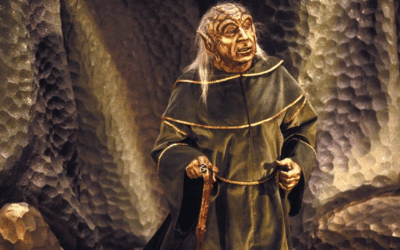
Elon Musk is a big fan of the original. His Teslas have a ‘ludicrous’ and ‘plaid’ mode, the spaceship’s fastest speeds in Spaceballs. “Yeah, he invited me to SpaceX, but I said no,” Brooks says. Why? “Well, he’s a little nuts. And he’s
a billionaire. That’s too big a jump for me.”
It would be like going to warp speed without a seatbelt – and at 99, Brooks is keeping his funny bones firmly on the ground.
The Producers runs until September 2026 – thegarricktheatre.co.uk

Keep community journalism free.
Jewish News is free for everyone. No paywall. No barriers. Just trusted journalism for anyone who wants to stay connected to Jewish life in Britain.
If you value that, please support us.
From as little as £5 a month, you can help keep our journalism free and accessible to all.
Every day, we report on the issues that matter to our community. We celebrate achievements, support charities, challenge antisemitism and ensure Jewish voices are heard more widely.
From as little as £5 a month, you can help us continue to:
- Report on the stories shaping Jewish life in the UK and beyond
- Bring our community together through shared stories, events and campaigns
- Celebrate the people, culture and moments that define our community
- Support organisations doing vital work across Jewish Britain
You can make a one-off donation or become a regular supporter. Every contribution helps keep our journalism free, independent and accessible to all.
If everyone who values Jewish News gave a small amount, it would make a real difference to our future.