Prefer Jewish News on Google
The Battle is Not Over
Ninety years after the Battle of Cable Street, a proud Jewish bloc will march through the East End this Sunday to ensure the Jews who stood against Mosley are not forgotten
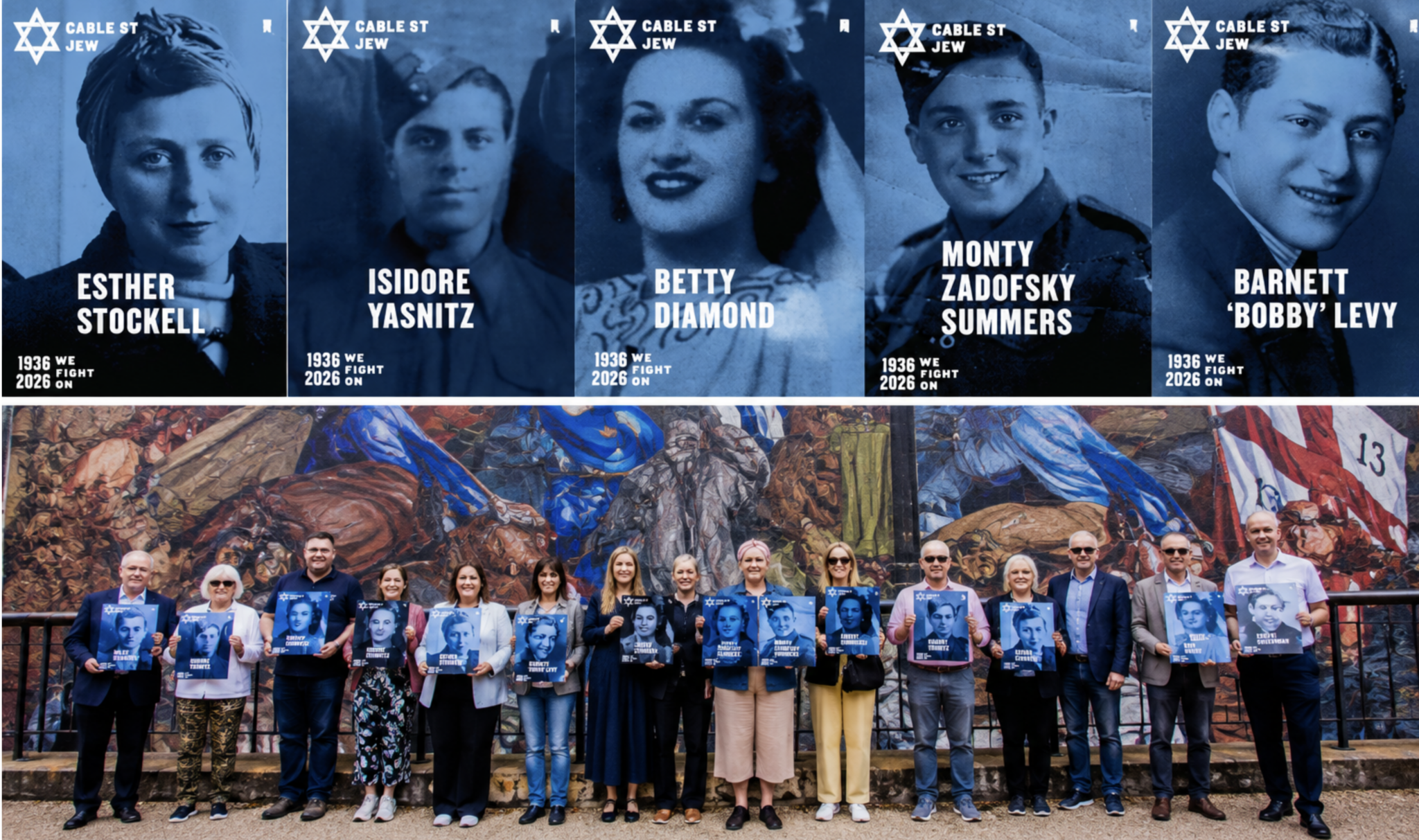
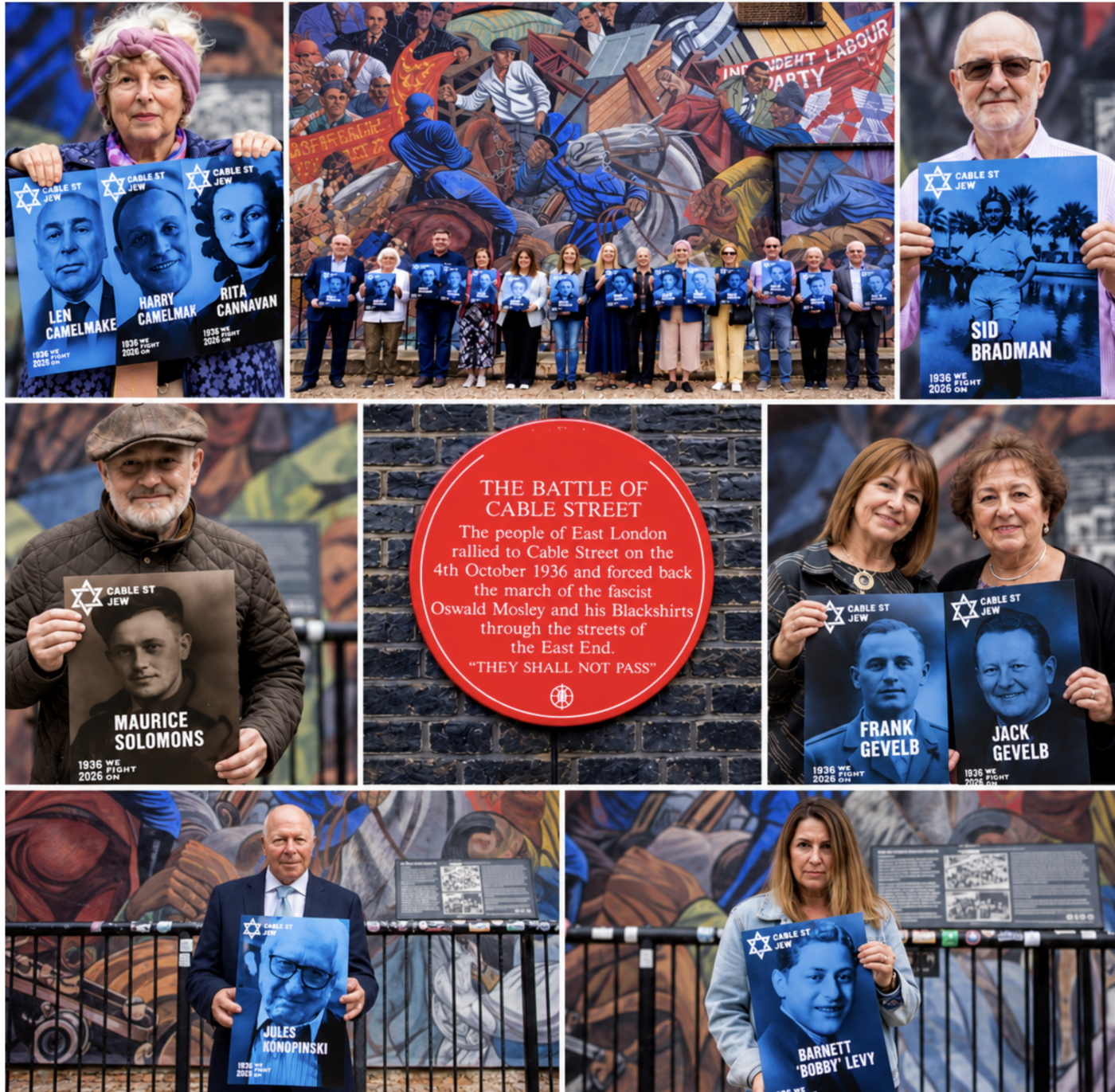
Moss, Betty, Maurice, Cissy, Moshe, Isidore and Victoria are going back to Cable Street, E.1 on Sunday. Not in person, but on placards held high by a new generation of Jewish marchers, 90 years after they and thousands of others stood on those same East End streets to stop Sir Oswald Mosley and his Blackshirts from passing through.
Grown men were ready to fight. Women armed themselves with whatever was to hand. Children watched from upstairs windows or were hidden inside their homes as barricades went up across their neighbourhood.
On Sunday, their faces will return as part of a proud, unapologetically Jewish bloc formed by Cable Street Jews, Stop the Hate, Our Fight and other Jewish activists, marking the 90th anniversary.
Unite announced the anniversary march and rally back in June, stating they would bring together trade unions, political organisations and anti-fascist groups. But when the event was announced, Jewish activists were horrified to see that the Jewish community and antisemitism were absent from the story being told. This was brought to Unite’s attention and they amended the announcement and publicity to acknowledge both.
With Jeremy Corbyn among the prominent political figures involved in the anniversary events and a key speaker at the rally, the omission was particularly sensitive for the Jewish community and its activists, given the controversies over antisemitism during his leadership of the Labour Party.
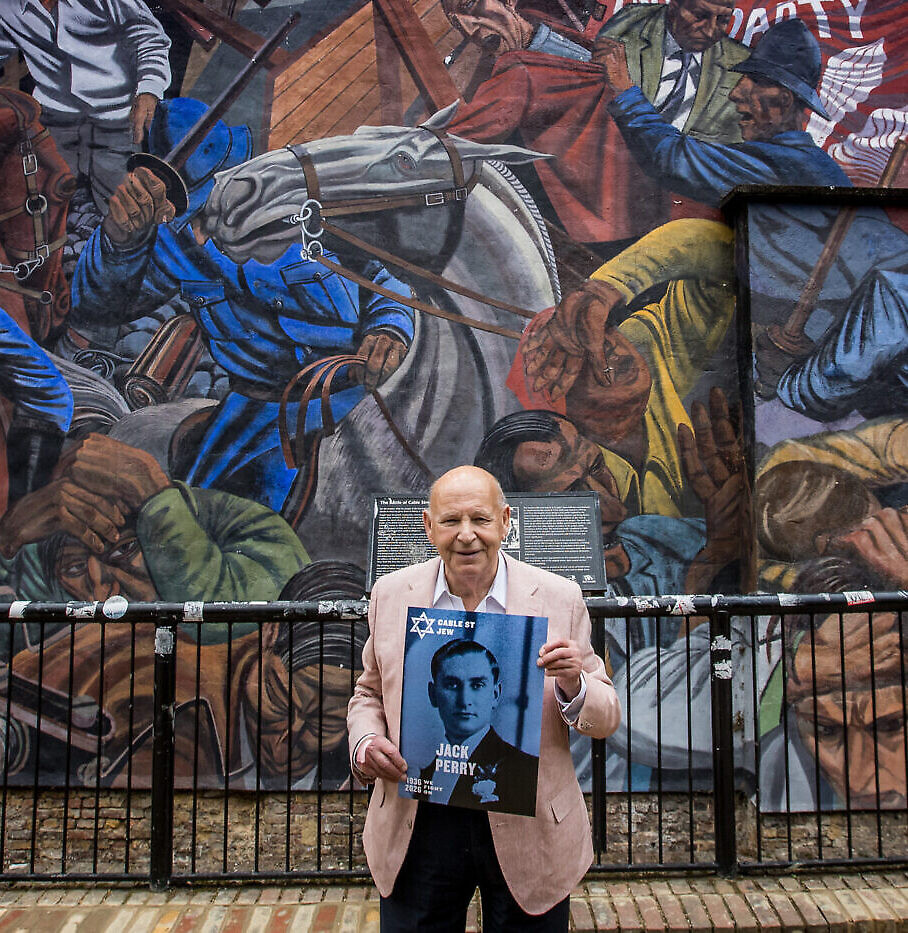
For those forming the bloc, being visibly Jewish on the streets of Cable Street 90 years later felt essential. Eve Kay, an organiser and one of the Jewish march initiators, says the portraits being carried on Sunday are about putting the people who were there back into the story.
“Relatives will hold their veteran portrait placards, others will hold our specially created banners and Magen David flags. The idea that the struggle of tens of thousands of Jews who put their bodies on the line to stop the ugliness of fascism can somehow be forgotten is unthinkable. Mosley’s march was against the Jews. That was its focus. So we will never let them be erased from this story. We are remembering their courage — the courage we need now.”
The Jewish bloc will meet at Aldgate East before joining the wider march with an unequivocal message: JEWS ARE HERE TO STAY. And behind those faces on the placards are extraordinary stories. Debbie Lee and her cousin will carry a placard of her grandparents Moshe and Esther and great-grandfather , Abe Stockell.
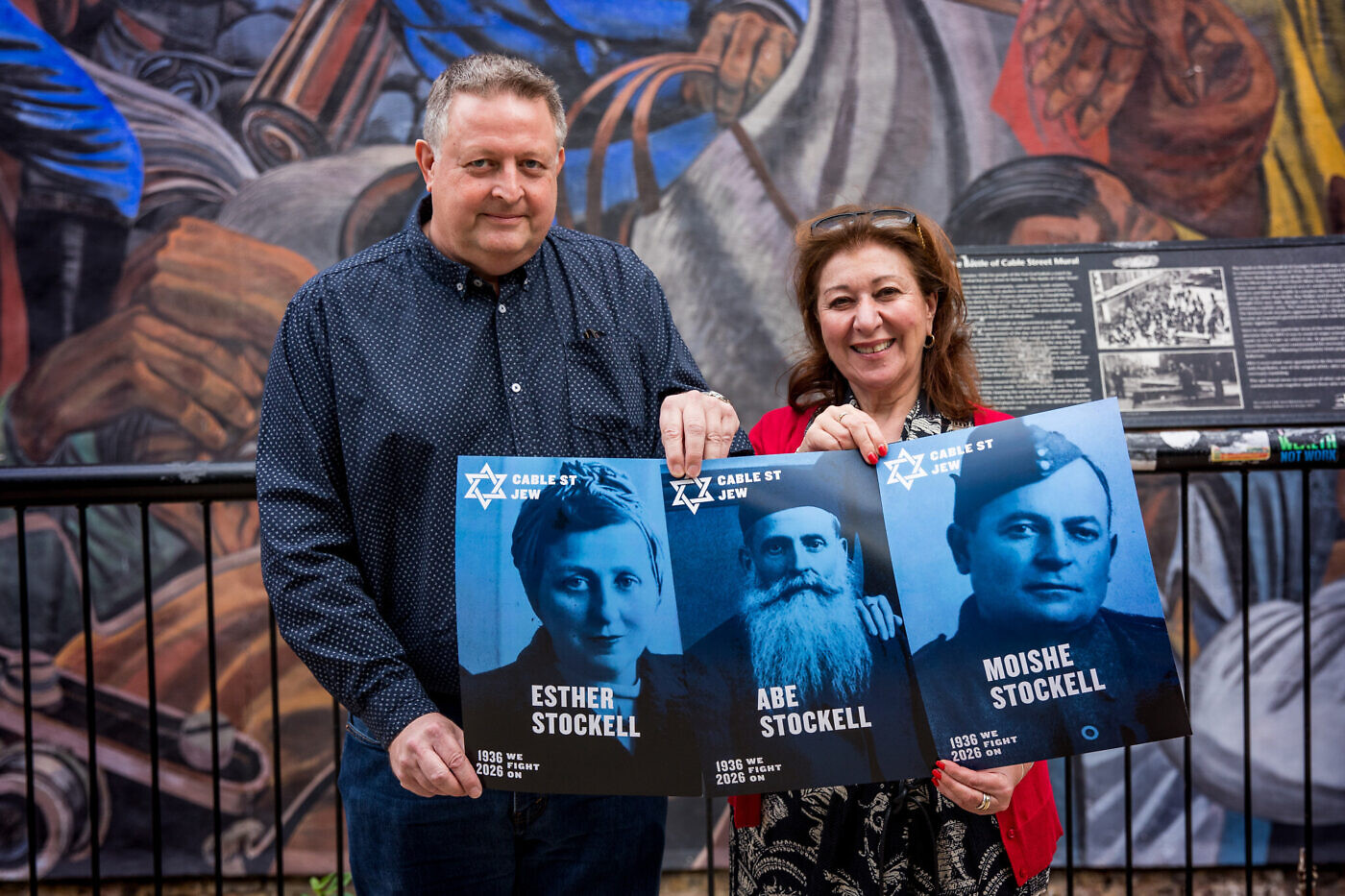
They lived at 25 Cable Street and Debbie tells the story passed down by her mother who was hidden with her younger sister beneath the kitchen table while a heavy dresser was pushed against the kitchen door in case the Blackshirts got in.
“It was the first time she experienced fear,” says Debbie. For Moshe, that fear had a history. He had witnessed pogroms and feared what could happen if Mosley’s demonstration succeeded. “My grandfather had no choice. It was fight what and whoever to protect his wife and children. He would not stand back and see his family at risk. He didn’t care if he got arrested or beaten. He was going to put himself on the front line.”
And he did. But he wasn’t alone. Dockers, Irish East Enders, communists and others stood shoulder to shoulder with their Jewish neighbours. Moshe later described Cable Street as “London’s finest hour.”
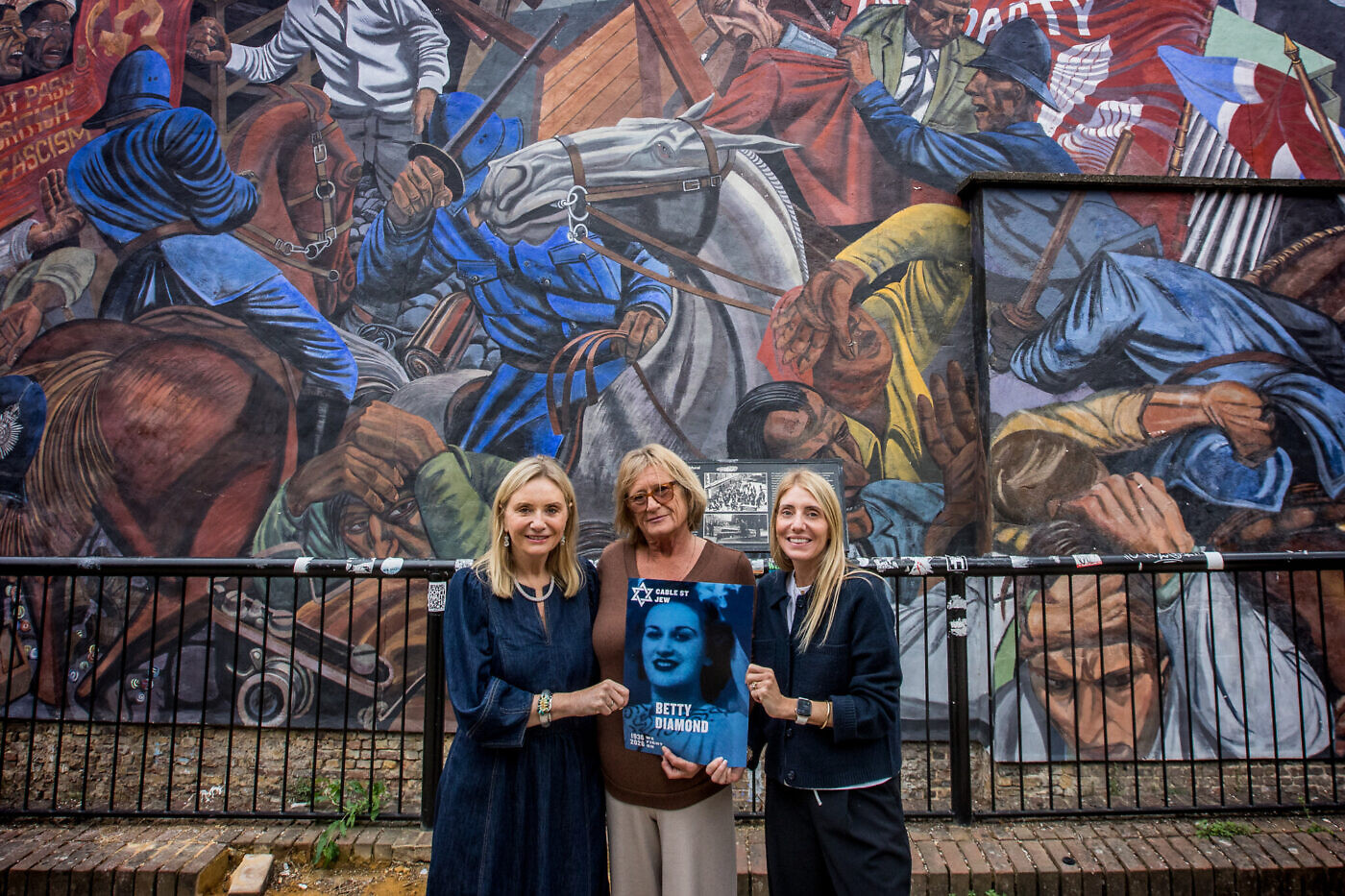
For Betty Diamond, the view was that of a 10-year-old girl. Her daughter Susie Foottit says Betty remembered standing with her hands firmly on her hips and shouting: ‘They shall not pass!’ “What stayed with her throughout her life was not only the confrontation itself, but the extraordinary sense of solidarity she witnessed that day —people standing together, united against fascism. For a ten-year-old girl, it was a powerful thing to see and it remained a memory of ordinary people coming together and standing up for one another.”
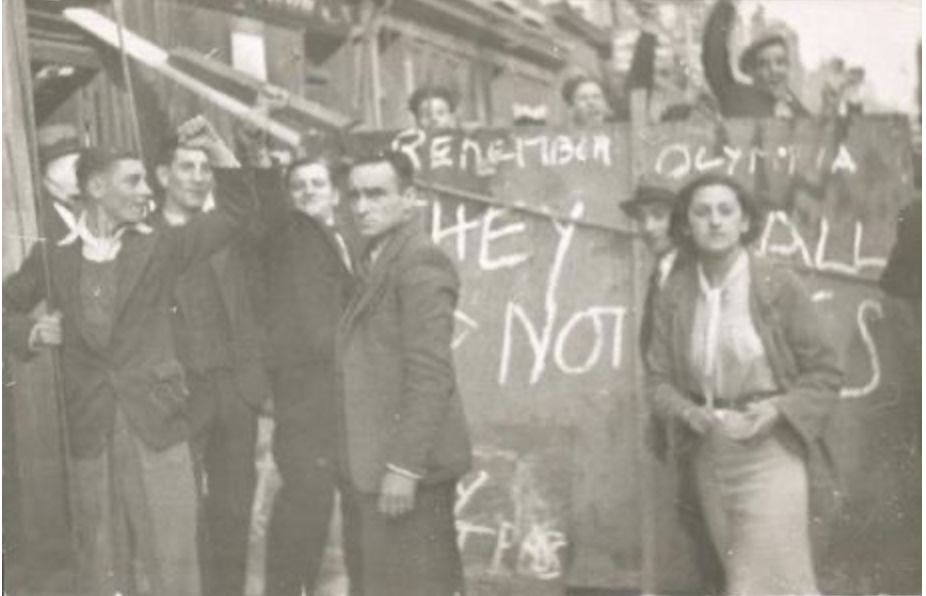
Cissy Sussman was there too. Her grandson Keith Sussman has a remarkable photograph of his grandmother taken on the day itself, standing outside one of the barricades.
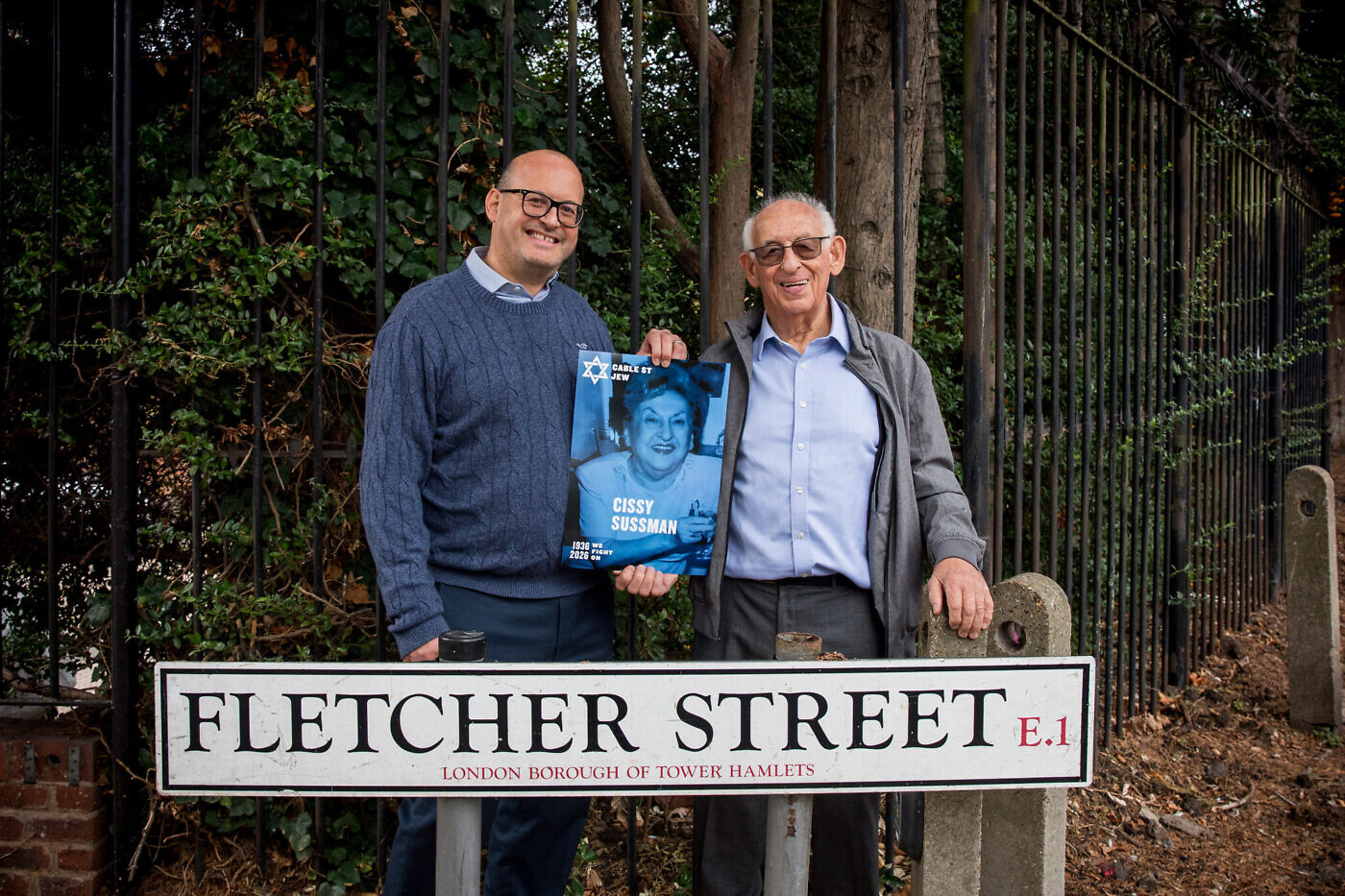
And Isidore Yasnitz from Bethnal Green and Victoria Rand from Stepney were just 19 and 17. Their daughter Shirley McKeon grew up hearing about two politically active Jewish teenagers. “My mum and dad told me how they would demonstrate against the Blackshirts, often ending in a fight,” says Shirley. On 4 October they joined those building the barricades.
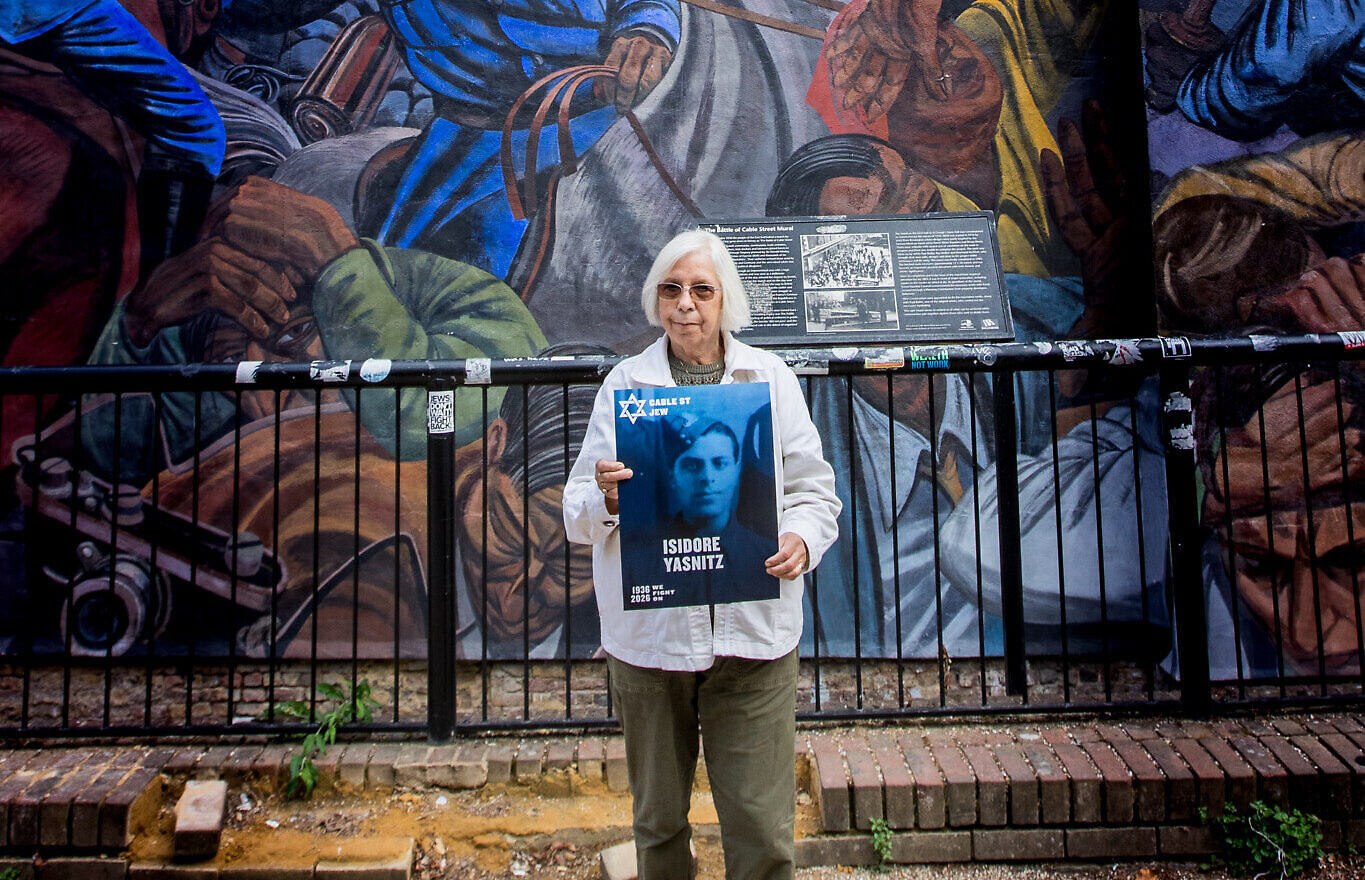
“The police protected the Blackshirts. However, the local community came out to support the Jewish people. It became a violent clash, but they won and the Blackshirts retreated. What a victory! I’m so proud of my mum and dad.”
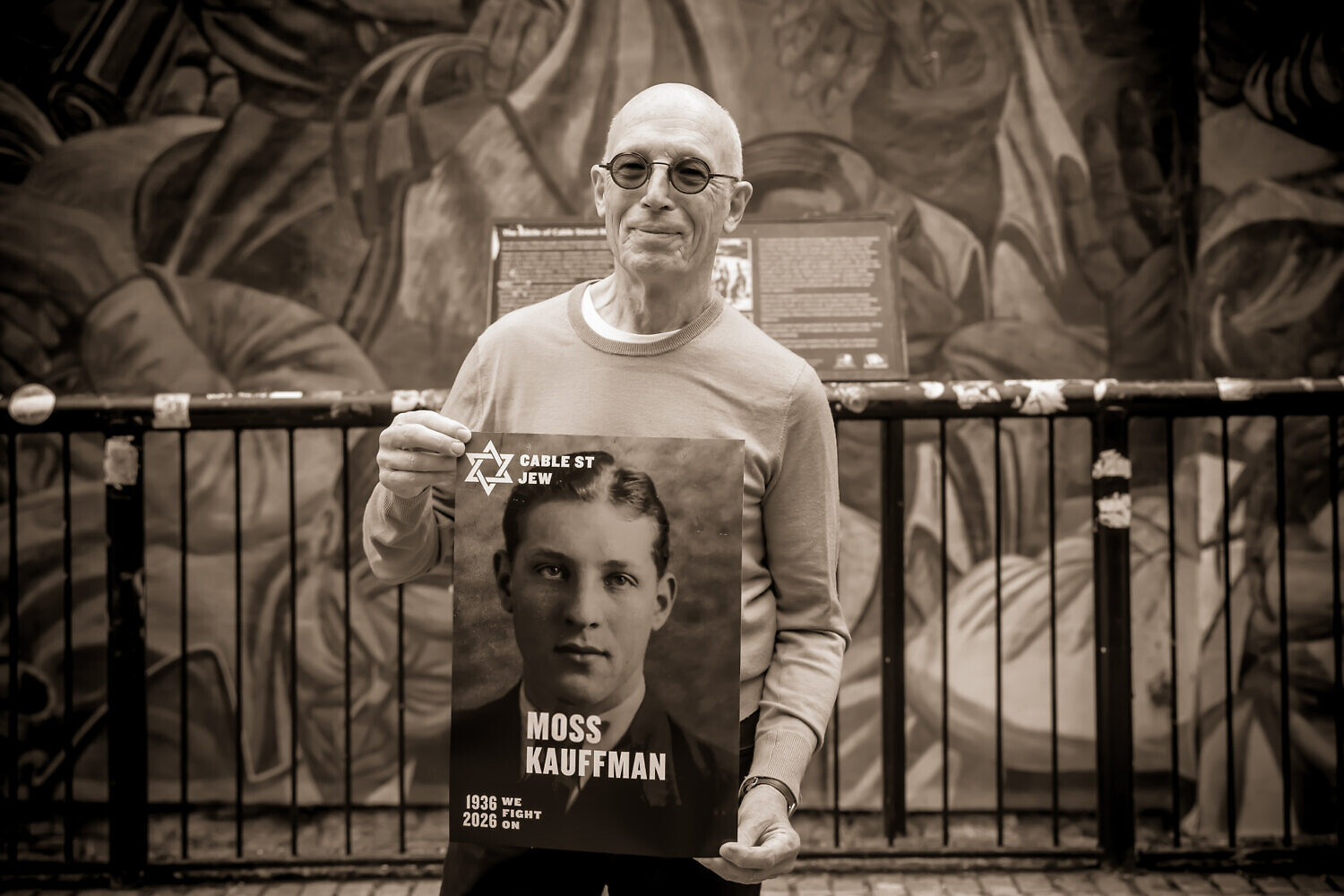
Another face returning on Sunday belongs to Moss Kauffman, father of lawyer Laurie Kaye. Moss, born in 1920, became a jazz musician. A bandleader who wanted his musicians to have more “English”-sounding names turned Kauffman into Kaye. Moss was a lifelong Labour supporter and a committed Zionist. “He saw absolutely no contradiction between being Labour and being a Zionist and a staunch supporter of Israel,” says Laurie. “Quite the reverse. For him, those values went hand in hand.”
Moss will be there on Sunday. So will Betty and hundreds of others representing their families. “Solidarity should never require the people who were the targets to disappear from their own story” added Eve Kay. Ninety years after they stood their ground, their faces will once again move through the streets of the East End. This time their children and grandchildren will be carrying them.
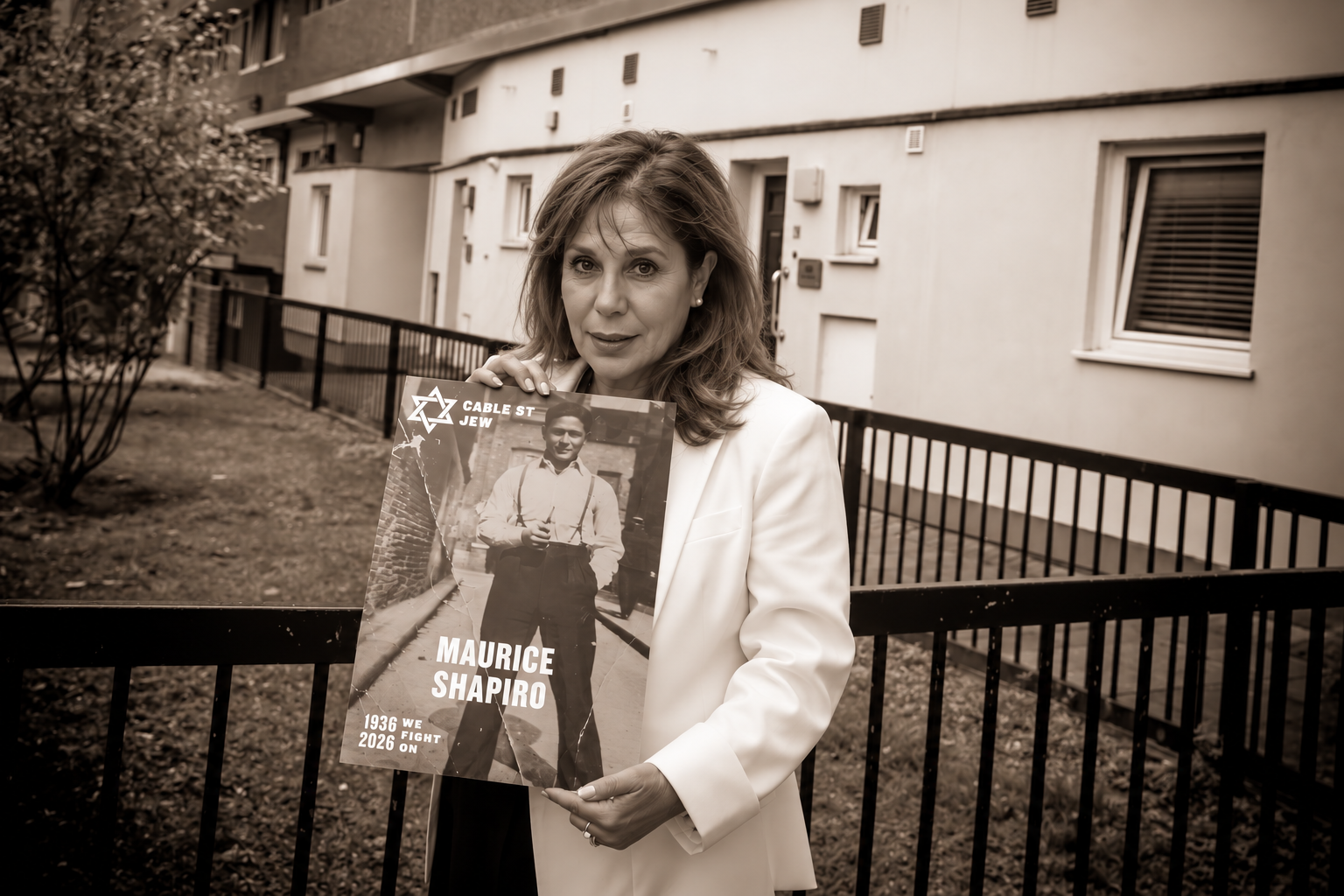
And then there is Maurice. Maurice Shapiro grew up at 100 Cable Street, the son of Solomon Shapiro. He later anglicised his surname to Shaw, but he was always a Shapiro at heart. He was also my grandfather. I only discovered the address days ago while researching my East End family history ahead of the anniversary. Suddenly Cable Street stopped being merely a famous chapter in British Jewish history. It was where my family lived. Maurice had been a boxer and brought that fighter’s mentality with him in 1936. Trust me, my grandfather wasn’t a man anyone wanted to start with. He never shouted. There was no need. He could achieve more with a warning delivered in a whisper than most people could with a yell. He was also ridiculously handsome, which only added to his ability to command attention. He belonged to a generation of Jewish men we don’t seem to see as much anymore. Unafraid, unapologetic about existing and prepared to move out of no one’s way.
He didn’t tell me much about Cable Street. It wasn’t something he would discuss with me when I was young and, by the time I was old enough to know the questions I should have asked, Britain seemed to have entered a sunny period when antisemitism felt as though it belonged to another age.
It doesn’t feel like that now. Which is why Sunday’s march is about more than looking back. Cable Street belongs to everyone who stood against fascism that day. But solidarity should never require the people who were the target to disappear from their own story. On Sunday, they won’t.
Sunday 4 October 2026
Jewish bloc: Aldgate East Station, 12 noon
Register here: https://tally.so/r/1AjQ5W

Keep community journalism free.
Jewish News is free for everyone. No paywall. No barriers. Just trusted journalism for anyone who wants to stay connected to Jewish life in Britain.
If you value that, please support us.
From as little as £5 a month, you can help keep our journalism free and accessible to all.
Every day, we report on the issues that matter to our community. We celebrate achievements, support charities, challenge antisemitism and ensure Jewish voices are heard more widely.
From as little as £5 a month, you can help us continue to:
- Report on the stories shaping Jewish life in the UK and beyond
- Bring our community together through shared stories, events and campaigns
- Celebrate the people, culture and moments that define our community
- Support organisations doing vital work across Jewish Britain
You can make a one-off donation or become a regular supporter. Every contribution helps keep our journalism free, independent and accessible to all.
If everyone who values Jewish News gave a small amount, it would make a real difference to our future.