Prefer Jewish News on Google
The BBC isn’t perfect, but we would all be worse off without it
A Jewish Book Week debate revealed deep anger over Israel coverage. But the rush to tear down Auntie ignores what Britain would lose, writes a former BBC executive
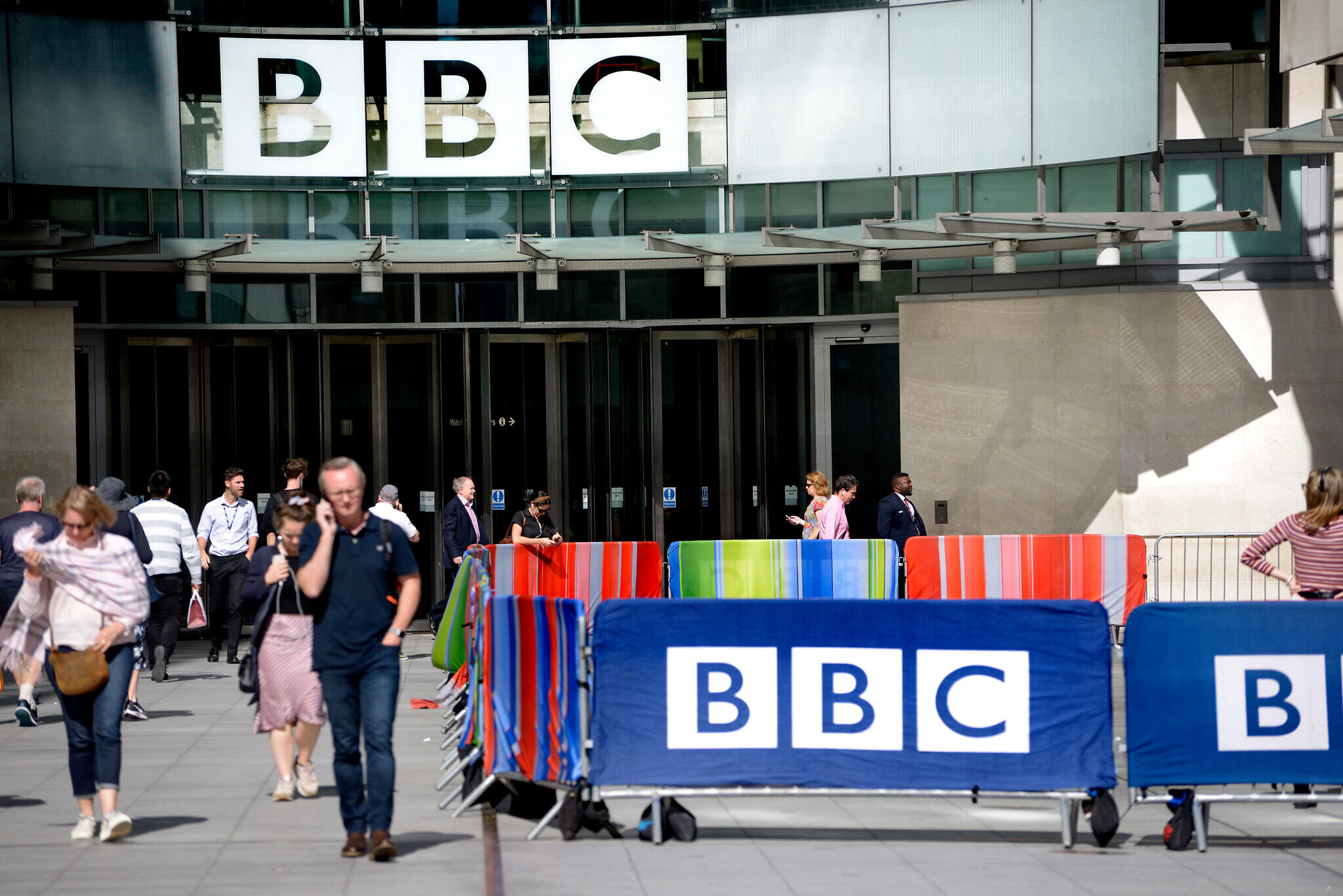
Last weekend in front of a packed Jewish Book Week audience the future of the BBC was debated under the banner ‘Can We Still Trust Auntie?’. Barrister Natasha Hausdorff of UK Lawyers for Israel poured invective on the corporation, while journalist Robin Lustig defended and educator Anthony Seldon gave a broader cultural perspective.
In a febrile atmosphere, the names of bogeymen Jeremy Bowen and Gary Lineker drew visceral reactions from the crowd. I understand why many in the Jewish community feel bitter about BBC coverage of Israel. I share many of their concerns. But while Hausdorff makes some good points, her fluid delivery shouldn’t blind us to the real agenda.
When she says about the licence fee – ‘Today it has become an absolute disgrace that this is still a cost imposed on the taxpayer’ – she seems to be gunning for the corporation’s very existence. That would be hideously short-sighted.
For over 20 years I was a BBC series and executive producer on output including Holocaust Memorial Day, a programme I doubt any other broadcaster would touch.
I’ve always had to field a lot of ‘How can a nice Jewish girl like you work for the BBC?’ comments, which I find bewildering. The BBC is one of our great cultural institutions and the envy of the world. I was proud to be a small cog in the machine.
Even if we agree that news is problematic, it consumes just over one tenth of the £3 billion content budget. The vast majority of the money goes on world-class documentaries, history, live events – Traitors, Blue Planet, Peaky Blinders, Strictly, Trooping of the Colour, Happy Valley, sport, symphony orchestras, 50 radio stations. Let’s not forget the quality Jewish history and culture programming from Howard Jacobson to Simon Schama – even, dare I say it, my own husband’s documentary Canvey the Promised Island, about the Charedi community moving to Essex. Comparing favourably with any other national broadcaster, it is truly one of Britain’s crowning glories.
Nor should we underplay the sheer complexity of delivering news about the Middle East. I wonder what the balance of the debate would have been if it had included a representative of the Muslim community. They are just as critical of BBC News as many Jews, but in the opposite direction.
The lack of this perspective made the discussion regrettably one-sided. I recently spoke with an ex-colleague who spelt out the problem: complaints in roughly equal numbers from pro-Israel and pro-Palestine viewers tends to engender a sense of being somewhere in the middle, which makes news executives feel they must be getting it roughly right.
Whether that is misguided is for clearer minds than mine to adjudicate.
I could see why Seldon spent much of the debate with his head in his hands. It’s too easy to criticise news gatherers from the comfort of our sofas. The reality of life amid the chaos of the frontline is way more complex than we can possibly imagine, with a barrage of editorial choices being forced on the correspondent moment by moment in the unremitting 24 hour news cycle. I am in awe that they do the job at all.
Ms Hausdorff makes it all sound very easy. But her worrying degree of certainty strikes me as the unfortunate byproduct of a private school and Oxbridge education. Balance and due impartiality are difficult things to achieve. Our criticism of Auntie should be a multi-faceted discussion, not a hand grenade.
As my relatives are sitting in bomb shelters in Tel Aviv, I absolutely know why it is difficult for us to be dispassionate about this issue. But let’s not tar the entire corporation with the sins of BBC News. Though Auntie is imperfect, once gone she can never be brought back, which would be a national tragedy. The rest of the world would think we had lost our heads. We need to look after her.

Keep community journalism free.
Jewish News is free for everyone. No paywall. No barriers. Just trusted journalism for anyone who wants to stay connected to Jewish life in Britain.
If you value that, please support us.
From as little as £5 a month, you can help keep our journalism free and accessible to all.
Every day, we report on the issues that matter to our community. We celebrate achievements, support charities, challenge antisemitism and ensure Jewish voices are heard more widely.
From as little as £5 a month, you can help us continue to:
- Report on the stories shaping Jewish life in the UK and beyond
- Bring our community together through shared stories, events and campaigns
- Celebrate the people, culture and moments that define our community
- Support organisations doing vital work across Jewish Britain
You can make a one-off donation or become a regular supporter. Every contribution helps keep our journalism free, independent and accessible to all.
If everyone who values Jewish News gave a small amount, it would make a real difference to our future.