Prefer Jewish News on Google
The buzz behind the honey
Ahead of dipping apples at Rosh Hashanah, meet the Israeli innovators using high-tech to save the bees we need for new years to come
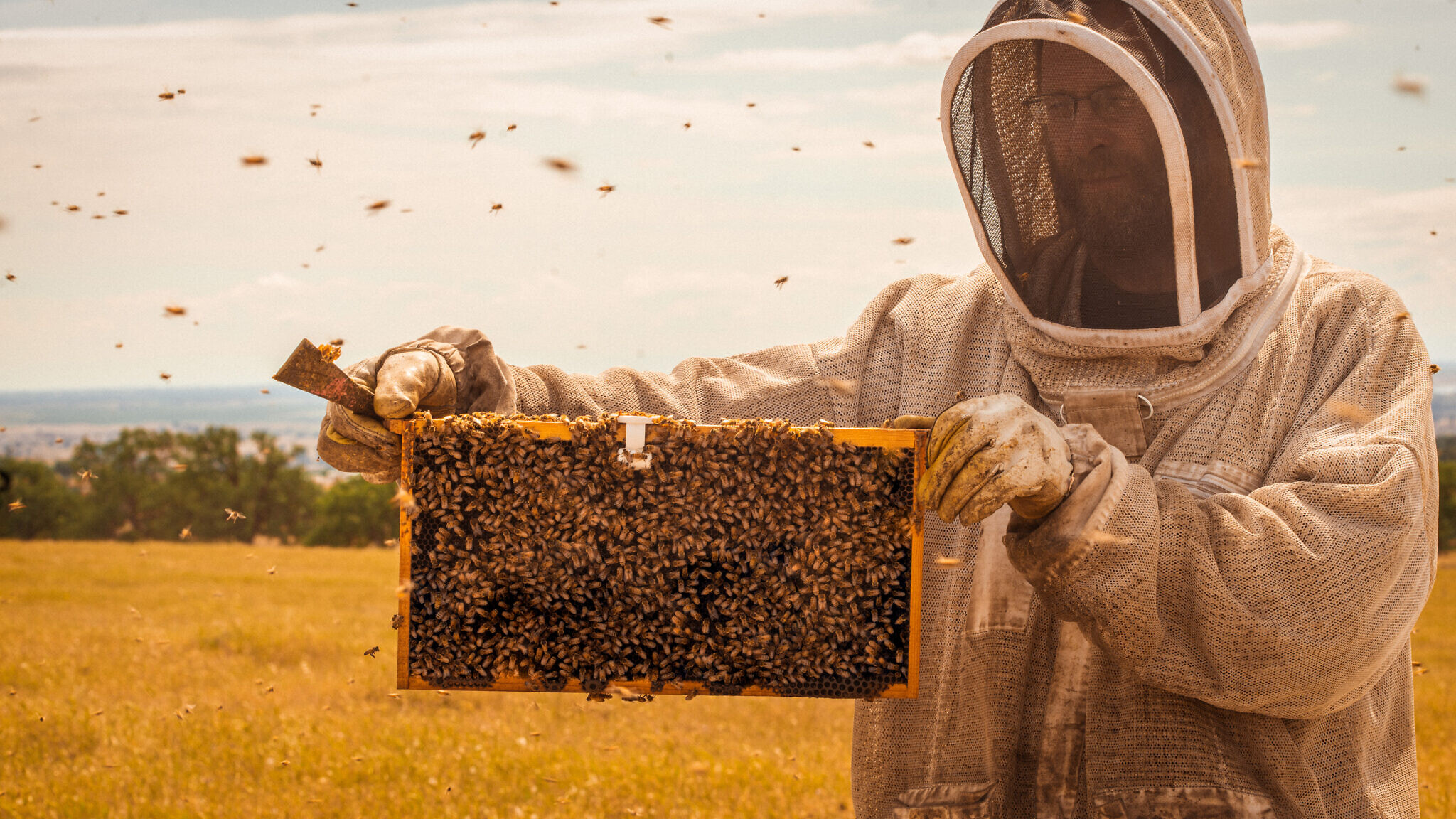
It should come as no surprise that it’s three Israeli entrepreneurs who discovered — among other things — that bees can “talk” to one another and send out real-time updates on the health of their Queen from inside the hive.
That’s just one of the many surprising, even magical side-effects of BeeHero, an award-winning Israeli company applying cutting-edge 21st-century technology to one of the world’s oldest agricultural practices.
Israel is, after all, widely known as the land of milk and honey. And while honey is deeply embedded in Jewish tradition — especially at this time of year when apples are dipped in it to welcome Rosh Hashanah — it’s easy to forget that milk, too, comes from cows who eat pollinated grasses. Without bees, there would be no milk, no apples, and certainly no honey.
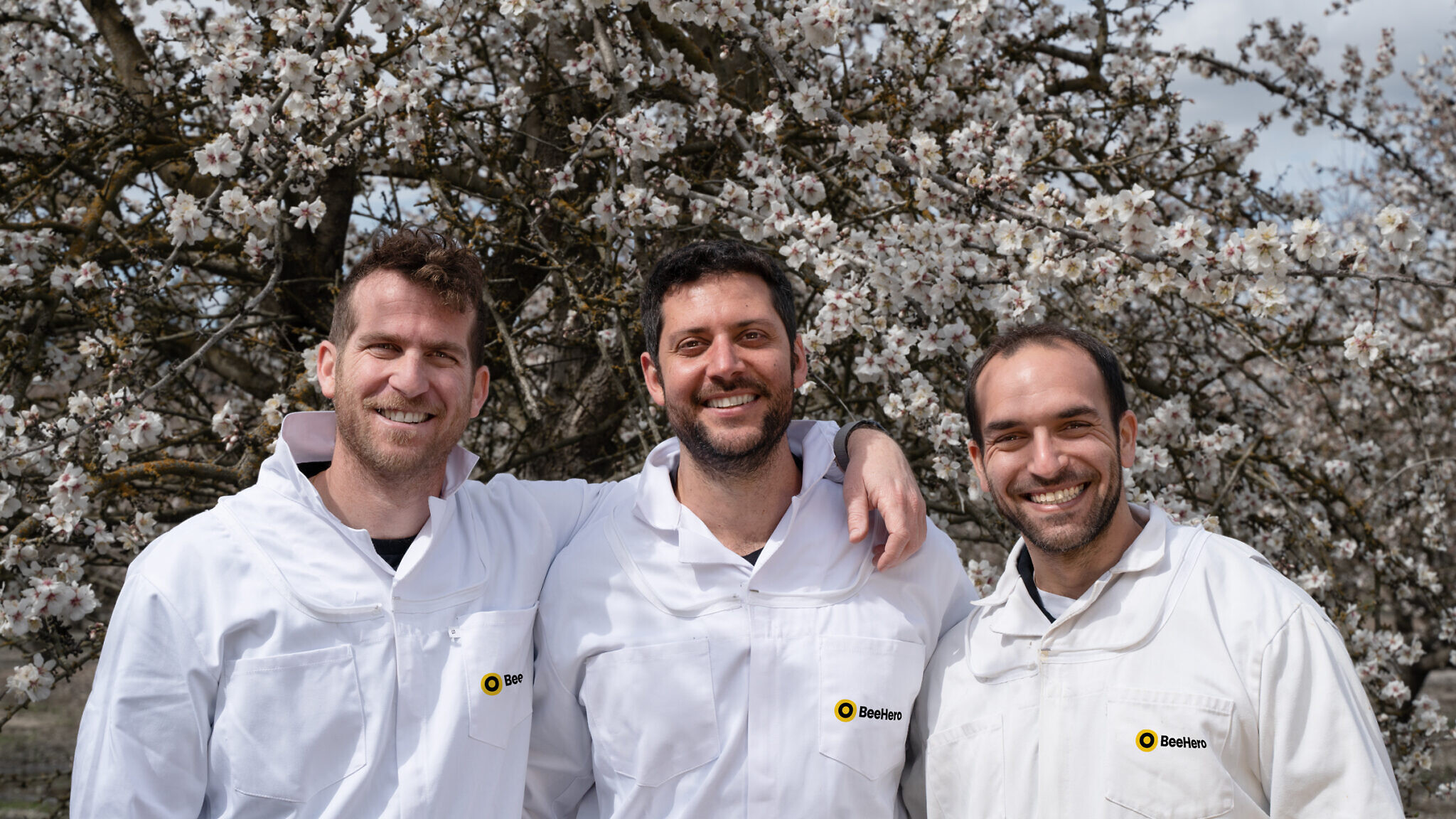
BeeHero was founded in 2017 by three close friends — Itai Kanot, Omer Davidi and Yuval Regev. Each brought different expertise and energy to the venture, but the original idea came from Itai, whose father, Boaz Kanot, is Israel’s largest private beekeeper.
Growing up on Moshav Avigdor, young Itai had a front-row seat to the slow decline of bee health. He watched year after year as his father’s hives weakened and yields dropped. “It always seemed strange to him,” says a colleague, “that everyone else in agriculture — grape growers, dairy farmers, even fish breeders — were using tech to boost their output, and yet his father was still doing things the old-fashioned way. Beekeeping hadn’t evolved in centuries.”




While studying a business sustainability course at Reichman University in Herzliyah, Itai met Omer Davidi — a seasoned entrepreneur with a background in Israeli start-ups and cybersecurity. As part of their final project, they set up a few experimental sensors in the Kanot family’s hives to test their theory: that data could change beekeeping.
“We wondered: could we modernise this ‘legacy industry’? Could we apply data science and machine learning to what was essentially a guessing game?”
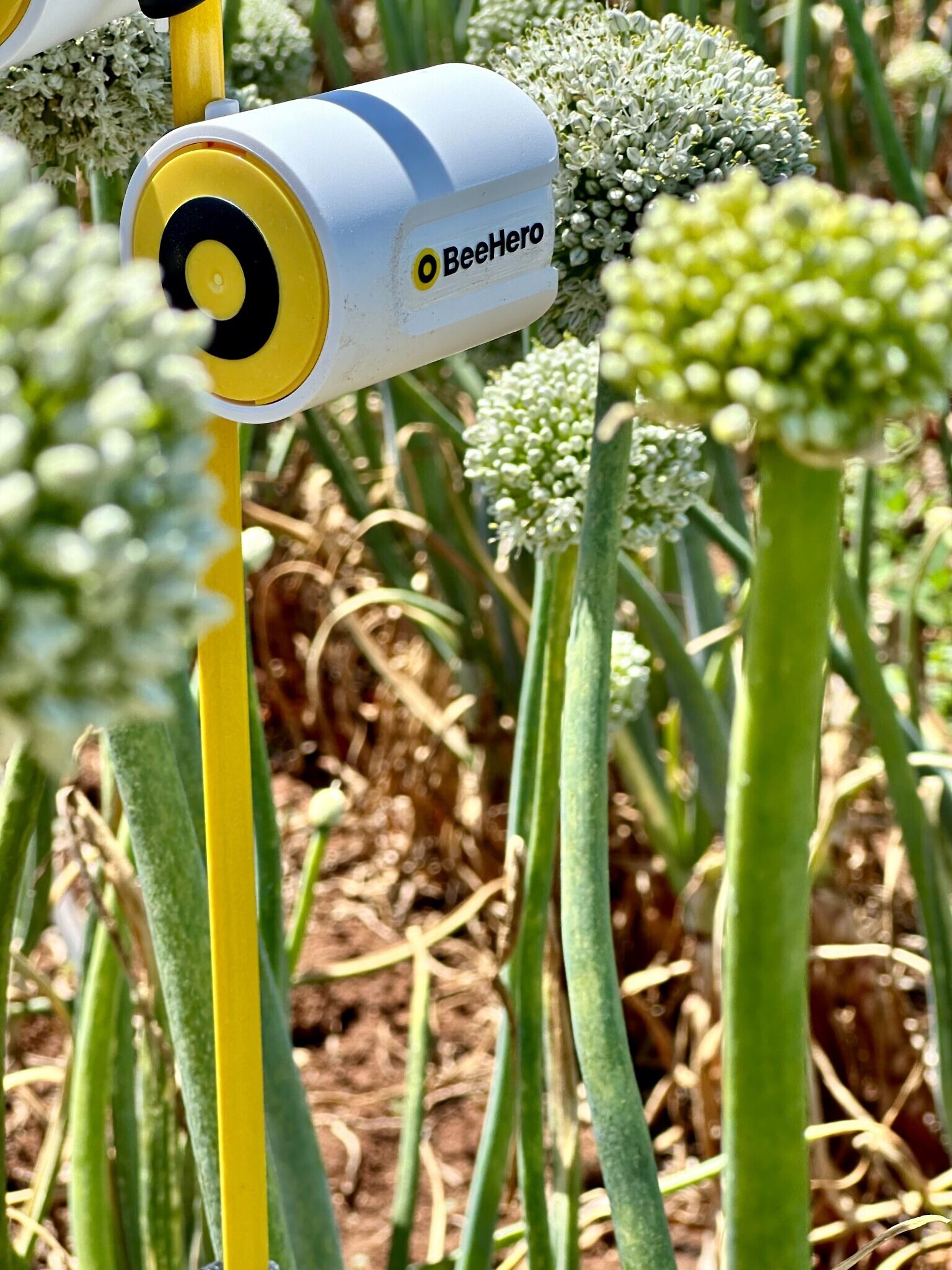 They were soon joined by Yuval Regev, a cyber and AI expert, now BeeHero’s Chief Technology Officer. What started as a backyard project quickly turned into a full-blown mission.
They decided to focus on the honeybee — just one species among 10,000 globally — but the one most vital to human food production. Around 75% of everything we eat depends on pollination. As populations rise and the climate becomes more unpredictable, improving that process isn’t just useful — it’s essential.
BeeHero’s breakthrough came in the form of two smart devices: an in-hive sensor and an in-field sensor. Historically, farmers improved natural pollination by physically transporting hives to fields during flowering periods. BeeHero steps in to optimise this whole process.
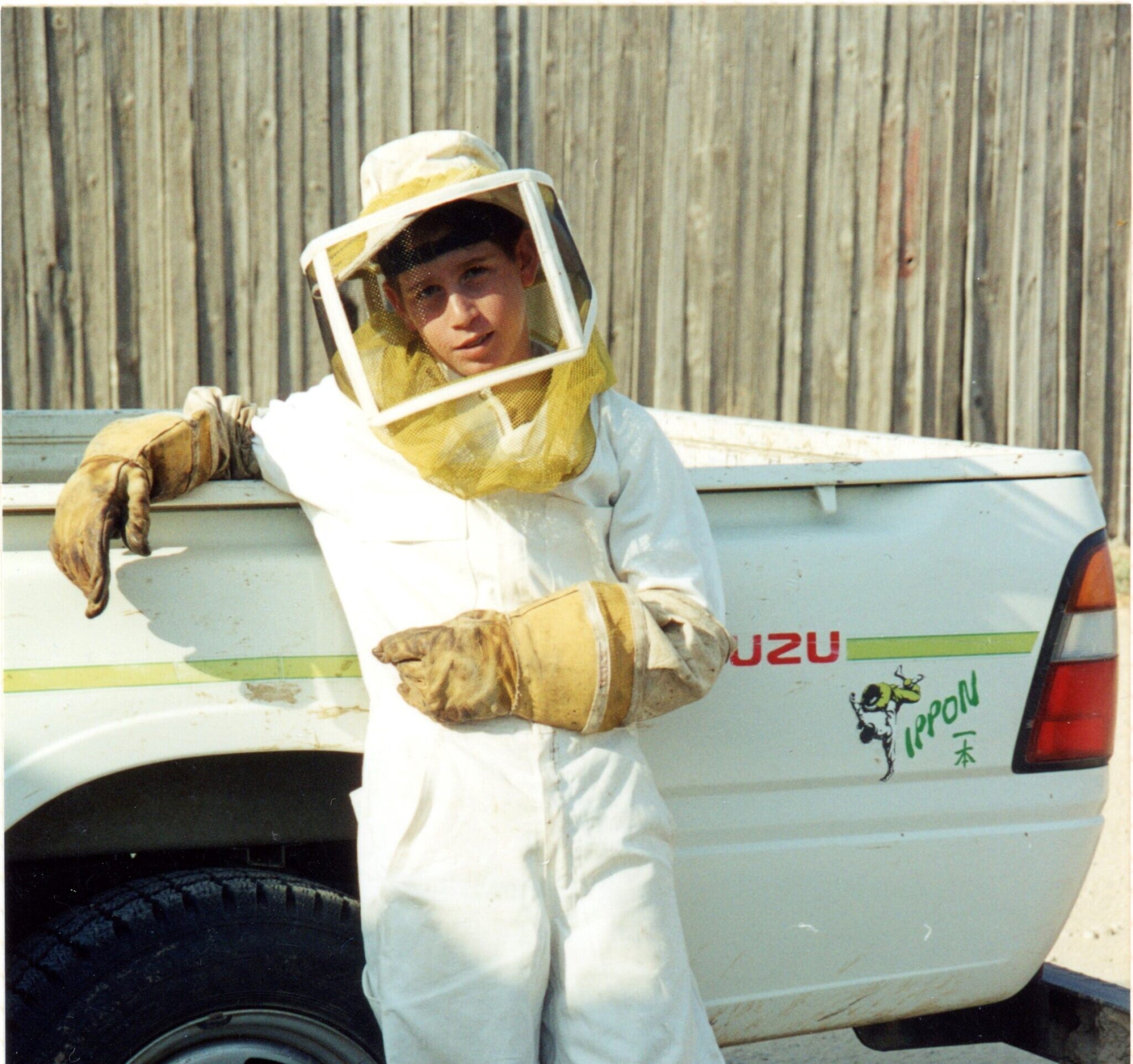
The in-hive sensor is a small, unobtrusive device placed inside the hive. It tracks humidity, temperature, vibrations, sounds, and light levels — all of which provide critical insight into the health and status of the colony. With this real-time information, commercial beekeepers — who often oversee thousands of hives — can step in early if something’s wrong.
Thanks to BeeHero’s proprietary software, these sensors are “the Google Translate of the bee world,” says the company. “Bees use vibrations and wing movements to communicate complex signals, including alerts about threats or a weakening Queen. We can now read those signals.”
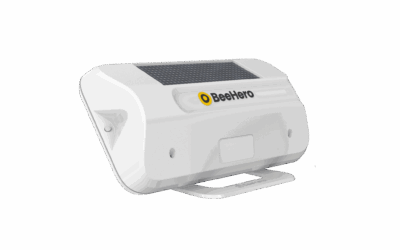 The second device — the in-field sensor — monitors the bees’ activity in the crops themselves. “We measure how many bees are visiting a field at any moment,” explains Davidi. “This helps farmers maximise pollination by adjusting the location or number of hives.”
This is Precision Pollination — the next evolution of Israel’s agricultural ingenuity, following in the footsteps of the globally adopted Precision Irrigation model.
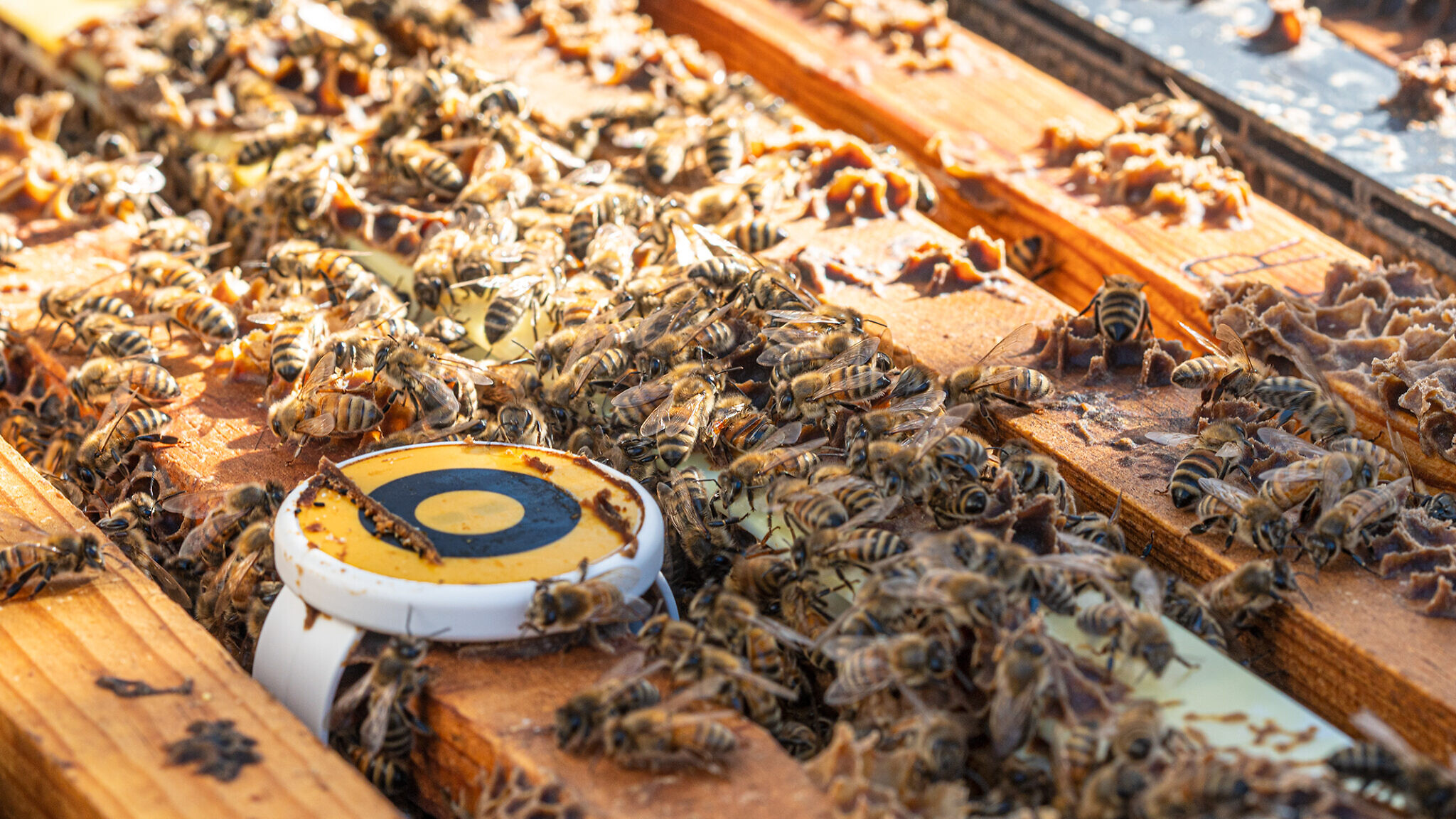
BeeHero rents both devices to farmers and growers on a subscription basis, ensuring that every hive is monitored and optimised. Instead of hoping for the best, they can now guarantee results.
The system is climate-agnostic and works globally. Currently, BeeHero operates in Israel, the US, Australia, New Zealand and Peru — countries with high-value crops that depend on effective pollination.
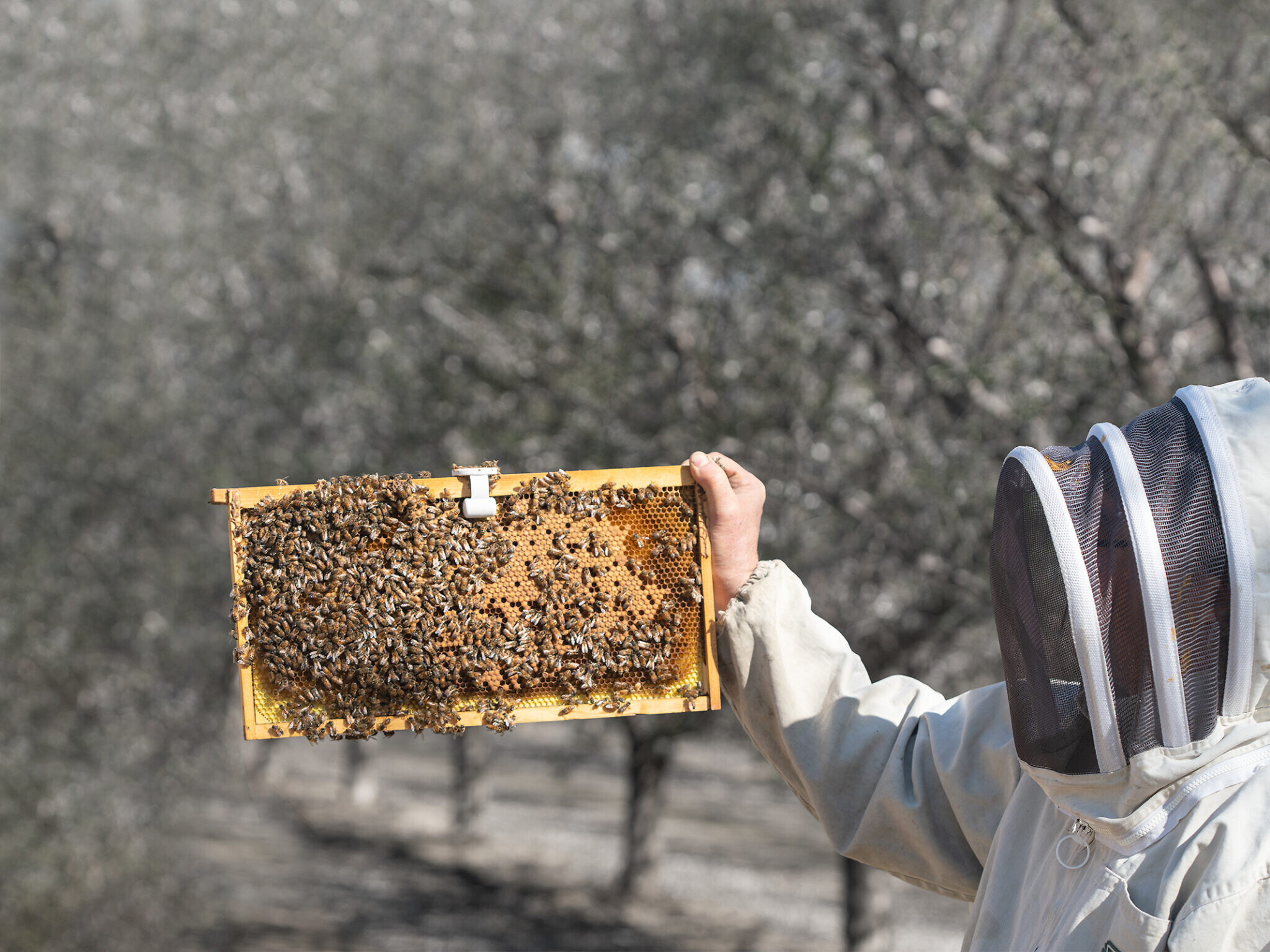
The impact hasn’t gone unnoticed. In 2024, Time Magazine named BeeHero’s in-field sensor one of its Inventions of the Year.
“We are very thankful to the bees,” the founders say. “They give us honey — of course — but also so much more. Our cows eat what bees help grow. There is no land of milk and honey without the bees. And to know that we’re doing this from Israel, helping farmers across the world, is something we feel deeply proud of.”

Keep community journalism free.
Jewish News is free for everyone. No paywall. No barriers. Just trusted journalism for anyone who wants to stay connected to Jewish life in Britain.
If you value that, please support us.
From as little as £5 a month, you can help keep our journalism free and accessible to all.
Every day, we report on the issues that matter to our community. We celebrate achievements, support charities, challenge antisemitism and ensure Jewish voices are heard more widely.
From as little as £5 a month, you can help us continue to:
- Report on the stories shaping Jewish life in the UK and beyond
- Bring our community together through shared stories, events and campaigns
- Celebrate the people, culture and moments that define our community
- Support organisations doing vital work across Jewish Britain
You can make a one-off donation or become a regular supporter. Every contribution helps keep our journalism free, independent and accessible to all.
If everyone who values Jewish News gave a small amount, it would make a real difference to our future.