Prefer Jewish News on Google

The government ignores the issue of the Muslim Brotherhood here at its peril
The UK conducted its last official review of the Muslim Brotherhood in 2014, with some worrying findings. More than a decade on, very little has been accomplished
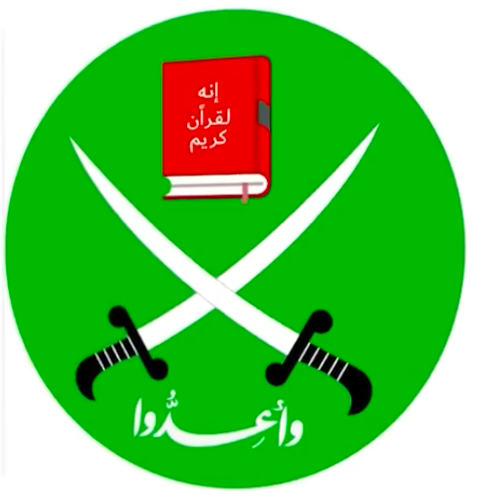
Last week, the Henry Jackson Society launched a fresh, and laudable, campaign to ban the Muslim Brotherhood in the UK. The campaign for proscription has steadily picked up steam in recent years, with senior figures in the Conservative party and Reform, including Nigel Farage, now supporting a ban.
The trend is the same with allies abroad. President Trump recently proscribed some foreign chapters of the group as terrorist organisations in the US, while France published their largest internal review of the organisation’s influence to date in May last year. A ban in the UK is long overdue, but so too is a fresh inquiry to establish the scope and size of the Muslim Brotherhood in Britain.
The UK conducted its last official review of the Muslim Brotherhood in 2014 at the behest of David Cameron. The report revealed a number of worrying details on Brotherhood activity in the UK, including a ‘complex network of charities’, some of which have been ‘linked to Hamas’. In March last year, the Charity Commission began investigating London-based charity ‘Save One Life UK’ for alleged material support for Hamas, the Muslim Brotherhood’s chapter in Gaza, via their fundraising. The 2014 review also described substantial historical Brotherhood involvement in organisations like the Muslim Council of Britain and the Muslim Association of Britain, which have, according to the review’s findings, ‘consistently opposed programmes by successive Governments to prevent terrorism.’
A decade of inaction has hinged upon the idea of the Brotherhood as an extreme, but not necessarily violent entity. This is a fundamental misunderstanding of the organisation’s relationship with violence. The 2014 review identified the Brotherhood’s strategic use of violence, happily adopted in cases where gradualism stalls or ‘proves ineffective’.
As HJS points out in their new campaign literature, there is no requirement in the Terrorism Act 2000 for a proscribed organisation to have actively carried out violence in the UK. Support for violence and the potential for violence is more than enough to consider proscription.
How much worse has the problem gotten, then, after a decade of inaction? The 2025 internal report by the French government identified the UK as a particular example of bad practice when dealing with the subversive nature of the Brotherhood. It found that the UK’s lack of strategy in recent decades has allowed the Brotherhood to grow to a level difficult to address; this is further complicated by the UK’s strong protections for charities and freedom of association.
Naturally, the UK government has not responded to France’s findings in the way other countries mentioned, like Sweden, have.
The relatively limited information we already have on the Brotherhood in itself surely justifies a ban, but any sound legislation rooting out the group’s influence will necessarily be preceded by a thorough investigation into the true extent of the Brotherhood network in the UK. This must extend beyond the charity and NGO sectors into education and politics, where Brotherhood influence is increasingly apparent.
The decision of the UAE in January to remove scholarships for its students to attend UK universities over radicalisation fears is instructive; the Emiratis know what is at stake. It is the height of arrogance to assume we know Islamists better than our allies in the Middle East, who deal with their subversive violence on a much more regular basis.
As consensus builds on the right to ban the Brotherhood, parliament must ensure no affiliates in any sectors escape new scrutiny. For too long parliament has been reluctant to investigate the organisation’s activities in the UK, lest they find something they can no longer ignore. Proscription is the right move, and long overdue, but it must be accompanied with sunlight’s disinfectant. The Muslim Brotherhood has taken advantage of our free society long enough, its subversive influence must be unmasked and dismantled.
Mackenzie France is the director of strategy at the Pinsker Centre, a UK-based foreign affairs think tank focusing on Israel and the Middle East. He is also a Senior Contributor at Young Voices and a Krauthammer Fellow at the Tikvah Fund.

Keep community journalism free.
Jewish News is free for everyone. No paywall. No barriers. Just trusted journalism for anyone who wants to stay connected to Jewish life in Britain.
If you value that, please support us.
From as little as £5 a month, you can help keep our journalism free and accessible to all.
Every day, we report on the issues that matter to our community. We celebrate achievements, support charities, challenge antisemitism and ensure Jewish voices are heard more widely.
From as little as £5 a month, you can help us continue to:
- Report on the stories shaping Jewish life in the UK and beyond
- Bring our community together through shared stories, events and campaigns
- Celebrate the people, culture and moments that define our community
- Support organisations doing vital work across Jewish Britain
You can make a one-off donation or become a regular supporter. Every contribution helps keep our journalism free, independent and accessible to all.
If everyone who values Jewish News gave a small amount, it would make a real difference to our future.