Prefer Jewish News on Google
The increasingly important voice of Rabbi Jonathan Sacks
Half a decade after his passing, the late Chief Rabbi's words have experienced a major growth in popularity - both in Israel and the wider diaspora
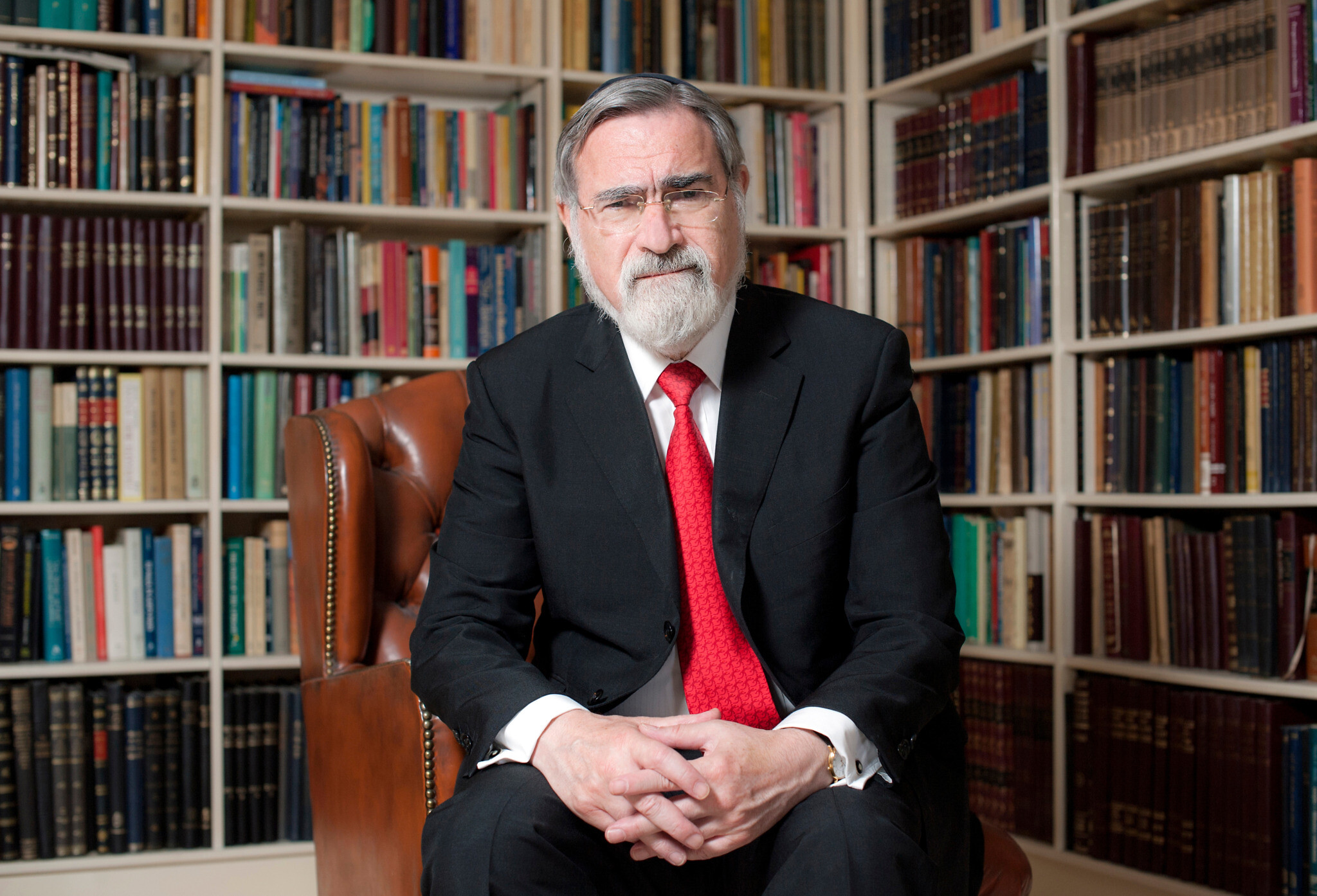
On the fifth yahrzeit of the passing of Rabbi Jonathan Sacks, it is appropriate to recall his own words on the mitzvah of Yizkor, remembering the dead:
“There is a specifically Jewish way of remembering,” he wrote. “When the word yizkor is mentioned in the Torah, it refers not to the past, but to the present and to renewal.”
With this in mind, I have no doubt that Rabbi Sacks would be deeply moved by the extent to which his teachings have found new and eager receptiveness since his passing. He would be particularly moved to see his impact within Israel, where, he would often tell me, he felt that there was the potential to impact not only on a community, as in the diaspora, but on an entire society.
In the years since his passing, Rabbi Sacks’ books, now beautifully translated into Hebrew, have become Israel’s bestselling books on Jewish thought. Courses based on the teachings of Rabbi Sacks are currently being taught to over 70,000 students in Israeli schools, both religious and secular, as well as in nearly 40 mechinot or leadership academies. At Bar-Ilan University, students are pursuing master’s and doctoral degrees in aspects of Rabbi Sacks’ thought, while a new online course makes his teachings available to students throughout Israel.
At the adult level, hundreds of thousands are engaging with Rabbi Sacks’ teachings through social media, as well as in-person study circles ranging from national religious thought leaders to Tel Aviv artists. The Hebrew language publication of his High Holiday prayer books was marked with a Yishai Rebo concert attended by over 8,000 people.
How is one to explain the extraordinary range and depth of his impact on Israeli society? The dedication of the small but talented team that coordinates the Rabbi Sacks Legacy programmes clearly plays a part. But a deeper reason may be that in these troubled days many Israelis are asking precisely the type of question that Rabbi Sacks tried to answer. His message of hope, dignity, and the need for positive Jewish identity and sense of mission has an acute resonance at this time. So too, does the image of a Jewish leader who could walk proudly with kings and princes have particular resonance at a time when the global standing of Jews is under attack.
At a deeper level, though, it seems that Israelis may be turning to Rabbi Sacks because they have themselves come to recognise a weakness within Israeli society that he was early to identify and because they intuit that his teachings may help to redress it.
In his last book, Morality, Rabbi Sacks made the argument that Western societies have come to rely almost entirely on the State and on the Market, that is, on the allocation of wealth and power. In doing so, he insisted, they have neglected the need to nurture community and a commitment to the shared good.
In Morality Rabbi Sacks doesn’t refer to Israel, but in fact the first time he made this argument was a decade earlier, in his book Future Tense, and then it was raised specifically in relation to Israel. He argued that it was understandable that David Ben Gurion and the founders of Israel, in their urgency to establish the State, had emphasised the policy of mamlachtiut, the centrality of the State. But this policy, he suggested, had gone too far. The result he argued was that “though Israel managed remarkably the transition from powerlessness to power, it did so at the cost of weakening the very institutions that had been the source of Jewish strength in the past.” These were not the state institutions but those communal and society associations which embody the principle ‘All Israel are responsible for one another.’
Many Israelis have had a growing sense of the importance of nurturing such social and civil assets for some time, but the need came into sharp focus on October 7. On that terrible day, the State institutions tragically failed, and it was the communal associations and civil society which stepped up to the challenge with a deep sense of shared responsibility. With a new-found awareness of the importance of social capital, Israelis are finding a new receptiveness to lessons from the Jewish diaspora, and among them the compelling voice of Rabbi Sacks.
A visit to the Rabbi Sacks Archive in the National Library of Israel brings home the scale of his loss. Among the correspondence with presidents and popes, are the lists of books he intended to write, courses to teach, and lectures to give. But there is comfort to be found in words we say in our daily prayers, which teach us that it is our words of our teachings which are “our lives and the length of our days”. The living spirit of Rabbi Sacks’ teaching lives on as vivid and as vital as ever.
Daniel Taub, former Ambassador of Israel to the UK, is the Chair of the Rabbi Sacks Legacy in Israel.

Keep community journalism free.
Jewish News is free for everyone. No paywall. No barriers. Just trusted journalism for anyone who wants to stay connected to Jewish life in Britain.
If you value that, please support us.
From as little as £5 a month, you can help keep our journalism free and accessible to all.
Every day, we report on the issues that matter to our community. We celebrate achievements, support charities, challenge antisemitism and ensure Jewish voices are heard more widely.
From as little as £5 a month, you can help us continue to:
- Report on the stories shaping Jewish life in the UK and beyond
- Bring our community together through shared stories, events and campaigns
- Celebrate the people, culture and moments that define our community
- Support organisations doing vital work across Jewish Britain
You can make a one-off donation or become a regular supporter. Every contribution helps keep our journalism free, independent and accessible to all.
If everyone who values Jewish News gave a small amount, it would make a real difference to our future.