Prefer Jewish News on Google
The Israeli startup that’s cleaning up
Serial entrepreneurs Avi Anais and Ran Sinai chose one of business's most overlooked industries, bringing AI and data to transform commercial washrooms as BuzzzTech expands into the UK
While much of Israel’s technology sector is focusing on cyber, defence and space tech, serial entrepreneurs Avi Anais and Ran Sinai saw an opportunity in an unlikely place: washrooms.
Their data-drive cleaning company, BuzzzTech, is using artificial intelligence and real-time data to modernise how public toilets in offices, hospitals, shopping centres and public buildings are cleaned.
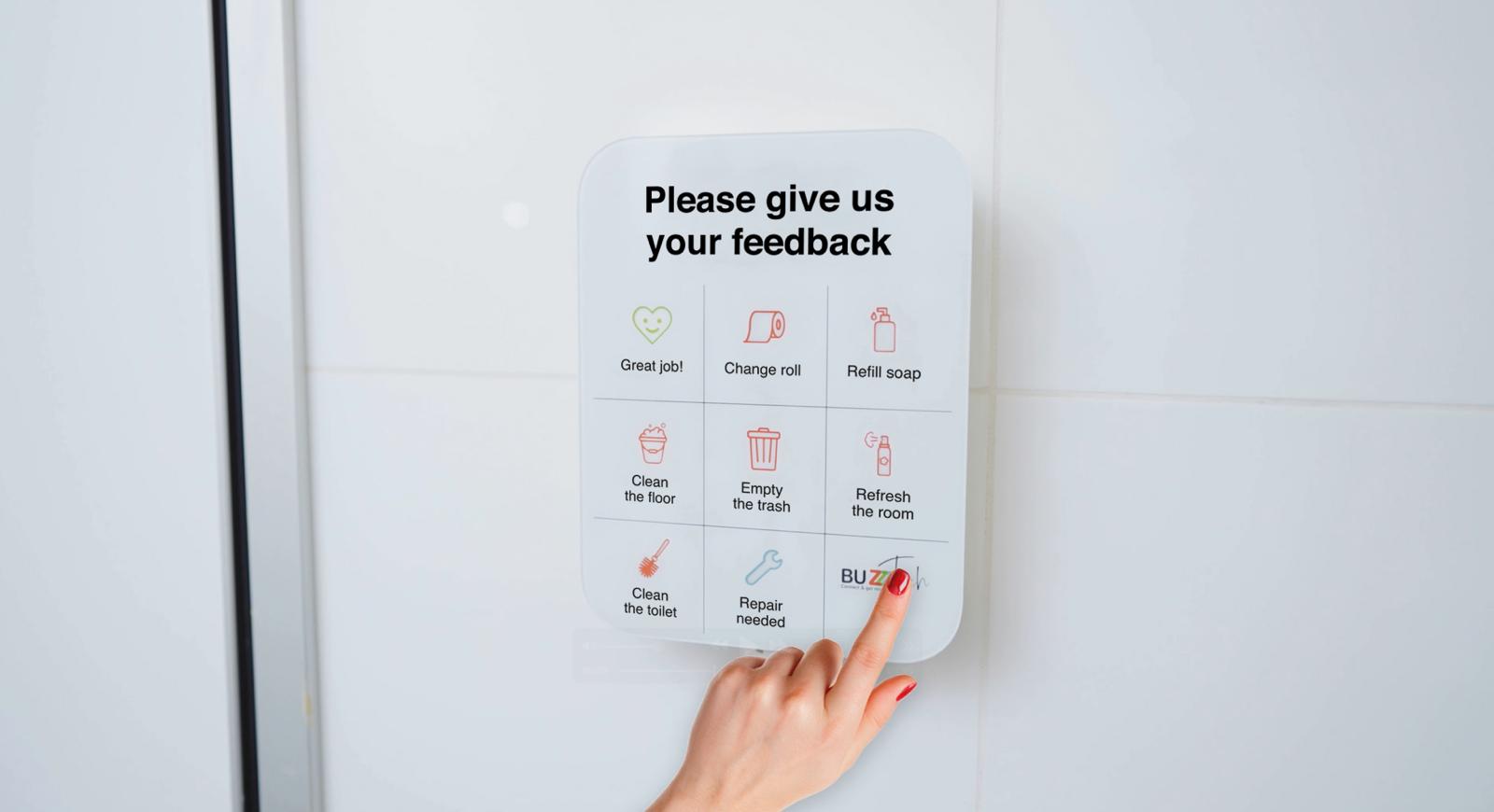
Its platform combines occupancy monitoring, user feedback screens and AI-powered analytics to monitor commercial washroom usage in real time. Visitors can report issues at the touch of a button, while the system alerts cleaning teams when attention is needed, helping facilities managers deploy staff more efficiently instead of relying on fixed cleaning schedules.
Already working with major companies including Intel, Google, TikTok, HP and Philips, the Israeli company has now set its sights on the UK after securing its first British customer at The Leadenhall Building – better known as the Cheesegrater – in the City of London.
“When most people see a washroom, they see somewhere to do what they need to do,” Anais tells Jewish News. “When I see one, I see data, technology and opportunity.”
He adds: “Everyone is talking about cyber, AI and space. But at the end of the day, they are sitting in an office that needs to be cleaned. Even Elon Musk has to go to the restroom.”
Anais, who lives in Tel Aviv, believes commercial cleaning represents one of the last major industries still operating largely without data.
“Cleaning is one of the biggest budgets in a commercial building, but it is still managed without enough data or validation. It has been done in much the same way for hundreds of years. I saw a huge opportunity in entering a field that nobody else wanted to enter.”
The problem with traditional scheduling, explains Anais, is that “a washroom could be spotless at 9.15am and in poor condition less than an hour later. At other times, a cleaner may enter an already-clean facility simply because the timetable says they should.
“At rush hour, the cleaning team might need to enter three or four times. Then there are quieter periods when a cleaner goes in and everything is already clean. Why waste their time and materials?”
That inefficiency has implications not only for cost and productivity, but also for environmental targets, with unnecessary cleaning consuming water, chemicals, paper products and other materials, says Anais.
BuzzzTech operates in 10 countries, working with over 300 companies in more than 5,000 sites.
The Cheesegrater marks BuzzzTech’s first UK deployment, but the company is already in discussions with a number of other commercial buildings across the City of London as it targets further expansion.
Ian Lipowicz, who is leading BuzzzTech’s UK operations together with Adam Hamilton, believes Britain represents one of the company’s biggest growth opportunities.
“The UK is a huge opportunity because commercial cleaning is still very inefficient,” he says. “What we’ve seen at the Cheesegrater is that you can deliver cleaner washrooms with less cleaning because it’s being carried out at the right time. You reduce complaints, shorten response times and improve the experience for everyone using the building.
“The technology can also deliver a clear return on investment by helping facilities managers deploy staff more efficiently while reducing unnecessary cleaning rounds.”
Anais believes commercial washrooms are only the beginning. Within the next six months, the company plans to launch a broader platform capable of managing cleaning across entire buildings, from offices and hospitals to shopping centres, universities and airports.
“The industry is changing. Artificial intelligence will play an even greater role in facilities management.
“We’re already testing technology that can use existing security cameras to identify spillages and other issues. Eventually, AI will know what has happened, decide what action is needed and coordinate the response.”
That does not mean human cleaners will disappear overnight, he stresses. “While robots are becoming increasingly common in large open spaces such as airports and shopping centres, they remain expensive and face practical challenges in everyday office buildings.
“People won’t disappear,” he says. “But what will change is that they become much more efficient.”
Before founding BuzzzTech, Anais built businesses in the automotive and telecommunications sectors. He launched his first company in the car industry in 1986, developing several patented products that became market leaders, but says he has always been drawn to industries where technology can solve overlooked problems.

BuzzzTech was founded in 2015 as BuzzzTV, after Anais and his co-founder, Ran Sinai, explored installing television screens on hand dryers and selling advertising in commercial washrooms.
“We realised the big brands didn’t want to advertise in washrooms. But while we were there, we discovered a much bigger problem.”
That insight led the pair to abandon the original idea and focus on using technology to improve how commercial cleaning is managed.
The Covid pandemic accelerated that shift, placing hygiene and cleaning under greater scrutiny, reinforcing the founders’ belief that facilities managers needed better data rather than more cleaning.
BuzzzTech has since raised seed funding and is planning a Series A round in 2027 to support expansion across the UK, western Europe and the United States.
The company currently employs 18 people – each one working alongside three AI agents to help analyse data and automate routine tasks.
Despite the company’s growing use of AI, Anais insists; “People won’t disappear. What will change is that they become much more efficient.”

Keep community journalism free.
Jewish News is free for everyone. No paywall. No barriers. Just trusted journalism for anyone who wants to stay connected to Jewish life in Britain.
If you value that, please support us.
From as little as £5 a month, you can help keep our journalism free and accessible to all.
Every day, we report on the issues that matter to our community. We celebrate achievements, support charities, challenge antisemitism and ensure Jewish voices are heard more widely.
From as little as £5 a month, you can help us continue to:
- Report on the stories shaping Jewish life in the UK and beyond
- Bring our community together through shared stories, events and campaigns
- Celebrate the people, culture and moments that define our community
- Support organisations doing vital work across Jewish Britain
You can make a one-off donation or become a regular supporter. Every contribution helps keep our journalism free, independent and accessible to all.
If everyone who values Jewish News gave a small amount, it would make a real difference to our future.