Prefer Jewish News on Google

The Jew who made New Yorkers run
Fifty years after a Holocaust survivor transformed the New York City Marathon, his niece celebrates the legacy of her Uncle Fred.
There’s nothing quite like being in New York City on marathon day. The city feels different. Complete strangers hand out drinks, cheer until they’re hoarse and stretch out their hands to high-five exhausted runners. More than 26 miles separate the start from the finish line in Central Park, but what carries people to the end is the extraordinary spirit of New York itself.
And behind it all was a Jewish Holocaust survivor with a thick Hungarian accent, who arrived in America with nothing but determination and an unshakeable belief that joy is meant to be shared.
Growing up, I never quite understood why my Uncle Fred attracted so much attention. Wherever we went, people fêted him. In restaurants, he was always given the best table, and strangers would send over bottles of wine as though he were a hero. And in some ways, he was.
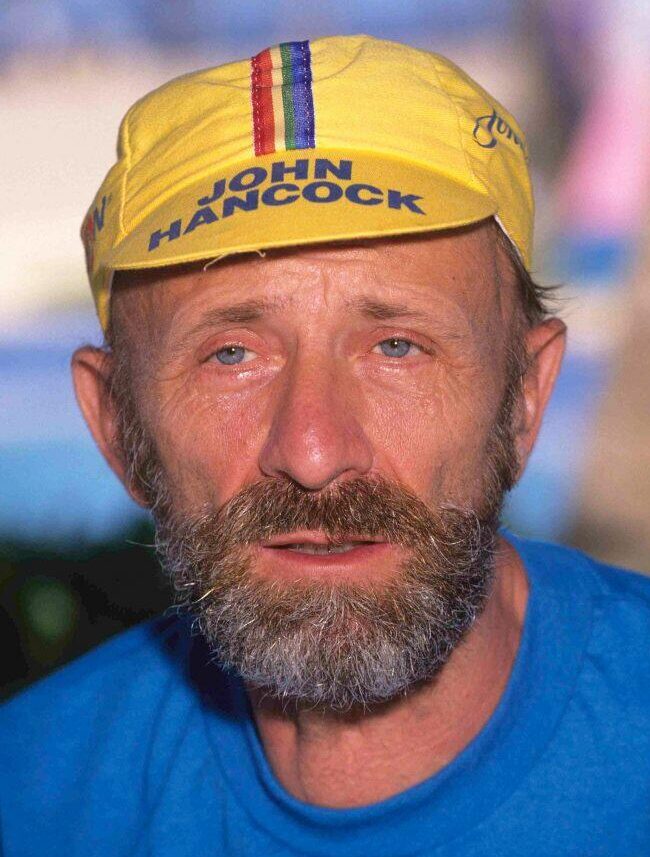
The sixth of seven children (my mother being the youngest), Fred Lebow was born Fischel Lebowitz in Transylvania. At only fourteen, he came to the United States with his older brother through a rescue effort organised by Rabbi Dr Solomon Schonfeld. He would not see his parents again for fifteen years. Like so many Jewish immigrants, he had to build a new life from scratch. Wanting to get fit for tennis, he began running. He had no idea it would become his destiny.
In the 1960s, running was not glamorous, and marathons were serious events reserved for elite athletes. The idea that ordinary people might want to run through city streets was considered completely ridiculous. Fred saw something different.
When the first New York City Marathon was held on 13 September 1970, it was a tiny race confined to Central Park, with a total budget of just $1,000. Fred contributed $300 of his own money to help get it off the ground, even paying for the winners’ prizes himself. When the fledgling race needed further funding, he found it, even though it meant borrowing from his Scottish best friend, Brian Crawford (known to me as Uncle Brian). Just 127 runners stood on the start line, and only 55 crossed the finish. Competitors ran the same loop four times, passing the same trees, the same landmarks and the same punishing hills over and over again. By the fourth lap, it must have felt less like a marathon and more like Sisyphus condemned to push his boulder uphill for eternity.
It was then decided that New York itself should be the course. While others saw endless logistical obstacles, Fred saw endless possibilities. Six years later, that vision became reality when the marathon left the park and wound through all five boroughs, transforming a small club race into one of the world’s greatest sporting events, now welcoming more than 50,000 runners from around the world.
Without Fred’s vision, tenacity and sheer determination, the five-borough marathon would never have happened.
What made Fred extraordinary was not simply his vision, but his values. He believed running was for everyone, elite athletes and first-timers, young and old, fast and slow. He understood that crossing the finish line means something different to each person, but it means something to everyone. He was also an early champion of women’s inclusion in marathon running, welcoming female athletes long before it became mainstream.
One of my favourite memories of Fred comes from the Hasidic Williamsburg stretch of the course. Standing in an open-top vehicle with a megaphone, he called out to spectators in perfect Yiddish, “Dee loifer darken vasser!” The runners need water!
That same spirit led him to help establish a pre-race minyan so observant Jewish runners could pray before the start. That minyan still exists, a small but meaningful legacy that reflects how deeply he cared about Jewish life and continuity. Even when life tested him, Fred kept running. In 1992, battling brain cancer, he completed the marathon with his dear friend, the world-class runner Grete Waitz, at his side. Thousands waited at the finish line, cheering them home as they crossed together in tears. It remains one of the most powerful moments in marathon history.
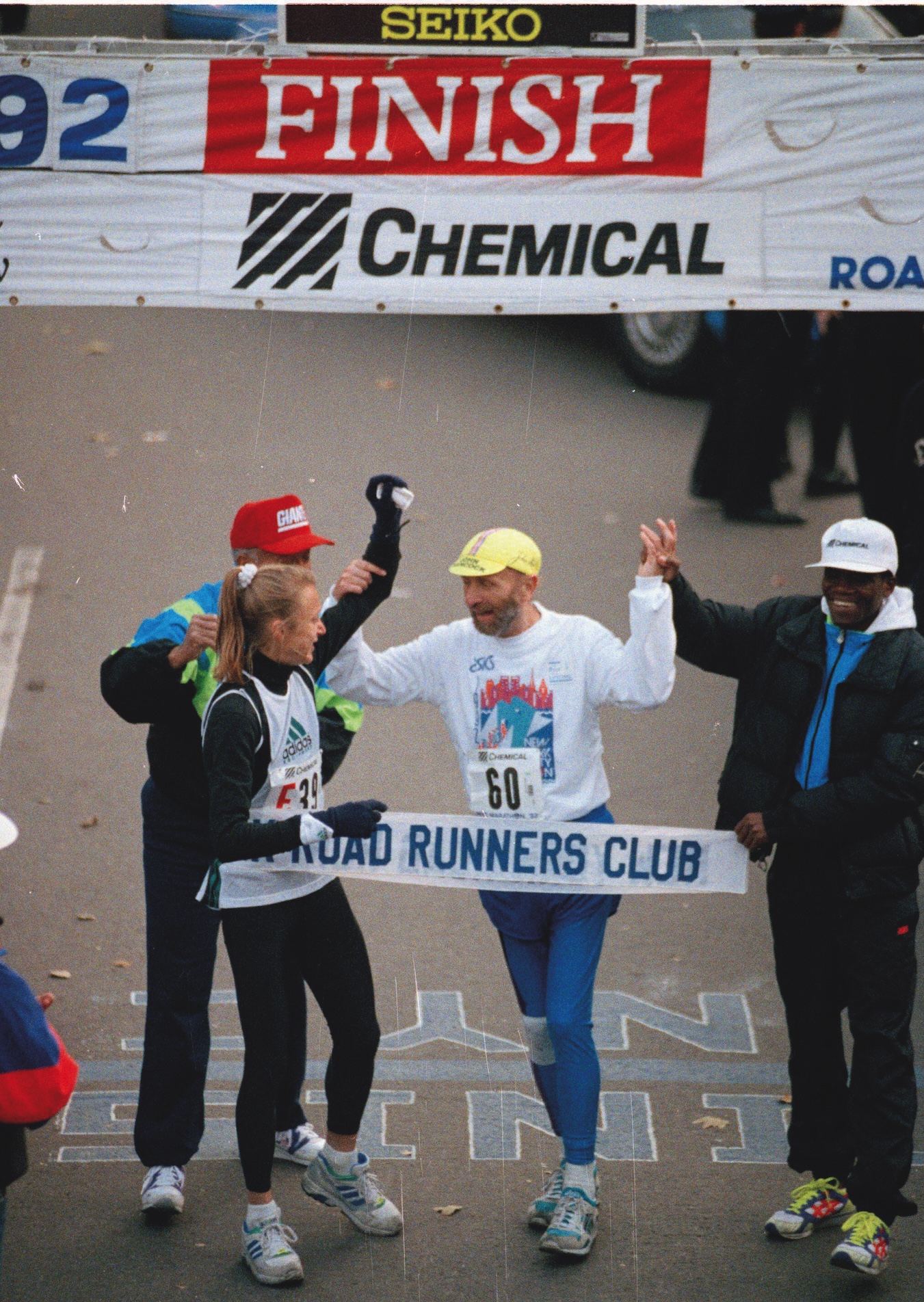
When he passed away in October 1994, tributes flooded in from every corner of the world, but I remember one in particular. Mercedes-Benz took out a full-page ad in the New York Times, saying, “Most people are remembered with a monument that’s six feet tall. Fred Lebow’s is 26.2 miles long.” It perfectly captured what he had created, a living, breathing memorial made up of footsteps and dreams.
His life story was later chronicled in the award-winning documentary Run for Your Life, introducing a new generation to the man who had reshaped not only a sport, but a city.
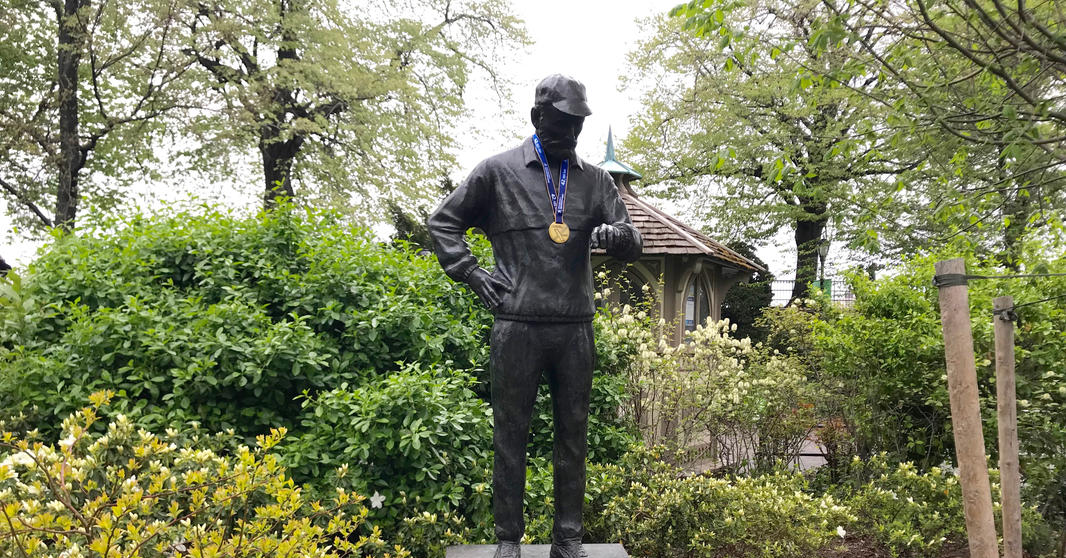
When his statue was unveiled in Central Park, I was invited to speak by the incredible Dan Mitrovich, and in that moment, I understood something deeply moving. My uncle was no longer just part of our private family story. He had become part of New York’s story. East 89th Street is Fred Lebow Place, and his statue stands proudly in Central Park across from the Guggenheim Museum. Every November, that statue is moved to the marathon finish line to commemorate the man who made it all happen.
He believed that sport had the power to transform lives, that ordinary people were capable of extraordinary things, and that the only person worth competing against was yourself.
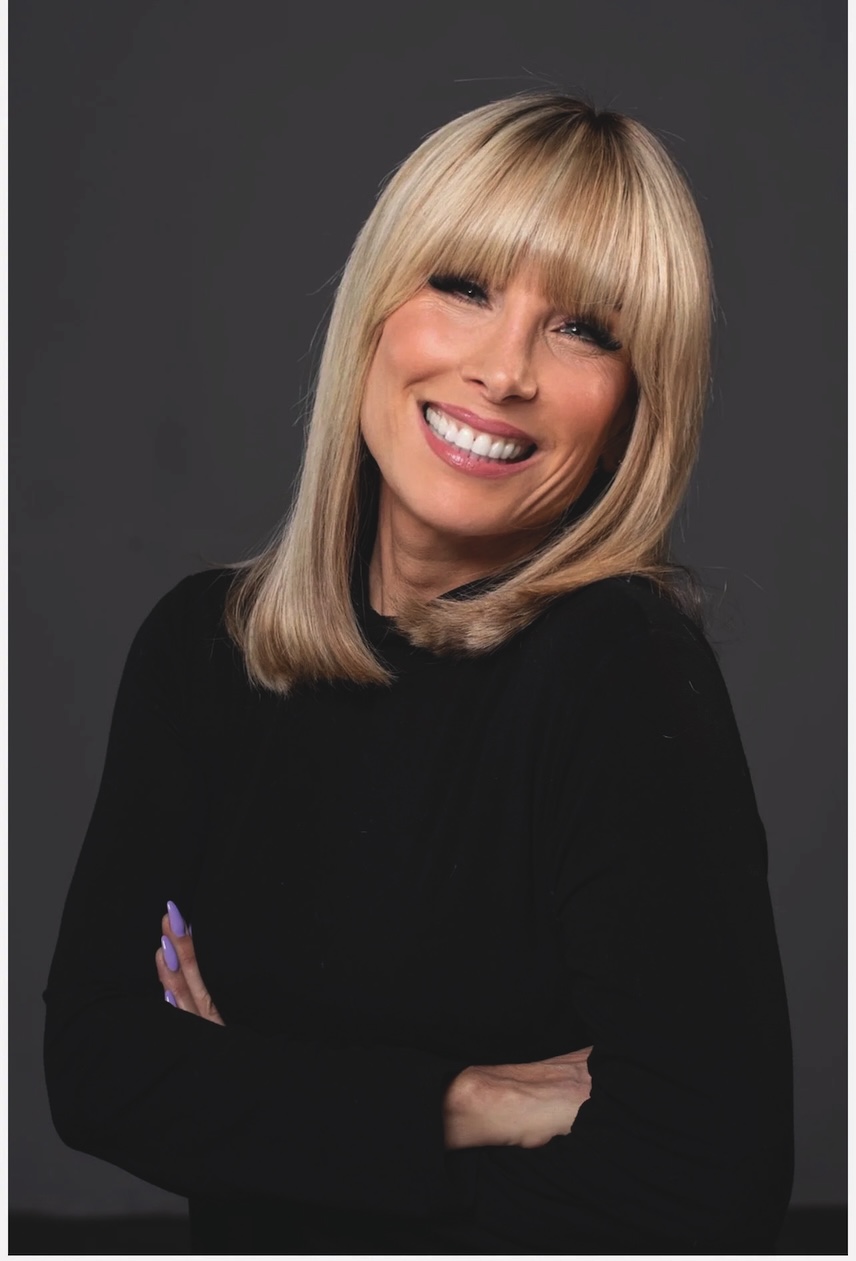
This year marks the 50th anniversary of the New York City Marathon’s expansion into all five boroughs, a vision that Fred fought so hard to make a reality. To commemorate this milestone, New York Road Runners is honouring the five trailblazers who made it possible, and I am incredibly honoured to be serving as one of this year’s Honorary Grand Marshals, representing my uncle.
To the world, he was the founder of the New York City Marathon. To me, he was my Uncle Fred, the man who made everyone believe that with a little chutzpah, they could go the distance.
The 2026 New York City Marathon takes place on Sunday 1 November 2026, marking 50 years since Fred Lebow helped take the race through all five boroughs in 1976. The race starts at 8am New York time (1pm UK time)

Keep community journalism free.
Jewish News is free for everyone. No paywall. No barriers. Just trusted journalism for anyone who wants to stay connected to Jewish life in Britain.
If you value that, please support us.
From as little as £5 a month, you can help keep our journalism free and accessible to all.
Every day, we report on the issues that matter to our community. We celebrate achievements, support charities, challenge antisemitism and ensure Jewish voices are heard more widely.
From as little as £5 a month, you can help us continue to:
- Report on the stories shaping Jewish life in the UK and beyond
- Bring our community together through shared stories, events and campaigns
- Celebrate the people, culture and moments that define our community
- Support organisations doing vital work across Jewish Britain
You can make a one-off donation or become a regular supporter. Every contribution helps keep our journalism free, independent and accessible to all.
If everyone who values Jewish News gave a small amount, it would make a real difference to our future.