Prefer Jewish News on Google
The King of Klezmer is back – in more ways than one
Frank London has spent the past two years battling cancer – but now he’s performing in the UK
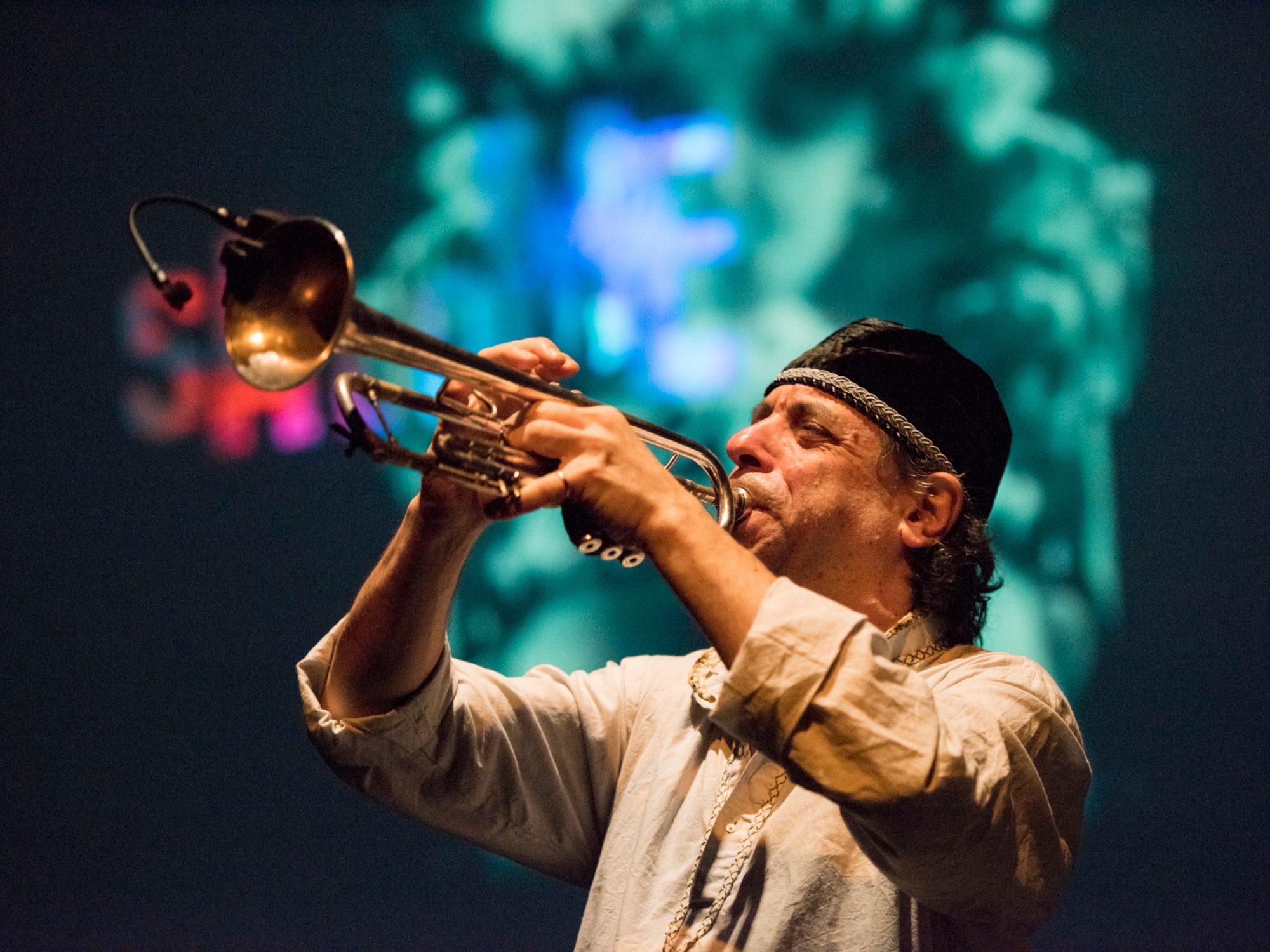
He’s considered the greatest jazz klezmer trumpeter of all time – playing with greats from Mel Torme to Itzhak Perlman, selling out wherever he plays with his own band The Klezmatics in their native USA, and a headline attraction at the Jewish Culture Festival in Krakow. He was even featured in Sex And the City. Now Frank London is playing the British capital again after a long absence, although it so nearly didn’t come to be.
Two years ago the jazzman was on his deathbed, not expecting to recover from a critical stage in the battle with blood cancer which pulled him off the stage for nine months in 2024 at the peak of his career. “I feel like Lazarus here – people are looking at me and thinking ‘You’re not dead yet!’ jokes the 67-year-old New Yorker in Kraków’s Cheder Cafe, where we chat during his comeback, which drew thousands to last year’s festival. “It’s true – I was very close. But I’m not – not yet.”
You would never know it from the vigour and vitality with which he plays, but London suffers from myelofibrosis, a rare blood cancer for which there is no cure: “Sometimes the treatments work and sometimes they don’t,” he shrugs. “I’m doing great now but have to go back to hospital in a month and a half. And as Woody Allen said: “I don’t want to achieve immortality through my work, but by not dying!”
Fearing no return from the OR where he underwent spleen removal and a bone marrow transplant ahead of chemotherapy in the year he needed urgent treatment, he laid down five albums including some of his own new compositions before going into hospital. His return to the stage to play them live last year was a spiritual, if not a physical, cure for the musician, who thrives on collaboration. In Krakow he played not with the Klezmatics but with legendary musicians from all over the world, who learned his latest compositions on the hoof and were conducted by London, who managed to play trumpet at the same time.
“Being back out there has given me so much energy and positivity,” he says. “Krakow came with its own challenges when all the Israeli artists had to cancel within a week or two of the festival starting. All of us who could came together and made things work.”


London only found out by accident five years ago that he had a life-threatening disease. “I was asymptomatic, which is common with this cancer, and had a typical middle-aged condition – a kidney stone or gallstone – which was annoying. So you go to hospital, they take blood and they call you back and say, ‘We see something strange’.”
When he got the diagnosis the disease was not yet active: “The typical mortality rate is two or three years – that’s when you stop reading the internet because according to that I’m dead already. I had a bone marrow transplant, which saved my life but didn’t cure me.” Weekly blood tests he faces for the rest of his life are challenging doctors fighting to halt the progression of his disease: “They might try another transplant or go for experimental treatment,” says this ultimate optimist with another shrug.
The near-death experience has had a profound impact on London, who composed nigunim – spiritual songs traditionally sung in the run-up to Simchat Torah – for his album In the City of God. “If you’re religious you might think Jerusalem is the city of God, or if you’re more diasporic it might be Krakow, where I performed it for the first time since we recorded it. That was on 23 May 2024; we were done by 1am and the next day I was in hospital for three months.”
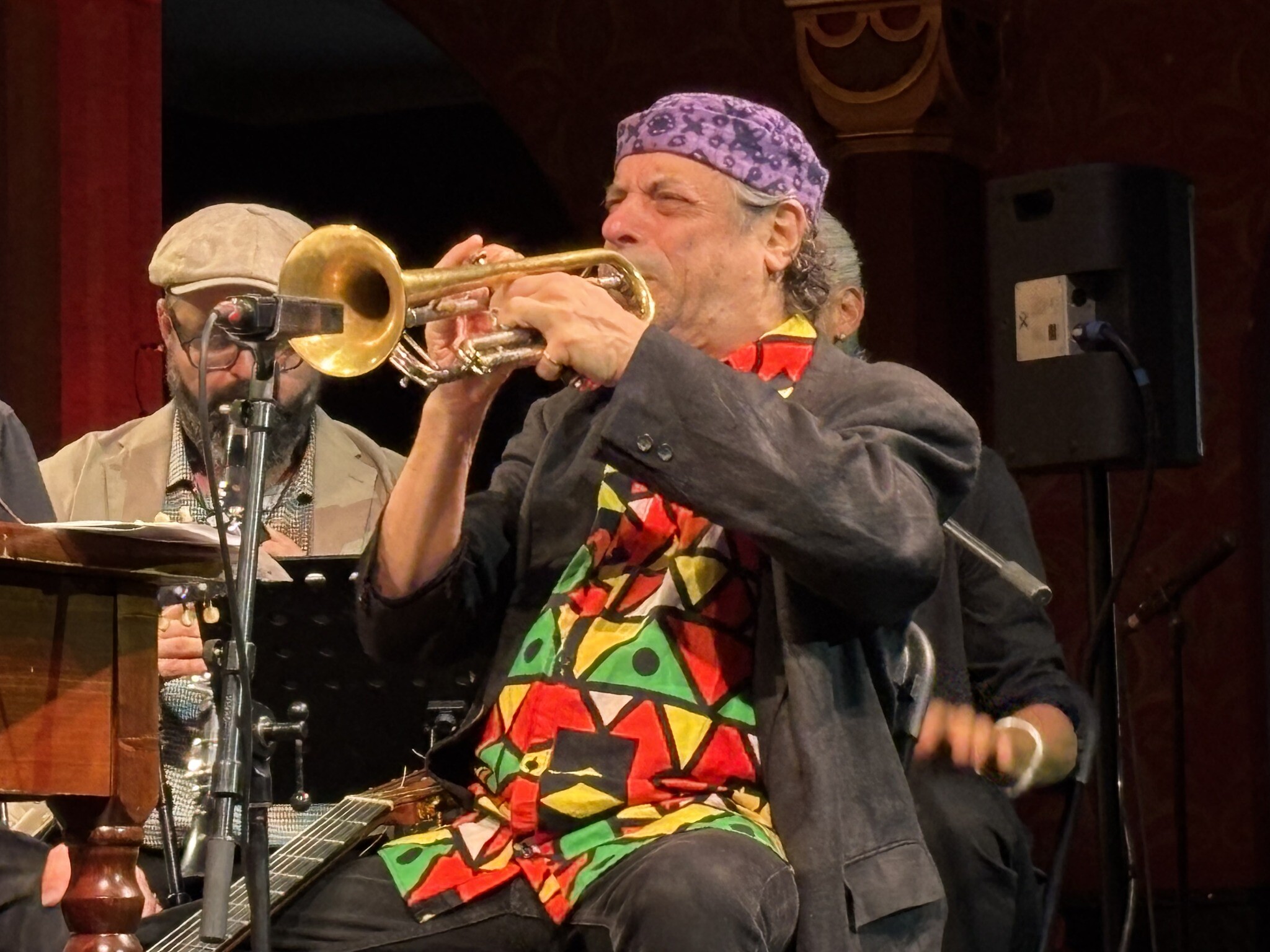
Now doing much better, London puts the vigour he manages to bring to his performances down to the fact he’s been a professional musician for nearly 50 years. “You learn over time how to channel things, make energy happen. Trumpeting is demanding but thank God I’ve had good teachers who’ve taught me how to be careful and protect myself; I’ve learned from the best.”
He first played London in the 1980s at the ICA with David Byrne of Talking Heads, where he met the British world musician-producer Ben Mandelson, who he describes as a kindred spirit. “We had never met but I had his albums and he had heard of mine. He made my entire career in Jewish music happen.”
He was not raised in the genre: “Like every good American boy I grew up with rock ’n’ roll and soul music. But in around 1977 when I went to college in Boston I discovered all the other music in the world. I was playing in salsa bands, Haitian bands, Serbian orchestras, doing classical music, jazz and a lot of avant-garde improvisation.” His first exposure to klezmer while studying for a degree in Afro-American music came when a teacher invited him and other students to perform some Jewish repertoire. “He made us into what was called the Klezmer Conservatory Band – it’s still around – and five years later I moved to New York and founded The Klezmatics.
“We’ve played in England at the Womad Festival and different clubs and I was the artistic director of Klezfest London for a few years.” In April he will play the Rich Mix arts centre in Shoreditch and Klezmargate in Cliftonville.
Among London’s recent work is Spirit Stronger Than Blood, honouring artist friends who have died from their own blood cancer and named one of 2024’s top 10 jazz albums by the New York Times, and a score for a King Lear production which played at Yale University as well as on the New York stage. “I did it with Karin Coonrod, the director of a collaboration which changed my life a few years ago. We did The Merchant Of Venice outdoors in the Venice Ghetto, where we had Shylock coming out of the bank building where Shakespeare placed him. It was so powerful; it’s one of the strongest indictments of antisemitism ever written.”
One thing is sure – when London makes his British comeback it won’t be as a stranger, despite his long absence. “The Yiddish music world is a small but very loving community of people with respect for each other and the music and culture. We’re an international community who speak the same language, whether literally or musically. Not all the musicians are Jewish and you don’t have to be – we’ve all done the work and have the same passion.”
Always exuberant, this Reform Jew does not deny the very audible topcoat of joy and celebration he has brought to his work since getting back on the road. “I always bring that but it’s more obvious, more pointed now. Thank God I’ve had a good grounding in different life philosophies that prepare me to deal with this – whether that’s Greek Stoicism or Marcus Aurelius and those cats, or spiritual Jewish writings.
“When do we confront our mortality? We all know we’re going to die, and my expiration date may be a little earlier than I might have hoped, but all I can do is play it by ear.”
*Frank London plays London on 21 April (richmix.org.uk) and Margate on 22 April (arkcliftonville.com).
London will be joined by four UK-based klezmer musicians with whom he regularly plays – cellist Francesca Ter-Berg, fiddler Anna Lowenstein, drummer Simon Roth and Josh Middleton on accordion. They will be preceded on April 21 by Sephirot, a one-man performer of techno-cantorial fusion, and will join in the Yiddish Ceilidh which precedes the seated Frank London concert on April 22.

Keep community journalism free.
Jewish News is free for everyone. No paywall. No barriers. Just trusted journalism for anyone who wants to stay connected to Jewish life in Britain.
If you value that, please support us.
From as little as £5 a month, you can help keep our journalism free and accessible to all.
Every day, we report on the issues that matter to our community. We celebrate achievements, support charities, challenge antisemitism and ensure Jewish voices are heard more widely.
From as little as £5 a month, you can help us continue to:
- Report on the stories shaping Jewish life in the UK and beyond
- Bring our community together through shared stories, events and campaigns
- Celebrate the people, culture and moments that define our community
- Support organisations doing vital work across Jewish Britain
You can make a one-off donation or become a regular supporter. Every contribution helps keep our journalism free, independent and accessible to all.
If everyone who values Jewish News gave a small amount, it would make a real difference to our future.