The Orthodox Jew who was no such thing
Author Reuven Fenton talks about the wild premise of his debut novel - the story of a comic road trip with a highly eclectic group of travellers
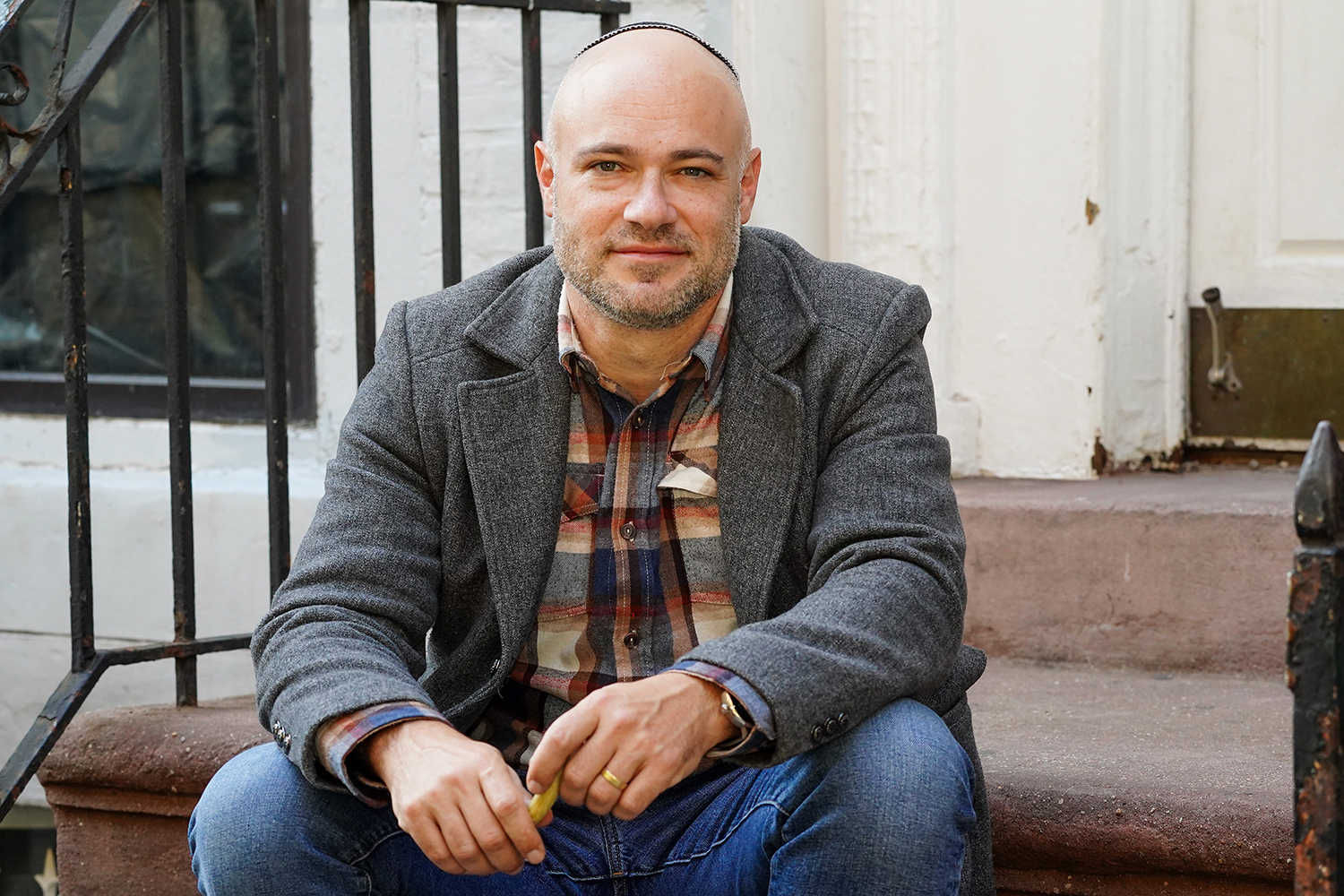
They say — whoever “they” are — that you should always write about what you know, particularly for debut novels. Which makes the premise of Reuven Fenton’s delicious book, Goyhood, even more intriguing.
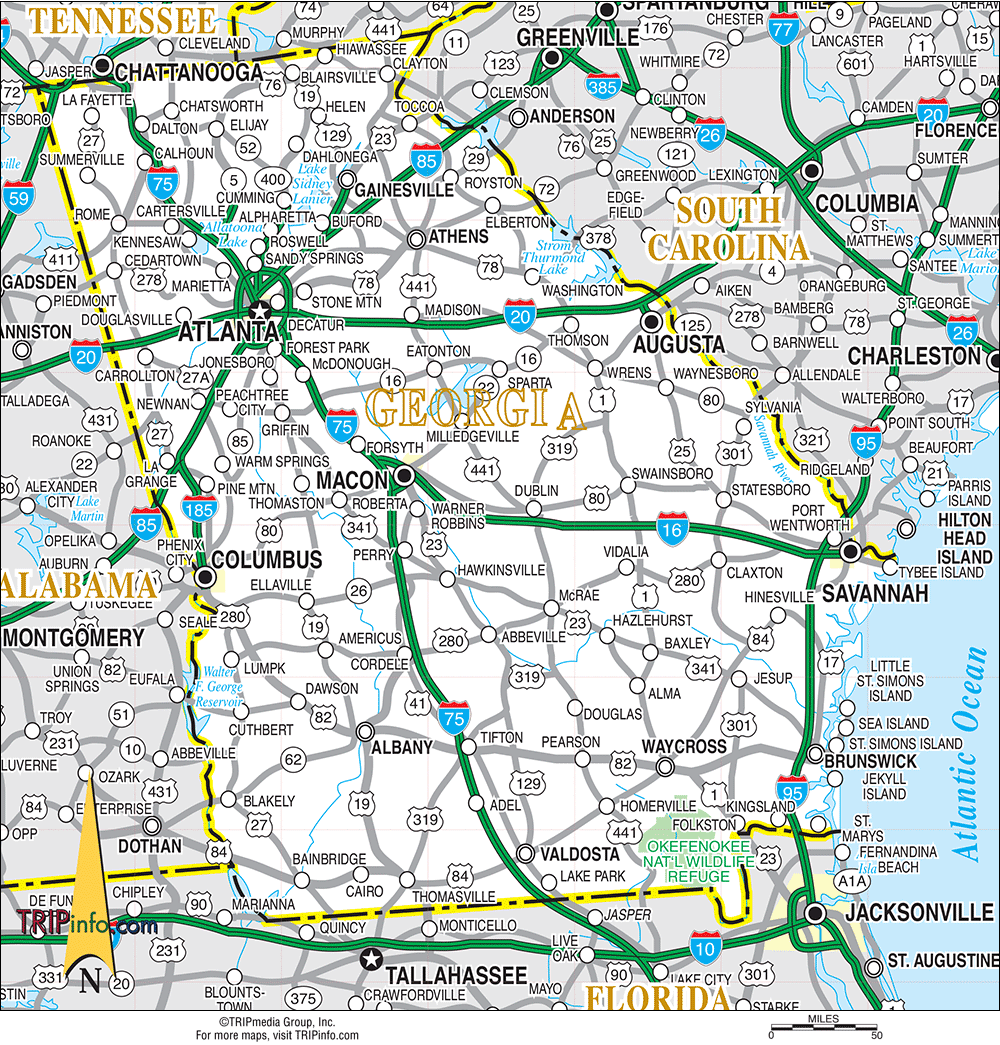
Fenton’s book begins in Georgia in the southern United States and meanders through a darkly comic road trip, with a pair of adult twin brothers who could not be more different. Oh, and the twins are accompanied by a Black woman influencer and a one-eyed mongrel dog.
Since Fenton, a veteran New York Post reporter specialising in crime, is neither a twin nor from Georgia (he is, however, the second eldest of eight siblings and began life in Lexington, near Boston), the reader is entitled to wonder at the genesis of Goyhood.
The clue, however, is in the name: because Fenton, a graduate of Yeshiva University as well as Columbia School of Journalism, was driven to pose the question “what if?” In this case, though Fenton had often wondered about having a supernatural power, the “what if” refers to being Jewish. What if, he posited, someone were to discover that though they had believed themselves to be an Orthodox Jew, in fact, they were no such thing?
“Wouldn’t it be wild,” he thought, “to have an Orthodox Jew who had a revelation about himself? Someone who was not only in yeshiva, but was praying every day, had a real connection with God?” Soon he had his protagonist, Marty Belkin, who becomes Mayer and loses himself in the unworldly bubble of the strictly Orthodox.

Fenton realised that in Mayer’s appalled response to discovering he was not actually Jewish, all kinds of questions, some funny, some serious, opened up about the nature of faith. But he needed a counterweight: and thus enters Mayer/Marty’s estranged twin, David, as irreligious as his brother is devout, the yin and yang of Jewish identity.
 “I was uniquely qualified to write this book”, says Fenton, “because I walk this tightrope between the religious and secular worlds. I am Orthodox” — our interview is conducted with Fenton wearing a kippah — “but I work for the New York Post and my day job involves secularity in all of the most profane ways, everything from scandal to crime”. This year, in fact, Fenton went viral after he and a Post photographer were attacked by a machete-wielding female academic they’d gone to interview.
Life in the mean city. For reasons he can no longer recall, Fenton decided to make David Belkin the profane mirror to his twin’s holy character. This set-up provides instant comedy, with, it must be admitted, rather more enjoyable life choices on the secular side of things.
Poor Mayer, as he slowly, slowly, regresses into the Marty Belkin he once was, has been so isolated from the world at large that he can barely deal with the physical nuts and bolts of wider society. He doesn’t know how to use a mobile phone, or drive, and his childhood fascination with birds and the world of nature has been ruthlessly set aside in favour of prayer, prayer, and more prayer.
The practical side of Mayer Belkin’s life has been entirely taken over by his wife, Sarah. (It was a shidduch). Book a plane? Pack a suitcase? Cook? She does everything. Little does she realise, as Fenton gloriously spells out, that if Mayer is not Jewish — and will have to convert — then their marriage isn’t valid either. There are a lot of unpalatable truths for all three Belkins, David, Mayer, and Sarah.
Meanwhile, on this action-packed road trip through American’s Deep South, we meet Charlayne, the most unlikely woman in the world for Mayer ever to meet, let alone carefully construct the tiny beginnings of a grown-up relationship (even if it turns out to be platonic). Somehow, Fenton makes all this work, together with —for once in the world of fiction relating to Jews — proper details about religious life.
“This book has been an education for me”, Fenton says, “because in researching these Jewish themes, I learned a lot. In fact I somewhat changed in terms of my own observance.” He was “more of a David” in his early 30s, he says, but now, in his 40s, married with kids, “I find I am taking my Judaism a lot more seriously. And these two brothers represent two sides of myself.”
He’s not really sure why he chose Georgia as the birthplace for the Belkin twins. He’s been there a few times, as with all the other states on the fraternal road trip. Perhaps, Fenton muses, it’s because Georgia is about as far as you can get from New York yeshiva life, and yet it has a cosmopolitan component in the form of the city of Atlanta.
Fenton is not a birder, either (there’s a lot of well-informed detail about the birds of America), though he does love to hike, and even though he now knows New York like the back of his hand, his preference is for “open spaces” and the natural world. “I wanted a book with urban and rural contrasts” — he has certainly achieved that. He and his family live today on Long Island and he says he grew up near Boston in a “traditional” family, which was not religious.
“We didn’t keep Shabbat… but when I was 11, my parents became Orthodox, through Chabad outreach.” His mother, he says, was very spiritual and was attracted to the religious world.
So Fenton understands very well the difference between being a secular boy and becoming an Orthodox teenager. Entertainingly, his fictional secular twin — who had also previously considered himself Jewish but not observant — begins to toy with the idea of converting to Judaism himself. Well, as Reuven Fenton would no doubt say: “what if?”
Goyhood by Reuven Fenton is published by Central Avenue on 28 May

Keep community journalism free.
Jewish News is free for everyone. No paywall. No barriers. Just trusted journalism for anyone who wants to stay connected to Jewish life in Britain.
If you value that, please support us.
From as little as £5 a month, you can help keep our journalism free and accessible to all.
Every day, we report on the issues that matter to our community. We celebrate achievements, support charities, challenge antisemitism and ensure Jewish voices are heard more widely.
From as little as £5 a month, you can help us continue to:
- Report on the stories shaping Jewish life in the UK and beyond
- Bring our community together through shared stories, events and campaigns
- Celebrate the people, culture and moments that define our community
- Support organisations doing vital work across Jewish Britain
You can make a one-off donation or become a regular supporter. Every contribution helps keep our journalism free, independent and accessible to all.
If everyone who values Jewish News gave a small amount, it would make a real difference to our future.