Prefer Jewish News on Google
The power of proud Jews both speaking out and listening
When we must use our voice, when others try to silence it, what can happen when we use it to tell our own stories and ultimately, when the most important thing we can do is listen.
There is a lot of noise about Jews.
Actually, that doesn’t remotely do it justice. There is a deafening cacophony that has been drowning out sense, reason and objectivity for nearly three years now.
A recent analysis examined 14.7 million news articles across 65 languages and a decade of global coverage. Some have said that what it found was extraordinary, my view is that it’s only extraordinary to those who haven’t been paying attention.
Israel has a population of around ten million people, roughly 95th in the world, yet over the last decade it ranked sixth for the absolute volume of international news coverage it received. Per capita, nobody else came close.
In 2024, one in every 26 articles published globally was about Israel. More than twice as many stories were published about Israel as all 48 countries of sub-Saharan Africa combined, 1.3 billion people.
After 7 October, Israel occupied more than one per cent of US cable-news airtime on 344 out of the subsequent 365 days. Sudan, where hundreds of thousands are estimated to have died, crossed the same threshold on just eight out of 390.
Sadly it isn’t simply volume that we can use as a metric. Using GDELT, the world’s largest open database of news coverage, the analysis calculated an average sentiment score for Israel over the last decade of -2.77. More negative than Iran, North Korea, Sudan, China, Congo and Russia.
Daniel Kahneman, Nobel prize winner and renowned psychologist, understood the danger of repetition:
“A reliable way to make people believe in falsehoods is frequent repetition, because familiarity is not easily distinguished from truth.”
For almost three years, Jews have lived inside that repetition.
Israel, Gaza, Zionists, Genocide, Apartheid, Colonisers, Occupation, Boycotts, Sanctions, Protests. Another accusation, another condemnation, another demand that Jews explain ourselves. Noise, endless, deafening noise.
But then comes Yom Kippur and for twenty-five hours, the Jewish people do something extraordinary, we turn off. We stop eating, we stop working, we put down our phones, we stop arguing with strangers, we stop defending ourselves, we stop refreshing the news.
Most importantly, we stop asking what everybody else has done wrong and ask the infinitely harder question: What have I done wrong?
After almost three years in which seemingly everybody has had something to say about Jews, perhaps the holiest thing we can do for twenty-five hours is stop listening to them and focus on the true demands of Yom Kippur, to examine ourselves more ruthlessly than any newspaper columnist, politician, activist or celebrity ever could.
Before the noise stops, four things stayed with me this week. Four very different reminders of the power of a voice. When we must use it, when others try to silence it, what can happen when we use it to tell our own stories and, ultimately, when the most important thing we can do is stop speaking and listen.
So this week’s Shabbat Shalom, and my thought as we approach Yom Kippur, is dedicated to those who chose to use their voices not simply to make more noise, but to do something with it. To challenge, to create, to tell stories, to preserve memory. To affirm who we are without demanding that somebody else disappear in the process.
That is the distinction worth carrying into Yom Kippur. Having a voice does not require drowning out somebody else’s and sometimes knowing when to speak matters every bit as much as knowing when to be silent.
Shabbat Shalom to Robert Kraft.
Something deeply troubling and deeply revealing happened in the music industry this week. Macklemore was removed from Ed Sheeran’s US tour after several venues made clear they would not host concerts with him on the bill. Among those drawing the line was Robert Kraft, owner of Gillette Stadium and founder of the Foundation to Combat Antisemitism.
Immediately the story became about Macklemore being “cancelled”, except context matters, history and patterns matter; all of which were abandoned and ignored in the pursuit of righteous condemnation.
In 2014, Macklemore appeared onstage wearing a black wig, beard and grotesquely exaggerated prosthetic nose, imagery immediately condemned as a Jewish caricature. Macklemore denied that the costume was intended as a Jewish stereotype and apologised for the offence caused. It’s happened to us all. One minute you’re getting dressed for work, the next you’ve accidentally assembled a costume dripping in centuries-old antisemitic tropes. An occupational hazard, apparently.
Then, less than a month after 7 October, by his own admission not knowing enough about the conflict, he nevertheless decided he knew enough to stand before thousands at a pro-Palestinian demonstration and accuse Israel of genocide. The accusation has followed ever since, through speeches, songs and performances, on repeat at every opportunity.
So let’s at least be clear about what happened this week. Robert Kraft did not object to an artist saying “Free Palestine”, he objected to the Jewish belief in their ancestral homeland being compared to white supremacy and to lies being screamed from a stage at tens of thousands of men, women and children who had paid to attend a concert, not a rally.
He looked at the history, he looked at the performer and at the performance and said not in my stadium.
Next we saw Finneas walk away from the tour, Lukas Graham walk away, Aaron Rowe walk away, Beoga walk away. Artists rallied around Macklemore, framing his removal as the silencing of someone prepared to speak for the oppressed. Even Ed Sheeran, who didn’t make the decision and has simply said that he wants his concerts to be places of unity rather than political rallies, faces demands that he too be boycotted.
The hypocrisy is staggering. These are creative industries obsessed with the idea that words matter. Industries that have spent years insisting that speech has consequences. Industries in which boycotts, cancellations and demands that people lose work because of words deemed hateful or offensive have become commonplace. Industries that rightly tell us that minorities should be listened to when they say something directed towards them is hateful.
Until the minority is Jews, then apparently we have misunderstood. Then consequences become censorship, cancellation becomes freedom of expression, then nuance suddenly matters. The people who would demand accountability for speech affecting almost any other minority close ranks around the person Jews say has crossed the line.
We have watched artists and journalists including Boy George, Pink and Eve Barlow experience the other side of this equation. Abuse, boycotts and demands for cancellation for expressing support for Israel or Zionism. Which makes the question increasingly uncomfortable to ask. Is it still a safe place for those of us who believe in the basic right of a Jewish homeland to exist?
Robert Kraft didn’t silence Macklemore, he didn’t remove his music, he didn’t close his social-media accounts, he didn’t prevent him performing elsewhere. He simply said not in my stadium – and that too, is freedom.
To Robert Kraft, and to everyone prepared to draw a line when so many others have decided that Jews should apparently be the one minority denied a meaningful voice in defining the hatred directed against us.

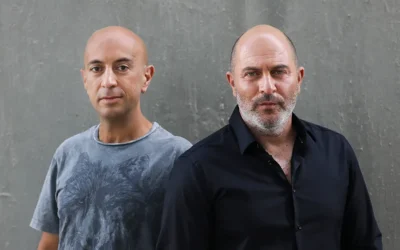
Shabbat Shalom to Lior Raz, Avi Issacharoff and everyone behind Fauda.
For almost three years, the world has been talking about the war in Gaza Increasingly, much of the world has been talking as though 7 October were a footnote. We have watched the beginning of this war slowly disappear from the story of the war itself.
Gaza became the beginning, Israel became the aggressor. The massacre that started it all became something to acknowledge briefly before moving rapidly onto the story so many people preferred to tell.
Then something extraordinary happened, people watched a television programme on Netflix and 7 October became the start of the story for some once again.
The final episodes of the fifth season of Fauda force viewers back into 7 October. Not as statistics, geopolitics or as another screaming television debate, but as human beings. Families under attack, homes invaded, terror, murder, kidnapping and around the world, people are watching.
People who have consumed almost three years of arguments about Gaza are encountering, some seemingly for the first time, the visceral reality of what happened that morning. This war began with a pogrom against Jews, not by Jews.
Perhaps most remarkably of all, Fauda is being watched across the Arab world. It reached number one on Netflix in Lebanon and has ranked amongst the most watched shows across numerous Arab countries.
An Israeli television series, created by Israelis, telling an Israeli story about the worst massacre of Jews since the Holocaust, being watched by huge audiences across the Middle East. No government campaign, press conference or spokesperson achieved that, a TV show did.
There is something both magnificent and profoundly depressing about that. Magnificent because it demonstrates the extraordinary power of storytelling. Depressing because journalism was supposed to get there first.
For almost three years Jews have argued facts, corrected falsehoods, contextualised statistics and reminded people what happened on 7 October. Perhaps we have simply been speaking the wrong language. Facts can be disputed, arguments ignored, social-media posts scrolled past. But make someone care about another human being and something different happens, they feel.
I have spent much of the last three years worrying about the extraordinary power of our industry to spread lies about Israel. This week I was reminded that the same power can also tell the truth.
To Lior Raz, Avi Issacharoff and everyone behind Fauda, for reminding millions around the world that before this war became an argument, it began with human beings being murdered, kidnapped and hunted in their homes simply because they were Israelis and Jews.
Shabbat Shalom to Neil Blair.
Sometimes the answer to being denied a platform is not to spend forever demanding one, sometimes you have to build your own. This week Neil Blair, the literary agent best known for representing JK Rowling, launched a new publishing venture with an imprint dedicated to writers not being afforded a platform.
At a moment when Jewish and Israeli writers increasingly describe boycotts, exclusion and an unwillingness to publish voices that do not conform to a particular political orthodoxy, Blair hasn’t simply complained about the gatekeepers, he has built another gate.
There is something deeply troubling about a cultural world that endlessly celebrates diversity while becoming increasingly uncomfortable with the diversity of Jewish thought. We shouldn’t need special publishing houses for Jewish voices or alternative platforms because Israeli writers have become inconvenient to the accepted narrative of the moral monoculture.
History has taught Jews something useful, if doors close then build another door and there is something wonderfully Jewish about that response. Not simply protest, but creation. If they won’t publish the book, publish it ourselves. If they won’t tell the story, tell it ourselves. If they won’t make room, build a bigger room.
To Neil Blair, and to everyone who understands that the most powerful response to people trying to remove Jewish voices from culture is not simply to demand they listen, but to make sure those voices become impossible to ignore.
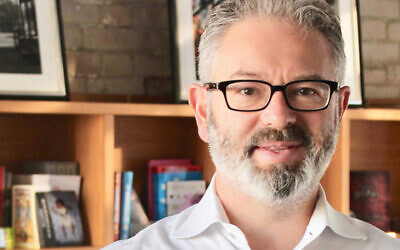
Shabbat Shalom to the Holocaust Survivor Centre.
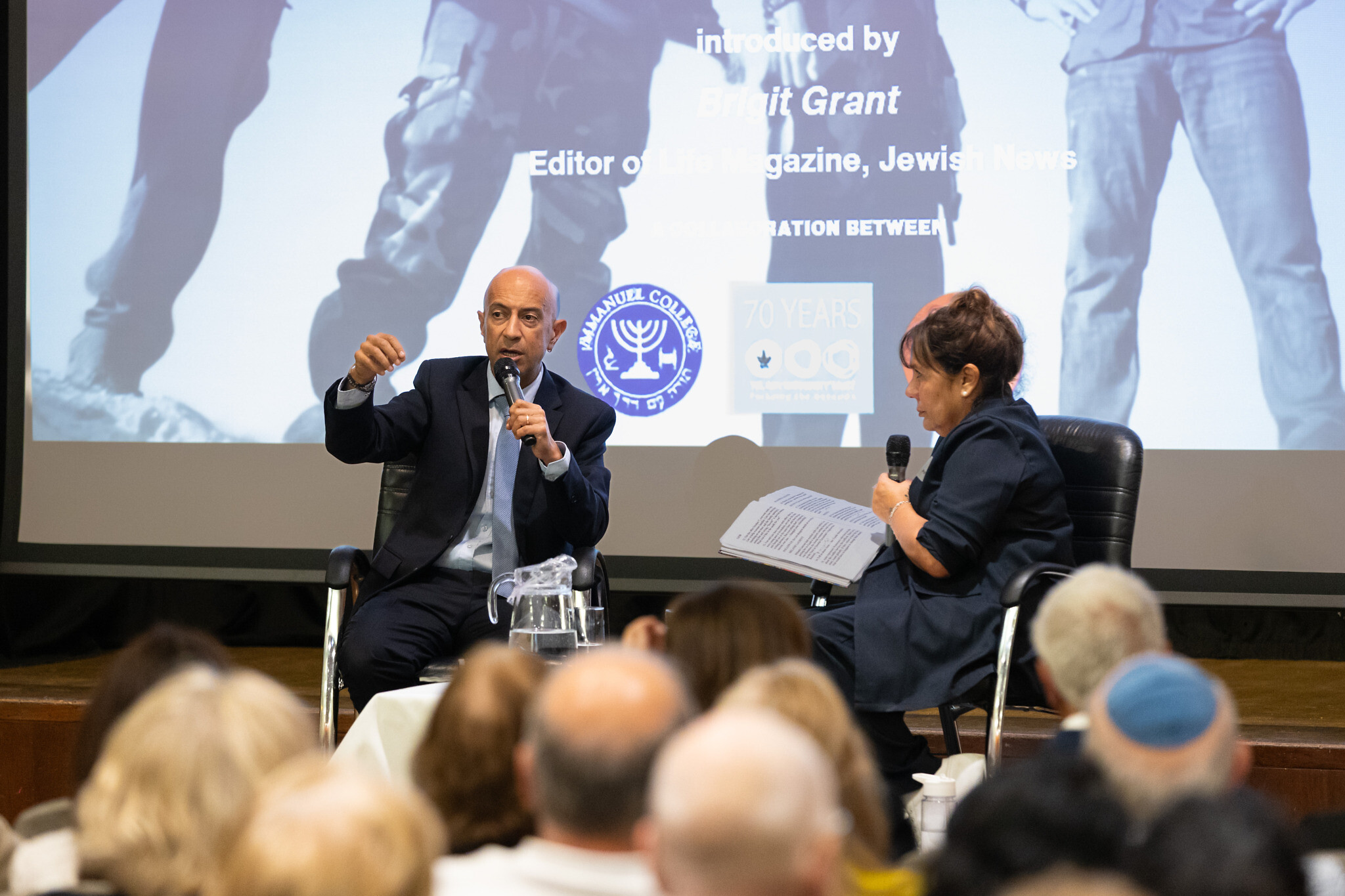
My final Shabbat Shalom this week is different. Just a room full of people I will never forget. This week I had the enormous privilege of being invited to speak at Jewish Care’s Holocaust Survivor Centre in London.
I went there ostensibly to talk about myself. My life, my career, Israel, antisemitism, the country we live in. Some of the things I have spent the last three years writing and speaking about. But sitting in front of some of the last remaining survivors of the Shoah, it quickly became obvious to me that if anybody in that room should have been listening, it was me.
My grandmother escaped Nazi Germany as a child, the majority of her family were murdered in Auschwitz, so there was something deeply personal about looking around that room. These were people who had witnessed evil in its most visceral form. People who survived the camps, the ghettos, the pogroms, the marches. People who lost parents, brothers, sisters, grandparents, friends, homes and entire communities. People whose childhoods were stolen because they were Jews and then somehow, after everything, they rebuilt.
That is the part of their story I found myself thinking about long after I left. Survival was only the beginning, thriving was always the true ambition. They came here and built lives, they fell in love, they married. They had children, grandchildren and great-grandchildren. They rebuilt families where families had been destroyed, communities where communities had been erased and their Judaism in a world that had just attempted to extinguish it.
The Nazis didn’t simply fail to kill them, they failed to determine what came next and that feels particularly important this weekend.
For much of the last three years, many Jews have understandably become consumed by what is being done and said around us, I certainly have. I’ve written about antisemitism, Israel, 7 October, the media, politics, universities and my own creative industries. I have challenged lies and worried about the country in which my children are growing up.
I don’t regret any of it, those battles matter. But sitting with those survivors forced me to ask myself a more difficult question. What am I fighting for?
Because if people who experienced the very worst of humanity could emerge from it and still choose to build, love, create families, practise Judaism, laugh and find joy, then surely the Jewish response to this moment cannot be defined only by what we oppose. We must decide what we are for and there could be no more appropriate lesson in the week of Yom Kippur.
Yom Kippur is not about everybody else’s sins, it is about ours. For twenty-five hours we stop pointing outward and look inward. We ask not what the world owes us, but what we owe each other.
What kind of husbands and wives have we been? What kind of fathers and mothers?What kind of sons and daughters? What kind of friends? What kind of Jews? Where did anger become consuming and stop being helpful? Where did we allow the ugliness around us to steal something beautiful within us? What will we do differently when this year ends and another year begins?
The survivors I met this week know more about hatred than I ever will, but hatred isn’t what defines them. Life does.
The families they created define them, the Jewish lives they rebuilt define them, the generations who exist because they refused to allow those who tried to destroy them to write the ending define them.
There will always be people trying to tell Jews who we are, our responsibility is to make sure they never get to decide who we become. The survivors did not simply survive history, they answered it with life.
To the extraordinary men and women I met at Jewish Care’s Holocaust Survivor Centre, to those no longer with us, and to a generation that experienced humanity at its absolute worst yet somehow retained enough faith in humanity, in Judaism and in the future to build again.

Four stories, a stadium owner, a television programme, a publisher and a room full of survivors. Four answers to the same question. What do we do when the world becomes deafening?
Sometimes we draw a line, sometimes we tell our story, sometimes we build our own platform and sometimes we stop, we breathe and we look inside ourselves.
This weekend, the argument can wait, for twenty-five hours Macklemore doesn’t matter, the boycotters don’t matter, the algorithms don’t matter, the columnists, protesters, politicians and celebrities don’t matter. Let them talk, we have something more important to do.
We will continue to fight antisemitism, continue to defend Israel’s right to exist, continue to challenge lies when I see them. But my promise to myself this Yom Kippur should also be that I spend at least as much energy celebrating what I am fighting for as attacking what I am fighting against.
The Holocaust survivors I met this week did not rebuild their lives so that their children, grandchildren and great-grandchildren could spend ours talking endlessly about antisemites. They rebuilt them so that we could be Jews. Proudly, joyfully, unapologetically.
When the final shofar sounds and we begin the year ahead, may we emerge not simply determined to survive another year, but determined to make that year worthy of the extraordinary inheritance handed to us by those who came before.
May we be sealed not merely for another year of life, may we be sealed for another year worthy of it.
G’mar Chatima Tova.
Shabbat Shalom.

Keep community journalism free.
Jewish News is free for everyone. No paywall. No barriers. Just trusted journalism for anyone who wants to stay connected to Jewish life in Britain.
If you value that, please support us.
From as little as £5 a month, you can help keep our journalism free and accessible to all.
Every day, we report on the issues that matter to our community. We celebrate achievements, support charities, challenge antisemitism and ensure Jewish voices are heard more widely.
From as little as £5 a month, you can help us continue to:
- Report on the stories shaping Jewish life in the UK and beyond
- Bring our community together through shared stories, events and campaigns
- Celebrate the people, culture and moments that define our community
- Support organisations doing vital work across Jewish Britain
You can make a one-off donation or become a regular supporter. Every contribution helps keep our journalism free, independent and accessible to all.
If everyone who values Jewish News gave a small amount, it would make a real difference to our future.