Prefer Jewish News on Google

The quiet revolution behind Israel’s record Arab turnout
Behind much of this mobilisation were civil society organisations and local activists who campaigned tirelessly for greater political participation. Jewish News spoke to two of them
The buzz on the streets of Israel’s mixed cities and Arab towns and villages was impossible to miss on election day. From social media posts by proud grandchildren showing their near-centenarian grandparents casting their ballots, some for the first time, to long queues outside polling stations and spontaneous celebrations in the Bedouin city of Rahat, where excited voters waved political party flags while riding camels and horses, the atmosphere was electric.
This mass mobilisation among Arab Israeli voters helped the two Arab-led parties — the Joint List, an alliance of Arab left-wing and Palestinian nationalist parties, and Ra’am, a pragmatic Islamist party — secure a combined 19 seats in the 120-member Knesset, their highest-ever representation. Two Druze politicians were also elected on Jewish-led lists, with Gadi Eisenkot’s Yashar and Avigdor Lieberman’s Yisrael Beiteinu.
Arab voter turnout surged to approximately 77 per cent in Israel’s 2026 election, compared with just 53.2 per cent in 2022 — an increase of nearly 24 percentage points and one of the highest participation rates in three decades, according to the Israel Democracy Institute. Behind much of this collective mobilisation were civil society organisations and local activists who had campaigned tirelessly for greater political participation for years. Jewish News spoke to two of them about their efforts and what the election results mean for their communities.
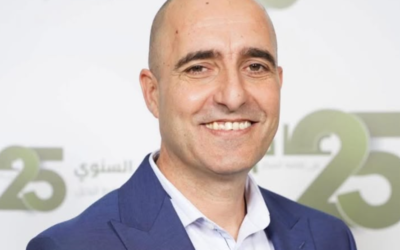
“There is a sense of pride among Arab citizens in the aftermath of the election. People feel that the community demonstrated a collective awakening and collective wisdom,” says Dr Samer Swaid, founder of Qadaya, a civic leadership initiative, and of Etelaf 2026, a broad coalition of movements, initiatives, research centres and civil society organisations aiming to strengthen political participation among Palestinian Arab citizens of Israel.
Fida Nara Tabony, a feminist activist and co-director of programmes at the New Israel Fund (NIF), describes the unusual sight of long queues outside polling stations early in the morning in her home city of Nazareth. “While standing in a long queue, I chatted with an elderly woman and a young woman, and we all agreed that we cannot stay silent, and how heart-warming it is to see such a turnout,” she says.

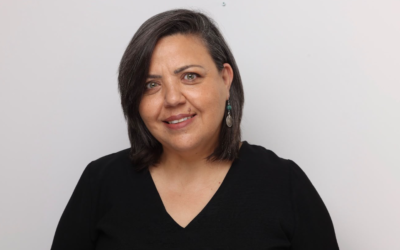
Tabony notes that before the latest election, statistics showed that only one in four young Arab Israelis voted, while turnout among women in certain areas, such as the Negev, was as low as 20 per cent. She credits years of democracy education and efforts to encourage active civic participation by Arab civil society organisations, particularly among women and younger generations, with helping bring about this historic result.
Qadaya and Etelaf 2026 were central to these efforts. Swaid describes a major door-to-door campaign led by students who knocked on approximately 164,000 doors across the country, reaching more than 40 per cent of households in Arab communities.
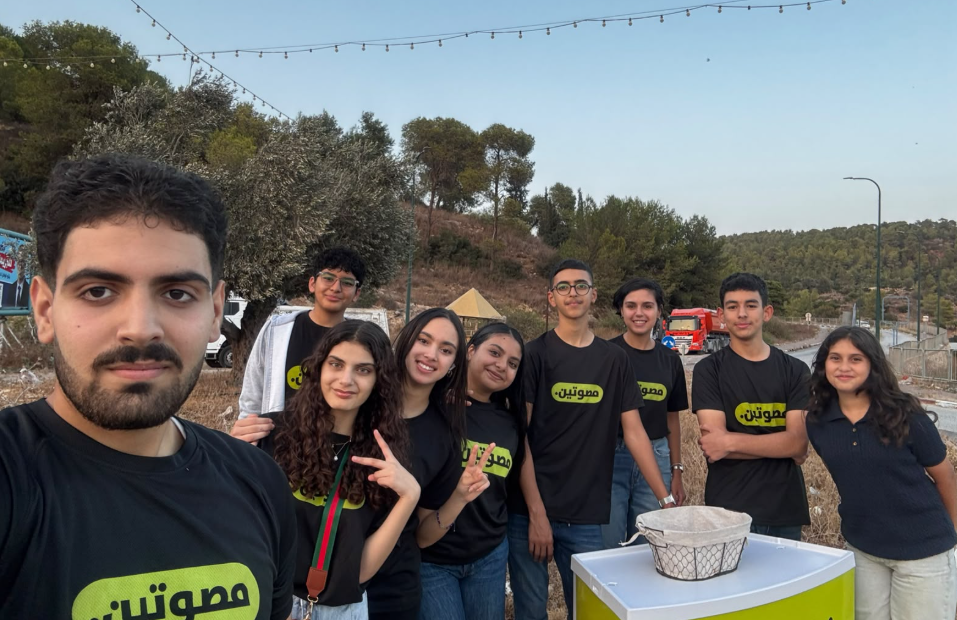
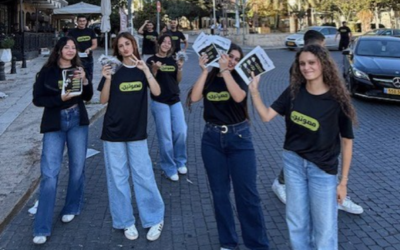
Another campaign, led by Betna, Israel’s first independent Arab youth movement, the Arab-Jewish Centre for Equality, Empowerment and Cooperation (AJEEC), and Ajyal, the Arab division of the Hashomer Hatzair youth movement, saw thousands of secondary-school pupils take to the streets of Arab and mixed cities and villages to create a sense of excitement ahead of the election. The young activists distributed leaflets and held informal conversations about the importance of voting. On election day, volunteers found themselves entertaining bored children in Nazareth while their parents cast their ballots, chatting with voters to help pass the time in the long queues in Umm al-Fahm, and even helping to clear a traffic jam near a polling station in Tamra.
“I think this was a personally empowering experience for them in terms of politicisation and democratisation, something one cannot learn at school. They will remain civically engaged for the rest of their lives,” says Swaid, who also serves as Betna’s chairman and is the upcoming winner for 2026 of the NIF UK Human Rights Awards.
Other initiatives included social media campaigns by SADA, an Arab-led civic organisation that raises awareness of issues affecting Arab citizens and amplifies their voices. In Bedouin towns and villages in the Negev, where turnout approached 80 per cent, up from around 51 per cent four years earlier, Itach-Maaki, a Jewish-Arab feminist legal advocacy organisation, worked alongside the Bedouin women’s movement Alnashmiat to mobilise women voters through home-based meetings on voting rights and practical assistance in reaching polling stations on election day.
As with many Arab voters I spoke to before the election, both Swaid and Tabony identify the deterioration in personal security and anger towards the government of Benjamin Netanyahu, particularly far-right National Security Minister Itamar Ben-Gvir, as major factors driving people to the polls. Under Ben-Gvir, who has a previous conviction for incitement to racism against Arabs, organised crime and violence in Arab communities, including blood feuds and so-called ‘honour’ killings, have reached record levels: 252 people were killed in crime-related violence in Arab society in 2025.
“He constantly provoked Arab society. As the minister responsible for the police, he watched crime rise and blamed the Arabs themselves. He celebrated the demolition of family homes,” says Swaid.
Swaid points to other pressing concerns that mobilised Arab voters, including fears that settler violence in the West Bank could eventually be replicated within Israel itself, and demands for “an end to house demolitions and discriminatory planning policies”. Yet he acknowledges the limits of what a change of government might achieve. On Gaza and Iran, he sees little prospect of a significant policy shift, noting that the opposition bloc has offered no clear alternative.
Arab citizens account for roughly a fifth of Israel’s population, with Muslims making up around 85 per cent of the Arab population and Christians and Druze accounting for most of the remainder. As discussions of boycotting Israeli elections have largely faded from public discourse in Arab communities, the idea of participating in government has also gained further support. A May 2026 survey by Tel Aviv University’s Moshe Dayan Centre found that 71.3 per cent of Arab respondents identified crime and violence as the most pressing issue facing their community, compared with just 8 per cent who prioritised the Palestinian issue. The survey also found that 77.2 per cent of Arab Israelis supported an Arab party joining the next governing coalition.
Therefore, Ra’am is now seeking to join the next coalition, having made history in 2021 as the first independent Arab party to enter an Israeli governing coalition. Its list now includes, at number two, Yoav Segalovitz, a Jewish Zionist and former senior police officer. The party has expressed a preference for a government led by Eisenkot. The Joint List has also indicated its willingness to support an alternative government from outside the coalition, subject to its political conditions.
Thanks to the high turnout, the Arab parties now have considerable influence over the balance of power between Prime Minister Benjamin Netanyahu’s right-wing bloc and the opposition parties’ so-called ‘change bloc’. With the current results leaving Netanyahu struggling to form a government, many Arab voters already regard the outcome as a victory.
The unprecedented Arab turnout was followed by allegations of electoral fraud from Netanyahu and his allies, who claimed that the election had been stolen through vote-buying and foreign interference. Seven people were arrested on suspicion of attempting to buy votes for Ra’am, while a separate Shin Bet investigation examined allegations of foreign funding, reportedly involving Qatar. Although the security agency suggested that the suspected interference could have involved thousands of people, it has not publicly substantiated those claims. On Wednesday, Israel’s Central Elections Committee certified the results after reviewing records from 9,069 polling stations — approximately three-quarters of the total — finding no evidence of irregularities that compromised the integrity of the election or altered its outcome.
“People went to vote because their lives are hard. I don’t know where the investigations stand, but no one paid us,” Swaid says. “Therefore, we see this discourse as intended only to delegitimise the Arab voice.”
“We are at a historic moment. The debate on both sides about Jewish-Arab partnership and the legitimacy of the Arab voice is significant — even if it can be harsh and deeply racist at times,” says Tabony. “But when was the last time Jewish-Arab partnership was discussed almost every evening on the news? Now, Israel’s leaders must decide whether to return to the spirit of the Rabin years or continue perpetuating a reality shaped by fear”.

Keep community journalism free.
Jewish News is free for everyone. No paywall. No barriers. Just trusted journalism for anyone who wants to stay connected to Jewish life in Britain.
If you value that, please support us.
From as little as £5 a month, you can help keep our journalism free and accessible to all.
Every day, we report on the issues that matter to our community. We celebrate achievements, support charities, challenge antisemitism and ensure Jewish voices are heard more widely.
From as little as £5 a month, you can help us continue to:
- Report on the stories shaping Jewish life in the UK and beyond
- Bring our community together through shared stories, events and campaigns
- Celebrate the people, culture and moments that define our community
- Support organisations doing vital work across Jewish Britain
You can make a one-off donation or become a regular supporter. Every contribution helps keep our journalism free, independent and accessible to all.
If everyone who values Jewish News gave a small amount, it would make a real difference to our future.