Prefer Jewish News on Google
Israel must be uncompromising in ending settler violence but the world should do something in return
As a final resort, a settlement with a pervasive and intractable culture of lawlessness and extremism could be evacuated.
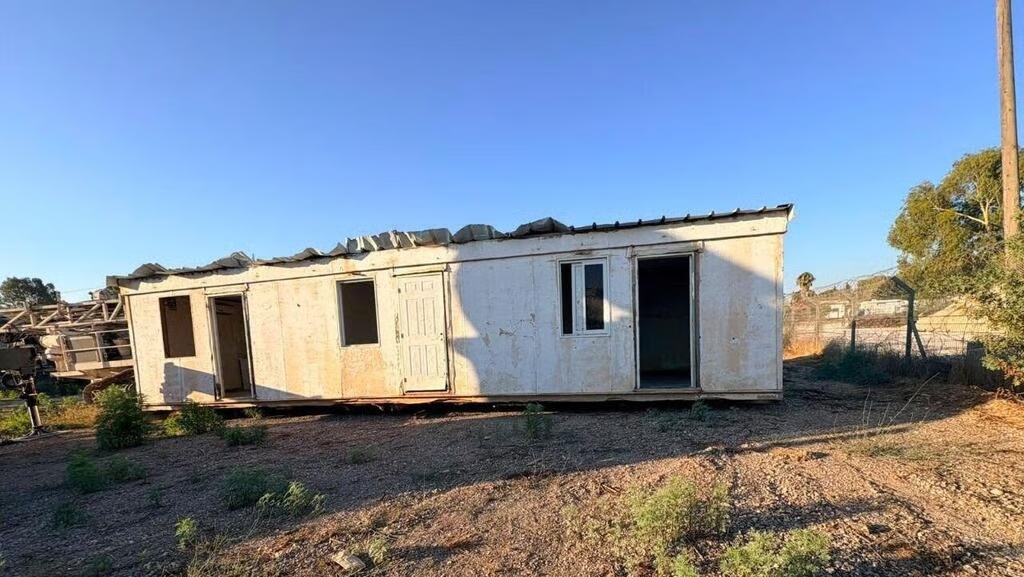
The ongoing siege on the Palestinian village of Qusra by extremist settlers is a challenge to Israeli political and military authority, and a challenge to the rest of us too.
Supporters of Israel, especially non-Jews like me, tend to avoid the subject of the settlements or simply echo the prejudices endemic across Western politics. All together now: the settlements are an obstacle to peace.
Well, I don’t go in for that. I believe Jewish settlement of the Land of Israel can be legitimate, where carried out in accordance with Israeli law, and, more than that, an act of decolonisation that returns territory to an indigenous people who were expelled from their homeland, whether two millennia ago or in the mid-20th century by the Jordanian occupiers.
Any peace that is threatened by the presence of Jews in Judea is not peace but politically correct ethnic cleansing.
Settlement is a supreme act of Zionism and it is because of this that the rot festering within the settlement project must be cut out.
But there is an election in October, in which former chief of the general staff Gadi Eisenkot hopes to topple Benjamin Netanyahu. This leaves the state in an impossible position.
The current government will not take comprehensive action against the extremists because the extremists are the people who keep it in power.
The opposition recognises settler lawlessness as a threat to Israel’s diplomatic standing and the authority of the state itself, but an Eisenkot-led government would by necessity span left and right in an ideologically precarious coalition.
Any action against the settlers would have to be carefully calibrated for fear of dividing that coalition or handing the right a rallying point to regroup and hasten its return to office.
That is not a reason to be timid. Quite the opposite: Eisenkot and his allies should be bold. If Israel chooses a new government, that government should propose a deal to the Trump administration and the wider international community.
Israel would launch a ruthless crackdown via a joint task force of the IDF, Israel Police and the Shin Bet. This unit would be tasked exclusively with investigating and deterring settler violence, extremism and incitement.
Its work would be backed with severe sanctions on settlers who attack Palestinians, damage or destroy their property, or attempt to intimidate them or NGOs lawfully working alongside them.
Penalties for settlers who obstruct or use force against Israeli soldiers or police would also be enhanced. Equally, soldiers convicted of collaborating in settler extremism should face military prosecution.
Punitive measures should include lengthy prison sentences for violence against persons or property, and in the case of recidivists and habitual inciters harsh remedies such as restrictions on movement and social media use and if applicable withdrawal of income-related Bituach Leumi benefits.
Where a settler persists in violence and disorder, the state should reserve the right to ban them from living in Judea and Samaria altogether. If you help undermine Israel’s legitimacy over the Green Line, you lose the right to live there. As a final resort, a settlement with a pervasive and intractable culture of lawlessness and extremism could be evacuated.
With a good faith effort on this scale, Israel would be entitled to ask the United States for something big in return: recognition of Israeli sovereignty over the settlement blocs.
Inspired by the Clinton parameters proposed in December 2000, this would see the major concentrations of settler population — Modiin Illit, Beitar Illit, Ma’ale Adumim, Gush Etzion, and Givat Ze’ev — become part of Israel as a matter of law.
Taken together, these areas comprise around four per cent of the land mass of Judea and Samaria but are home to 70 per cent of the settler population. Outside these blocs, nothing would change either on the ground or in terms of legal status.
While the European Union is unlikely to agree to recognition, the Trump administration could be persuaded by CNN-friendly images of law and order being restored in Judea and Samaria.
Benjamin Netanyahu has previously pledged to ‘annex’ the settlements but never followed through. The pragmatic Israeli centre could succeed where Bibi failed in expanding Israel’s borders while suppressing lawlessness in the country’s ‘Wild East’.
Eisenkot would be able to position himself as both scourge of nationalist extremism and defender of the Land of Israel, a middle ground position shared by many Israeli voters. By cleaving the majority of law-abiding settlers from the radical minority, he would also strengthen the state’s hand should further crackdowns be required.
An enlarged Israel would be a more confident Israel and a confident Israel would be more open to diplomatic efforts to end the conflict. October 7 buried the two-state solution and it will take something momentous to resurrect the paradigm.
Incorporating the patches of territory where seven in ten settlers live would reduce the settler population and their political valency to more manageable levels. Diminishing the scale of evacuations required to reach a concord with the Palestinians would make such a concord more achievable on the Israeli side.
The settlement project must be saved from its fanatics and redeemed from the common criminality into which they have plunged it. Benjamin Netanyahu has presided over this degradation of the Zionist ideal and done grave harm to Israel in the process.
If Israel chooses a new direction in October, his successor should show courage and boldness. Take the settlements back from the extremists.
- Stephen Daisley is an opinion journalist and writer for The Spectator based in Scotland

Keep community journalism free.
Jewish News is free for everyone. No paywall. No barriers. Just trusted journalism for anyone who wants to stay connected to Jewish life in Britain.
If you value that, please support us.
From as little as £5 a month, you can help keep our journalism free and accessible to all.
Every day, we report on the issues that matter to our community. We celebrate achievements, support charities, challenge antisemitism and ensure Jewish voices are heard more widely.
From as little as £5 a month, you can help us continue to:
- Report on the stories shaping Jewish life in the UK and beyond
- Bring our community together through shared stories, events and campaigns
- Celebrate the people, culture and moments that define our community
- Support organisations doing vital work across Jewish Britain
You can make a one-off donation or become a regular supporter. Every contribution helps keep our journalism free, independent and accessible to all.
If everyone who values Jewish News gave a small amount, it would make a real difference to our future.