
 Prefer Jewish News on Google

The tragedy of Kairos for Jewish-Christian relations
The selective theologising of Kairos I and now Kairos II has succeeded in driving a wedge between Christians and Jews in the UK
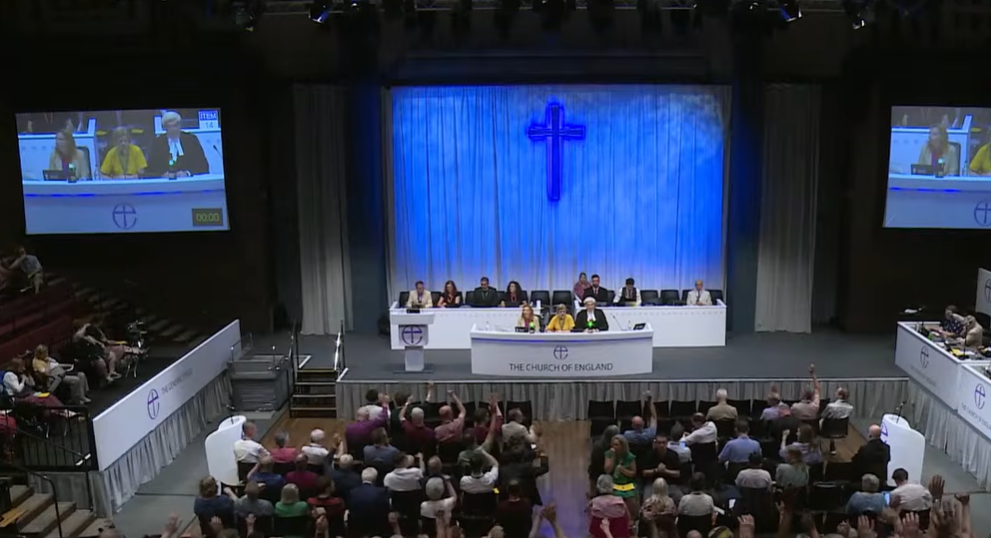
As I sat down to listen to the Synod 2026 debate on whether to receive or merely ‘hear’ Kairos II, among other recommended documents, I felt a deep sadness.
My own journey into Christian Jewish relations began with Kairos, while serving as Public Affairs Director at the Board of Deputies of British Jews, following 23 years living in Israel, including as a Director at a leading Israeli civil society organisation. Kairos I was a watershed moment in Christian Jewish relations, due to its singular narrative, selectively theologising the conflict, and for example referring to BDS as ‘loving resistance’
I had lived through, among other wars, two Intifadas and crucially the Oslo Accords, during which I had the unparalleled opportunity of working with Palestinian civil society. This was the beginning of a life-long personal and professional journey, that I am still and will always be on, to acknowledge and engage with the Palestinian narrative alongside my own.
I think the lessons I learned from these encounters and since then are these: not to demonise or other an entire community, not to delegitimise another’s identity and most importantly to sit with multiple truths, even where they challenge my most deeply held beliefs, side by side. And this was what I endeavoured to model while serving as Council of Christians and Jews (CCJ) Director, taking over 100 Christian and Jewish leaders and clergy to Israel and Palestine, to encounter multiple narratives, and to wrestle with deep seated prejudice and complexity together, from within both our communities, in order to build empathy with all the peoples of the Holy land.
Kairos II achieves none of these things. Instead, it seeks to demonise and deny the very legitimacy of the modern state of Israel and the enduring historical and spiritual connection of the Jewish people to Israel, integral to Jewish identity. And while the voices of indigenous Palestinian Christians, where there is suffering or discrimination, should not only be heard, but also advocated for by Christians and indeed my own community, Kairos II undermines this very goal, shutting down dialogue and empathy, with hateful language, including disengagement with any Jew that considers themselves a Zionist.


By commending and disseminating this document, the window of opportunity to engage with UK Jewry seems far narrower, and this is why I am so sad. The fact that this document was overwhelmingly endorsed by the House of Bishops, without equivocation, is troubling. The fact that there were also clergy and laity that spoke eloquently, acknowledging the greater complexity to be considered and the damage this will inflict on community relations, was deeply moving.
In recent years, in large part due to the war in Gaza, there has been insufficient dialogue and engagement between Christian and Jewish leaders. Potentially more engagement has taken place at the grass roots, given the more nuanced local interventions at Synod. I am hopeful that through existing and new networks, we can rebuild trusting and sustainable relationships, but this will undoubtedly include some very difficult conversations, that will need to be carefully curated. I do not underestimate how hard it will be. We should take example from Palestinian and Israeli peacebuilders.
Listening to Synod, I was reminded of a visit to Ramallah in 2019, where our group of Christian and Jewish leaders met with a Lutheran priest. At the end of the meeting we asked him “what is the message you want us to take back to the UK?”. His answer was simple: “Don’t be more Israeli than the Israelis and don’t be more Palestinian than the Palestinians. Be Peace Builders.”
Elizabeth Harris-Sawczenko is Vice President of the Council of Christians and Jews (CCJ)

Keep community journalism free.
Jewish News is free for everyone. No paywall. No barriers. Just trusted journalism for anyone who wants to stay connected to Jewish life in Britain.
If you value that, please support us.
From as little as £5 a month, you can help keep our journalism free and accessible to all.
Every day, we report on the issues that matter to our community. We celebrate achievements, support charities, challenge antisemitism and ensure Jewish voices are heard more widely.
From as little as £5 a month, you can help us continue to:
- Report on the stories shaping Jewish life in the UK and beyond
- Bring our community together through shared stories, events and campaigns
- Celebrate the people, culture and moments that define our community
- Support organisations doing vital work across Jewish Britain
You can make a one-off donation or become a regular supporter. Every contribution helps keep our journalism free, independent and accessible to all.
If everyone who values Jewish News gave a small amount, it would make a real difference to our future.





















