Prefer Jewish News on Google
The UK has a major maths problem. This 19-year-old is helping to solve it with AI
Tyler Welby, a former head boy of Immanuel College and the UK's youngest school governor, has launched a GCSE maths platform after nearly 42% of entries failed to achieve a standard pass last year
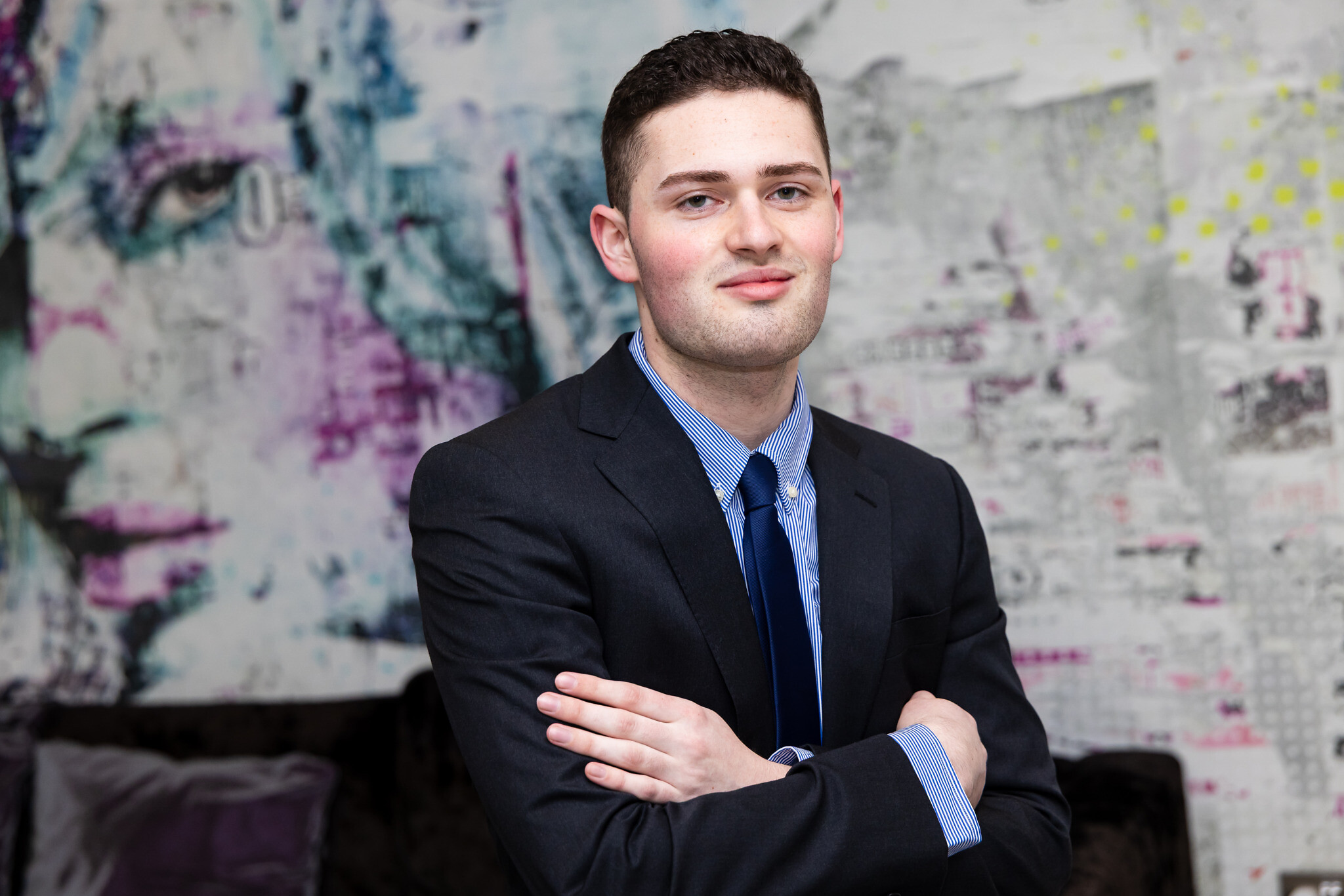
A former head boy at Immanuel College, believed to be Britain’s youngest school governor, has launched an AI-powered platform to help tackle the UK’s growing GCSE maths crisis.
Tyler Welby, 19, founded MathaMentor after seeing first-hand, both as a student and a private tutor, the scale of the challenge facing schools.
Nearly 42 percent of GCSE maths entries failed to achieve a standard pass (grade 4) last year.
“We’re at crisis point,” Welby tells Jewish News. “Every year, around 175,000 students are finishing school without a GCSE maths pass. That’s having a huge impact on future opportunities.”
Welby wants to close that gap with MathaMentor, which provides personalised support at a scale that traditional one-to-one tutoring cannot match.
MathaMentor creates a tailored learning journey for each student, adapting questions, explanations and support to their individual strengths and weaknesses, remaining aligned to GCSE exam board requirements.
Each pupil is assigned their own AI-powered learning avatar, while the platform’s teacher dashboard provides AI-generated insights into class performance, helping schools identify learning gaps earlier and target support more effectively.
“MathaMentor is designed to work alongside classroom teaching rather than replace it,” explains Welby, who lives in Elstree.
“It’s not just about helping the students. It’s also about helping teachers understand where they should be focusing their time and attention.”

The launch last week comes as the Government announced plans to increase its focus on artificial intelligence in education, with Sir Keir Starmer unveiling the rollout of AI tutors to 450,000 children to help close attainment gaps.
“The conversation is no longer whether AI belongs in education,” says Welby. “The question now is how we use it responsibly and effectively to improve outcomes for students. AI is the future of education.”
When Welby, who studied Maths, History and Politics A-levels, left Immanuel College, he remained in close contact with the then chair of the board of governors Daniel Levy, a prominent philanthropist and co-chairman of The Grove Hotel and Luxury Family Hotels.
The pair regularly discussed education, technology and the growing role AI could play in classrooms. Those conversations eventually led to an unexpected invitation.
“Daniel has been an incredible mentor to me and he invited me back to become a governor,” says Welby. “I was initially quite hesitant because of my age, but it was an incredible opportunity.”
Welby joined the governing body, serving on education and strategy committees while simultaneously studying his History and International Relations degree at King’s College London and running his own tutoring business, Cloud 9 Tutoring.
It was through those experiences that the idea for MathaMentor began to take shape.
“I was sitting GCSEs not long ago and saw how many of my fellow students struggled with maths and there was a huge gap between students who could afford regular one-to-one support and those who could not.
“I wanted to use AI to create something that could give every student personalised support, build their confidence and help them achieve the grades they are capable of.”
Welby assembled a team that included experienced GCSE maths teachers, educational psychologists and special educational needs specialists to help build the platform.
He is already in discussions with schools, tutoring providers and academies across the UK.
While MathaMentor is currently focused on GCSE maths, Welby says the technology has been built with a much bigger ambition in mind.
“Our mission right now is to reduce the GCSE maths failure rate but the technology can be adapted for different age groups and different curricula.
“This may be bold but in five years’ time, I’d love to see MathaMentor being used in all schools around the world.
“There’s no reason why this couldn’t support students across different education systems globally.”
For now, however, his focus remains firmly on the challenge closer to home.
“If we can help reduce that 42 percent failure rate and give more young people the confidence and qualifications they need to succeed, that would be a huge achievement.”

Keep community journalism free.
Jewish News is free for everyone. No paywall. No barriers. Just trusted journalism for anyone who wants to stay connected to Jewish life in Britain.
If you value that, please support us.
From as little as £5 a month, you can help keep our journalism free and accessible to all.
Every day, we report on the issues that matter to our community. We celebrate achievements, support charities, challenge antisemitism and ensure Jewish voices are heard more widely.
From as little as £5 a month, you can help us continue to:
- Report on the stories shaping Jewish life in the UK and beyond
- Bring our community together through shared stories, events and campaigns
- Celebrate the people, culture and moments that define our community
- Support organisations doing vital work across Jewish Britain
You can make a one-off donation or become a regular supporter. Every contribution helps keep our journalism free, independent and accessible to all.
If everyone who values Jewish News gave a small amount, it would make a real difference to our future.