Prefer Jewish News on Google
This summer, remember the work that madrichim do to make Israel tours successful
The scale of what they make possible is easy to miss because, when it works, it looks effortless
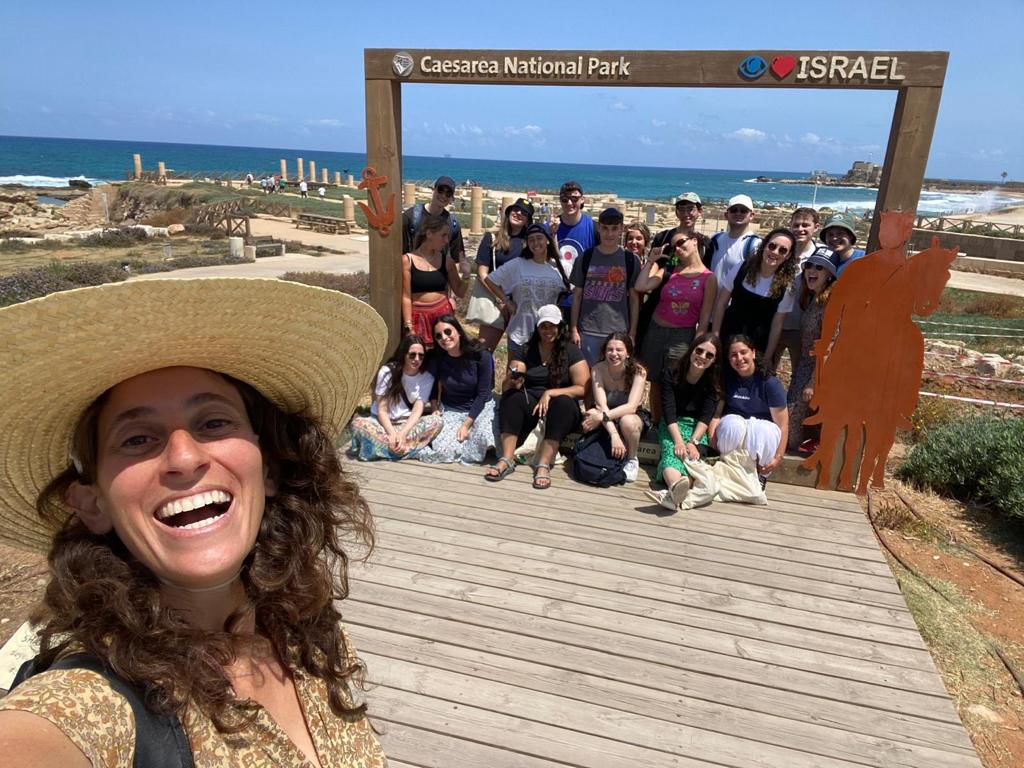
This summer, more than 1,300 young people have travelled to Israel on UJIA-supported Israel experiences. Thousands more are on summer camps, residential programmes, leadership seminars and movement activities across the UK and beyond.
They will sing too loudly on coaches, stay up too late in dorms, argue in peulot (programmes), make friends they will keep for years, and begin to work out what being Jewish, Zionist, and part of a community means to them.
At the centre of all of it will be madrichim (leaders).
These are mostly young adults, often only a few years older than the chanichim (participants) themselves, who have chosen to give their summer to other people’s children. They are not distant adult educators, nor are they polished professionals with decades of experience. They are living proof that Jewish commitment does not have to wait until adulthood.
They will be the ones waking people up in the morning, counting heads before every journey, noticing who is quiet at lunch, handling homesickness, explaining complex ideas, leading songs, calming parents, managing risk, keeping energy up, and somehow still finding the emotional capacity to sit with a teenager at the end of a long day and ask, properly, “Are you okay?”
That is what makes the youth movements so extraordinary.
Every summer, we ask young adults to do something genuinely difficult. We ask them to hold together safeguarding, logistics, pastoral care, education, Jewish identity and Israel engagement, often before they are 23. We ask them to be responsible, creative, careful and inspiring. We ask them to model a lived relationship with Israel at a time when that relationship is more contested, more emotionally charged and more necessary than ever.
And every summer, they step forward.
The scale of what they make possible is easy to miss because, when it works, it looks effortless. A coach arrives. A campsite opens. A group boards a flight. A peulah begins. A homesick child settles. A teenager who thought Israel had nothing to do with them finds themselves arguing, singing, crying, laughing, and caring.
But none of it just happens.
It happens because madrichim plan it. Roshim (senior leaders) train them. Movement workers carry the responsibility. Volunteers give up evenings and weekends. Parents trust the system. Donors help make it affordable. Organisations take safeguarding, welfare and educational quality seriously. And young people show up.
In the past 30 years, more than 31,000 young people have gone on a UJIA-supported Israel Tour. The annual average is just over 1,100. The only major interruptions have come from moments of genuine crisis: the Second Intifada, Covid, and the Israel and Gaza war. Even in the difficult summers of 2024 and 2025, 1,281 young people chose to go.
That is not just a statistic about travel. It is a story of trust, commitment and continuity.
It tells us that families still want their children to encounter Israel directly. It tells us that young people still want an experience that is bigger than a holiday. It tells us that, even in a more anxious and polarised Jewish world, Israel Tour remains one of the defining rites of passage of Jewish life in the UK.
Ask someone who grew up in a youth movement what they remember and they may not be able to name every session or every educational aim. But they will remember the atmosphere. The friendships. The songs. The strange intensity of a residential Jewish space where life feels a little more possible, a little more communal, a little more alive. They will remember the madrichim who role modelled a passionate and proud Jewish identity
That is the real work of youth movements. Not only to teach about Israel, but to make Jewish life feel inhabited. To make young people feel that they are part of a story, a people and a community. To give them role models who are close enough in age to be believable and far enough ahead to be aspirational. To show them that Zionism is not an argument to win, but a relationship to wrestle with, care about and live in.
This summer, teenagers will return from Israel Tour with stronger friendships, sharper questions and a more personal relationship with Israel. Some will have had their first serious conversation about Jewish identity. Some will have encountered Israeli peers or Israeli stories that challenge what they thought they knew. Some will decide that next year they want to be the one standing at the front of the room.
And that is how the pipeline renews itself.
The British Jewish community is full of people who were formed in these spaces: trustees, educators, rabbis, CEOs, campaigners, philanthropists, communal professionals and volunteers. A disproportionate number of them once stood nervously in front of a group of 16-year-olds with a flipchart, a messy peulah plan and a belief that this work mattered.
It did matter. It still does.
So, this summer, when the coaches leave, the flights land, and when your child returns home, take a moment to pause, notice what happened, and then remember to thank the madrichim that make all of it possible.
Zvi Noé is the chair of UJIA

Keep community journalism free.
Jewish News is free for everyone. No paywall. No barriers. Just trusted journalism for anyone who wants to stay connected to Jewish life in Britain.
If you value that, please support us.
From as little as £5 a month, you can help keep our journalism free and accessible to all.
Every day, we report on the issues that matter to our community. We celebrate achievements, support charities, challenge antisemitism and ensure Jewish voices are heard more widely.
From as little as £5 a month, you can help us continue to:
- Report on the stories shaping Jewish life in the UK and beyond
- Bring our community together through shared stories, events and campaigns
- Celebrate the people, culture and moments that define our community
- Support organisations doing vital work across Jewish Britain
You can make a one-off donation or become a regular supporter. Every contribution helps keep our journalism free, independent and accessible to all.
If everyone who values Jewish News gave a small amount, it would make a real difference to our future.