Prefer Jewish News on Google
This year’s BMA conference: obsessed with opposing the IHRA antisemitism definition
Professor David Katz writes about his experience of the British Medical Association's Annual Representative Meeting
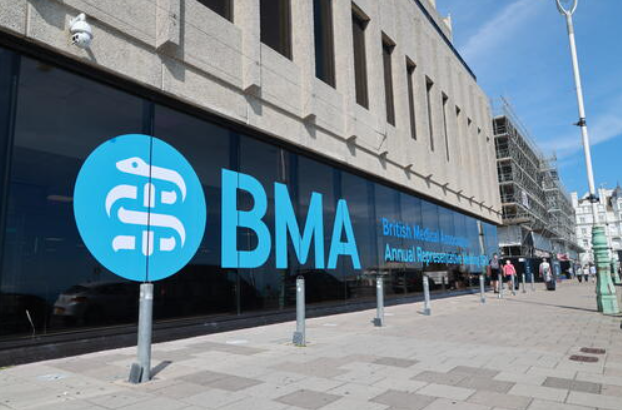
A year ago, I wrote an update for Jewish News on the 2025 Annual Representative Meeting (ARM) of the British Medical Association (BMA), describing the hostile environment there, and how antisemitism was alive and well in the British healthcare sector. Since then, we have had much wider coverage of the antisemitism experiences of doctors and healthcare workers, about how medical students are made to feel uncomfortable on their in-course WhatsApp groups, and about Jewish patients scared to admit to their identity because they fear discrimination.
From a government perspective, clear efforts have been made to improve the situation. Wes Streeting, then Secretary of State for Health and Social Care, asked Lord Mann to look at the evidence on the subject and to come up with suggestions how racism, including antisemitism, will be challenged and combatted within the Health Service.
No longer will the General Medical Council’s own racism expert forget to include Jew hatred. The McPherson principles about protected characteristics will be applied to Jews, alongside other minority groups. On 4 June, Lord Mann published his review, which contained 36 recommendations, which if adopted would demonstrate the zero tolerance for antisemitism to which we believe British society and its healthcare professions should aspire.
If one were trying very hard to find a silver lining within the medical profession itself, I suppose one could point to the fact that the number of antisemitic motions submitted by doctors to the ARM appears to have stabilised over the past three years. It remains disproportionally high, and spills over into other domains within the BMA where the only topic worldwide raised by the International Relations Committee at the ARM is Gaza, Israel and Palestine, but at least it is not rising at the same rate as antisemitism within the general population, as recorded by the Community Security Trust (CST) records. If you find such a data point to be cold comfort, I do not blame you at all.
After all, last year at the ARM, there was an emergency motion calling on the BMA to have no communication with the Israeli Medical Association (IMA) and call for their expulsion from the World Medical Association (WMA). This has since been actively pursued by the BMA. The GMC’s racism advisor now refers to “genocide” in Gaza, not appearing to know that this charge gets translated into shouts about killing babies aimed at random Jewish men, women and children in the street. At an awards dinner held the night before the ARM, the outgoing and past Presidents of the BMA (John Chisholm and Mary McCarthy, respectively) had clearly prioritised Israeli misdeed and iniquities as part of their remit. People may recall that in December 2024 the BMA announced an investigation into Dr McCarthy’s social media behaviour, specifically relating to antisemitism claims. That investigation was abruptly dropped in 2025.
Which brings us to the ARM itself. Given what I have just mentioned, it will not surprise you to hear that there were several motions where antisemitic views were expressed. One of these, about Lord Mann’s views on regulatory matters, was amended to remove the link. Another, about how his report interferes with Freedom of Expression, was carried. But the most extraordinary was that even though the BMA has not adopted the International Holocaust Remembrance Alliance (IHRA) definition of antisemitism, the meeting saw fit to document its rejection of it. This was despite outstanding contributions from my colleagues – Dr Penelope Toff, resident doctor Alex Boulton and medical student Eli Sassoon – to the discussion. They spelled out clearly how uncomfortable it is to be Jewish in healthcare in the UK in June 2026.
This bald statement of fact does not convey the tone of the proceedings. There was rapturous loud applause, and shouts of acclaim, from those opposed to the IHRA. All such speakers made token reference to their specific motion itself, but then spoke mainly about Israeli “crimes”.
On the final ARM day, emergency motions are debated. 17 were submitted of which 6 were related to the IHRA definition. Perhaps needless to say, one of which I was a part, as well as another put forward by sympathetic colleagues, were not selected. But one, which called for a halt to the implementation of the of the Mann Review recommendations, was prioritised. Leaving aside the content of the motion itself, none of which would surprise readers, the proposer Imran Sharieff said repeatedly that he “abhors antisemitism”. Without any explanation about what antisemitism is. And without any comment about the constructive steps that need to be taken to combat what he claims to abhor. Nonetheless, it was passed by a large majority.
There was a silent minority in the room who were kind, sympathetic and supportive – who were shocked and horrified by what they saw. They understood that the torrent of invective against both the Mann Review and the IHRA definition did not reflect the views of decent people who understand that slogans and antisemitic tropes should have no place in medicine.
It can feel lonely fighting from within – many Jewish doctors have left the BMA, doubting that a union which is unable to stand up against antisemites within its own ranks could ever stand up for them if they needed it. But there were the inspiring contributions this year, made by the younger generation. A Jewish doctor and medical student stood up, despite the hostility of the crowd, and told the room the truth that they did not want to hear.

Keep community journalism free.
Jewish News is free for everyone. No paywall. No barriers. Just trusted journalism for anyone who wants to stay connected to Jewish life in Britain.
If you value that, please support us.
From as little as £5 a month, you can help keep our journalism free and accessible to all.
Every day, we report on the issues that matter to our community. We celebrate achievements, support charities, challenge antisemitism and ensure Jewish voices are heard more widely.
From as little as £5 a month, you can help us continue to:
- Report on the stories shaping Jewish life in the UK and beyond
- Bring our community together through shared stories, events and campaigns
- Celebrate the people, culture and moments that define our community
- Support organisations doing vital work across Jewish Britain
You can make a one-off donation or become a regular supporter. Every contribution helps keep our journalism free, independent and accessible to all.
If everyone who values Jewish News gave a small amount, it would make a real difference to our future.