Prefer Jewish News on Google
Jews targeted by antisemitism need more than statements of sympathy from politicians
Professor Deborah Lipstadt writes for Jewish News of her exhaustion at the platitudes of world leaders in the aftermath of antisemitic attacks
In 1964, during the height of the American civil rights struggle, a leader of the black community, Fannie Lou Hammer, famously declared, “All my life I’ve been sick and tired. Now, I’m sick and tired of being sick and tired.” I have thought of her declaration frequently in the past few months.
I have fought antisemitism and hatred for all my professional life. I have done so in the classroom and in the courtroom, on the pages of scholarly journals and in widely circulated newspapers, and in the halls of United States State Department and foreign capitals worldwide.
I assiduously track antisemitic incidents wherever they may occur. My social media algorithms feed me news of them continuously. And, lest I miss something, my alerts are set to “antisemitism,” “Jew-hatred,” and “attacks on Jews.”
I track them because I feel professionally obligated to be aware of what is going on. But I also know someone, probably another Jew, is going to accost me at the supermarket, shul, gym, or some airport lounge, with three questions: “Did you hear what just happened in Manchester, Ontario, Washington, Paris, etc.?” That question is invariably followed with another: “Why now?”
Unlike so many people who, though deeply disturbed by this development, feel helpless to make their voices heard, I have had and continue to have that opportunity. Long before, during my time in office as the United States’ Special Envoy to Monitor and Combat Antisemitism and since then, I have had numerous opportunities to sit with leading government officials worldwide to discuss responding to this scourge.
After impressing upon them the gravity of this situation, I have warned them not to think of this as solely an attack on Jews, Jewish institutions, and those associated with them. Antisemitism poses a multi-tiered that encompasses more than just Jews. In fact, they and the societies they lead are in the crosshairs. Those engaged in these attacks – rightists, leftists, and Islamist jihadists – are also aiming at democracy, rule of law, and international security and stability.
Some of the haters are home-grown and some are foreign. Some are ideological Jew-haters, e.g. Iran, Muslim Brotherhood, and Russia. They want to harm – including lethally – Jews, because they despise them.
But some are utilitarian antisemites, e.g., China, and Russia. (Yes, Russia falls into the ideological and the utilitarian category.) The utilitarians use antisemitism as a means of fostering rifts in society, creating dissension, and destabilizing the social compact.
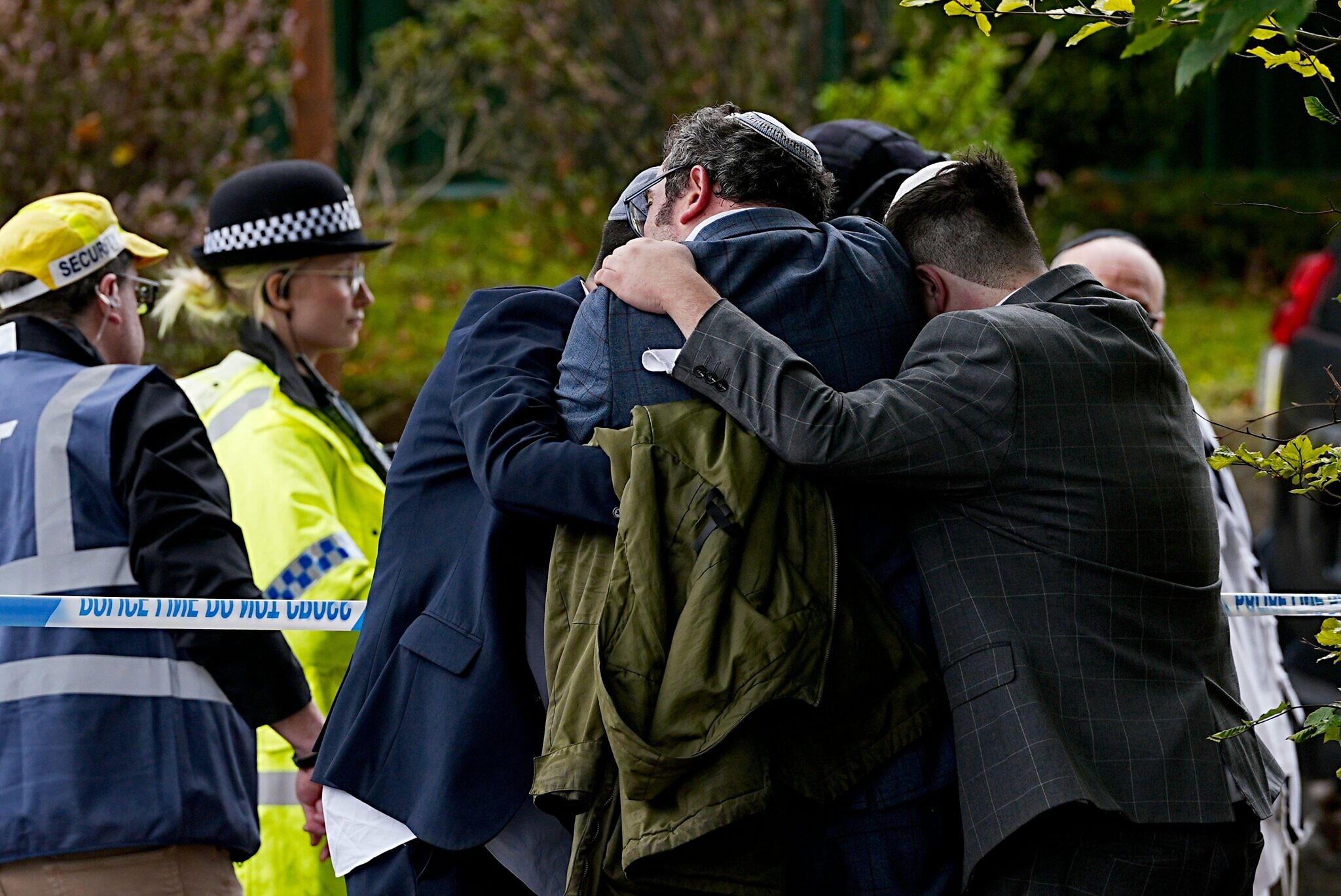
The plethora of incidents of Jew-hatred rolls off the tongues of those who follow these developments, like some sort of incantation: Washington D.C.’s Capitol Jewish Museum (2 dead), Boulder, Colorado (1 dead), Golders Green (2 stabbed, 1 beaten badly), Manchester (2 dead), Ontario (2 seriously wounded), Pittsburgh (11 dead), San Diego (1 dead), and the list goes on.
But this is not what has left me sick and tired. I knew that this was the case when I entered this field of study and when I accepted the Presidential appointment as an Ambassador with the portfolio of addressing this hatred.
No, what has left me sick and tired are the pious sympathies and sincere regrets issued by government leaders, Prime Ministers (UK, Canada), Mayors (London, Manchester, New York), University presidents (worldwide) and so many others. Their aides must have a file on their computers which they can expeditiously open when something happens. Maybe it’s entitled: “Reactions to Attacks on Jews.” They just need cut and paste from previous declarations. Last year, in the wake of the Golders Green stabbing, this newspaper put those platitudes on its front page. I was exhausted just reading them. [“Our thoughts and prayers are with you”; “An attack on one of us is an attack on all of us”; “We stand with you.” And the one that I find most infuriating: “This hate has no place in our society.” Has no place? It’s already here… and it’s thriving.]
Do I think leaders should condemn these acts? Of course. They must speak out unequivocally and expeditiously and with no contextual hesitations. But those condemnations must be accompanied by action, including difficult actions, ones that might have political costs. Political leaders must be willing to name the source of these attacks, call them out specifically, and demand that the communities and political enclaves spit out the hate mongers who have taken refuge in their midst.
Leaders must do this even at the risk of losing votes. They must also recognise, as those in the United Kingdom, Canada, and France, among other places, have failed to do, that when their most energetic foreign policy actions are aimed at Israel, when they reward Hamas even when it has made no moves towards peace, the attackers are invigorated. Despite being warned, as Foreign Secretary Miliband was by Chief Rabbi Mirvis and other Jewish leaders, that this singling out of Israel motivates attackers to harass, attack, and murder Jews worldwide, they ignore the warnings.
Why, my interlocutors ask me, is this happening now? In part because the haters know that there rarely are consequences for attacking Jews. So please spare me your pious sympathies, sincere regrets, and worn-out protestations. I am not just sick and tired of them, I consider them – and you – to be hypocritical and self-serving.
I – together with so many others – have had enough.
Ambassador (ret.) Deborah E. Lipstadt is the former United States Envoy to Monitor and Combat Antisemitism and is currently Distinguished University Professor at Emory University.

Keep community journalism free.
Jewish News is free for everyone. No paywall. No barriers. Just trusted journalism for anyone who wants to stay connected to Jewish life in Britain.
If you value that, please support us.
From as little as £5 a month, you can help keep our journalism free and accessible to all.
Every day, we report on the issues that matter to our community. We celebrate achievements, support charities, challenge antisemitism and ensure Jewish voices are heard more widely.
From as little as £5 a month, you can help us continue to:
- Report on the stories shaping Jewish life in the UK and beyond
- Bring our community together through shared stories, events and campaigns
- Celebrate the people, culture and moments that define our community
- Support organisations doing vital work across Jewish Britain
You can make a one-off donation or become a regular supporter. Every contribution helps keep our journalism free, independent and accessible to all.
If everyone who values Jewish News gave a small amount, it would make a real difference to our future.