Prefer Jewish News on Google

Tisha B’Av for the future
On the saddest day of our calendar, a thought about the one catastrophe we can still prevent
Tonight we sit on low stools and mourn. Tisha B’Av gathers into a single day the destruction of both Temples and the long list of griefs that came after. It is the saddest date in our year, and I’ve always thought its genius is that our tradition gives sorrow somewhere to go. We don’t pretend the losses didn’t happen. We name them, we grieve them properly, and then the calendar picks us up and carries us on, within days to Shabbat Nachamu, the Shabbat of consolation, to Tu B’Av and towards rebuilding and love.
But I wonder whether we need to broaden our focus. On Tisha B’Av should we also mourn for the future? We have no fast day for catastrophes that haven’t happened yet. Indeed our tradition refuses to let us treat the future as a fixed thing to be grieved in advance. We live by remembering the past to shape our future. Rabbi Sacks didn’t call his book Future Tense by chance. To be a Jew is to believe the future is ours to build.
Which is exactly why one particular response to the climate crisis bothers me so much. When I raise it, and (to the mirth of my friends and family) I raise it a lot, the reply I hear most often isn’t denial. It’s a comfortable shrug. It’ll be fine, won’t it. We’ll adapt. We always do. I heard Malcolm Gladwell say more or less precisely that on the Unholy podcast last year, when Yonit Levi and Jonathan Freedland asked him about climate. Humanity finds a way.
It’s a lovely thing to believe. But it isn’t hope. If anything it’s the opposite of hope, because it’s the belief that we can carry on exactly as we are and someone else will quietly sort it out. So I went looking for that someone. I couldn’t find them.
Let’s look at what we’re actually relying on.
We tell ourselves that if food ran short, the government would step in. But the government’s own food security report admits it holds no contingency plan for a supply shock. The National Risk Register, our official list of what might go wrong, covers food contamination and not food shortages. When Russia invaded Ukraine, that one event handed us the worst food price rises in forty-five years, and that was a single shock in a relatively stable climate. What actually stands today between us in the UK and empty shelves is a committee and a hope that the supermarkets pick up the phone.
We tell ourselves technology will rescue us. Fusion power, promised for decades, comes from a flagship project that was meant to switch on in 2019 and now hopes to run properly around 2039. Carbon capture, worldwide, currently deals with less than a tenth of one per cent of what we emit. Lab-grown food is real, but it makes speciality ingredients by the kilo, not the calories a country actually eats, and it’s fed on sugar grown by farmers, so it can’t rescue us from farming failing.
And we tell ourselves the market will warn us in good time, that prices will climb steadily as the danger grows. The Bank of England expects two million British homes to be uninsurable against flooding by 2050. Yet premiums have lately been falling, because insurance prices track the industry’s own boom-and-bust cycle far more than they track the actual risk. The warning light we’re all trusting is showing green while the engine itself overheats.
The scientific consensus is the temperature rises and associated disruption is locked in for the next twenty five years, and we would be wise to prepare for it rather than assume it away.
And you don’t need me to tell you the signs are here. As I write, Britain is in its third heatwave of the summer, under hosepipe bans and sliding into drought, and last month, at the peak of the heat, a hospital in Surrey declared a critical incident. Surrey. This isn’t some far-off Tisha B’Av waiting patiently in a distant Av. It’s begun.
So no, it won’t simply be fine. But despair isn’t available to us either, and that matters, because between the false comfort of “someone will fix it” and the paralysis of “nothing can be done” sits the only properly Jewish response, which is to roll up our sleeves.
Rabbi Sacks put it better than anyone. Optimism, he taught, is the belief that things will get better. Hope is the belief that together we can make them better. Optimism is passive and asks nothing of you. Hope is active and takes real courage. Knowing our history, he said, no Jew can be an optimist, but no Jew has ever given up hope.
And hope, unlike the shrug, has a track record. When a heatwave killed 1,300 people in the Indian city of Ahmedabad, the city built a plan: warnings, cool public spaces, roofs painted white, and neighbours checking on neighbours. It now saves around 1,190 lives a year, and almost none of it was clever technology. It was organisation and care. Britain shut its last coal power station barely a decade after coal ran a third of our grid. In 2022, tens of thousands of British families opened their homes to Ukrainian strangers within weeks of being asked. Choices, all of them.
And notice what runs through every one of these failures: it lands hardest on the vulnerable. The old, the poor, the ones with nobody to check on them. Our sages taught that the Second Temple fell through sinat chinam, baseless hatred, a failure not of engineering but of how we treated each other. The cure they named was its mirror image, ahavat chinam, love freely given. That’s as true of a warming world today as it was for our sages then.
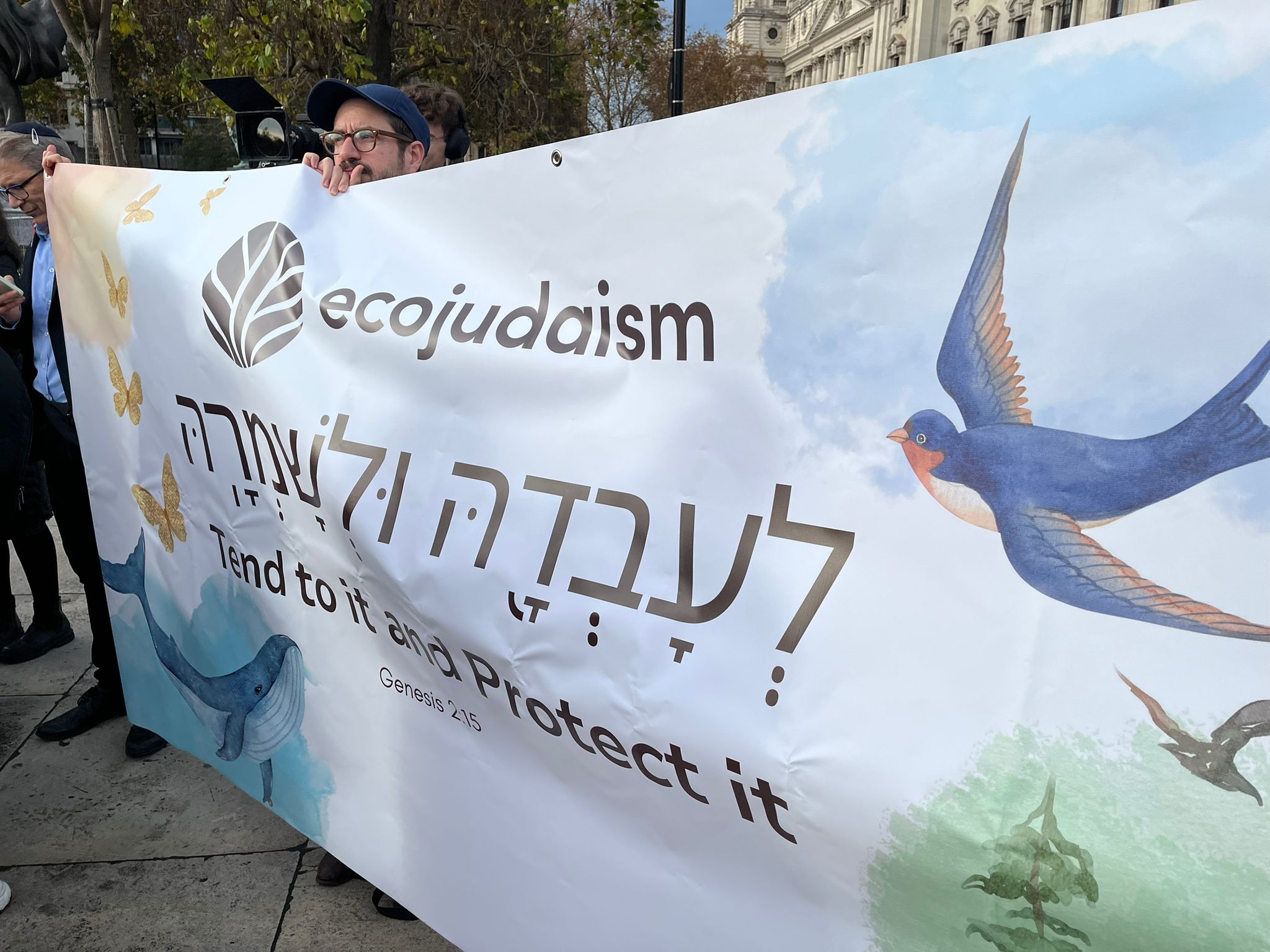
That is why, as Chair of Trustees of EcoJudaism, I’m so proud of what our community is starting to build, and so sure it matters. We’re helping shuls, schools and Jewish organisations become more sustainable and more resilient, which is exactly the practical, future-shaping work our tradition asks of us. You can read our strategy, and find out how to be part of it, at bit.ly/EcoJudaismStrategy.
Tonight we mourn what was destroyed. Tomorrow, and every day after it, we are commanded to build. There is no Tisha B’Av for the future, because the future is still ours to write.
Rafi Addlestone is Chair of Trustees of EcoJudaism, co-founder of the Jewish Climate Professionals Network, co-chair of Golders Green United Synagogue, Trustee at JW3, co-host of The Impact Equation podcast and Chief Strategy Officer at Pineapple Partnerships.

Keep community journalism free.
Jewish News is free for everyone. No paywall. No barriers. Just trusted journalism for anyone who wants to stay connected to Jewish life in Britain.
If you value that, please support us.
From as little as £5 a month, you can help keep our journalism free and accessible to all.
Every day, we report on the issues that matter to our community. We celebrate achievements, support charities, challenge antisemitism and ensure Jewish voices are heard more widely.
From as little as £5 a month, you can help us continue to:
- Report on the stories shaping Jewish life in the UK and beyond
- Bring our community together through shared stories, events and campaigns
- Celebrate the people, culture and moments that define our community
- Support organisations doing vital work across Jewish Britain
You can make a one-off donation or become a regular supporter. Every contribution helps keep our journalism free, independent and accessible to all.
If everyone who values Jewish News gave a small amount, it would make a real difference to our future.