Prefer Jewish News on Google
Twelve roles and counting: Ian Marcus’s life beyond Credit Suisse
The property veteran and OBE tells Candice Krieger about his “plural career”, why people remain the key to success and what the next generation needs to stand out
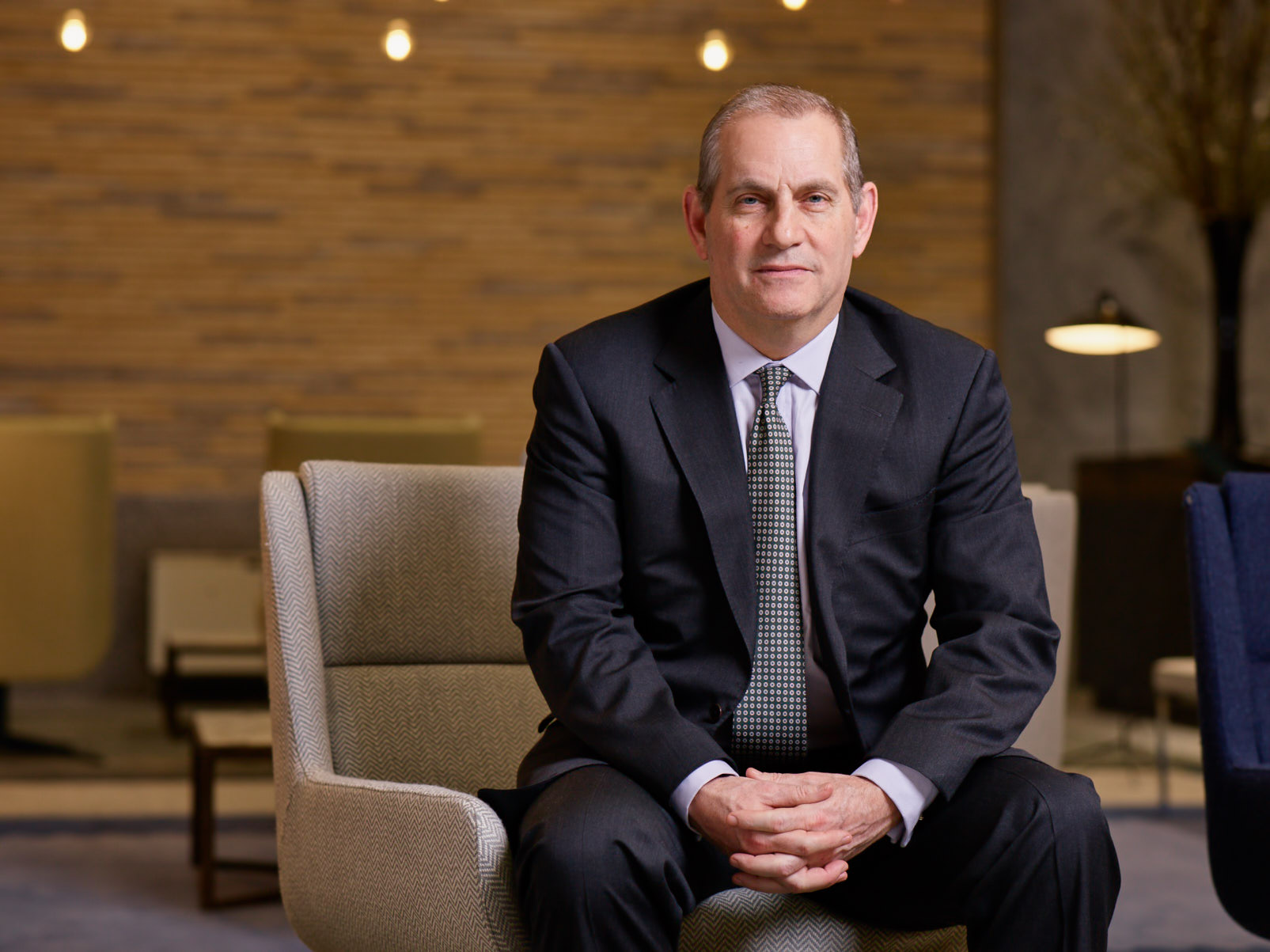
When Ian Marcus left Credit Suisse in 2012, aged 53, it might have looked like an early retirement. It was anything but.
Fourteen years later, the veteran property banker – who was awarded an OBE for services to business and education in 2020 – has 12 roles, leaves home at 6.30 most mornings, appears busier than ever.
Marcus, 67, calls it his “plural career”: a collection of board, advisory, educational and charitable roles that, he says, must satisfy three criteria. “They have to be intellectually stimulating, offer me the opportunity to keep learning and, most importantly, involve people that I know, like and trust.
“The ‘who’ is the most important thing in business,” he adds. “To me, it’s all about the people.”
Perhaps surprisingly for someone who now holds a dozen roles, Marcus has never actually applied for a job, apart from the Bank of America graduate scheme.
“People have called and said: ‘Would you be interested?’ and I will always take the call.
It is an approach that has led to a portfolio featuring some of the most prominent names in property.
Marcus is a senior adviser to global real estate investment bank Eastdil Secured Savills, chairs Europe’s largest self-storage company, Shurgard and holds positions with businesses including Town Centre Securities, Redevco, AEG, Elysian Residences, Work.Life and data centre operator Green Mountain, after being approached by Danna Azrieli, chief executive of its parent company, Azrieli Group.
He sees his non-executive roles as having three principal functions: fulfilling his fiduciary responsibilities, challenging and supporting management, and acting as a mentor, sounding board and door-opener.
“You have to know when to be the handbrake and when to be the accelerator,” he says. “You are there to test the chief executive, ask the right questions and offer a different perspective. But you shouldn’t get into the weeds. Advisers advise and principals decide.”
A grammar-school boy from Essex, Marcus attended Westcliff High School for Boys, where a teacher encouraged him to apply to Cambridge. He got in and studied geography before switching to land economy, setting him on the path towards property.
“I had always wanted to work in America and applied to ten US banks after graduating.” He decided on Bank of America, which ironically sent him not to New York or California, but to Birmingham.
The location at least suited another of his great passions: rugby, playing for Warwickshire. It also launched his career in property finance.
After Bank of America came roles at UBS, NatWest and Bankers Trust (later acquired by Deutsche Bank). He joined Credit Suisse in 1999 and became chairman of European real estate investment banking, remaining there until 2012.
By then, Marcus had “grown tired of spending more time on compliance, compensation, reviews and managing people than meeting clients and doing deals.” He left full-time investment banking without any grand plan for what would come next.
Yet even before leaving Credit Suisse he had begun taking on positions outside the bank. He became the first president of the British Property Federation who was not a landlord, chaired the Investment Property Forum and spent a decade chairing the Bank of England’s Property Forum.
For 14 years, he chaired The Prince’s Regeneration Trust and related organisations for the now-King, and served for nine years as a Crown Estate Commissioner.
Marcus shows little sign of slowing down. He is normally in central London from Monday to Thursday and can often be found at Eastdil’s offices.
“Do I need to work? No, but I do it because I enjoy it.” Besides, he jokes, “my golf isn’t good enough and my wife Beverley doesn’t want me at home.”
Marcus remains closely involved with the next generation and acknowledges that young people trying to enter the industry face an increasingly competitive market. Eastdil received 4,000 applications for just 14 graduate positions in Europe this year.
“Candidates need to find ways to distinguish themselves beyond academic results. When I look at a CV, I’ll start at the bottom rather than the top.
“I assume that if they have been to a good university and achieved a good degree, they are intellectually and academically capable of doing the job – I want to know what differentiates them: their interests, experiences, and whether they are team players.”
He adds: “With the increased use of technology and AI, a candidate’s EQ is equally, if not more, important than their IQ.
“Some younger people have become too reliant on digital communication. They would rather text than call, and rather call than meet.
“Technology is going to make people more efficient, but what are they going to do with the time it releases? Hopefully, they will use it to develop some of those softer skills.”
Marcus believes the sector will continue to offer opportunities, even as the way buildings are used, owned and financed evolve.
“We all need somewhere to live, work, shop and spend our leisure time.”
His own portfolio reflects this shift, spanning senior living, flexible offices, self-storage, experiential real estate and data centres.
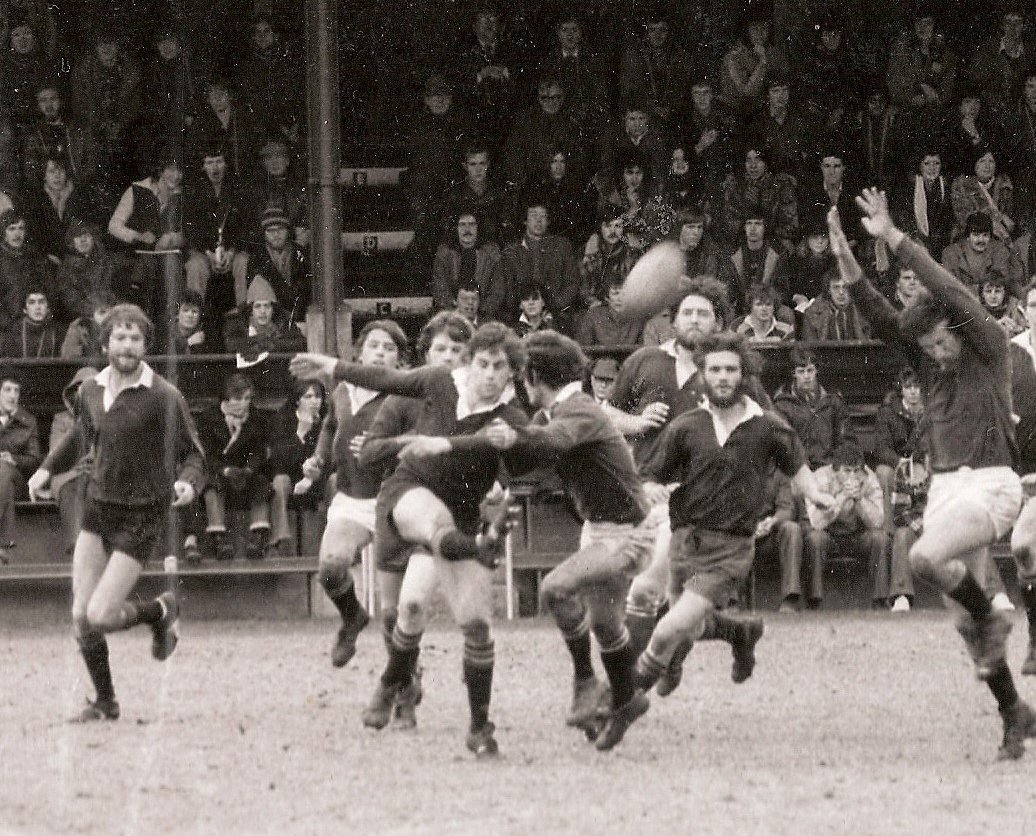
Away from business, rugby has remained a constant thread. A former players for Saracens, Marcus captained the British rugby team at two Maccabiah Games and is now helping to develop Israeli rugby, with the ambition of seeing the national side qualify for the 2031 Rugby World Cup in the US.
Rugby also led him into education. Marcus, who has longstanding friendships with Saracens investors Nigel Wray and Nick Leslau, spotted an appeal for school governors in a match-day programme and applied online. Within two hours, Leslau called him and suggested that his experience would be better suited to the board of the wider Saracens Multi-Academy Trust.
Marcus is now its deputy chair, helping to oversee schools serving around 2,000 pupils.
“It is tremendously rewarding when you see these children from very challenging backgrounds doing so well,” he says.
For all his professional commitments, family and community remain central to Marcus’s life. He lives in Stanmore with his wife, Beverley – they met in America, although she grew up in Kenton. The couple are members of Mill Hill Synagogue, where their children and four grandchildren also attend.
In 2026, Marcus received the PROPS Lifetime Achievement Award in recognition of his contribution to the property industry. “My wife said: ‘I think they’re telling you it’s time to retire.”
There seems little prospect of that. And although Beverley believes he “needs to become better at saying no”, Marcus remains as enthusiastic as ever about new people, ideas and opportunities.
With 12 roles already, is there room for another?
“I should get to a barmitzvah really, shouldn’t I?”

Keep community journalism free.
Jewish News is free for everyone. No paywall. No barriers. Just trusted journalism for anyone who wants to stay connected to Jewish life in Britain.
If you value that, please support us.
From as little as £5 a month, you can help keep our journalism free and accessible to all.
Every day, we report on the issues that matter to our community. We celebrate achievements, support charities, challenge antisemitism and ensure Jewish voices are heard more widely.
From as little as £5 a month, you can help us continue to:
- Report on the stories shaping Jewish life in the UK and beyond
- Bring our community together through shared stories, events and campaigns
- Celebrate the people, culture and moments that define our community
- Support organisations doing vital work across Jewish Britain
You can make a one-off donation or become a regular supporter. Every contribution helps keep our journalism free, independent and accessible to all.
If everyone who values Jewish News gave a small amount, it would make a real difference to our future.