Prefer Jewish News on Google
Two decades after transforming web design, Wix is reshaping how we create and run online businesses
From websites to software, Wix COO tells Candice Krieger how the company's next revolution is about building entire businesses with AI at the core

Wix, known as the go-to DIY website builder for small businesses and creators, is undergoing a quiet but radical transformation.
Under the strategic leadership of chief operations officer Ronny Elkayam, the Israeli tech company is doubling down on artificial intelligence—not just to build websites faster, but to reinvent how people create and run businesses online.
With over 288 million users worldwide, a market cap of $8.45 billion, and operations in nearly 200 countries, Wix’s reach is undeniable.
But scale alone isn’t the story — it’s what the company is doing with it. Wix is using AI to reshape the next era of software creation, one defined not by code, but by conversation and intent.

“AI isn’t just another tool — it’s becoming the fabric of how people will build and run businesses online,” says Elkayam, a driving force behind Wix’s culture of innovation.
“Ten years ago, we made it possible for anyone to create a website without code. Today, we’re making it possible to describe what you want, and have intelligent agents build it for you — infrastructure, design, even marketing — in seconds.” He adds: “We are reshaping software creation itself.
“The real opportunity is intent‑driven creation,’ adds Elkayam, who previously served as Wix’s senior vice president of mobile and strategic products where he led initiatives including the Wix Mobile App. “We call it ‘vibe coding’ — you describe the vibe or outcome you’re aiming for, and AI handles the heavy lifting behind the scenes. A VC might say, ‘I need an AI assistant for my portfolio companies,’ or a bakery might ask for a custom ordering dashboard — and in both cases, the system generates it instantly.”
Wix’s AI ambitions have moved far beyond building websites. “We’re becoming the go-to creative engine for anyone looking to build, brand, and scale their business online with AI at the core.”
The company’s recent acquisition of Israeli entrepreneur Maor Shlomo’s Base44 earlier this year and its development of the Model Context Protocol (MCP) lay the groundwork for fully AI‑driven workflows. MCP allows websites to communicate directly with AI agents — think LLMs that can check inventory, schedule appointments, or pull live data from your store.
Elkayam points out that this is crucial as search itself goes generative.
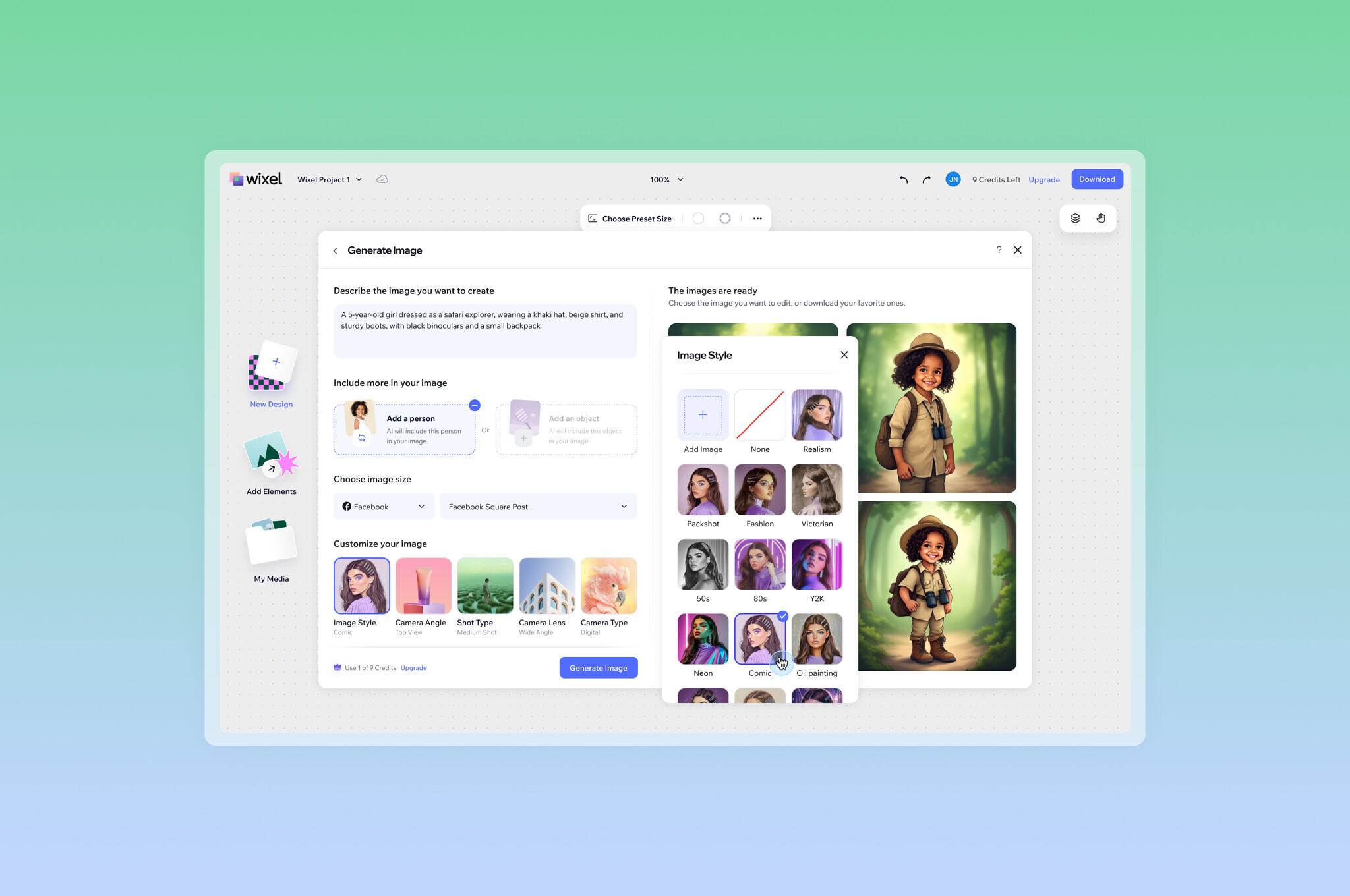
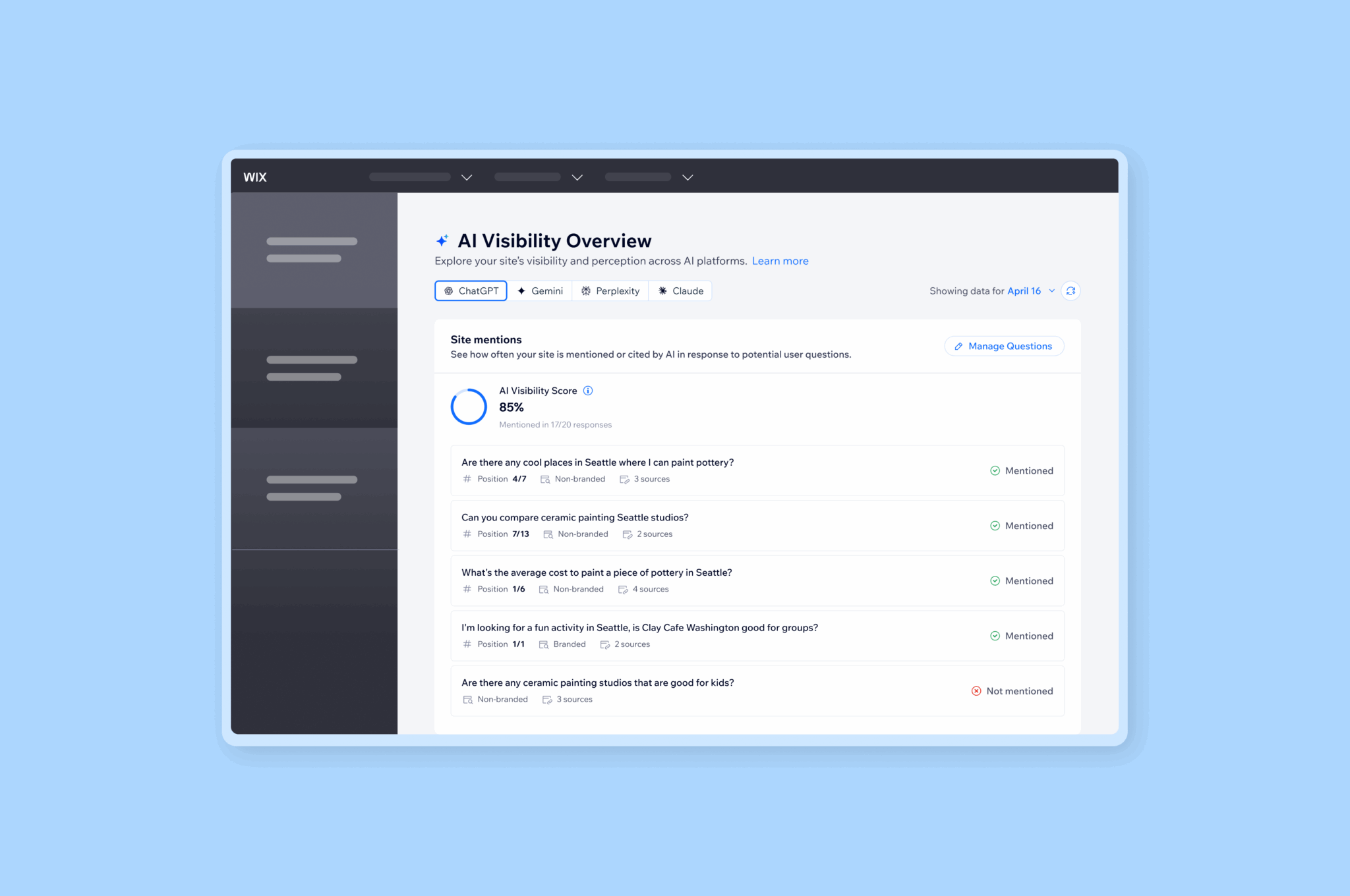
“In a world where people ask ChatGPT or Gemini for everything, your brand’s visibility depends on how those models see you,” he says. “That’s why we created the AI Visibility Overview, giving users a powerful way to understand, monitor, and improve how their brand is represented across leading LLM-based search engines like ChatGPT, Gemini, Perplexity, and Claude.” Alongside AI search, Wix is betting big on AI‑driven design through Wixel, its standalone generative design platform. Wixel lets users edit images, apply brand styles, and generate polished visuals without design experience.
“We want creation to feel like play,” Elkayam says. “Drag‑and‑drop was revolutionary a decade ago. Now, the revolution is describing your brand in a sentence and watching an entire visual identity come to life in real time.”
What a difference two decades make. Wix was founded in 2006 in Tel Aviv by Israelis Avishai Abrahami, Nadav Abrahami, and Giora Kaplan. Ten years later it became the first to launch a generative AI website builder (ADI). It has grown into one of Israel’s biggest tech success stories. Now a NASDAQ‑listed company with 5,300 employees across globe, Israeli innovation remains in the company’s DNA.
“As Nir Zohar, President of Wix, often highlights,” notes Elkayam, “the dynamic and fast-changing Israeli tech environment has fostered a culture of adaptability, resilience, and continuous learning within Wix. This mindset helps the company embrace change and turn challenges into opportunities, which has been key to evolving from a startup into a global technology leader. The Israeli emphasis on collaboration and agility is also reflected in how the company operates globally – with the company’s diverse teams coming together quickly and effectively, reinforcing a strong sense of community and shared purpose.”
Since 7 October, Wix has channelled resources toward long-term recovery in Israel, focusing on education, employment, and community support. The company has funded local programs, trained displaced residents in digital skills, and partnered with schools, municipalities, and tech groups to rebuild infrastructure and create new economic opportunities in both northern and southern Israel.
Wix’s support for Israeli communities since 7 October highlights a core company principle: using technology to empower people and help them build. The same mission drives Wix’s leadership in AI — not only to make website building faster, but to open new possibilities for online creativity and entrepreneurship.
Co-founder and chief executive Avishai Abrahami said: “AI lets people build advanced websites, generate videos, edit images — things that once required entire teams,” he said. “But our role is to give them the tools, not to replace their creativity.”
Elkayam emphasises that Wix’s approach to AI is designed to empower users, not replace them. “Our hybrid approach combines conversational AI with powerful visual editors, giving users the speed of automation with the precision of manual design,” he explains. “AI gets you 90% of the way there; the human touch makes it perfect.”
At a time when some predict websites will fade in favour of social and mobile platforms, Wix sees the opposite. “The website isn’t disappearing,” says Elkayam, “it’s becoming the essential backbone that supports AI-driven discovery and interaction across platforms.”
But in today’s digital environment, where AI-driven search is rapidly reshaping how people discover content online, Elkayam acknowledges that “businesses need more than traditional SEO to stand out. They need visibility in AI models themselves. That’s why Wix introduced the AI Visibility Overview.
“This isn’t just about rankings anymore, it’s about how AI sees and understands your brand. Wix also offers some premium eCommerce users the ability to manage LLMs.txt – designed to help websites communicate directly with LLMs – further empowering them to stay optimised for emerging AI platforms. With platforms like ChatGPT and Gemini expanding tools for product listings, LLMs.txt works alongside dynamic shopping feeds to give LLMs richer data on sellers and products. This can boost visibility in AI-powered search experiences and help merchants reach millions of potential customers.”
Wix is soon launching a Connect to Bing feature to help users appear in AI-powered Bing results. “These initiatives ensure Wix users can thrive as AI reshapes how people search and discover content.”
Two decades after democratising website building, Wix now wants to democratise software itself. “The next wave isn’t just building pages,” says Elkayam. “It’s creating the systems that run your business — in seconds, from a single prompt.”
Ronny Elkayam’s top tips for businesses embracing AI to enhance their online offering for customers?
1. Integrate conversational AI: Businesses should turn their website into a 24/7 sales and support channel with AI chat tools that provide instant answers, product recommendations, and personalised help. Wix offers its users an AI Site-Chat – designed to serve as a virtual agent for customers. Businesses can then connect with visitors 24/7, even when they are unavailable.
2. Personalise user experiences: Businesses can use site data and AI to tailor content, offers, and suggestions based on user behaviour, preferences, and history. Wix offers users the ability to use an AI-powered adaptive content application, designed to personalise website experiences for the users’ site visitors by generating dynamic content based on visitor characteristics and instructions.
3. Streamline product discovery: Customers are becoming more and more accustomed to interacting with chat-driven interfaces that guide them to the right products or services through natural, interactive conversations. Having these on a website will help the business to better stay competitive.
4. Structure content to ensure discovery on AI engines: Ensure your product information and storytelling are clear and well-organised so AI tools can access and personalise content effectively.
5. Focus on real engagement: Choose AI tools that enhance, not replace, human connection by making digital experiences more intuitive, dynamic, and trustworthy.

Keep community journalism free.
Jewish News is free for everyone. No paywall. No barriers. Just trusted journalism for anyone who wants to stay connected to Jewish life in Britain.
If you value that, please support us.
From as little as £5 a month, you can help keep our journalism free and accessible to all.
Every day, we report on the issues that matter to our community. We celebrate achievements, support charities, challenge antisemitism and ensure Jewish voices are heard more widely.
From as little as £5 a month, you can help us continue to:
- Report on the stories shaping Jewish life in the UK and beyond
- Bring our community together through shared stories, events and campaigns
- Celebrate the people, culture and moments that define our community
- Support organisations doing vital work across Jewish Britain
You can make a one-off donation or become a regular supporter. Every contribution helps keep our journalism free, independent and accessible to all.
If everyone who values Jewish News gave a small amount, it would make a real difference to our future.