Prefer Jewish News on Google

Two gatherings of British Jews – one out of despair, the other responding to support
On Sunday thousands of British Jews stood outside Downing Street. On Thursday they stood in Golders Green, during a remarkable display of encouragement from the King to his people

On Sunday afternoon, I was among thousands of people – many from the Jewish community, some others from beyond – stood outside Downing Street protesting against the rise of antisemitism that we have all witnessed in recent months and years in the UK. From the speeches on the stage to the many conversations in the crowd, we questioned whether the place we had all called our home for so long was, indeed, still our home.
On Thursday, I had the immense privilege to meet His Majesty the King, in the heart of Golders Green, which is home to one of the largest Jewish communities in the country.
I had the honour of working, in a personal capacity, with a small, remarkable group of individuals to coordinate His Majesty’s visit at very short notice. This included senior officials of the King’s household, the members of the King’s protection team and the police. Hosted by the incredible Daniel Carmel-Brown and his amazing team at Jewish Care, the King met the individuals who were attacked in the area just a few weeks ago, the inspiring first-responder volunteers from Shomrim London and Hatzola Northwest Trust, together with representatives from crucial organisations like Community Security Trust, The Jewish Leadership Council, The Board of Deputies of British Jews, Metropolitan Police, and others who do so much on behalf of us all.
The visit had not been publicly pre-announced – the first intimation many people in the area had that something was happening was the sudden erection of security barriers in the vicinity, an even larger contingent of police than usual, and the appearance of additional, smartly dressed security personnel. But in a community like ours, word spreads like wildfire, and I watched as the King walked outside to be greeted by an enormous crowd that had spontaneously gathered upon hearing he was there. Everywhere you looked, you saw people: on the streets, on the balconies, even on the rooftops. As HM The King shook hands, spending far more time than was scheduled to greet those who gathered, they cheered, clapped, and sung “God save the King”. Most importantly, they smiled – something that has not been easy for the British Jewish community to do collectively for quite a while.
Why did this visit by matter so much? Of course, there was the message it sent visually: an immense show of support and solidarity by the Head of State to the British Jewish community. But more than that, it demonstrated what we already knew: that the King deeply understands the challenge posed by antisemitism to this country. He recognises, as Rabbi Sacks said, that the hate that begins with Jews never ends with Jews. That the appearance of antisemitism in a culture is the first symptom of a disease, the early warning sign of collective breakdown. And that antisemitism in the UK is not a Jewish problem for the Jewish people to solve, but a British problem for the British people to solve.


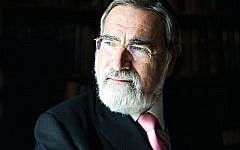

We can only hope that the words and commitments our political leaders offer result in real, tangible, impactful action on our streets to tackle this most ancient of hatreds. For now, I take immense strength and comfort from the fact that the week that started with a protest outside Downing Street ended with a walk about in the heart of the Jewish community by His Majesty The King.

Keep community journalism free.
Jewish News is free for everyone. No paywall. No barriers. Just trusted journalism for anyone who wants to stay connected to Jewish life in Britain.
If you value that, please support us.
From as little as £5 a month, you can help keep our journalism free and accessible to all.
Every day, we report on the issues that matter to our community. We celebrate achievements, support charities, challenge antisemitism and ensure Jewish voices are heard more widely.
From as little as £5 a month, you can help us continue to:
- Report on the stories shaping Jewish life in the UK and beyond
- Bring our community together through shared stories, events and campaigns
- Celebrate the people, culture and moments that define our community
- Support organisations doing vital work across Jewish Britain
You can make a one-off donation or become a regular supporter. Every contribution helps keep our journalism free, independent and accessible to all.
If everyone who values Jewish News gave a small amount, it would make a real difference to our future.