Prefer Jewish News on Google
UK breaks with Tory policy and confirms it will abstain on Human Rights Council Israel votes
JLC, Board and other communal organisations slam 'appalling' decision
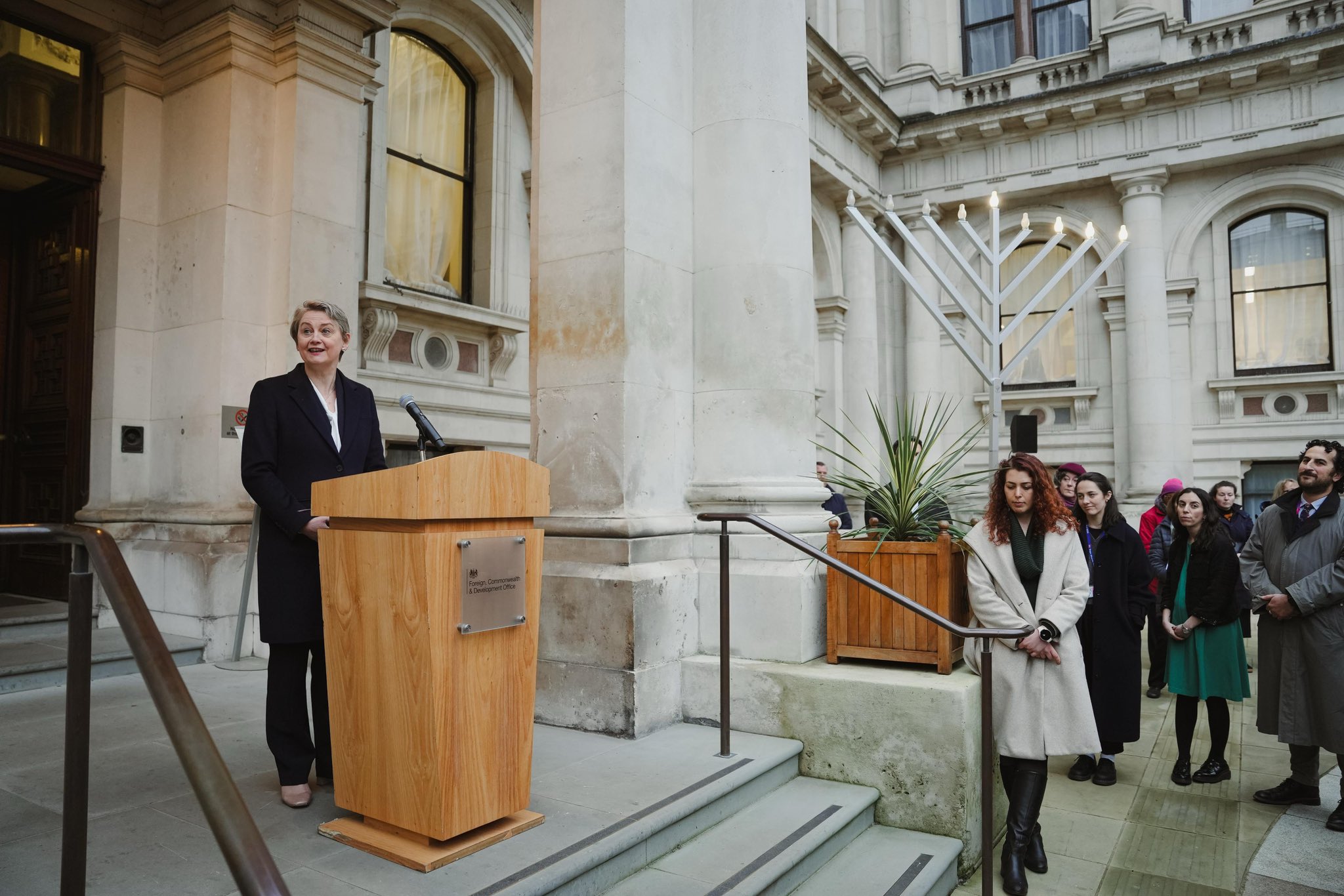
The UK will retain its “principled objection” to matters raised under Item 7 at the UN Human Rights Council on the grounds it “uniquely singles out Israel” – but on issues such as settler violence or Palestinian self-determination could now abstain on votes.
The Foreign Commonwealth and Development Office (FCDO) confirmed the shift to Jewish News, saying it would “bring us closer in line with European partners and the longstanding UK position from 2006-2019.”
The FCDO said that while the previous Tory government had for much of its time in government voted “no” by default on any Item 7 resolution, the UK would now “engage in constructive dialogue to influence discussions and other HRC members, and to ensure consistency in our policy positions.”
They added: “However, we will seek to avoid votes and abstain to reflect our continued objection to the unfair mechanism by which these legitimate issues are raised.”
Confirmation of the change angered communal leaders and also infuriated Israel.


Only last week, the World Jewish Congress took the floor at the United Nations to protest against Item 7 , saying it ” exemplifies the Council’s institutional bias against one country – Israel – subject to different treatment compared to the rest of the world.”
But being re-elected as a voting member of the HRC after a gap of two years, the UK said it would now seek engage in “constructive dialogue” with other states on issues such as settler violence in the West Bank, and Palestine state recognition.

And the UK would only go so far as abstaining on these serious issues, to reaffirm the view that Item 7 remains an “unfair mechanism” with which to raise matters relating to Israel’s human rights record.
Last week in a joint statement ahead of confirmation of the shift, the Jewish Leadership Council and Board of Deputies said they were “appalled” by the decision, ahead of scheduled votes on Item 7 at the upcoming UNHRC sessions.
They accused the government of an “inexcusable abandonment of principle” in the same week the UK community is “still reeling” from the Golders Green Hatzola ambulance arson attacks.
The joint statement said:”We are appalled at the UK Government’s decision to renege on its previous principled position of voting against all Item 7 resolutions in the UN Human Rights Council.
“In the week that the UK’s Jewish community is still reeling from an antisemitic attack on ambulances in Golders Green, the Government’s abandonment of principle on antisemitism is inexcusable.
“Israel, like all countries, should be held accountable for its human rights record. There is another item, Item 4, which provides for the opportunity to consider human rights in all contexts.
“The notorious Item 7 makes Israel the only country in the world to have its own standing item at the UNHRC. For context, flagrant human rights abusers like Russia, North Korea, China and Iran do not have their own agenda items.
“The fact that the world’s only Jewish state has its own standing agenda item is a feature of the UN’s institutional antisemitism, and it undermines the credibility of what should be a crucial institution. Importantly, systemic bias in the UN has undermined progressive forces in the Middle East who wish to pursue a secure peace.
“Successive UK governments since 2018 have recognised this fact and on principle voted against any resolution tabled under Item 7, but given due consideration to any resolution, even with the same text, under Item 4. We have supported this stance.
“For the Jewish community to have any confidence in the Government’s resolve on this issue, the policy of voting against all Item 7 resolutions must be maintained.”
Ahead of confirmation that Keir Starmer’s government had altered its stance, Dame Priti Patel MP, Shadow Foreign Secretary, said: “It’s disgraceful that Labour are ditching the longstanding cross-party commitment to vote against Item 7 resolutions unfairly targeting Israel.”
Labour Friends of Israel also said, “the government must not renege on its commitment to vote against all Item 7 resolutions.”
Israel remains the only country with a dedicated, standalone place on the HRC agenda, through the controversial Item 7, which focuses on its human rights record regarding the Palestinians.
Every session of the UN Human Rights Council devotes a special agenda item to the “Human rights situation in Palestine and other occupied Arab territories,” which is defined as covering “Human rights violations and implications of the Israeli occupation of Palestine and other occupied Arab territories.”
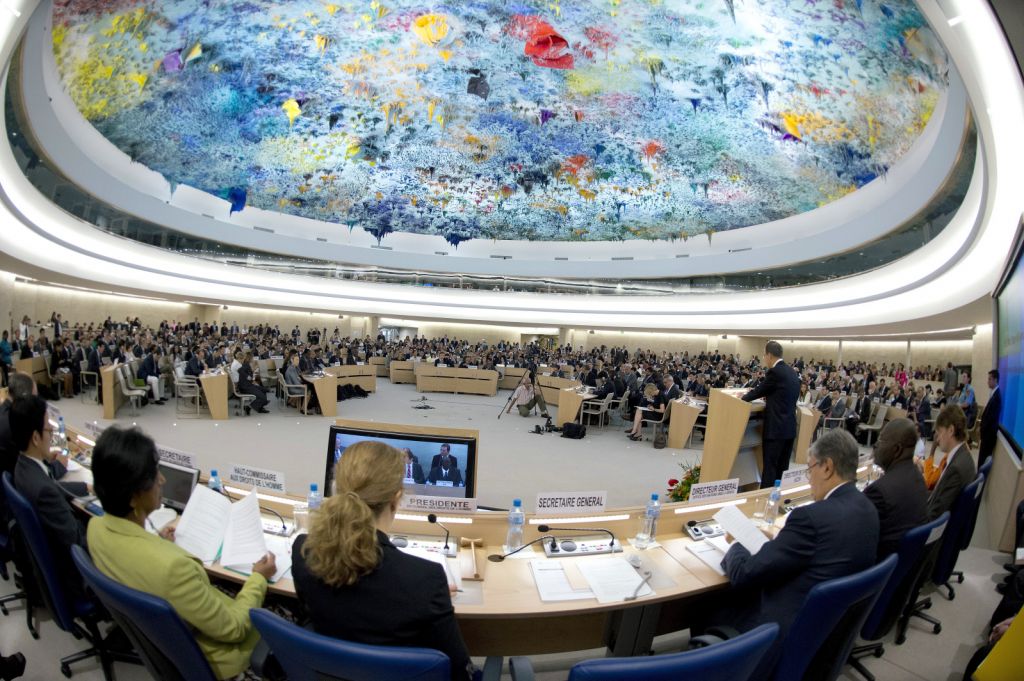
In 2017, the UK told the Council that the existence of a dedicated agenda item concerning Israel — Item 7 — amounted to systemic institutional bias, and unless things changed, the UK would move to voting against all Item 7 resolutions.
It was for these reasons that the UK announced its decision to do so.
In 2019, the move of the accountability resolution to Item 2 allowed the UK to abstain on that text, and for the remaining resolutions under Item 7, the UK voted against all of them.
Britain has opposed all texts tabled under Item 7 of the UNHRC, a permanent fixture on the agenda devoted to discussing Israeli human rights abuses, since 2019.
At the time, Sir Jeremy Hunt, the then Conservative foreign secretary, warned that Item 7 resolutions showed the UN had a “disproportionate and discriminatory” focus on Israel.
Asked to comment on the shift in stance an FCDO spokesperson said: “The UK’s longstanding and principled objection to Item 7 remains unchanged.
“Our position is that the existence of Item 7 unfairly and uniquely singles out the State of Israel in comparison to other countries, and that there are a number of other non-country specific agenda items where relevant issues could and should be discussed instead.
“The UK has just been re-elected as a voting member of the Human Rights Council after a gap of two years.
“As such, we will continue to lead the charge for the removal of Item 7 and to push for issues related to Israel-Palestine to be discussed under alternative agenda items.
“Where issues are instead tabled under Item 7, in line with the UK approach taken before 2019, we would expect to engage in constructive dialogue to influence discussions and other HRC members, and to ensure consistency in our policy positions. However, we will seek to avoid votes and abstain to reflect our continued objection to the unfair mechanism by which these legitimate issues are raised.
“The last government’s position saw the UK vote ‘no’ by default on resolutions on serious issues like settlement expansion, settler violence or Palestinian self-determination, even when that contradicted UK policy and where conditions on the ground worsened.
“This will bring us closer in line with European partners and the longstanding UK position from 2006-2019.”
Two Deputies told Jewish News they felt the Board and JLC were “mistaken” to issue such a strong attack, pointing to the worsening situation in the West Bank with settler attacks, and the lack of strong action in response.

Keep community journalism free.
Jewish News is free for everyone. No paywall. No barriers. Just trusted journalism for anyone who wants to stay connected to Jewish life in Britain.
If you value that, please support us.
From as little as £5 a month, you can help keep our journalism free and accessible to all.
Every day, we report on the issues that matter to our community. We celebrate achievements, support charities, challenge antisemitism and ensure Jewish voices are heard more widely.
From as little as £5 a month, you can help us continue to:
- Report on the stories shaping Jewish life in the UK and beyond
- Bring our community together through shared stories, events and campaigns
- Celebrate the people, culture and moments that define our community
- Support organisations doing vital work across Jewish Britain
You can make a one-off donation or become a regular supporter. Every contribution helps keep our journalism free, independent and accessible to all.
If everyone who values Jewish News gave a small amount, it would make a real difference to our future.