Prefer Jewish News on Google
UK ‘does not want a bad relationship with Israel,’ says Middle East minister
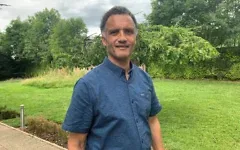
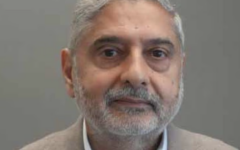
Hamish Falconer spoke with Labour Friends of Israel parliamentary chair Mark Sewards MP at JLM's annual conference

The UK “does not want a bad relationship with Israel,” Middle East minister Hamish Falconer has insisted.
Speaking at Jewish Labour Movement’s annual conference, Falconer acknowledged, “It’s a real source of pain to me too, that the relationship between the Israeli government and the British government has become as fractious as it has.”
However, Falconer said it was “too early” to speculate about the UK restarting trade talks with Israel, noting that the next Israeli election could be a decisive factor.
In conversation with new Labour Friends of Israel parliamentary chair Mark Sewards, Falconer reflected on the breakdown of relations between the governments of Keir Starmer and Benjamin Netanyahu.
“We want a good relationship with Israel,” he said. “We are long-standing allies. It is a source of real pain to me personally, the degree to which there has been an inability on our part to secure the outcomes that we want.”

He attributed the tensions to differences in policy, particularly regarding settlements and the conduct of the war in Gaza: “I think that is an obvious reflection of our different policy approaches on questions from settlements to the conduct of the war in Gaza. But that’s not a deliberate or welcome development. I would much prefer to have a much closer relationship with the Israeli government.”
Last week, a debate in the House of Lords saw a minister hint that trade talks—suspended by former foreign secretary David Lammy last year—could resume following the uneasy ceasefire in Gaza.
Falconer, however, urged caution: “I think it’s too early to speculate too much about when those negotiations might be restarted, and there are obviously big political changes due in Israel. We may end up with consistency, but probably only after the Israeli elections, when things might be considered again.”
Falconer also expressed anger over the failure of both the current and previous governments to detect historic tweets by Egyptian activist Alaa Abd El Fattah, which called for the killing of Zionists and sparked widespread backlash.
“It was not just the UK government that had been calling for his release but a whole range of others,” Falconer said. “I obviously was not aware of these tweets before his release, and discovering that there had been such a long-standing and widespread failure not to be aware of these tweets raises two questions. Firstly, how on earth did that happen? That’s the subject of an internal review now being carried out by Permanent Secretary Olly Robins, on the instructions of the Foreign Secretary.”
He emphasised the need to understand both how this information failure occurred within the Foreign Office and how to prevent it in the future.
“It is right, I think, that we provide consular assistance on a non-judgmental basis—we don’t check whether or not British nationals are in the right or in the wrong. That’s not the nature of consular assistance or the treaties that provide it. But it is obviously not right that, in such a high-profile case, so closely associated with a series of prime ministers and foreign secretaries, the public messaging from the British government was so unaware,” Falconer concluded.

Keep community journalism free.
Jewish News is free for everyone. No paywall. No barriers. Just trusted journalism for anyone who wants to stay connected to Jewish life in Britain.
If you value that, please support us.
From as little as £5 a month, you can help keep our journalism free and accessible to all.
Every day, we report on the issues that matter to our community. We celebrate achievements, support charities, challenge antisemitism and ensure Jewish voices are heard more widely.
From as little as £5 a month, you can help us continue to:
- Report on the stories shaping Jewish life in the UK and beyond
- Bring our community together through shared stories, events and campaigns
- Celebrate the people, culture and moments that define our community
- Support organisations doing vital work across Jewish Britain
You can make a one-off donation or become a regular supporter. Every contribution helps keep our journalism free, independent and accessible to all.
If everyone who values Jewish News gave a small amount, it would make a real difference to our future.