Prefer Jewish News on Google
UK moves to reimpose sanctions on Iran over ‘significant’ concerns about its nuclear programme
David Lammy says Tehran's 'nuclear programme remains a threat to global peace and security'

The UK, France and Germany have confirmed they plan to reimpose sanctions on Iran after talks aimed at reviving diplomacy over Tehran’s nuclear programme broke down.
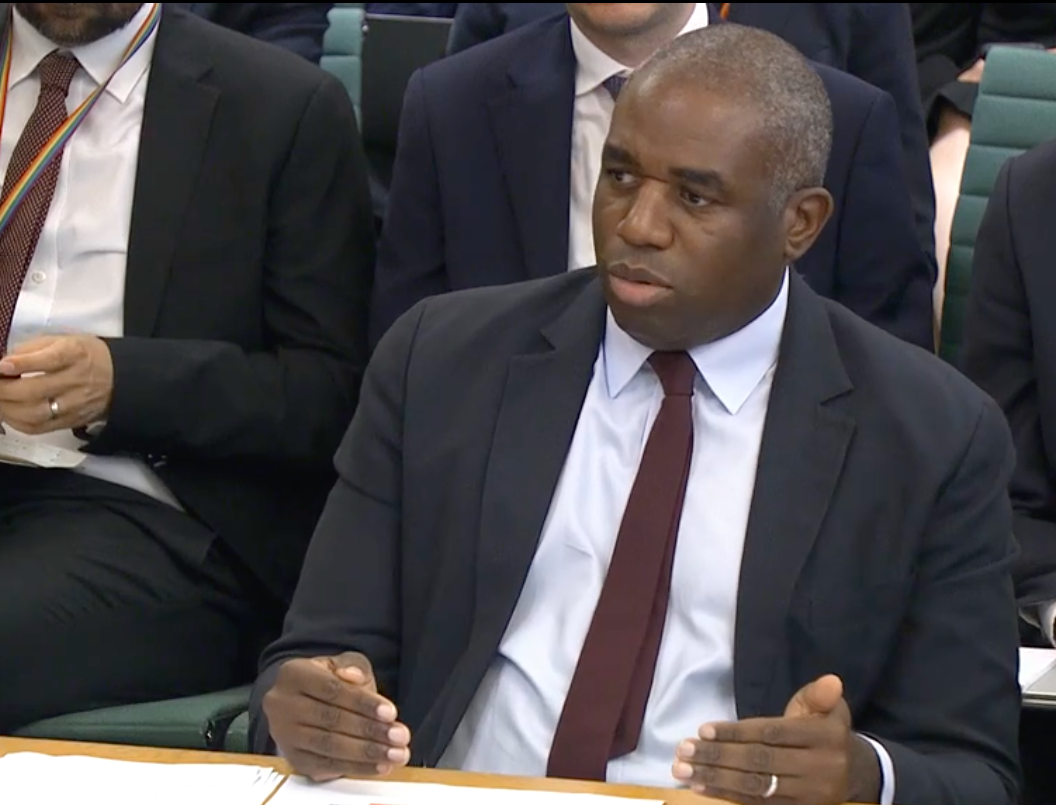
Foreign Secretary David Lammy has announced that the so-called E3 trio of countries will revive sanctions on Iran over its nuclear programme in 30 days.
In a joint statement with the foreign ministers of France and Germany, Lammy said that Iran’s non-compliance with a 2015 agreement to limit its nuclear programme was “clear and deliberate”.
Jewish News has learned that Iran allowed inspectors to visit some of its nuclear sites, but refused to allow them access to three of the plants targeted by Israel and the United States during the 12-day-long conflict in June.
One diplomatic source also claimed Tehran had failed to explain what happened to the 400kg of enriched uranium which appears to have been moved from the Isfahan nuclear site before massive US strikes.



During the 12 day long war in June Israel targeted Iran’s largest nuclear sites, after claiming Tehran was close to developing nuclear weapons.
The sanctions are like to trigger a harsh reaction from Tehran, where relations with the West are already strained following Israel’s 12-day war with the country earlier this year.
UK officials confirmed Israel, and the US had been told of the E3’s move in advance of Thursday’s letter from the three European nations.
Foreign Secretary David Lammy confirmed:”Alongside my French and German counterparts, I have today written to the UN Security Council announcing that we have triggered the snapback mechanism which will end sanctions relief against Iran.
“Iran’s nuclear programme remains a threat to global peace and security.
“Over the past six years, Iran has broken almost all limits in the Joint Comprehensive Plan of Action (JCPOA) and its stockpile of enriched uranium is 45-times over the JCPOA limit.
“Alongside our European allies, the UK has negotiated in good faith since 2019, when Iran began to disregard the nuclear deal. We supported a viable deal in 2022, which Iran rejected, and recently offered an extension to sanctions relief, subject to Iran meeting set conditions.
“However, despite repeated warnings, Iran has made no substantive effort to meet the conditions of our extension offer and has consistently failed to provide credible assurances on the nature of its nuclear programme.
“Whilst we have been left with no choice but to take this action, the ball remains in Iran’s court and I would welcome their return to the table with a serious offer”.
A UK Government official said the E3 was taking steps to revive sanctions for three reasons.
These include that: Iran is in “significant non-compliance” with the terms of the 2015 nuclear deal.
– Iran is the “only non-nuclear weapon state producing highly-enriched uranium”, with a stockpile over 400kg – the definition of the approximate amount of material needed to make nuclear weapons.
– There has not been “sufficient response on the Iranian side to reach an agreement” about scaling back its nuclear programme, despite E3 nations “making every effort to resolve this diplomatically, bending over backwards to do so”.
-Failure to account for the whereabouts of 400kg of uranium enriched at 60 per cent, in violation of the nuclear deal.
The E3 have requested a mechanism to be set up for the unaccounted stockpile, which they believe represents nine times the amount of material necessary to produce a nuclear bomb.
A UK official told Jewish News Iran’s stockpile was 45 times the agreed cap of 300kg of 3.67 per cent-enriched uranium.
The number of advanced centrifuges in operation before the recent 12-day war with Israel and the US resulted in inspectors withdrawing from the sites was 10 times the deal’s limit.
UN atomic energy agency chief, Rafael Grossi, has said Iran has “made no secret” of the fact that it had “protected this material.”
On Wednesday, US Secretary of State Marco Rubio had a phone call with the foreign ministers of the three European countries in which, a US spokesperson said in a statement, “all reiterated their commitment to ensuring that Iran never develops or obtains a nuclear weapon.”
The UK, Germany and France – known as the E3 – have notified the UN Security Council Thursday of a decision to trigger snapback sanctions.
Late August was the deadline for the countries to give 30 days’ notice of the decision to launch the procedure, known as snapback and widely described as their only leverage, before the deal expires on October 18.
The aim is to force Iran to provide some assurances over its nuclear programme within the next 30 days.
Sanctions, if implemented, would again target Tehran economically, particularly through its banking sector – with the nation struggling to bounce back from the devastating cost of the last conflict with Israel.
Iran would have to include allowing inspectors to visit all major nuclear sites – Fordow, Natanz and Isfahan – targeted by Israel and Iran back in June.
Tehran would also be expected to commit to talks with the US administration over a deal to end the standoff.
But in a sign of a growing crisis, Iran’s Deputy Foreign Minister Kazem Gharibabadi told state television on Wednesday Tehran is ready to “halt” all cooperation with the International Atomic Energy Agency (IAEA) if snapback sanctions were reimposed.

Jewish News revealed earlier this week that Tehran remains suspicious of the UK’s claim not to have played any role in the June attacks.
Tehran is also furious that the IAEA failed to condemn Israel over the June military strikes.
In this country, the Board of Deputies has been among those urging Lammy to reimpose snapback sanctions if Iran fails to comply with inspectors.
Board of Deputies Senior Vice President Adrian Cohen said:
“We welcome the Government’s decision to trigger the snapback of sanctions on the Iranian regime. This move is fully justified considering the regime’s undimmed nuclear ambitions and ongoing commitment to Israel’s destruction.
“Following this decision, we have reiterated directly to Government the need to confront the full spectrum of the Iranian regime’s threats to Britain’s Jewish community as well as to international security, including by proscribing the Islamic Revolutionary Guard Corps in full.”
The Jewish Leadership Council also praised the snapback decision, describing how “the Iranian regime is a threat both regionally and globally, from its support of proxy terrorist groups in the Middle East to plots on the streets of Britain. This week, Australia took action after accusing Iran of directing antisemitic attacks against their citizens. Our security services have previously confirmed their success in foiling Iranian-backed plots on Israeli and Jewish targets here in the UK.
“In the last 2 years, Iran’s capability and willingness to target Israel directly became clear, as the IRGC directly fired hundreds of ballistic missiles at Israel. Such a regime must never be allowed to possess a nuclear weapon.
“The statement from the E3 sets out that Iran has been in breach of the JCPOA Iran Nuclear Deal since 2019 and efforts to bring Iran into compliance have failed in the intervening years. It is therefore correct that sanctions are reintroduced to ensure all possible measures are taken to prevent a nuclear Iran. We call on the UK and our partners to hold firm during the snapback process to ensure the maximum pressure is exerted.”

Keep community journalism free.
Jewish News is free for everyone. No paywall. No barriers. Just trusted journalism for anyone who wants to stay connected to Jewish life in Britain.
If you value that, please support us.
From as little as £5 a month, you can help keep our journalism free and accessible to all.
Every day, we report on the issues that matter to our community. We celebrate achievements, support charities, challenge antisemitism and ensure Jewish voices are heard more widely.
From as little as £5 a month, you can help us continue to:
- Report on the stories shaping Jewish life in the UK and beyond
- Bring our community together through shared stories, events and campaigns
- Celebrate the people, culture and moments that define our community
- Support organisations doing vital work across Jewish Britain
You can make a one-off donation or become a regular supporter. Every contribution helps keep our journalism free, independent and accessible to all.
If everyone who values Jewish News gave a small amount, it would make a real difference to our future.