Prefer Jewish News on Google

UK police chiefs warned ‘stringent and assertive’ measures required as antisemitic attacks escalate
EXCLUSIVE: National Police Chiefs Council (NPCC) document sets out 'five significant recommendations'
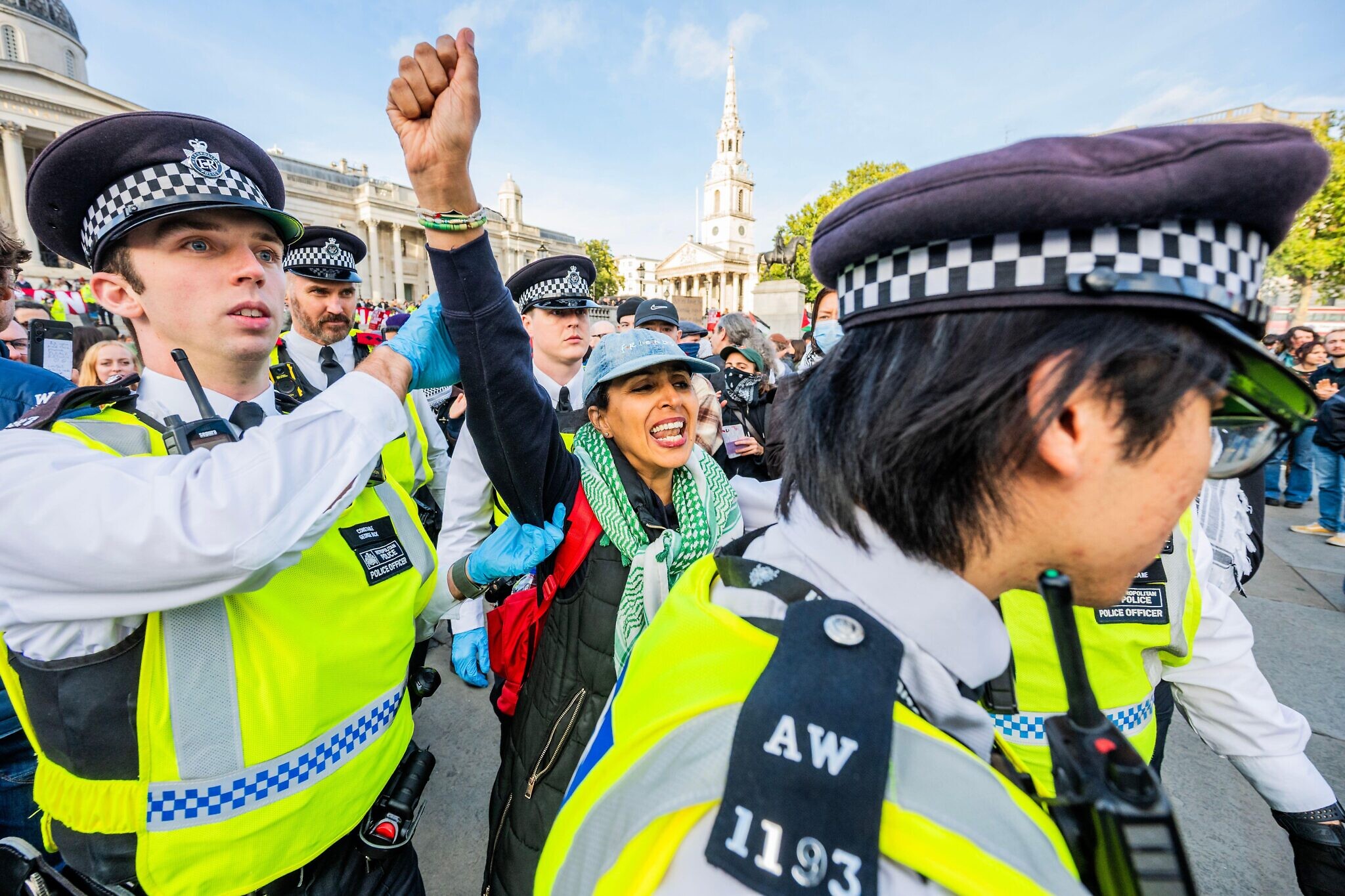
A revealing document circulated to British police chiefs confirmed that a series of “stringent, assertive and expansive use of powers” were required to respond to increasingly serious and frequent attacks against the Jewish community.
The National Police Chiefs Council document, distributed to the Chief Constables Council under the title ‘National Response to Tackling Antisemitism,’ outlined “Five significant recommendations” for future action, aiming to ensure a consistent national response to the growing challenge of antisemitism in the UK.
In a damning admission, the document acknowledged an “urgent need to develop a high-quality training offer for prompt delivery across the service.”
“There needs to be general cultural competence for front line officers, including an understanding of why antisemitism is a significant issue,” the document stated.
“Officers need to understand that the Jewish community is not homogeneous – there are distinct differences even within the community, and policing must be able to navigate these differences.”


It is also recommended that The College of Policing should develop targeted training for officers in affected communities and provide tailored training to senior leaders, with universal training available for all forces.
Officer wellbeing should be prioritised, especially for Jewish police, with welfare roles embedded in command teams.
In another significant admission, Chief Constables were informed that the laws governing the policing of pro-Palestine protests—which have taken place on a near-weekly basis in the UK since October 7, 2023—”allow a reasonably high threshold for expression for the purposes of protest and is context-based, which makes it impossible for police and prosecutors to clearly identify language, slogans, banners and chants which are automatically an offence.”
The NPCC document also says police urgently await the publication of Lord Macdonald’s independent review of Public Order and Hate Crime Legislation.
“Policing clearly cannot, and should not, define what acceptable public discourse is,” it states. However, the current law leaves much open to interpretation based on context, which inevitably leads to inconsistency.
“Lord Macdonald’s independent review of Public Order and Hate Crime Legislation is expected to be published soon, but in the interim there is a clear need for stronger national coordination and greater consistency.”
The peer’s review was delivered to Home Secretary Shabana Mahmood in May, but she is yet to outline the government’s official findings.
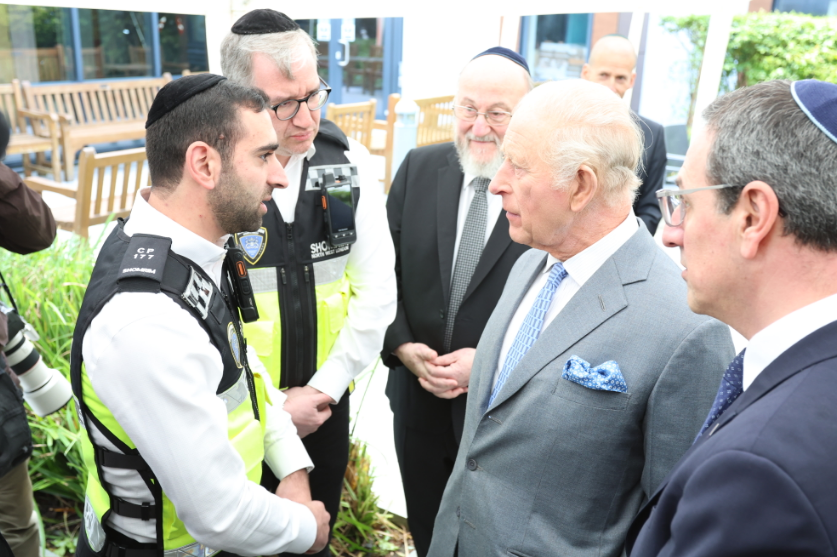
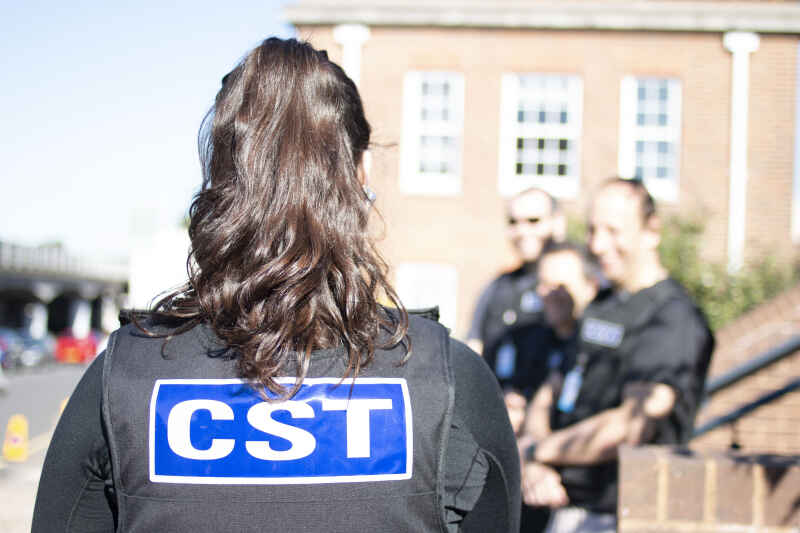
The NPCC document, obtained by the Jewish News through a Freedom of Information request, also confirms how much police chiefs have come to value the input and collaboration with communal organisations such as the Community Security Trust and Shomrim, as they attempt to stave off criticism from the community over the way they have policed pro-Gaza demos and investigated allegations of antisemitism.
Forces should designate named escalation routes (at superintendent rank) for Jewish community organisations (like CST and Shomrim) to report concerns and improve trust, it is concluded.
Assessing the current climate in regard to antisemitism in the UK, the document confirms: “Following a series of serious attacks against Jewish people in London and against a backdrop of increasingly frequent antisemitic attacks across the country, the Joint Terrorism Analysis Centre raised the terrorism threat level in the UK from ‘substantial’ to ‘severe.’”
“This has not happened in a vacuum,” it adds. “We have good evidence that hate crime and antisemitism are rising.”
“Jewish communities are in a uniquely targeted position, facing both the highest levels of hate crime per capita and persistent targeting by the Iranian state.”
“As an indicator, anti-Jewish hate crime offences in April 2026 were as high as 100 per 100,000 of population, while anti-Muslim hate crime offences were around 10 per 100,000.”
Written earlier this summer, when Keir Starmer was still Prime Minister, it adds: “The NPCC has established Operation Solar, led by Chief Constable Mark Hobrough.”
“This coordinating group aims to ensure the safety and confidence of the Jewish community by reducing the threat, risk, and harm from antisemitic violence and extremism through a unified command structure, coordinated operational activity, and strong stakeholder engagement and partnership working. However, as agreed at the Prime Minister’s summit, a broader response will be required to address the scale and threat of antisemitism—of which policing is only one part.”

The document, which outlines new codes for “Fair and Impartial Policing,” also reveals a deliberate change in police tactics in May 2026 in response to both the pro-Palestine Nakba Day protests and the Tommy Robinson-backed far-right demonstrations held on the same day.
It is confirmed: “In London, during the most recent operational example at the UTK and Nakba Day protests on 16 May 2026, the MPS, in partnership with the CPS, adopted a more robust and expansive approach to charging hate crime, testing the limits of the current law.”
“This was an attempt to reassess the legal thresholds in light of recent incidents and the cumulative impact of antisemitism on the Jewish community.”
“As such, it was agreed that neither officers nor prosecutors should be constrained by previous decisions to take no further action or by earlier prosecutions that resulted in acquittal.”
It was confirmed that the tougher approach “generated 18 hate crime allegations, 10 of which have been submitted to the CPS with three charging decisions to date.”
The document added: “As the phrases and slogans used on the 16th were not novel, it has shown that context is key to prosecution and, therefore, previous precedent is not always relevant.”
A further change involved imposing public order conditions on march organisers, thereby “reinforcing expectations as to what was acceptable.”
“The MPS, for the first time, imposed conditions relating to the speakers at these protests,” it was confirmed. “These conditions made organisers responsible for ensuring speakers did not break the law by using these events as a platform for unlawful extremism or hate speech. Community Impact Assessments were also used to demonstrate the harm that antisemitic incidents have had on the broader community and to justify such conditions.”
In addition, there was: “Strict use of conditions in policing plans, such as imposing requirements on organisers regarding speakers and considering the context of the event and community impact—for example, changing routes to protect communities and places of worship.”
The increased threat posed by antisemitic hate online is also highlighted to police chiefs. “Online hate is a growing concern; as the volume of online offences now outstrips police capacity to address them, and these are not geographically localised, policing them effectively is challenging,” the document states.
“To illustrate volume versus capacity, it is recommended that notifications of high-profile referrals related to online antisemitism be tracked by forces and shared with the NPCC to help monitor volume and trends.”
Another recommendation in response to the threat of online antisemitism reads: “Forces should support the NPCC hate crime lead in developing a process for the NPCC Strategic Intelligence and Briefing (SIB) to track delivery and escalation of notifications of referrals related to high-profile online antisemitism, and to share data to illustrate volume, track trends, and link events.”
Elsewhere, the document warns: “We should recognise that other minoritised communities may feel a disparity in treatment following policing’s consolidated approach to tackling antisemitism.”
“In addition, these proposals come amid allegations of two-tier policing, which will influence public perceptions. As such, the recommendations in this paper are clearly centred on threat, risk, and harm, and could be replicated for other communities should they face similarly extraordinary levels of hate crime or discrimination in the future.”
The NPCC is the national coordinating body for policing in the United Kingdom. It brings together chief officers from police forces across England, Wales, Scotland, and Northern Ireland to work collaboratively on national policing issues, set policy, and develop coordinated responses to crime and public safety challenges.
Shortly after the document was circulated, the UK government announced a substantial £251.1 million, three-year funding package in July to “address rising antisemitism and enhance protection for Jewish communities across England and Wales.”
Funding for an increase in police numbers across the country was included in the new measures, along with the bolstering of security of the communal buildings, and funding for increased education aimed at countering anti-Jewish hate.
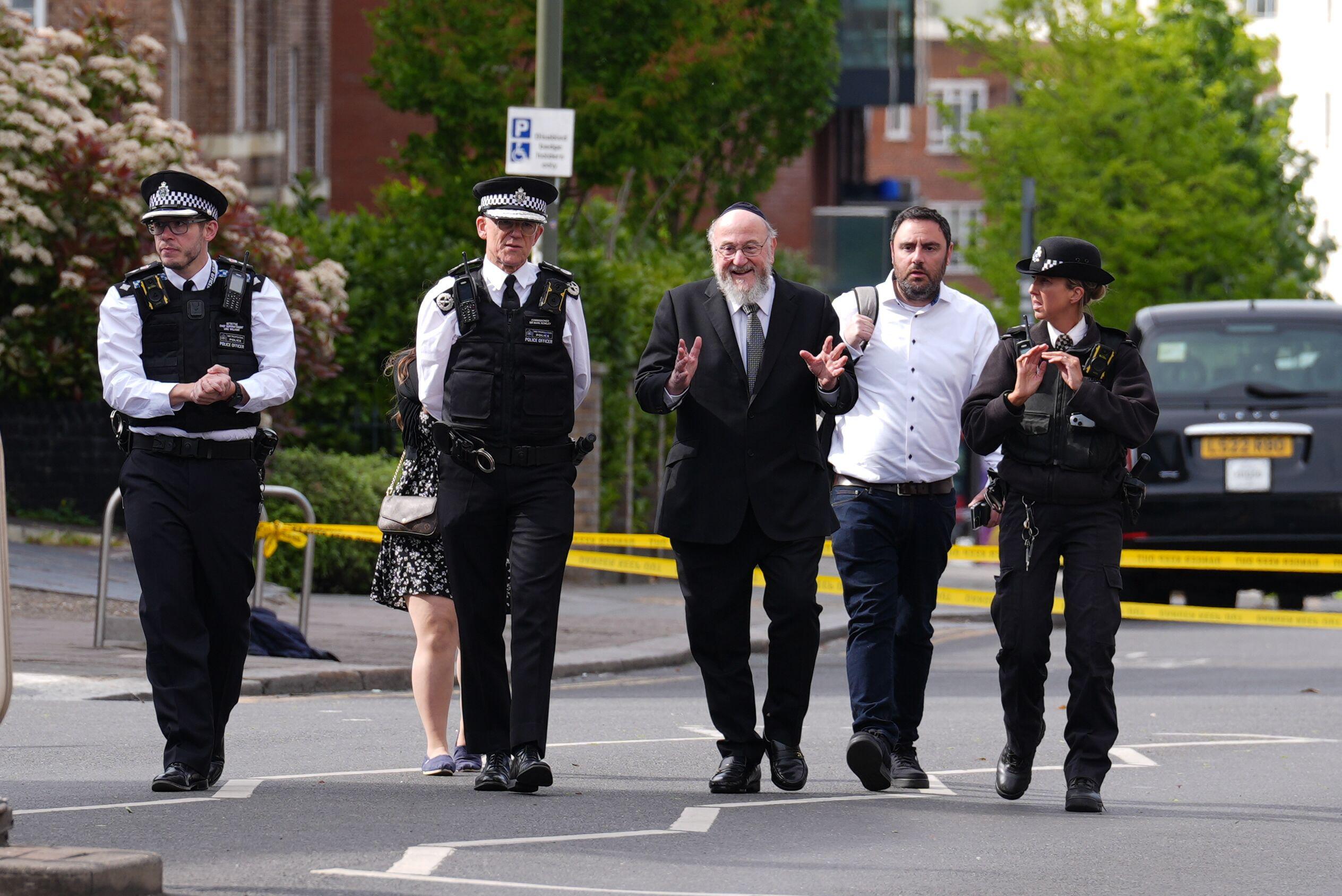
Earlier this month Metropolitan Police Commissioner Sir Mark Rowley told Jewish News the Met had decided to push harder to bring cases under existing hate-crime laws as the threat to Jewish communities increased, including over “globalise the intifada” and “death to the IDF” chants.
“We took the view, as the threat was rising and on the back of Heaton Park, that some of the chants we hadn’t been able to prosecute before, we were going to arrest and put it to the CPS and say, ‘This must be across the threshold now’,” he confirmed, speaking for a three-part documentary series, What Next?
He denied that this amounted to demanding new legislation, saying it was instead an attempt to test the boundaries of the existing law.
“Given the rising threat to Jewish communities, we took the view we were going to go to the outer edges of what we thought was within the law,” he said.
“The CPS agreed and followed through on some of those cases with charges, and disagreed on others. But I’m happy the officers made sensible arrests.”

Keep community journalism free.
Jewish News is free for everyone. No paywall. No barriers. Just trusted journalism for anyone who wants to stay connected to Jewish life in Britain.
If you value that, please support us.
From as little as £5 a month, you can help keep our journalism free and accessible to all.
Every day, we report on the issues that matter to our community. We celebrate achievements, support charities, challenge antisemitism and ensure Jewish voices are heard more widely.
From as little as £5 a month, you can help us continue to:
- Report on the stories shaping Jewish life in the UK and beyond
- Bring our community together through shared stories, events and campaigns
- Celebrate the people, culture and moments that define our community
- Support organisations doing vital work across Jewish Britain
You can make a one-off donation or become a regular supporter. Every contribution helps keep our journalism free, independent and accessible to all.
If everyone who values Jewish News gave a small amount, it would make a real difference to our future.