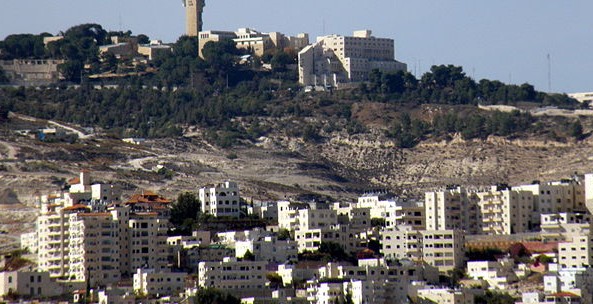
Ma'ale Adumim settlement in the occupied West Bank
The UK has significantly expanded its legal toolkit for enforcing foreign policy objectives by unveiling a new statutory framework that enables action against unlawful Israeli settlement activity in the West Bank.
The new Global Human Rights and International Humanitarian Law Sanctions Regulations 2026, were laid before Parliament on Tuesday.
They add three new grounds to the earlier 2020 regime – “serious violations of international humanitarian law”, “obstruction of humanitarian assistance”, and “serious violations of the right to liberty and security of person.”
According to an explanatory memorandum published by the UK government, the previous sanctions package “lacked global reach to tackle systemic violations of International Humanitarian Law (IHL), such as unlawful settlement expansion and the systemic obstruction of humanitarian aid.”
The new regulations, by contrast, significantly expand the UK’s legal powers to enforce targeted sanctions against individuals, developers, commercial entities, and financial institutions, such as those involved in or facilitating illegal settlement activity in the West Bank.
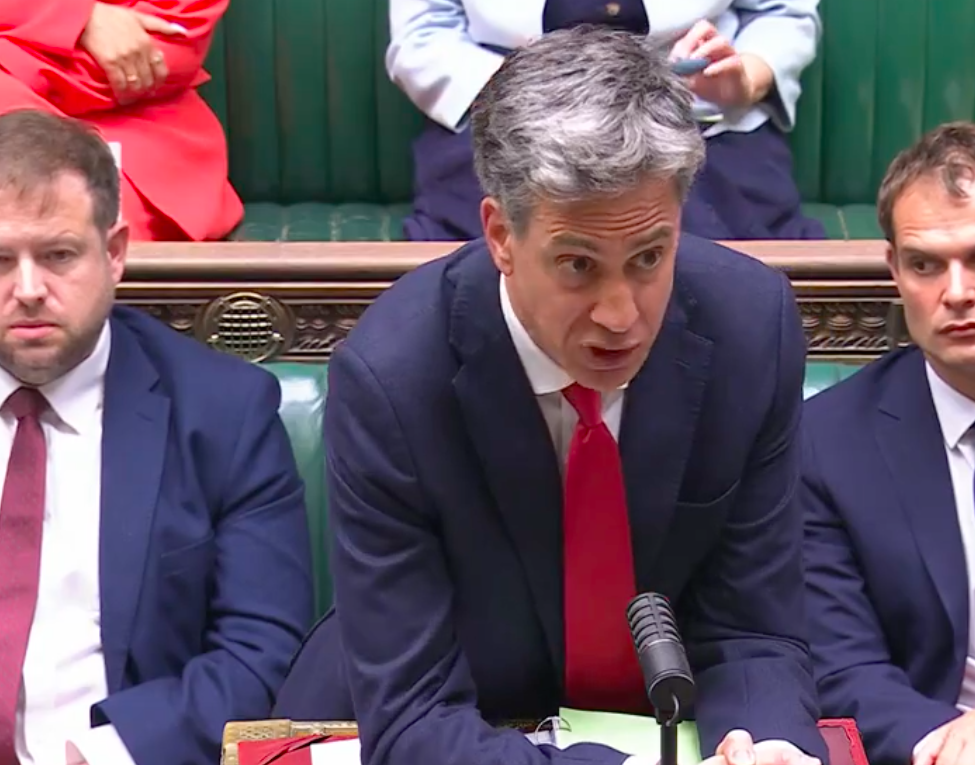
Ed Miliband answers questions in the House of Commons as Foreign Secretary
The Israeli settlement watchdog Peace Now welcomed the new regulations, and warned their impact could extend far beyond companies directly involved in settlement construction.
“This is a real alarm. Today, it is already clear that settlements are not only an obstacle to peace and a danger to security, but also an economic threat to the country’s future,” the organisation said.
Peace Now also accused Israeli Prime Minister Benjamin Netanyahu and Finance Minister Bezalel Smotrich of advancing construction in E1, warning that “the consequences of sanctions could eventually affect the broader Israeli public.”
“The price of this messianic adventure could be paid not only by settlers, but by millions of law-abiding Israeli citizens,” the organisation said.
“Today, these are sanctions on settlements. Tomorrow, they will reach every household in Israel.”
The Foreign Office has insisted that the updated regulations represent a change in global sanctions policy rather than a measure specifically targeting Israel or settlements.
But the measures took effect on Thursday, four days before the deadline for submitting bids for controversial construction in the West Bank E1 area between Jerusalem and Ma’aleh Adumim, amid a diplomatic dispute between Israel and Britain.
The updated policy expands the range of serious violations that could trigger sanctions, regardless of where they occur, the Foreign Office said, adding the regulations are separate from the legislative process and sanctions measures concerning settlements considered illegal under international law.
Israelis take part in a rally in support of establishing a Palestinian state alongside Israel to end the conflict, in Tel Aviv.
The regulations do not introduce any trade-related restrictions.
The Foreign Office also insisted the updated policy does not target any specific country.
Rather, it is intended to allow Britain to respond more quickly to individuals and organisations involved in serious human rights violations or breaches of international humanitarian law anywhere in the world.
Communal organisations in the UK, including the Board of Deputies, Jewish Leadership Council, and the Labour and Conservative Friends of Israel groups, have come out strongly against the sanctions move, announced by Foreign Secretary Ed Miliband last month.
Under the new regulations, ministers can now sanction individuals and entities “by description rather than just explicit names”—a move designed to “prevent bad actors from evading enforcement by operating under loosely associated shell structures.”
Crucially, the 2026 powers “widen the net from direct perpetrators to anyone who facilitates, promotes, incites, or funds qualifying misconduct.”
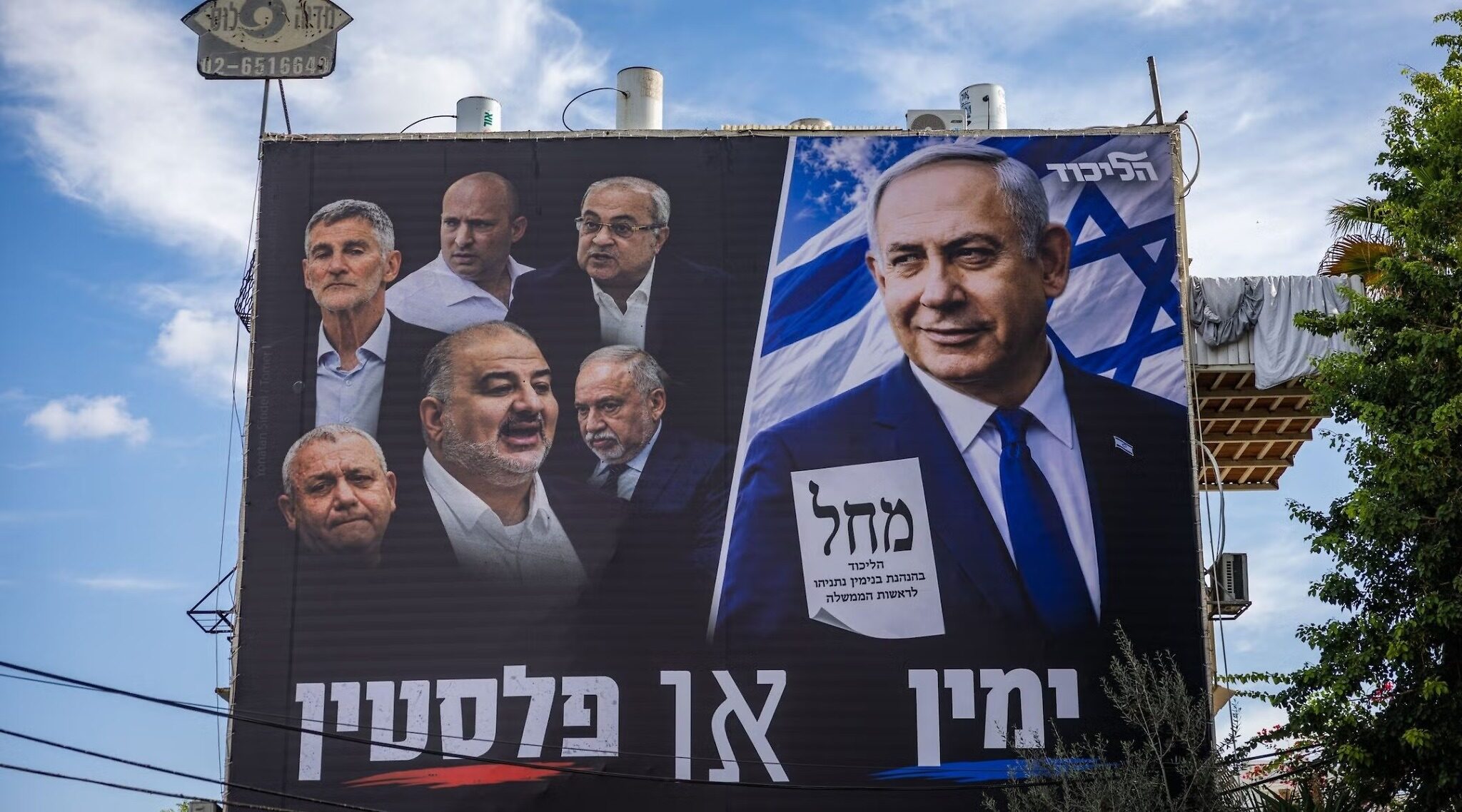
View of a giant election campaign poster displayed on a building in the southern Israeli city of Ashdod, showing Prime Minister and Likud party chairman Benjamin Netanyahu alongside leaders of opposition parties, with the slogan “Right or Palestine,” ahead of Israel’s upcoming general elections, October 5, 2026. (Yonatan Sindel/Flash90 via JTA)
In the West Bank context, this allows the UK to target construction companies, real estate developers, and banks backing unlawful settlement growth.
Once an individual or corporate entity is designated, a trio of strict punitive measures apply – financial restrictions, director disqualifications, and travel bans.
Banks and commercial entities could also fall within this remit, as designation only requires reasonable grounds to suspect involvement.
The FCDO also notes that “the administrative and compliance burden on UK businesses is negligible.”
A new urgent procedure will allow ministers to mirror designations already made by the EU, US, Canada or Australia for up to 112 days while a specific separate UK case is prepared.
The new global sanctions regime came into force on Thursday but will need endorsement by MPs and peers within 28 days.
In September, Foreign Secretary Miliband vowed to push through sanctions measures at speed because the Israeli government has vowed to press ahead with an E1 settlement containing 1,234 homes in the West Bank – a development that many observers say would sever a contiguous, viable Palestinian state, so making the so-called two-state solution to the Palestinian-Israeli conflict near impossible.
The E1 bids close on 19 October but the Israel Land Authority has confirmed that the tender box will not be opened, nor the bids considered, before 19 November, which is after the Israeli election on 27 October.
Last month, members of Parliament contacted banks and financial institutions, warning of the risks associated with financing construction in E1. This week, the Britain Palestine Project, an organization supporting measures against settlements, warned that companies and contractors participating in the development could jeopardize their international business relationships.
Israel has reduced Britain’s diplomatic presence and halted additional activities in response to the UK’s measures, but Britain has not reversed its sanctions policy.
Although the new regulations are now in force, no new sanctions have been announced under them against companies, developers, or financial institutions involved in E1 construction.
The Jerusalem Post reported that a spokesperson for the British Foreign Office clarified, “The updated regulations represent a change in global sanctions policy rather than a measure specifically targeting Israel or settlements.”
According to the spokesperson, the existing framework had allowed Britain to impose sanctions on individuals and entities involved in serious human rights violations or breaches of international humanitarian law worldwide.
The updated policy expands the range of serious violations that could trigger sanctions, regardless of where they occur.
The spokesperson stressed that the regulations are separate from the legislative process and sanctions measures concerning settlements considered illegal under international law, and do not introduce any trade-related restrictions.
The Foreign Office also emphasised that the updated policy does not target any specific country.
Rather, it is intended to allow Britain to respond more quickly to individuals and organisations involved in serious human rights violations or breaches of international humanitarian law anywhere in the world.
Support Jewish News. Keep community journalism free.
Jewish News is free for everyone. No paywall. No barriers. Just trusted journalism for anyone who wants to stay connected to Jewish life in Britain.
If you value that, please support us.
From as little as £5 a month, you can help keep our journalism free and accessible to all.
Every day, we report on the issues that matter to our community. We celebrate achievements, support charities, challenge antisemitism and ensure Jewish voices are heard more widely.
From as little as £5 a month, you can help us continue to:
Report on the stories shaping Jewish life in the UK and beyond
Bring our community together through shared stories, events and campaigns
Celebrate the people, culture and moments that define our community
Support organisations doing vital work across Jewish Britain
You can make a one-off donation or become a regular supporter. Every contribution helps keep our journalism free, independent and accessible to all.
If everyone who values Jewish News gave a small amount, it would make a real difference to our future.
Every day, we report on the issues that matter to our community. We celebrate achievements, support charities, challenge antisemitism and ensure Jewish voices are heard more widely.
From as little as £5 a month, you can help us continue to:
Report on the stories shaping Jewish life in the UK and beyond
Bring our community together through shared stories, events and campaigns
Celebrate the people, culture and moments that define our community
Support organisations doing vital work across Jewish Britain
You can make a one-off donation or become a regular supporter. Every contribution helps keep our journalism free, independent and accessible to all.
If everyone who values Jewish News gave a small amount, it would make a real difference to our future.

 Prefer Jewish News on Google