Prefer Jewish News on Google
UK terror chief: Ministers and civil society endanger Jews by ‘cul-de-sac’ focus on protest rights
EXCLUSIVE: Speaking to Jewish News, Jonathan Hall KC says ‘Ban pro-Palestine demos to protect British Jews amid national security emergency’
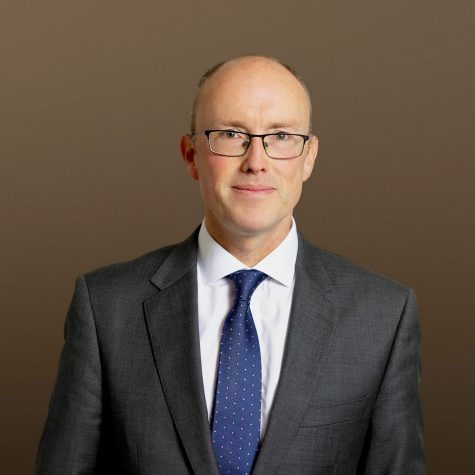
The UK’s independent reviewer of terror legislation has warned that too many senior politicians and civil society organisations have “gone down a cul-de-sac”—vigorously defending the right to protest without recognising actual threats to the safety of Jewish and other British citizens.
Speaking to Jewish News in the aftermath of the Golders Green double-knife attack, Jonathan Hall KC said: “I have spoken about a national security emergency and the risk, as I have warned about repeatedly, that demonisation of Jews and Israelis and Zionists will lead to a terrorist attack.”
The highly respected barrister has served as the UK’s Independent Reviewer of Terrorism Legislation since 2019, and was appointed the first Independent Reviewer of State Threats Legislation in 2024.
Recognised for his expertise in national security law he has provided independent oversight and recommendations on counter-terrorism measures for several years.
On Thursday Hall described attacks on Jewish people in the UK as “the biggest national security emergency” in almost a decade.

He earlier told the BBC that British Jews are “now thinking they cannot live a normal life” due to a series of recent incidents in which Jewish communities have been targeted.
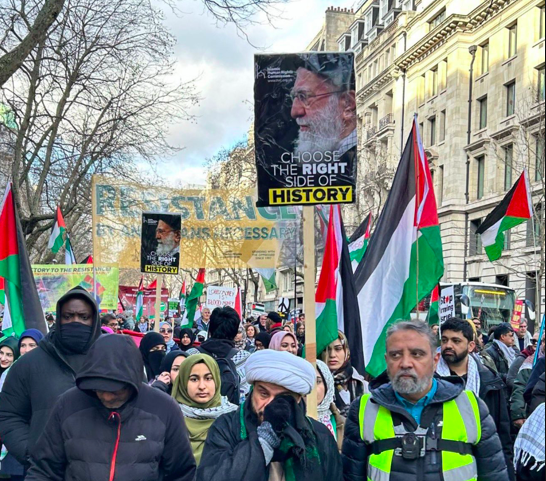
In his interview with Jewish News, the barrister called for a ban on pro-Palestinian demonstrations, stating: “Since the right to life is more important than the right to protest, it makes sense to consider a pause or moratorium on protests where public demonisation and hatred are incubated.”
He continued: “We are talking about protecting British lives, and the life of the community. In order to protect British lives in the current emergency, I would take a precautionary approach: ban the demos to lower the risk of more attacks.”
He was also frank when asked whether he felt that, in the midst of a spate of antisemitic attacks, government ministers and civil society organisations were unwilling to comprehend the scale of the national emergency the country now faces.
He replied: “History shows that ministers have a major role in communicating the threat and the need for action.
“It is important that police, prosecutors, and courts are provided with sufficient information by ministers to understand the gravity of the situation, and therefore the harm and culpability of attackers, proxies, and saboteurs.
“Too many civil society organisations appear to have gone down a cul-de-sac, where they recognise only the right to protest and are incurious about protecting the right to life of British citizens.”

Hall noted that the authorities are still awaiting an assessment on whether Iran inspired or commissioned Wednesday’s attack in Golders Green—which has been claimed by the same group responsible for earlier attacks on community sites—but he added: “Ultimately, it takes a UK resident to carry out an attack, so there is a social responsibility.”
“This is where antisemitism in the public and private domain comes in,” Hall said.
“I don’t think I can think of a bigger national security emergency happening in the UK since 2017, in terms of the attacks in Manchester and London,” Hall added, referring to the Manchester Arena bombing and London Bridge attack, claimed by ISIS at the time.
Asked whether he felt Starmer’s government had been too slow to adopt his recommendations on proscribing Iran’s IRGC organisation, he responded: “All I can do is make recommendations; it is up to the government whether and when it wants to act. But obviously, I did not make the recommendation lightly.”
The Prime Minister has now said the legislation will be fast-tracked, amid criticism from communal groups about the failure to ban the IRGC.
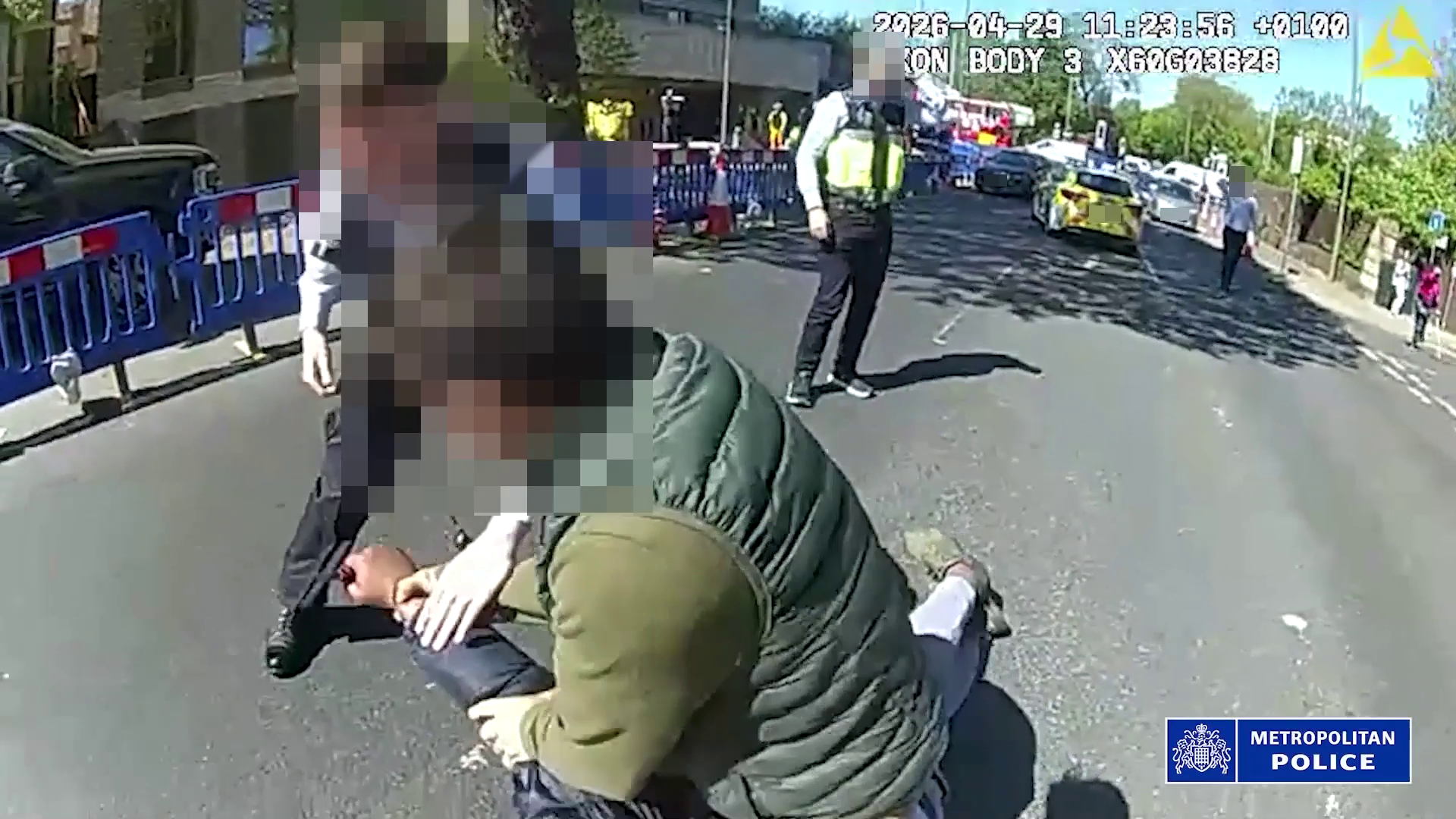
NOTE TO EDITORS: This handout photo may only be used for editorial reporting purposes for the contemporaneous illustration of events, things or the people in the image or facts mentioned in the caption. Reuse of the picture may require further permission from the copyright holder.
Some suggest proscription is merely a cosmetic change, but Hall said: “At best, counter-terrorism and counter-state threats work uses every available tool.
“Very few legal innovations are game-changers, but they can add an extra option. A new state threat proscription law would bring more conduct into the ambit of national security, where it belongs.”
Asked for his view on whether the government now needed to take further action to counter extremist rhetoric emerging from some preachers and some mosques, and whether current laws are strong enough, he replied: “Stirring up racial hatred is an offence whether it takes place in the street or in a mosque. I have not yet seen a good case for changing the law in this instance—it is about applying the law that currently exists.”
“

Keep community journalism free.
Jewish News is free for everyone. No paywall. No barriers. Just trusted journalism for anyone who wants to stay connected to Jewish life in Britain.
If you value that, please support us.
From as little as £5 a month, you can help keep our journalism free and accessible to all.
Every day, we report on the issues that matter to our community. We celebrate achievements, support charities, challenge antisemitism and ensure Jewish voices are heard more widely.
From as little as £5 a month, you can help us continue to:
- Report on the stories shaping Jewish life in the UK and beyond
- Bring our community together through shared stories, events and campaigns
- Celebrate the people, culture and moments that define our community
- Support organisations doing vital work across Jewish Britain
You can make a one-off donation or become a regular supporter. Every contribution helps keep our journalism free, independent and accessible to all.
If everyone who values Jewish News gave a small amount, it would make a real difference to our future.