Prefer Jewish News on Google
Universities, Democracy and the Art of Disagreement
On a recent trip to universities across America, Irfan Zaman found institutions grappling with a common challenge: how to sustain cultures of inquiry, pluralism and mutual respect
In 1831, Alexis de Tocqueville travelled to the US to study the American prison system. Before long, the prisons proved less interesting than the society that had built them. He returned with the material that became Democracy in America, a study not just of political institutions but of the habits, norms and civic virtues that sustain democratic societies. “I saw more than America,” he reflected. “I sought there an image of democracy itself.”
As a Churchill Fellow researching campus polarisation, antisemitism and Islamophobia, I found myself in a similar search recently as I travelled to universities across the US. Tocqueville arrived in America at a moment when democracy seemed ascendant. I arrived at a time when many of the institutions responsible for preparing the next generation of citizens are asking a different question: not how democracy expands, but how it endures.
Universities on both sides of the Atlantic are grappling with a common challenge: how to sustain cultures of inquiry, pluralism and mutual respect in an era where questions of identity, belonging and political conviction have become increasingly difficult to navigate.
While the conflict in the Middle East has been the catalyst for some of the most high-profile and contentious campus protests and controversies in recent years, the underlying problems extend beyond that conflict. The environment post 7 October simply exposed weaknesses that already existed in campus culture and revealed how difficult it can be for institutions to respond consistently during periods of heightened tension.
Neutral Rules, Political Consequences
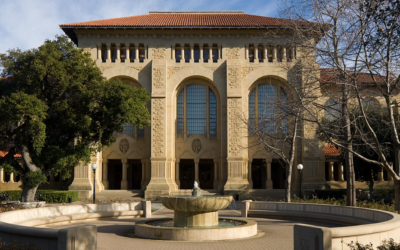
A case in point is Stanford University, where I spent time during my Fellowship and saw how well-intentioned attempts to manage campus tensions can sometimes undermine confidence in the consistent application of institutional rules.
Stanford had long maintained a strict, viewpoint neutral “no-camping” policy that prohibited overnight sleeping or structures without explicit permission from the university. When activists set up a small encampment in White Plaza in late October 2023, the university allowed it to go ahead “out of a desire to support the peaceful expression of free speech in the ways that students choose to exercise that expression”.
Having allowed the encampment for months, any subsequent attempt to enforce the rules was then interpreted by activists as a political decision rather than an administrative one. Stanford’s leadership chose not to enforce its own rules to reduce conflict, but that temporary accommodation ultimately made later enforcement more difficult and more contested. It also created an environment in which protesters and counter-protesters in opposing encampments spent months locked in a cycle of confrontation.
What’s in a statement?
Several university leaders reflected that one of their earliest missteps was the rush to issue institutional statements in the post 7 October environment. Faced with intense pressure to respond, many felt they had entered a political arena from which it became increasingly difficult to retreat.
On October 11, 2023, Stanford’s President Richard Saller and Provost Jenny Martinez publicly argued that universities should “generally refrain from taking institutional positions on complex political or global matters” and that “maintaining university neutrality allows for our individual scholars to explore them freely.” Yet the very act of articulating that principle came amid intense pressure to respond to October 7th illustrating the dilemma facing many university leaders: once institutions become accustomed to speaking on public issues, deciding when not to speak can prove just as controversial as speaking itself.
Stanford effectively used a statement on the Middle East to explain why universities should generally stop issuing statements on geopolitical events. That moment became one of the clearest examples in American higher education of the post–7 October shift toward institutional neutrality.
Holding the Centre
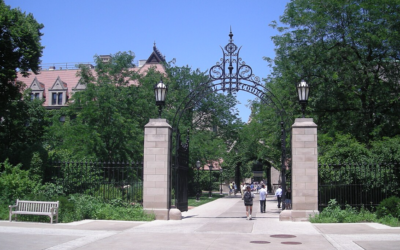
Among the most significant developments in American higher education is the growing influence of two ideas originating at the University of Chicago: the Chicago Principles and the Kalven Report.
The Chicago Principles defend the broadest possible protection for lawful speech, including ideas that many find offensive or deeply uncomfortable. The Kalven Report asks a different question: should universities take sides in political and social disputes? Its answer is clear. Universities should be the “home and sponsor of critics, not the critic itself.” Their role is not to prescribe the right answers, but to create the conditions in which competing ideas can be tested, challenged and debated.
While the Chicago Principles have been steadily gaining traction since their publication in 2015, the aftermath of 7 October accelerated a much broader movement towards institutional neutrality. According to Heterodox Academy, a non-partisan US organisation that promotes viewpoint diversity, open inquiry and constructive disagreement in HE, more than 120 US universities adopted policies of institutional restraint or statement neutrality after 7 October , bringing the total number of institutions with such policies to more than 150 by the end of 2024. At the same time, the number of universities endorsing the Chicago Principles on free expression continued to grow, surpassing 100 institutions nationwide.
The Mission of Higher Education
Yet beneath the debates about free speech, institutional neutrality and university statements lies an even more fundamental question: what is a university for? Across almost every campus I visited, from presidents and provosts to faculty and student affairs professionals, conversations repeatedly returned to the purpose of higher education itself.
In an era of political polarisation, social media activism and declining trust in public institutions, many university leaders argued that universities had become burdened with expectations that extend far beyond their traditional role. Increasingly, they were asking whether institutions of higher learning exist to shape public opinion and advance particular causes, or whether their primary responsibility is to pursue knowledge, educate students and create the conditions for rigorous inquiry and debate.
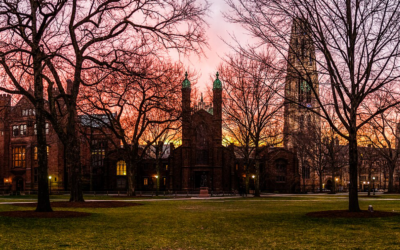
These debates are very much live. Just weeks before I arrived in the US, Yale University took a step that encapsulated the wider rethinking taking place across American HE about the purpose of the university and its role in society. Yale’s decision to change its mission statement reflects this broader rethinking of the university’s role. Following recommendations from the university’s Committee on Trust in Higher Education, Yale removed language about “improving the world” and educating “aspiring leaders”, replacing it with a simpler commitment: “to create, disseminate, and preserve knowledge through research and teaching.” The change was more than semantic. It reflected a growing recognition that universities best serve society not by acting as political actors or arbiters of public morality, but by remaining focused on their core purpose: the pursuit of knowledge, the testing of ideas, and the education of students capable of forming their own judgements.
The Character of Citizenship
What are the skills and virtues that are needed for students to live alongside one another. Perhaps the most important lesson from the US leg of my Fellowship was that the future of pluralism will not be secured by policies, statements or disciplinary procedures alone. Those things matter, but they ultimately depend upon the habits, relationships and norms that shape campus life.
When Alexis de Tocqueville travelled through America, he concluded that democracy was sustained not primarily by constitutions, laws or elections, but by the habits and virtues of its citizens. A willingness to participate in public life. The ability to cooperate with strangers. Tolerance of disagreement. Respect for minority views. Self-restraint, responsibility and civic engagement. Democracy, he realised, is not simply a political system. It is a way of living together.
Nearly two centuries later, universities find themselves wrestling with a remarkably similar question: what kind of student, and ultimately what kind of citizen, does a pluralistic democracy require?
Across the universities and civic organisations, I visited, a strikingly consistent theme emerged. The role of a university is not to tell students what to think. It is to teach them how to think. How to weigh evidence. How to engage with competing viewpoints. How to listen generously. How to challenge ideas without dehumanising the people who hold them. How to live alongside those whose experiences, identities and convictions differ from their own.
Democracies depend upon qualities such as intellectual humility, curiosity, courage, empathy and generosity. They depend upon citizens who can hold strong convictions while remaining open to dialogue and disagreement. They depend upon people who understand that disagreement is not a threat to democracy, but one of its defining features.
If there is a lesson here for universities in both the UK and the US, it is that safety and belonging cannot be achieved through rules alone. Jewish students, Muslim students and indeed all students deserve campuses where their safety and dignity are protected, harassment is challenged, and standards of conduct are consistently upheld. But the long-term answer lies in building campus cultures characterised by inquiry, openness, intellectual humility and mutual respect. Cultures in which students are encouraged not merely to express their views, but to understand one another’s humanity.
That may ultimately be the most important contribution universities can make to democratic renewal. Not producing graduates who think alike, but producing citizens capable of living, learning and disagreeing well together.
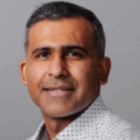
Irfan Zaman is Chief Executive of SOAS Students’ Union and a Churchill Fellow.

Keep community journalism free.
Jewish News is free for everyone. No paywall. No barriers. Just trusted journalism for anyone who wants to stay connected to Jewish life in Britain.
If you value that, please support us.
From as little as £5 a month, you can help keep our journalism free and accessible to all.
Every day, we report on the issues that matter to our community. We celebrate achievements, support charities, challenge antisemitism and ensure Jewish voices are heard more widely.
From as little as £5 a month, you can help us continue to:
- Report on the stories shaping Jewish life in the UK and beyond
- Bring our community together through shared stories, events and campaigns
- Celebrate the people, culture and moments that define our community
- Support organisations doing vital work across Jewish Britain
You can make a one-off donation or become a regular supporter. Every contribution helps keep our journalism free, independent and accessible to all.
If everyone who values Jewish News gave a small amount, it would make a real difference to our future.