Prefer Jewish News on Google
Unorthodox ambition: from Netflix screens to building machines
She first made headlines breaking away from her strictly-Orthodox upbringing on TV. Now Miriam Haart is rewriting the rules of AI. By Candice Krieger
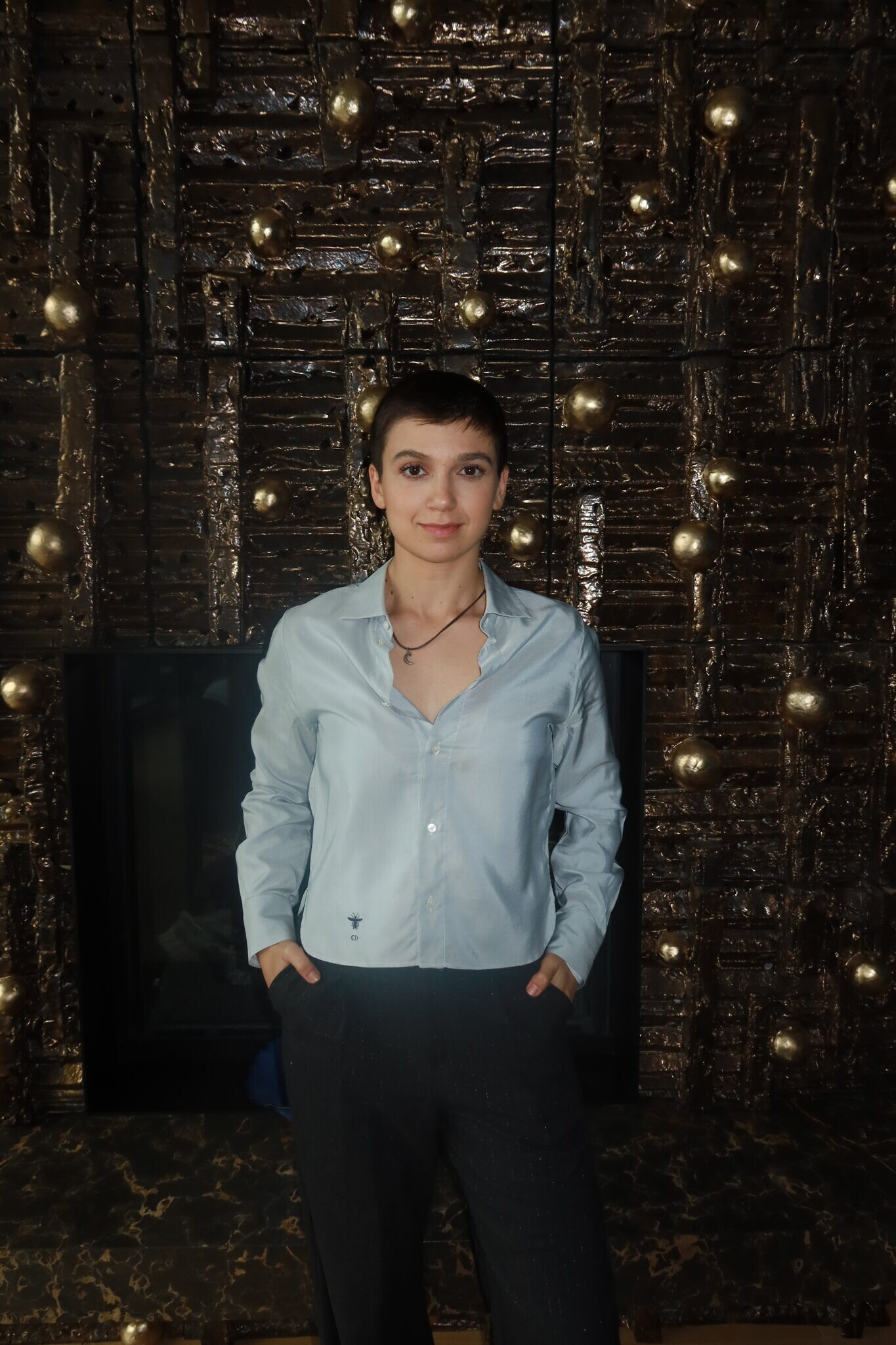
Miriam Haart may be known to many as one of the standout faces of My Unorthodox Life – the headline-grabbing series that followed her family’s dramatic break from the strictly-Orthodox world.
When it premiered in 2021, the show quickly became a cultural lightning rod. At its centre was mum Julia, separated from her husband and former life, now installed as CEO of Elite World Group, embracing designer wardrobes, a penthouse apartment and boardroom power. Alongside Miriam were her siblings Batsheva and Shlomo, who joined the family’s very public reinvention – while younger brother Aron chose to remain with his father within the strictly-Orthodox community.
But while audiences watched the Haarts navigate fashion, fame and fallout on screen, Miriam’s next chapter was unfolding behind a very different kind of screen – in the fast-moving world of artificial intelligence (AI). At 26, the computer scientist is the co-founder and CEO of ActionAI, an ambitious start-up she describes as driving “the next frontier of artificial intelligence.”
Most people know AI through novelty chatbots such as ChatGPT. ActionAI, however, is building something more consequential – AI that can “act” reliably enough to take on mission-critical work in industries in which mistakes are not an option.
Co-founded with Shai Dekel, the former head of AI at website builder Wix, the firm is targeting areas such as auditing, compliance and judicial systems.
“If everyone’s now talking about agentic AI,” says Miriam, “the next big one is ‘Action AI’ – AI you can depend on to act on your behalf.”
The leap from reality television to high-stakes AI may seem surprising. But for Miriam, tech came first.
“I grew up ultra-Orthodox and I was very bored,” she says. “For women, usually there’s no extracurricular activities.”At 13, she began playing around on a computer her brother was given.
“I spent my afternoons creating things and learning new skills via YouTube,” she recalls. “And then one day I decided how cool it would be if I could build an app?”
Within months, she had created just that for fellow students and remembers the thrill when it was accepted into the App Store.
Her path accelerated quickly. At 16, she moved to San Francisco, graduated high school two years early, worked as an engineer in Silicon Valley and went on to study computer science at Stanford. At 19, she became the youngest lecturer in Stanford’s Computer Science Department.
Around the same time, her family’s story reached a global audience on Netflix and introduced viewers to Miriam, who was open about her personal life, partners and being bisexual.
“I got the privilege to share my story on TV with my family and highlight female empowerment,” says Miriam, who is not currently in a relationship. “I wanted to prove that, no matter where you come from, you can achieve anything.”
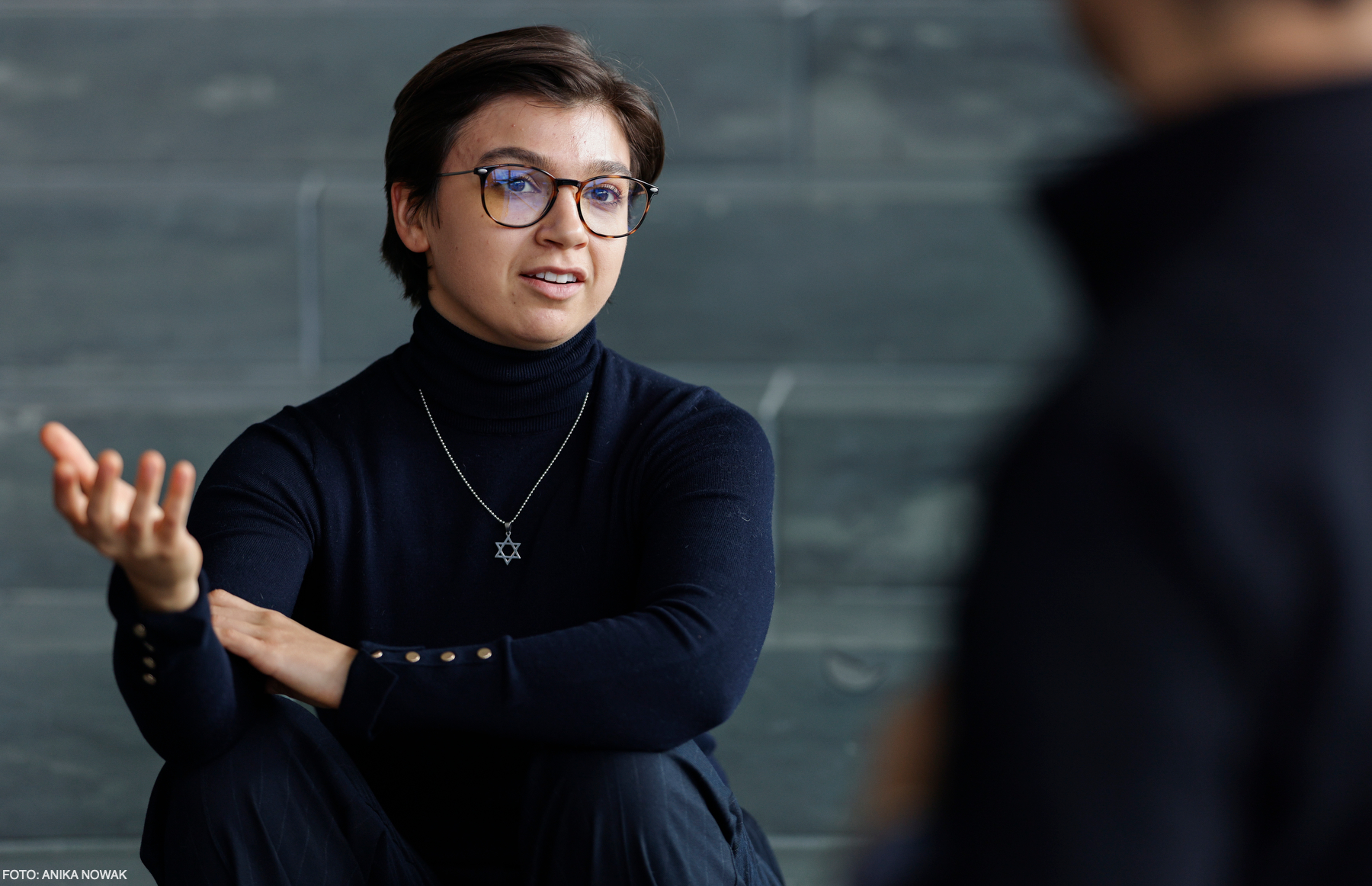
The show gave Miriam a platform far beyond the tech world. Today, she has more than 400,000 followers across her social channels, hosts the popular podcast Faking It, and has emerged as a sought-after speaker, including on the TED stage, where her talk The SITT Test: Are You Really Thinking Freely? explores free thought and fundamentalism through the lens of her own upbringing. Such interest was no surprise to Miriam. After My Unorthodox Life aired, the response was immediate.
“I got thousands of DMs, particularly from women who could relate to my experiences around religion, identity and being underestimated in male-dominated spaces.”
While Miriam has become a public figure, she still sees herself as “a builder… a creator”.
ActionAI is her second start-up. “People are used to seeing me more as a public persona and less of a founder,” she admits. “It will take some time for the world to see this side of me.”

Miriam credits much of her leadership style to her mother, Julia, the former CEO and founder of Body by Julia. “I’m lucky that my mother is not only my mum but also my business mentor. When it comes to work, she is able to both get her point across and make sure people are well fed!” she jokes. “She’s also taught me about helping people find meaning in their work” – a philosophy Miriam brings into ActionAI. “And we always have cake when it’s someone’s birthday,” she smiles.
As a young woman leading an AI firm, Miriam acknowledges the barriers that still exist. “We need to continue to fight for these positions of power.
I hope to show other women they can do it too.”
Miriam splits her time between the US and Israel, where ActionAI is based. While the company’s ambitions are global, some of its earliest momentum has come from the Gulf. One of ActionAI’s private investors is based in the Emirates.
With the Abraham Accords reshaping ties between Israel and parts of the Arab world, Miriam believes tech is becoming one of the most powerful new bridges. “The opportunity in the Gulf is profound. There is such a hunger for AI and we have an advantage having our R&D in Israel… We’re next door to each other. There’s so much opportunity here,” she says, adding that “economic prosperity is a mechanism for peace at the end of the day… and it gives meaning behind my work”.
A majority of ActionAI’s customers are based in the UAE, but Miriam says Europe, and eventually the UK, is firmly in her sights as she looks to define “the next big thing in AI”.
She says proudly: “We’re coining that term: reliable ‘action AI’.” And while many first came to know her through television, Miriam believes some skills transcend both worlds.
“On TV you’re in the spotlight and as a CEO, you are too… you have to be public-facing – those are skills I’ve acquired.”
She points too, to the importance of teamwork, whether building a company or navigating life in front of the cameras.
For now, ActionAI is her priority. But she hasn’t ruled out returning to the screen one day.
“Right now, I’m super technology-focused,” she says. “But… if there’s another season – stay tuned.”

Keep community journalism free.
Jewish News is free for everyone. No paywall. No barriers. Just trusted journalism for anyone who wants to stay connected to Jewish life in Britain.
If you value that, please support us.
From as little as £5 a month, you can help keep our journalism free and accessible to all.
Every day, we report on the issues that matter to our community. We celebrate achievements, support charities, challenge antisemitism and ensure Jewish voices are heard more widely.
From as little as £5 a month, you can help us continue to:
- Report on the stories shaping Jewish life in the UK and beyond
- Bring our community together through shared stories, events and campaigns
- Celebrate the people, culture and moments that define our community
- Support organisations doing vital work across Jewish Britain
You can make a one-off donation or become a regular supporter. Every contribution helps keep our journalism free, independent and accessible to all.
If everyone who values Jewish News gave a small amount, it would make a real difference to our future.