Prefer Jewish News on Google

‘Uprooted Lives’, and the importance of memory
Rabbi Jonathan Wittenberg writes about a book which testifies to the inestimable role refugees have played in their adoptive country
I used to think that I grew up in England, and so I did, rugby, cricket, a degree in English literature. And yet I didn’t; I was raised in an enclave of refugee German Jewry which I both loved and sought to escape, and for which I now sometimes mourn.
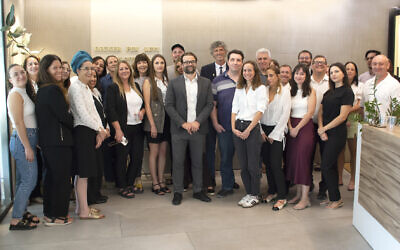
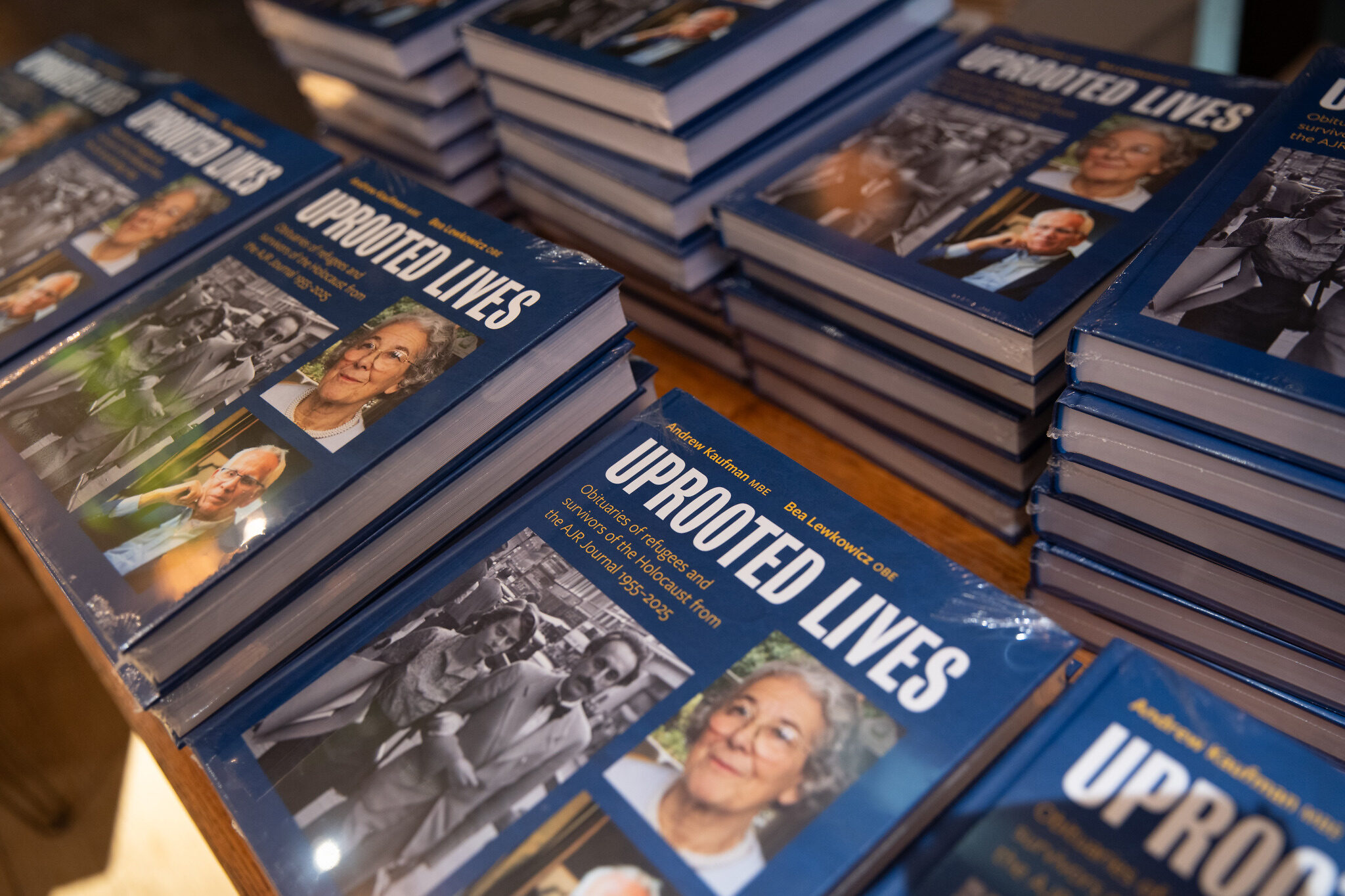
At the wonderful launch of Uprooted Lives at JW3 last week, I was thrown instantly back into that world. I had difficulty holding in my tears. The venue was full of the descendants of those who came as children, fled here as domestics, or were saved by the Kindertransport. I was back in the world of my childhood, with continental accents and German and English mixed in the same sentence, as if I were sitting once again in my grandparents’, my Oma and Opa’s, living room. I was in the palpable but invisible presence of a world lost yet longed for, destroyed by Nazism yet partly recreated in exile, a world of art and intellect, a world deeply Jewish yet embracingly cosmopolitan, a world haunted by memory.
Documented in this remarkable collection of four hundred and forty obituaries, collected from the eighty years of the AJR Journal, are our parents’ and grandparent’s lives, among them my own grandfather Rabbi Dr Georg Salzberger, founding rabbi of Belsize Square Synagogue, and my second mother, Isca Salzberger-Wittenberg.
As Bea Lewkowicz OBE, Co-founder and Director of the AJR Voices Testimony Archive, writes in her Introduction, these obituaries ‘provide a unique historical source, revealing changing patterns of identity, belonging and public recognition.’ Focussing on those who rebuilt their lives in Britain, together they form ‘a collective autobiography of a refugee community written over seventy years.’
Included are many famous names. As Michael Newman, CEO of the AJR, writes: ‘From captains of industry, innovators, public servants and Nobel Prize winners, this unique community has made a profound contribution to their adopted homeland.’


Here is testament to Rabbi Dr Leo Baeck and ‘the leadership he gave in Germany in good days and in the days of despair.’ He married my parents. I remember my father showing me a copy of the remarkable lecture he gave in Theresienstadt, ‘The University of the Abyss,’ on the faith and courage of the Hebrew Prophets. He now rests in peace in the same row as my mother and father in Hoop Lane Cemetery.
Here is Dr Adelheit Levy, who pioneered refugee welfare in Britain and became the first social worker for the AJR in 1941: ‘For the next twenty-seven years, she provided practical and emotional support to thousands of Jewish refugees, visiting the sick and isolated, advising families and helping newcomers rebuild their lives.’
The earlier part of the collection, covering the years 1955 – 1979, contains the obituaries of more famous people. In just four pages of this four-hundred-and-thirty-page volume one can find, among many other high achievers, a playwright, art historian, ophthalmologist, artist, educator, gastroenterologist, gynaecologist, economist, dentist, not to mention Dr Alfred Wiener, founder of the library that bears his name.
From 1980 onwards a far wider range of people are included, especially more women. Here, for instance, is Judith Kerr, author and illustrator of the beloved The Tiger Who Came To Tea, and of the story of her family When Hitler Stole Pink Rabbit, and its painful sequels.
Taken together, the obituaries describe far less a world of mourning, and far more a collective pattern of resilience and achievement. But there is also a deep acknowledgement of pain and loss. The book opens with the quotation from Elie Wiesel: ‘For the dead and the living; we must bear witness.’ As Michael Newman confirms: ‘We remember also those for whom the trauma endured.’ This is essential. It would be wrong to imagine that everyone who fled here from the horrors of Nazi Europe was able to create a successful new life. For many, anguish and loss haunted the rest of their lives.
I shall never forget being asked to conduct the funeral of a lady who was in and out of hospitals and care since arriving here before the war, and whom dementia had robbed of her memory. No one knew anything about her, beyond her name and that she had clearly been a lady of education and manners. There were just seven of us at the cemetery, four of them from Jewish Care. On her gravestone, we inscribed the words:
- S. died December 2012, who, fleeing the terrors of Nazi Europe, came alone. Also in memory of her parents and all the parents who with selfless love sent their children to safety in an unknown land.
We wanted to pay tribute to all those whose aloneness pursued them to the end of their lives, and to the parents who went home from railway platforms to lonely, silent rooms.
Among the four hundred and forty lives recorded it is remarkable how often the word ‘volunteer’ appears among their titles. Here are so many people who helped create new communities of support, from providing immediate and essential assistance to helping those recently arrived to find their first footing in a new land; from creating social hubs where refugee Jews could meet, to caring for them in their advancing age, until the close of their lives.
In a time of resurgent populism and widespread anti-refugee rhetoric, this book testifies to the inestimable role refugees can, and have, played in their adoptive country. It is a significant testament, of importance far beyond the Jewish community.
Yet it is also distinctively Jewish, on an obvious level because it specifically documents the lives of Jews who fled to the UK from Nazi Europe, but also because it is an embracing tribute to the values, strength and resilience of community, to the centrality of gemilut chesed, loving kindness and care, and to arevut zeh azeh, collective social responsibility. It is, in the end, a book about faith, the commitment to lechaim, the dignity of life .
Uprooted Lives: Obituaries of refugees and survivors of the Holocaust from the AJR Journal 1955 – 2025 ed. Andrew Kaufman MBE & Bea Lewkowicz OBE, published by the Association of Jewish Refugees, London, 2026. For more information and purchasing options, click here.

Keep community journalism free.
Jewish News is free for everyone. No paywall. No barriers. Just trusted journalism for anyone who wants to stay connected to Jewish life in Britain.
If you value that, please support us.
From as little as £5 a month, you can help keep our journalism free and accessible to all.
Every day, we report on the issues that matter to our community. We celebrate achievements, support charities, challenge antisemitism and ensure Jewish voices are heard more widely.
From as little as £5 a month, you can help us continue to:
- Report on the stories shaping Jewish life in the UK and beyond
- Bring our community together through shared stories, events and campaigns
- Celebrate the people, culture and moments that define our community
- Support organisations doing vital work across Jewish Britain
You can make a one-off donation or become a regular supporter. Every contribution helps keep our journalism free, independent and accessible to all.
If everyone who values Jewish News gave a small amount, it would make a real difference to our future.