US diplomat: Israel’s ‘bubble of illusion’ will burst
The senior American-Jewish diplomat described as a “human seismograph” on US-Israeli relations has said that Israel is displaying “hubris and bravado” toward its ally and that the “bubble of illusion will burst”.

Martin Indyk, a former US ambassador to Israel and most recently a key player in the Israeli-Palestinian negotiations, reflected on the Jewish state in an in-depth interview to Foreign Policy magazine as the Gaza conflict wound down.
London-born Indyk, a former director at AIPAC who is now vice-president of the prestigious Brookings Institute, said right-wing Israeli politicians’ disparaging comments about the US were not only “cheap” but showed “something deeper”.
He said: “Israelis feel more independent of the US, especially as they sense it is withdrawing from the region and therefore may be less reliable for Israel.”
Reflecting on Israel’s own pivot towards Russia, China and Arab states such as Egypt and Saudi Arabia, Indyk said: “Israel is not anymore the weak, small, dependent state. Now it has a strong army. It has a strong economy. And it has developed relations with world powers that it didn’t have before.”
He continued: “There’s a sense that Israel has become a power in its own right, and it doesn’t need the US as much. It’s a kind of hubris.”
Having spent almost four decades at the frontline of the Middle East conflict, Indyk drew on personal experience to compare Israel’s recent boldness.
“I saw this once before, in 1973, when Israelis felt they were the superpower in the region and didn’t have to worry about support from the US. And it turned on a dime once Egypt and Syria attacked by surprise on Yom Kippur. Suddenly Israel found itself totally dependent on the US.
“So it may be that the bubble of illusion will burst here too and Israeli politicians will come to understand that for all their bravado, the US is not just Israel’s most important friend but in a real crunch its only reliable friend.”
In a wide-ranging interview, Indyk worried aloud that support for Israel in the US was dropping, pointing to polls suggesting that young Americans – including young American Jews – felt differently about Israel’s actions than their parents’ generation.
He also noted that support for Israel was slipping among Democrats, suggesting that the country could yet become a partisan issue.
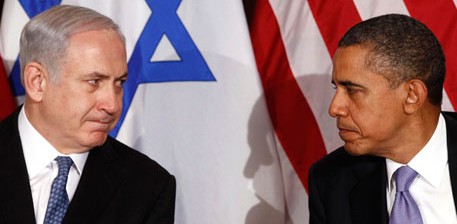
He also confirmed an open secret: that Obama and Netanyahu do not see eye-to-eye, adding that the recent Gaza conflict had not helped.
“It’s had a very negative impact,” said Indyk. “There’s a lot of strain in the relationship now. The personal relationship between the president and the prime minister has been fraught for some time and it’s become more complicated by recent events.”

Keep community journalism free.
Jewish News is free for everyone. No paywall. No barriers. Just trusted journalism for anyone who wants to stay connected to Jewish life in Britain.
If you value that, please support us.
From as little as £5 a month, you can help keep our journalism free and accessible to all.
Every day, we report on the issues that matter to our community. We celebrate achievements, support charities, challenge antisemitism and ensure Jewish voices are heard more widely.
From as little as £5 a month, you can help us continue to:
- Report on the stories shaping Jewish life in the UK and beyond
- Bring our community together through shared stories, events and campaigns
- Celebrate the people, culture and moments that define our community
- Support organisations doing vital work across Jewish Britain
You can make a one-off donation or become a regular supporter. Every contribution helps keep our journalism free, independent and accessible to all.
If everyone who values Jewish News gave a small amount, it would make a real difference to our future.