Prefer Jewish News on Google
VOICE OF THE JEWISH NEWS: The silent majority speaks out
Polling of the wider British public provides interesting data on views of the Israeli-Palestinian conflict - and on Zionism itself
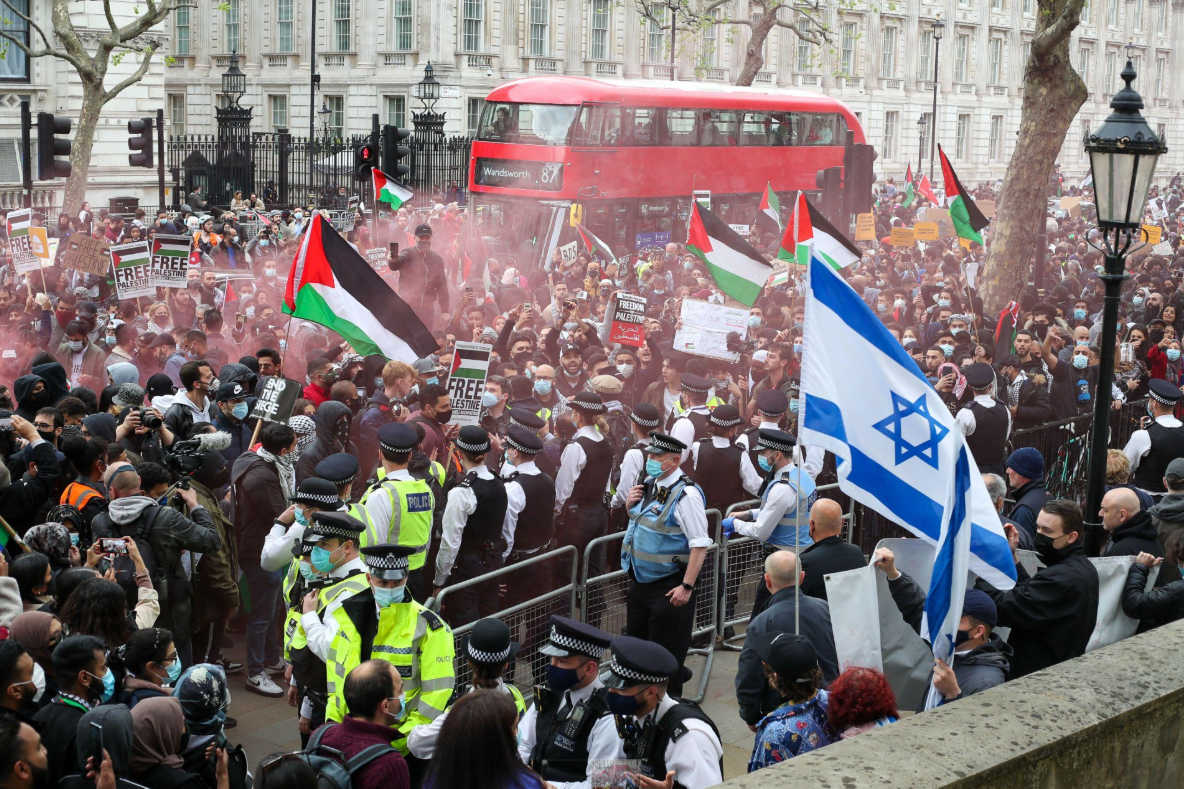
The last two years have been acutely uncomfortable for the British Jewish community. We have seen a surge in antisemitism, mass protests and anti-Israel extremism. It is tempting to believe – based on national print and TV media as well as Jewish publications, that the Israeli-Palestinian conflict is one of the key issues concerning the British public today.
But extensive polling now shows us this is just not true. 60 percent of the population do not have a strong view one way or the other. Most were horrified by 7 October and have been deeply disturbed by the destruction in Gaza, but they do not take ‘sides’ in this conflict. In fact, they’re exhausted of talking about it and are growing deeply resentful of intrusive protests on the subject.
This probably won’t surprise any Jewish person who has been to university. They will know that while a significant minority of the student population are acutely invested in the Israeli-Palestinian conflict, the majority are just getting on with their lives. The same appears true of the country at large.
Ultimately, this is likely to benefit British Jews, who overwhelmingly want peace. By contrast, it seems many Pro-Palestine activists do not want any peace unless it fulfils their long and growing list of demands for “justice”. For a toxic ideology where anti-Zionism and anti-Capitalism merge, disruptive protests are not just a means to an end, but an end in and of itself. The polling suggests this is likely to be a self-defeating strategy.
You’re so Zionist – you don’t even know it



What is Zionism?
To many of us, the answer, in its simplest form, is “the belief the Jewish people have a right to a state in their historic homeland”.
But new polling shows the general British public appear to have no idea what Zionism is. That is made clear by the fact that while a majority of British people would appear to agree with that statement, only a small percentage of them would describe themselves as “Zionists”. By contrast, while a significant minority describe themselves as antagonistic towards “Zionists”, far fewer describe themselves as opposed that statement – the core of what Zionism is.
What this shows is how successful a range of anti-Israel voices and institutions, from local grassroots projects all the way up to and including the United Nations itself, have been in warping and twisting the idea of Zionism in the public mind. Many of us are perplexed at how so many people appear hostile to the concept of the Jews having a country in their historic homeland. Now we know why – they simply do not equate that with “Zionism”.
Those of us who are staunch Zionists may have a choice to make. Do we continue to fight against those who would seek to distort the word “Zionism”? Or do we instead describe ourselves as “supporters of Jewish self-determination”? Would such a shift upend the narrative which has been allowed to develop, or would it be surrendering the field to our foes? Such questions may be worth considering.

Keep community journalism free.
Jewish News is free for everyone. No paywall. No barriers. Just trusted journalism for anyone who wants to stay connected to Jewish life in Britain.
If you value that, please support us.
From as little as £5 a month, you can help keep our journalism free and accessible to all.
Every day, we report on the issues that matter to our community. We celebrate achievements, support charities, challenge antisemitism and ensure Jewish voices are heard more widely.
From as little as £5 a month, you can help us continue to:
- Report on the stories shaping Jewish life in the UK and beyond
- Bring our community together through shared stories, events and campaigns
- Celebrate the people, culture and moments that define our community
- Support organisations doing vital work across Jewish Britain
You can make a one-off donation or become a regular supporter. Every contribution helps keep our journalism free, independent and accessible to all.
If everyone who values Jewish News gave a small amount, it would make a real difference to our future.