Prefer Jewish News on Google

We cannot afford to wait until the terrorist reaches the synagogue gates
As new research warns of increasingly deadly attacks on Jewish places of worship, protecting our communities must begin long before an attacker reaches the door.
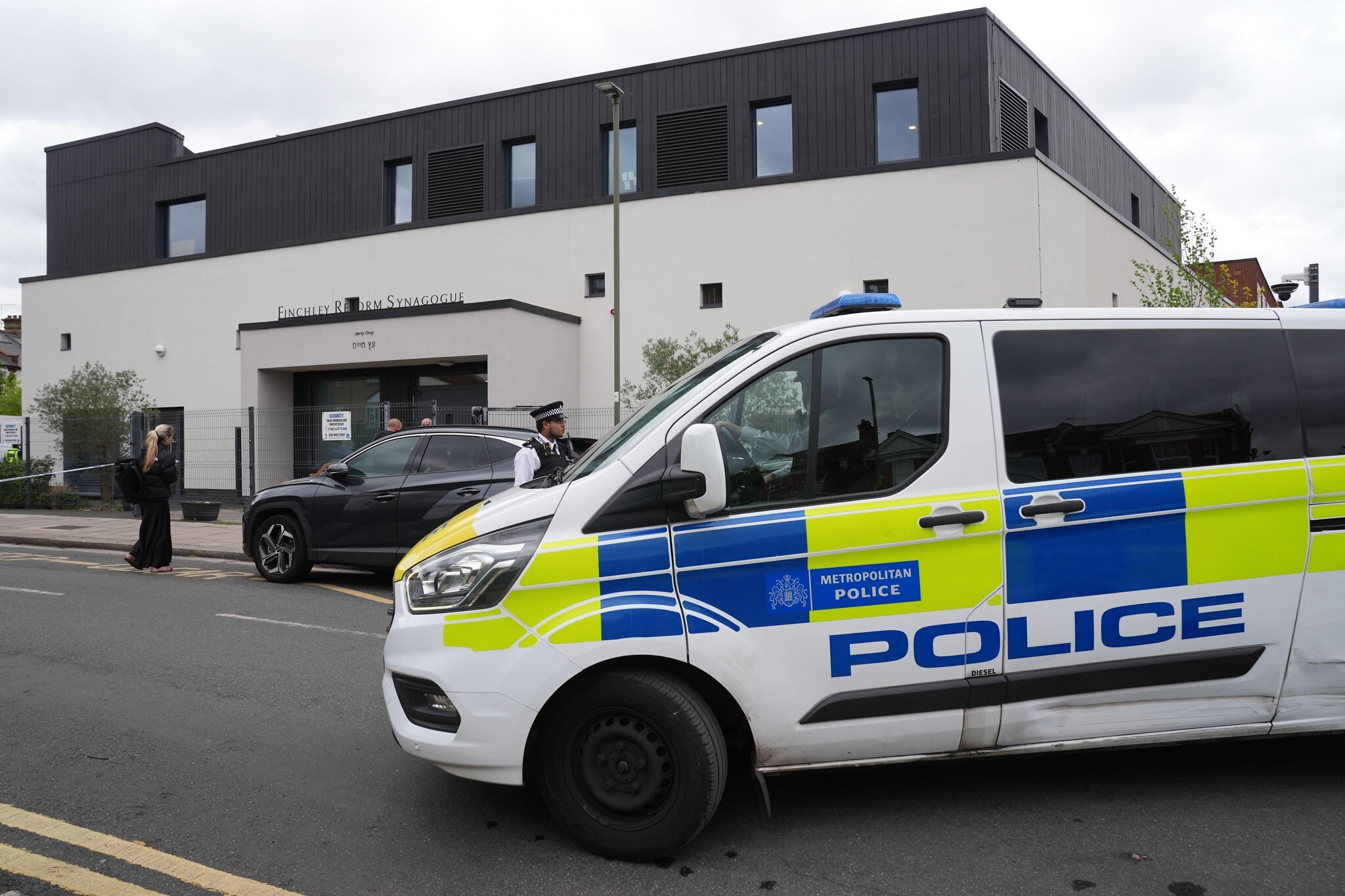
Walk past almost any major synagogue in Britain today and the signs of heightened security are unmistakable. Cameras monitor entrances, reinforced doors control access and security personnel stand guard. These precautions have become such an accepted part of Jewish life that we rarely stop to question what their presence means.
They are a response to a very real threat, but they also expose a fundamental weakness in how we think about protecting Jewish communities. Instead of prevention and intervention, too much of our attention is focused on what happens when danger arrives, rather than how to identify it before it gets there.
New research from Israel’s Diaspora Affairs and Combating Antisemitism Ministry makes that question more urgent than ever.
The report, released ahead of the anniversary of Kristallnacht, warns that attacks on synagogues worldwide are becoming increasingly lethal, with firearms, incendiary devices and vehicles among the weapons used. Crucially, it identifies a growing threat to worshippers travelling to and from religious services, rather than simply to the buildings themselves.
In Britain, a record 227 synagogue-related antisemitic incidents were documented in 2025, including 50 targeting congregants travelling to or from services.
The danger was brought home with devastating consequences during last year’s Yom Kippur terrorist attack at Manchester’s Heaton Park Hebrew Congregation, where two worshippers were killed.
These findings demand a rethink of how Jewish communities as a whole, approach their security, from synagogues to schools, retail spaces to restaurants.
After more than three decades working in Israeli intelligence and law enforcement, I believe the most important question is not simply whether a synagogue can withstand an attack, it is whether that attack could have been prevented in the first place.
Effective security is not only about barriers, guards and emergency responses. It is about understanding how threats develop, recognising credible warning signs and ensuring that information reaches those who can act upon it, a protocol we have developed called the Horizon method.
This begins with a more comprehensive understanding of the risks facing individual congregations.
Every synagogue should regularly review its security arrangements with qualified professionals, including local police and communal security organisations. But these assessments must extend beyond entrances and perimeter fences.
Fundamental questions must be asked, such as how do congregants arrive and leave? Where do people gather before and after services? Are there particular vulnerabilities during Shabbat and major festivals? Are security arrangements designed to protect people outside the building as well as those already inside?
This latest research highlights how predictable routines can create opportunities for attackers, meaning that security planning must consider the wider environment in which Jewish life takes place, rather than treating the synagogue as an isolated building.
A second priority is ensuring that synagogue staff, volunteers and community leaders know how to recognise and report potentially concerning activity.
An unusual enquiry about security arrangements may be entirely innocent. But what if other credible information suggests extremist networking, suspicious preparations or behaviour consistent with planning an attack?
Individually, these details may prove little. Together, and properly verified, they could justify closer examination by the appropriate authorities.
This is why every congregation should have a designated security coordinator, clear reporting procedures and established relationships with police and communal security organisations such as Britain’s Community Security Trust.
Suspicious incidents should be recorded accurately and passed to trained professionals rather than investigated independently by synagogue volunteers.
But the nature of modern extremism means that local vigilance alone is no longer sufficient.
An individual planning violence against a Jewish institution in Britain may have been influenced by propaganda originating thousands of miles away, communicated with extremist networks abroad or left fragments of information across different digital environments.
The Israeli report raises additional concerns about suspected involvement by terrorist networks and state actors, including Iran, in attacks carried out through local criminal intermediaries. Such allegations underline the importance of understanding threats that may originate far beyond the immediate community.
A local security team may know something about a suspicious incident. Police may hold other relevant information. Intelligence specialists elsewhere may have identified patterns of extremist activity.
The challenge is connecting those fragments before they become part of an investigation into an attack that has already happened.
Modern analytical technology, including artificial intelligence, can help trained professionals examine large quantities of information, identify connections across languages and borders, and recognise patterns that might otherwise remain hidden.
But technology is only useful if it supports timely, informed decisions.
Synagogues should not be expected to operate their own intelligence networks. Instead, governments, law enforcement agencies and established communal security organisations must strengthen the channels through which credible information can be assessed, shared and acted upon.
This requires trusted partnerships, clear responsibilities and appropriate legal safeguards.
There is an essential distinction between antisemitic speech, lawful political activity and credible preparations for violence. An effective early-warning approach must recognise those differences rather than treating every expression of hostility as evidence of an impending attack.
Human judgement, privacy protections and accountability are not obstacles to effective security. They are essential to ensuring that intelligence is reliable and proportionate.
There is also a more immediate responsibility for synagogue leadership.
Emergency plans should be reviewed and rehearsed regularly. Staff and volunteers must understand how to respond to threats involving firearms, fire or attempted forced entry. Congregations should know who is responsible for contacting police, communicating with worshippers and making decisions during an emergency.
These measures are particularly important for institutions serving children, elderly congregants and people with disabilities.
None of this means replacing the physical protections that have become an unfortunate necessity of Jewish life.
A reinforced door may save lives. A trained guard may stop an attacker. A rapid police response may prevent a tragedy from becoming even worse. But each of these measures comes into play when danger is already close.
Britain already has considerable expertise in communal security, including the work of the Community Security Trust, police and intelligence agencies. The challenge is to build on that expertise, improve coordination and ensure that the right information reaches the right people before a threat materialises.
For synagogue leaders, the practical priorities are clear. Risks must be assessed beyond the building, staff and volunteers must be trained, reliable reporting channels must be established. Emergency procedures must be reviewed, constantly, and there must be strong and close cooperation with professional security organisations.
For governments and intelligence agencies, the task is broader: improve the sharing of credible information, strengthen early-warning capabilities and ensure that threats crossing international borders do not disappear into the gaps between institutions.
We cannot eliminate every threat, and no intelligence system can guarantee that every attack will be prevented. But we should not accept that the first meaningful opportunity to protect Jewish lives comes when a terrorist is already standing outside a synagogue.
The future of Jewish security must be about more than keeping attackers out. It must be about recognising the danger early enough to prevent them from ever reaching the gates.
Arik Barbing is co-founder of Black Wall Global, an Israeli intelligence and security company. A counter terrorism expert, he spent over three decades in Israel’s defence establishment, including as a senior figure in Shin Bet.

Keep community journalism free.
Jewish News is free for everyone. No paywall. No barriers. Just trusted journalism for anyone who wants to stay connected to Jewish life in Britain.
If you value that, please support us.
From as little as £5 a month, you can help keep our journalism free and accessible to all.
Every day, we report on the issues that matter to our community. We celebrate achievements, support charities, challenge antisemitism and ensure Jewish voices are heard more widely.
From as little as £5 a month, you can help us continue to:
- Report on the stories shaping Jewish life in the UK and beyond
- Bring our community together through shared stories, events and campaigns
- Celebrate the people, culture and moments that define our community
- Support organisations doing vital work across Jewish Britain
You can make a one-off donation or become a regular supporter. Every contribution helps keep our journalism free, independent and accessible to all.
If everyone who values Jewish News gave a small amount, it would make a real difference to our future.